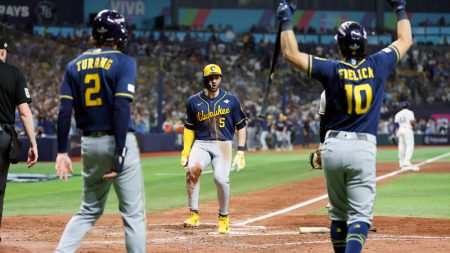


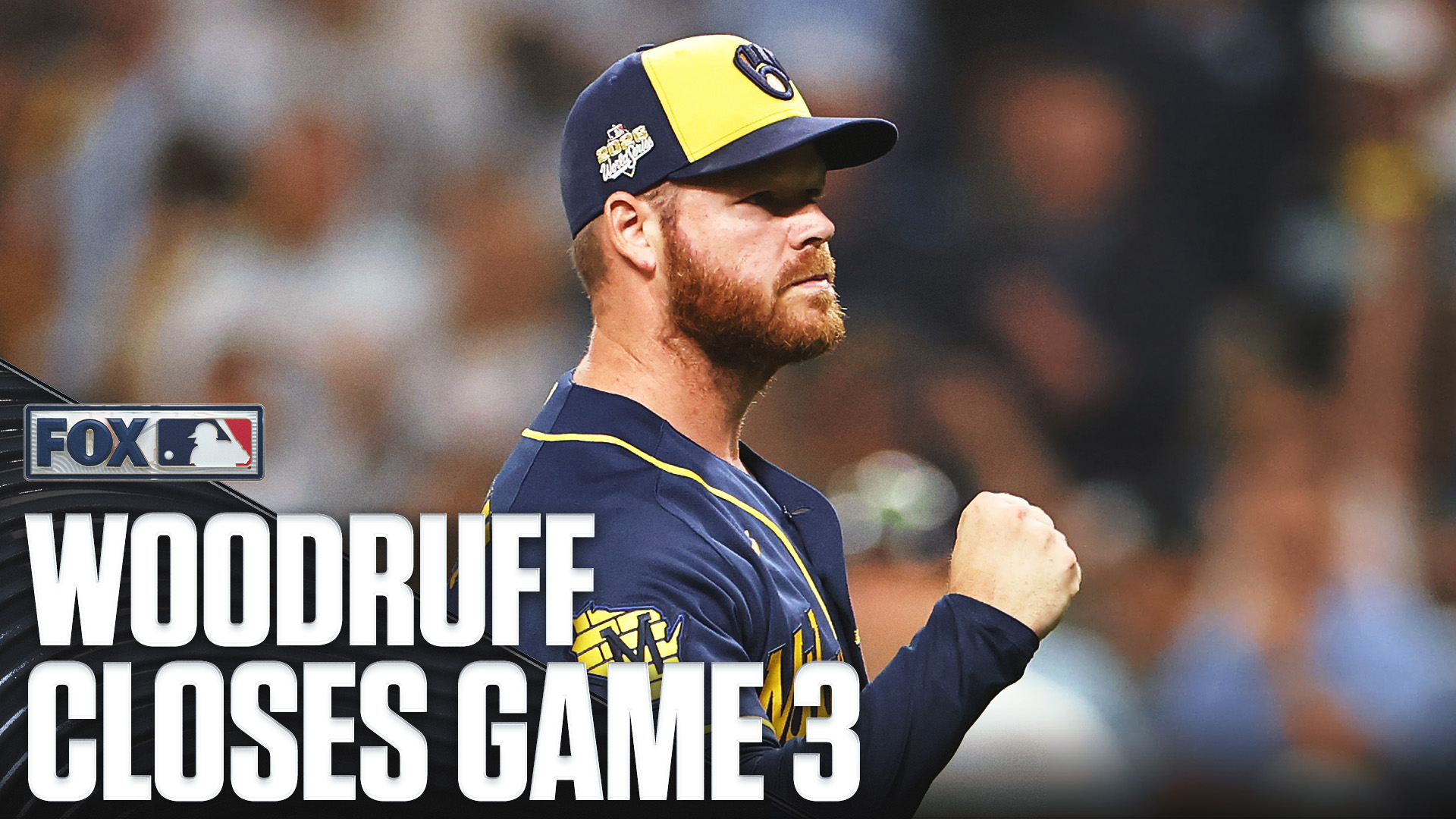
It began with an explosion of offense, a wild, breathless fifth inning in which the Milwaukee Brewers sent eight runs across the plate and seemed to turn the World Series into a coronation. By any reasonable measure, that was the moment the game was decided, the moment Tampa Bay’s hopes were buried and the Brewers moved to within one victory of a championship. But baseball is rarely just about scores and statistics. It is about stories, about the quiet moments that carry an emotional weight far beyond the numbers. And while the eight-run fifth inning will appear in every highlight reel, the image that will linger longest from Game 3 is Brandon Woodruff walking in from the bullpen in the bottom of the ninth inning. The 33-year-old pitcher, making his first appearance since July 4, had been through surgeries, months of shoulder inflammation, doubt and rehab. He had spent his entire decade-long career with the Brewers, and now, on the same field where he first threw a major league pitch, he was one strike away from something he had spent a lifetime chasing. The fireworks of the fifth inning were spectacular, but Woodruff’s ninth-inning entrance was poetry.
The setting could not have been more fitting. Tropicana Field, with its strange rings and static air, is not the most beloved stadium in baseball, but for Woodruff it has always been sacred ground. It was there, in 2017, that he made his Major League debut, a raw and hopeful right-hander from Mississippi who had worked his way through the Brewers system with a fastball that could overwhelm and a quiet determination that never wavered. Eight years later, in the same building, he walked onto the mound for the first World Series appearance of his career. The symmetry was almost too perfect to believe. The same stadium that once represented a beginning now hosted the latest and most meaningful chapter of his career. It was as if the baseball gods had conspired to give him a full-circle moment, a chance to stand where he started and appreciate how far he had come. In the dugout, teammates watched with a mix of awe and pride. They knew what he had endured to reach this point. They knew the months of skepticism, the whispers about whether he would ever be the same, the quiet mornings of rehab while the team played on without him. And now, there he was, back on the biggest stage, not as a spectator but as the man trusted to close out a World Series game.
The road to that moment had been brutal. On July 4, Woodruff last pitched, and then his shoulder flared up. What followed was a stretch of uncertainty that tested every ounce of his resolve. He missed months, unable to throw, unable to help his team, forced to watch from the sidelines as the Brewers fought through the summer and into October. The injury was not new. In the fall of 2023, he had undergone season-ending surgery, a procedure that forced him to miss part of the 2024 season and left everyone wondering whether he would ever regain his form. The recovery was slow, patient and often lonely. Then came 2025, and every throw was watched, every outing analyzed, every hint of soreness magnified. He made only 12 regular-season starts, a number that reflected the careful management of his workload rather than any lack of desire. There were days when his shoulder felt strong and days when it reminded him of all he had lost. At times, it seemed unlikely he would ever return to the mound at all. But Woodruff refused to accept the end. He opted against another season-ending surgery, betting on his body, his work ethic and his stubborn belief that he still had more to give. That bet led him to October, but even then, his place on the roster was far from guaranteed.
When manager Pat Murphy told Woodruff he had earned a spot on the World Series roster, the relief was immediate but fleeting. Because soon the questions came, not from the manager or the front office, but from the nagging voice of doubt that follows every athlete who has been through what he has been through. How would he be used? Would he start Game 3? Would his shoulder hold up under the pressure of October? Could he really be trusted in a game this important? These questions hung in the air throughout the first two games of the series. Woodruff prepared quietly, staying ready for any role, refusing to let uncertainty crack his focus. He understood that the organization had invested hope in him, that Pat Murphy had stuck his neck out for him, and that the best way to repay that faith was not with words but with action. And so when the call came in the bottom of the ninth inning, with the Brewers holding a lead and the game within reach, Woodruff jogged in from the bullpen with the same calm expression he had worn all season. He was not thinking about the roster battles or the rehab or the years of doubt. He was thinking about the next pitch, the next out, the moment that had been given to him.
The ninth inning was not flawless. Baseball rarely offers perfect endings. Woodruff allowed a run, gave up two hits and managed just one strikeout. But perfection was never the point. The point was presence. It was the simple, powerful fact that he was out there at all, throwing pitches in a World Series, trusting his shoulder and his mechanics and his heart. Every pitch carried the weight of everything he had overcome. The fastball, once a weapon that could intimidate the best hitters in the world, was still alive. The slider, the curve, the changeup, all of them spoke to countless hours of rehabilitation and repetition. When the final out was made, when the Tampa Bay threat was extinguished and the Brewers had improved to 3-0 in the series, Woodruff allowed himself a moment to feel it. The emotion was not loud. He did not pump his fist or scream into his glove. He simply walked toward the infield, the game won, the mission one step closer to completion. In that quiet celebration, everyone who had followed his journey understood what this moment meant. This was not just a relief appearance. It was redemption, resilience and a reminder that the human spirit can carry a person through nearly anything.
Now, with the Brewers one win away from a World Series title, Woodruff stands on the edge of a dream that has defined his entire career. Ten years he has worn the same uniform, given everything to one organization, endured injuries and surgeries and setbacks that would have ended lesser careers. He could have gone elsewhere. He could have given up. But he stayed, and he kept believing, even when it seemed the world had stopped believing in him. This World Series run is his reward, not just for the arm that still delivers 95 miles per hour, but for the perseverance that kept him going through the darkest moments. If the Brewers win one more game, Brandon Woodruff will be a World Series champion with the only team he has ever known. And when he stands on that mound, perhaps in the final inning of the final game, the eighty-run fifth inning of Game 3 will be just a footnote. The real story will be the 33-year-old pitcher who refused to let his body write his ending, who returned to the same stadium where he began and closed out a game with the weight of a decade on his shoulders. That is not just baseball. That is the reason we love the game.