


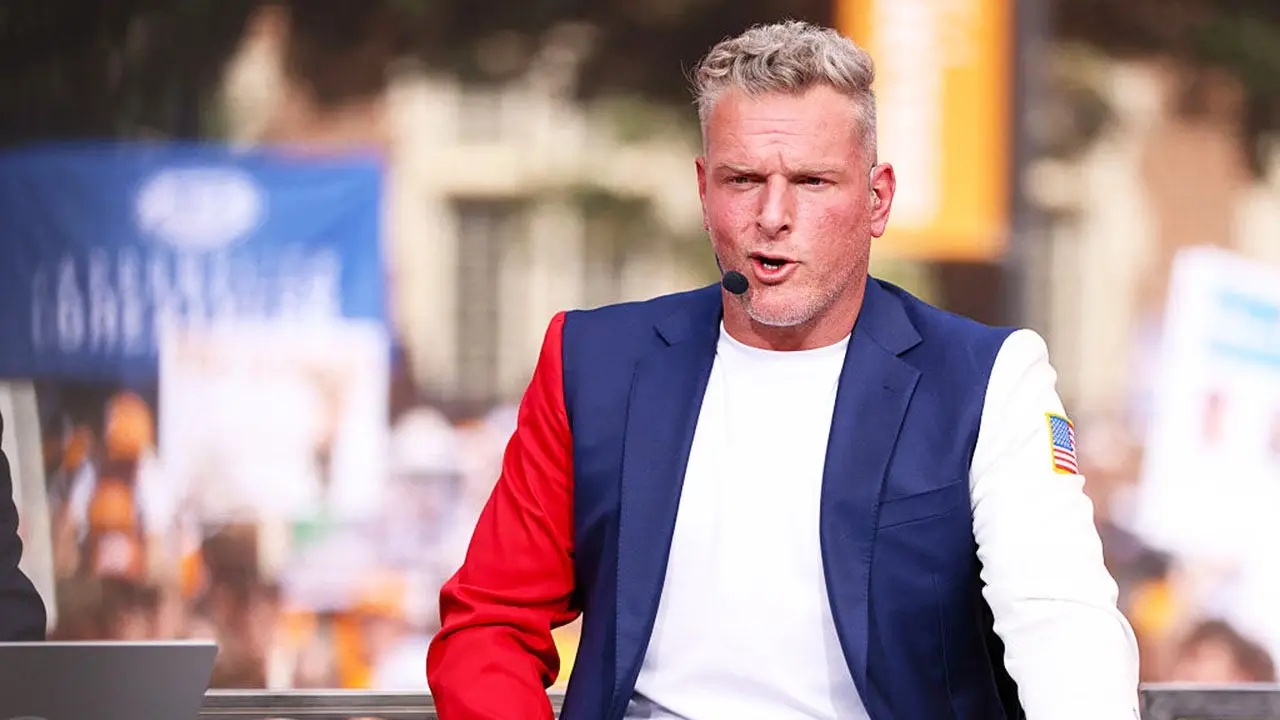
A Saturday morning that should have been pure pageantry for ESPN’s Pat McAfee turned into an uncomfortable reckoning before he ever stepped in front of the cameras. McAfee had traveled to Salt Lake City with the “College GameDay” crew, ready to bring his signature blend of loud enthusiasm, college football reverence, and chaotic good humor to the University of Utah. But as he prepared to walk into a sea of fans and help broadcast what he later called an “infomercial” for the university, he glanced at the school’s official Instagram account and felt his mood curdle. The university had posted a video asking students to do impressions of him, and the comments beneath it were apparently laced with words that stung: “corny,” “creepy,” and worse. The video was eventually removed from the university’s social media pages, but not before McAfee had seen it, and not before it lodged itself in his mind. On his show the following Monday, he explained that he could shrug off student comments posted from personal accounts—that came with the territory of being a public, sometimes polarizing personality. What he could not shake was the fact that an official university account, the very institution that had invited him to campus, had chosen to amplify those voices moments before he was supposed to stand in front of thousands of people and celebrate the school. It felt less like playful banter and more like being handed a plate of cold discomfort and told to smile for the cameras.
McAfee’s reaction went beyond bruised ego. Beneath the bravado and the booming voice, there was a raw, vulnerable admission that the post had made him feel “very, very uncomfortable” and had “set him off a little bit.” He then made a striking, sobering reference that raised the stakes far beyond social media snark. McAfee asked whether anything really scary had happened at a college gathering in the state of Utah recently, and he alluded to the September 2025 shooting of Charlie Kirk at Utah Valley University, roughly 40 miles south of Salt Lake City. Kirk, a conservative activist, had been killed during an event on that campus, and McAfee’s mention of it was not random or rhetorical. He wanted to make a point: in an era when political and cultural tensions can spill into actual violence, why would a university publish content that encourages people to express contempt for a visiting public figure right before he walks unprotected into a crowd? He wondered aloud whether the university should be “amplifying reasons for why people hate my guts.” For a man who makes his living on adrenaline and oversharing, this was a surprisingly candid glimpse into the inner reality of being a celebrity in a divided country. The comments might have been mild, but the context was heavy. McAfee was not just asking for polite treatment; he was asking to feel safe.
The University of Utah responded quickly and, by all appearances, humbly. In a statement posted to its official Instagram account, the school said its intention had been to create “lighthearted engagement” around McAfee’s return to campus, but it acknowledged that the execution had “missed the mark.” The university took full accountability for the social media post, noting that staff members are responsible for reviewing and publishing content on official accounts. Officials said they had reached out to McAfee directly to express appreciation and regret, and they were careful to insist that any perception that Pat was unsafe or unwelcome on campus was entirely untrue. The statement went further: “Nothing could be further from the truth.” It reminded the public that “College GameDay” had visited the university seven times and that the relationship between the crew and the school had generally been positive. It was, by any standard, a model apology in terms of speed, tone, and accountability. But apologies, no matter how well crafted, cannot erase a feeling in real time. McAfee acknowledged that some people would dismiss the students’ comments as mild or harmless, but he kept returning to the same central point: this was not a random blog or a rogue fan page. It was the official voice of the university itself. In his eyes, that made all the difference. An institutional account carries weight, and when it posts something that makes a guest feel unwelcome, the guest is right to wonder whether the institution shares that sentiment.
The Instagram post was not the only thing that soured McAfee’s visit. He also found himself irritated by a moment during his signature “Kicking Is Easy” segment, in which a student gets a chance to kick a field goal for a prize. McAfee’s show had increased the potential prize to $3 million for the previous week’s Notre Dame–BYU game, so when this week’s contestant questioned why the prize was “only $1 million,” McAfee reacted with theatrical exasperation. “It’s my money! Only $1 million,” he said, before joking, “I hate this place. I hate this place.” It was a moment designed for comedy, but it revealed a deeper thread of irritation running through the day. McAfee had come to Utah expecting to be treated as a guest, and instead he encountered a series of small, cumulative signals—the Instagram video, the dismissive comment about the prize—that made him feel less like an honored visitor and more like a target of casual contempt. He later said he hoped he never had to return to the university and joked that he might come down with COVID if “College GameDay” ever went back. The quips were funny, but they carried a sharp edge. For a man whose entire persona revolves around being larger-than-life on television, he seemed to be asking for something simple: a day when the host is treated with basic courtesy and the institution doesn’t feed him to the lions before the opening kickoff.
Yet McAfee, true to his nature, did not let the frustration define the entire weekend. He was careful to separate the administration’s social media blunder from the people who actually made the day feel electric. He praised Utah’s football team, called the student section “incredible,” and thanked the fans who showed up to the broadcast. The game itself went on as scheduled, with Utah defeating Houston 21-13, and “College GameDay” delivered its usual spectacle of signs, chants, and college-town passion. McAfee’s ability to hold two feelings at once—genuine discomfort with the university’s post and genuine appreciation for the fans and players—made his reaction feel human rather than petulant. He was not demanding that everyone love him. He was asking for a baseline of respect and safety from an institution that had invited him into its house. There is a meaningful difference between playful, student-led teasing and an official account publishing content that can be interpreted as hostile. One is part of the fun; the other is a failure of hospitality. By the end of the day, McAfee had made that distinction clear, and the university’s apology suggested it understood the lesson, even if the timing had been far from ideal.
In the end, this episode was never really about one ESPN star feeling a little weird about an Instagram post. It was about the larger atmosphere surrounding campus events in a polarized and volatile era. McAfee’s mention of Charlie Kirk was not a cheap political point; it was a reminder that the line between online mockery and real-world violence has grown dangerously thin. Public figures who walk into college stadiums and event centers are not protected by their fame alone, and universities have a responsibility to think carefully about the signals they send when they publish content about their guests. McAfee’s reaction was a layered mix of genuine unease, performative outrage, and professional exhaustion. He was a guy in a high-energy job who wanted to do his show, cheer for a football team, and go home without feeling like the official university account had thrown him to the wolves. The video was deleted, the apology was issued, and life moved on. But the feeling of standing in front of a crowd while wondering whether the institution had just validated people who dislike you—that is not something a press release can erase. It lingers. And it should remind colleges everywhere that trust is the foundation of hospitality. When a school invites a public figure to its campus, the least it can do is make sure the welcome mat is not hiding a trap.