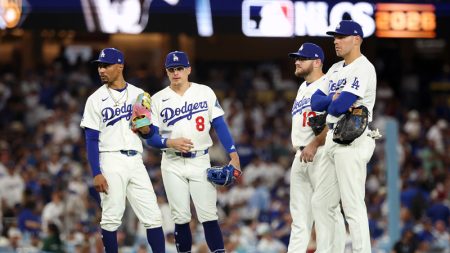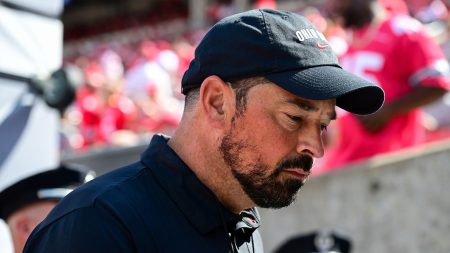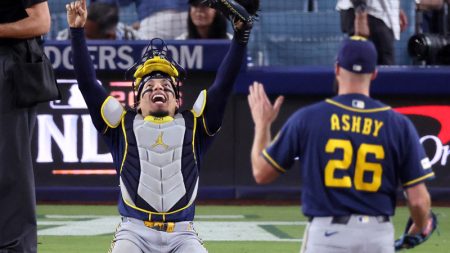



A year ago, the Los Angeles Dodgers were kings of the National League Championship Series, sweeping the Milwaukee Brewers aside with the kind of cold, efficient dominance that makes a team look destined for greatness. Now, as the baseball world watches in disbelief, the script has flipped so completely that even the most seasoned broadcasters are struggling to process what’s happening. The Brewers didn’t just win Game 3 on Wednesday at Dodger Stadium — they manhandled the Dodgers front of their own fans, taking a 6-2 victory and seizing a 3-0 series lead that has put them one win away from returning the favor in the most poetic way possible. The FOX Sports postgame crew was practically speechless. Alex Rodriguez, whose baseball career has seen just about everything, admitted that watching the Brewers dismantle the Dodgers was surreal — like witnessing Mike Tyson get knocked out for the first time. “You can’t believe what you’re seeing,” he said, describing how the crew sat in the green room with their mouths open, awestruck by the sheer dominance unfolding before them. It’s the kind of moment that makes even the most accomplished athletes feel like fans again, because sports rarely hand you the same story twice with a different ending. And yet here it is: a rematch that has become a reckoning, with Milwaukee playing the role of the ruthless opponent they were last year, only this time they’re the ones delivering the knockout punches.
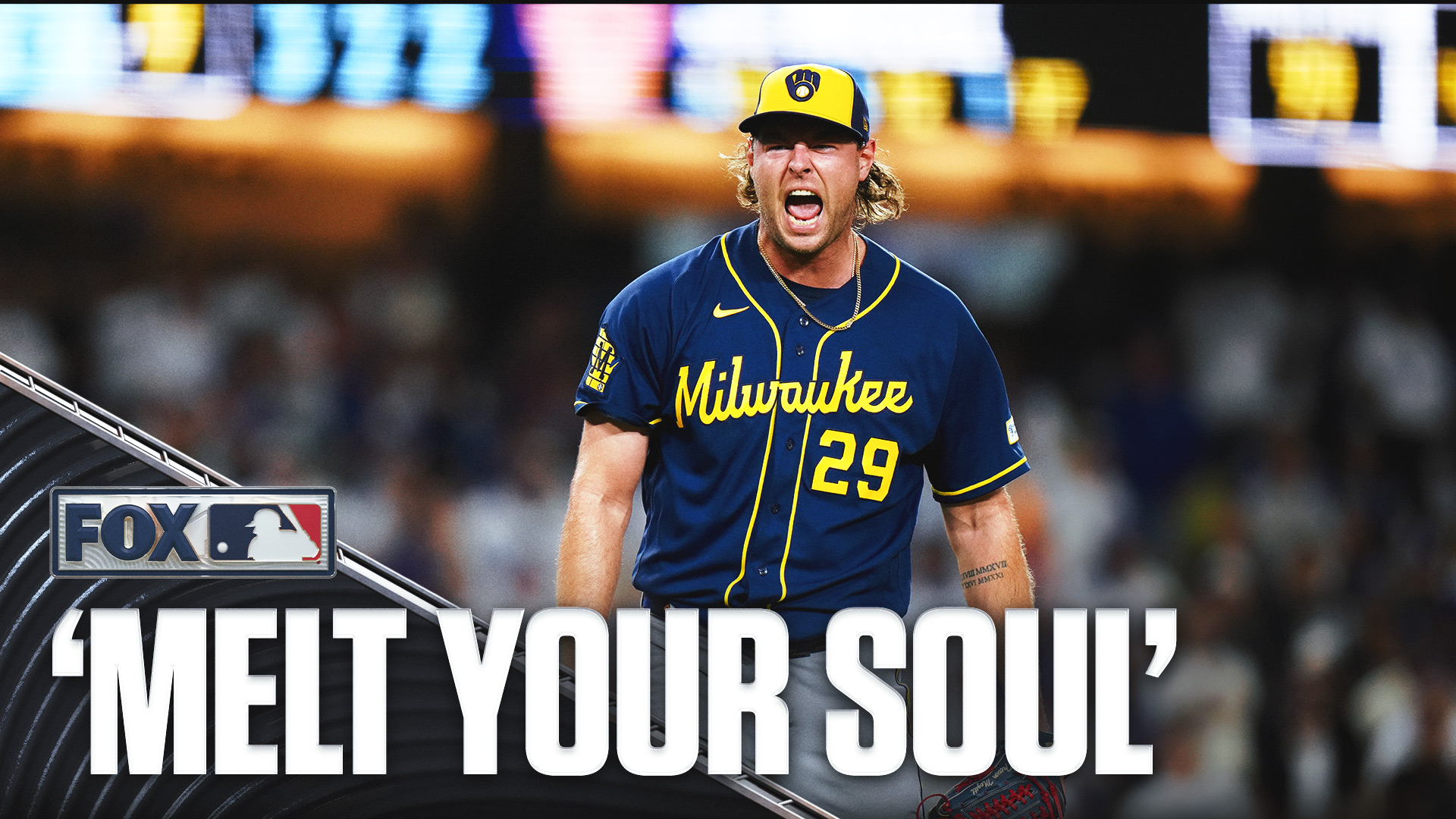
The latest blow came from a Brewers left-hander named Robert Gasser, who turned Dodger Stadium into his personal proving ground. Gasser held the Dodgers scoreless for five full innings, scattering three hits and a walk while striking out three batters, all while looking like he was out for a casual summer stroll rather than pitching in the biggest games of his life. David Ortiz, the legendary slugger known for his postseason poise, couldn’t stop marveling at the way Gasser went about his work. “Robert Gasser looked like he didn’t drop a sweat while he was out there facing these Dodgers,” Ortiz said. “He was locating his pitches in an incredible type of way, and he just kept coming at them, kept keeping that offense down. He did an incredible job.” And the Brewers didn’t stop there. DL Hall came on and threw 2⅓ scoreless innings, setting the table for Trevor Megill, who closed things out with the final four outs and picked up his fourth save of the postseason in the process. The pitching staff, as a unit, didn’t just hold the line — they suffocated the Dodgers, turning a high-powered offense into a lineup of frustrated hitters swinging at ghosts. It wasn’t just about physical talent; it was about composure, about the ability to stay unbothered when the moment is enormous and the crowd is hostile. The Brewers, according to Ortiz, have spent the entire year building this kind of performance. “This is the result of what they did all year long,” he said. “They know how to shut down an offense.” And on Wednesday night, they did exactly that, pitch by pitch, inning after inning, leaving Dodger fans with nothing to cheer and the Dodgers themselves with nothing to say.
But the true signature of this Milwaukee team might be found not in the pitchers who silenced the Dodgers, but in the at-bats that wore them down at the plate. Jake Bauers has developed a habit of turning frustration into devastation, and he’s done it twice now against the Dodgers’ best arms. In Game 2, he worked a 12-pitch, bases-loaded walk against Yoshinobu Yamamoto, grinding through a plate appearance that felt more like a heavyweight bout than an at-bat. Then, in the seventh inning of Game 3, with the Brewers trailing 2-1 and the momentum wobbling, Bauers took his time against Blake Snell, fouling off pitch after pitch, refusing to chase bad balls, before finding the one he wanted. He hit the 11th pitch of the at-bat for a go-ahead, two-run homer, and in that instant, he didn’t just change the scoreboard — he changed the entire emotional energy of the game. It was the kind of swing that breaks a team’s spirit, and the Dodgers looked like they felt it. Ortiz could barely contain his awe. “You don’t get to watch many games of the Brewers on TV, but once you are following their steps during this playoff, you get to know how good they are,” he said. “They are deep in every category of the game: pitching, defense, speed. They battle in the at-bat.” Then he made a statement that should make any baseball fan sit up and take notice: “Those two at-bats against Yamamoto, and tonight against Snell, those are the most impressive two at-bats that I have seen probably in my whole life.” For a man who played in over 20 postseason series and faced some of the greatest pitchers in baseball history, that’s not hyperbole — it’s a warning to anyone who thinks Milwaukee is just getting lucky.
What makes this all the more remarkable is not just that the Brewers are dominating, but who they’re dominating against. Derek Jeter, another man who knows a thing or two about pressure and expectations, pointed out that Milwaukee has been doing this all year. The impressive part, he said, is the opponent. “They’ve been doing it all year,” Jeter said. “I think the impressive thing is, as was mentioned, they’re doing it against the Dodgers, who swept them last year. It tells a lot about the mentality they have, the resilience they have to come back and face the two-time defending world champion, disregard what happened just 12 months ago, and now you’re up 3-0.” Think about what that means. The Dodgers have been the standard for modern baseball dominance, a team that doesn’t just win but does so with a kind of inevitable certainty that makes opponents feel like they’re playing a losing game before it even begins. Last year, they swept the Brewers out of the NLCS, humiliating them on the way to another championship. Most teams would have rebuilt, maybe regressed, or at least carried the psychological scars of that defeat into the next season. The Brewers instead chose to use that pain as fuel. They rebuilt their approach, sharpened their details, and learned how to beat the best at their own game. Their defense has become impenetrable, their speed has become a weapon, and their patience at the plate has transformed into a kind of art form. They’ve proven that talent can be taught, but mentality has to be cultivated. And right now, Milwaukee’s mentality is exactly what you’d expect from a team that isn’t just trying to win a series — they’re trying to erase a memory, to rewrite history, and to show the world that last year’s sweep was an anomaly, not an identity.
Still, even as the majority of the baseball world begins to write the Dodgers’ obituary, Jeter was quick to caution that the series isn’t over. Nobody in that studio knows better than the FOX Sports crew what can happen when a team is backed against a wall. In 2004, David Ortiz’s Boston Red Sox became the only team in MLB history to come back from a 3-0 series deficit, storming back to defeat the New York Yankees in the American League Championship Series — and on the other side of that heartbreak were Derek Jeter and Alex Rodriguez. The memory of that historic collapse still lingers, not as a distant fact but as a lived trauma, a reminder that no lead is safe and no comeback is impossible until the final out is recorded. Jeter’s voice carried the caution of someone who had been on the wrong side of history, someone who knew exactly how quickly celebrations can turn to commiserations and how a team with nothing to lose can become the most dangerous team in the world. The Dodgers will attempt to start their own improbable comeback in Game 4 on Thursday at Dodger Stadium, and if any team has the talent to do it, they do. The two-time defending world champions have championship DNA, a roster full of stars, and the home crowd behind them. But they also have a Milwaukee team in front of them that has done everything right, that has done more than just win three games — they’ve broken the Dodgers’ spirit one at-bat at a time. The path to a comeback exists, but it requires more than talent; it requires the kind of mental fortitude that the Brewers have been showing all series long. The question now is whether the Dodgers can find that fortitude within themselves before it’s too late.
As Game 4 approaches, the storyline has become irresistible. The Brewers stand on the doorstep of redemption, one win away from avenging last year’s sweep with a sweep of their own. The Dodgers stand on the edge of an abyss, a team that has dominated baseball for years now staring at the possibility of being on the wrong end of history. The FOX Sports crew, with all their combined championship experience, could hardly believe what they were watching, and yet there it was: a masterclass in pitching, a lesson in patience, and a reminder that sports are never scripted. “It’s hard to watch,” Rodriguez said, but even he couldn’t look away. What makes this series so compelling isn’t just the scores or the statistics — it’s the human element, the fear, the pride, the fragile line between confidence and desperation. The Brewers have played like a team possessed, not by anger, but by the quiet certainty of a group that knows exactly what they are and what they came to do. The Dodgers have played like a team that doesn’t quite recognize the opponent in the mirror, a team whose identity has been challenged in a way it never has been before. Thursday’s game won’t just decide whether this series continues; it will reveal the character of both teams. The Brewers, for their part, seem to be enjoying every second of it, soaking in the Dodger Stadium silence like a reward for all the hard work. The Dodgers, meanwhile, have to find a way to stop the bleeding, to rediscover the brilliance that made them champions. One game. One chance. And as the baseball world holds its breath, the only thing we know for sure is that no one in that FOX studio — not Rodriguez, not Ortiz, not Jeter — is going to look away. Because this is exactly the kind of story that reminds us why we love sports: it can humble the greatest, elevate the underdog, and leave all of us, mouth open, watching in awe at the impossible unfolding right before our eyes.