

Paragraph 1
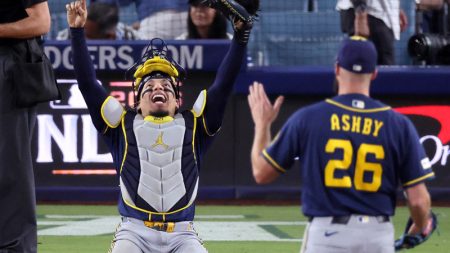
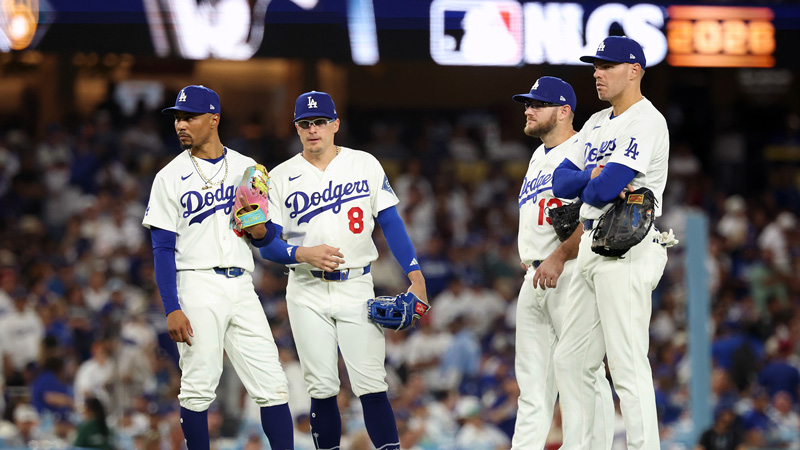
The Los Angeles Dodgers just experienced the cruelest kind of heartbreak: getting so close to immortality, only to watch it slip away in a brisk October sweep. After winning back-to-back World Series titles in 2024 and 2025, they entered the 2026 playoffs as the heavy favorites to become the first team in more than two decades to three-peat. But the Milwaukee Brewers, hungry and fearless, dismantled them in the National League Championship Series, leaving the Dodgers eight wins short of history. And just like that, the dream of joining the pantheon of baseball’s greatest dynasties vanished—at least for now. The last team to actually pull off a three-peat was the New York Yankees, who won three straight from 1998 to 2000. Since then, ten teams have won back-to-back championships, only to fall short in their quest for a third. The question that now haunts Dodgers fans is one that has haunted fans of every one of those ten teams: will they bounce back? Or will the weight of glory, the grind of the season, and the shrinking window of a championship core prove too heavy? To answer that, we have to look at the stories of those ten teams—some who found redemption, and many who never quite recovered.
Paragraph 2
Let’s start at the beginning of baseball’s modern dynasty age, with the early 1900s teams who tasted back-to-back glory and then had to face the unforgiving realities of the sport. The Chicago Cubs of 1907 and 1908 were powered by a rotation of Hall of Famers and near-legends—Mordecai Brown, Ed Reulbach, Jack Pfiester—and they throttled the Detroit Tigers in five games in both Fall Classics. But after missing the playoffs in 1909, they reached the World Series again in 1910, only to lose to the Philadelphia Athletics in five games. That would be their last World Series appearance for over half a century, and their last championship until the legendary curse-breaking 2016 season. The Cubs didn’t bounce back—they spiraled into a century of futility. Then there were the Athletics of 1910-11, a team that came of age with stars like Home Run Baker and Eddie Collins, winning 102 and 101 games in those two seasons, and beating the Cubs and Giants to claim back-to-back titles. After a hiccup in 1912, they regrouped and won again in 1913, proving that a short stumble doesn’t mean the journey is over. The Boston Red Sox of 1915-16, with young Babe Ruth still a dominant pitcher, beat the Phillies and Robins in consecutive years. They missed the playoffs in 1917, but then stormed back to take the 1918 World Series over the Cubs. Yes, the Red Sox bounced back immediately—though that 1918 title would be their last for 86 years, a twist of fate no one could have predicted. These early stories teach us that the immediate aftermath can be wildly unpredictable, and that “bouncing back” might look different than you expect—sometimes it’s a swift return, sometimes it’s a ghost that haunts for generations.
Paragraph 3
The 1920s brought us two of baseball’s most iconic franchises, and their fates after two straight titles couldn’t be more different. The New York Giants of 1921-22, led by Frankie Frisch, George Kelly, and a lineup full of grit, defeated the Yankees in a best-of-nine series and a best-of-five series in consecutive years. They were the kings of New York, but the Yankees were rising fast. The Giants returned to the World Series in 1923 and 1924 but lost both—first to the Yankees, then to the Washington Senators. After that, they faded from contention for eight long years, not returning to the Fall Classic until 1933, when they finally won again. That’s a long wait for a team that just two years earlier was on top of the world. Meanwhile, those very Yankees, after losing to the Cardinals in 1926, erupted into the Murderers’ Row era. They swept the 1927 World Series over the Pirates and then swept the 1928 World Series over the Cardinals, with Babe Ruth and Lou Gehrig at the height of their powers. Then the Yankees missed the playoffs from 1929 to 1931—a temporary blip that must have felt like an eternity to their fans. But in 1932, they roared back, winning 107 games and sweeping the Cubs in the World Series, with Ruth’s famous “called shot” along the way. The Yankees didn’t just bounce back; they redefined dominance, starting a run that would see them win four straight titles from 1936 to 1939. That’s the blueprint for a true dynasty: the ability to absorb a few bad years and then come back stronger, fueled by the hunger of remembering what it feels like to lose.
Paragraph 4
The 1929-30 Philadelphia Athletics offer a cautionary tale about how close you can be to a three-peat and still end up empty-handed. With Al Simmons, Jimmie Foxx, and Lefty Grove, they were a juggernaut, winning the World Series in 1929 over the Cubs and in 1930 over the Cardinals. In 1931, they had perhaps their best regular season ever, winning a still-franchise-record 107 games. But baseball is a game of cruel ironies: they ran into a Cardinals team that was just as hot, and Pepper Martin hit .500 in that World Series, single-handedly breaking the A’s hearts. The A’s would not see the playoffs again until 1971—a forty-year drought that shows how a single loss can actually mark the end of an era. Then we jump to the early 1960s Yankees, who were still riding the legacy of Mantle and Maris. After losing to the Pirates in the legendary 1960 World Series on Bill Mazeroski’s walk-off, the Yankees won back-to-back titles in 1961 and 1962, beating the Reds and Giants in tight series. But a new era was dawning: the Dodgers swept them in 1963, holding them to just four runs with Sandy Koufax and company. In 1964, they lost a seven-game classic to the Cardinals. That was their last World Series appearance until 1976, and a full 14-year playoff drought. The “spectacular” 1961 team, the one that everyone remembers, turned out to be the last gasp of a generation. These stories show that the fall after a two-peat can be sudden and brutal, and that the pain of losing a third championship can be the first crack in a dynasty’s foundation.
Paragraph 5
Moving into the modern era, we see the Cincinnati Reds of 1975-76, the iconic Big Red Machine. After years of playoff heartbreak, they finally broke through in 1975, edging the Red Sox in a seven-game classic, with Pete Rose earning MVP honors. Then they swept the Yankees in 1976, with Johnny Bench going 8 for 15 with two homers. But after two years of utter dominance, they missed the playoffs in both 1977 and 1978, then got swept by the Pirates in the 1979 NLCS. It would take them until 1990 to even return to the World Series, and that was a completely different team. The Reds never truly recovered the magic of that mid-70s squad. Then we have the New York Yankees of 1977-78, who were the special brand of chaotic, talented, and unyielding. After being swept by the Reds in 1976, they beat the Dodgers in six games in both 1977 and 1978, with Reggie Jackson earning the nickname Mr. October for his heroics. But the Yankees missed the playoffs in 1979, got swept by the Royals in the 1980 ALCS, then lost to the Dodgers in the 1981 World Series. That would be their last playoff appearance for many years—they didn’t return until 1995. And then there are the Toronto Blue Jays of 1992-93, the last back-to-back champion before the Yankees did it again. The Blue Jays had a lineup that could scare anyone, with Alomar, Carter, and Molitor, and they beat the Braves and Phillies in consecutive years. Then came the strike in 1994, which ended their season at a mediocre 55-60. The core scattered, and the team didn’t see the playoffs again until 2015—a 21-year drought. These modern cases show that with two titles, the margin for error becomes razor-thin. The schedule gets tougher, other teams build specifically to beat you, and injuries and age catch up. The euphoria of a repeat can turn into the anxiety of a three-peat, and that anxiety can eat away at a team’s identity.
Paragraph 6
So what’s the final verdict? Out of the last ten teams that repeated as champions and failed to three-peat, only three truly bounced back in a meaningful way: the 1910-11 Athletics (who won again in 1913), the 1915-16 Red Sox (who won in 1918), and the 1927-28 Yankees (who won again in 1932). The rest faced droughts, heartbreak, and in some cases, decades of irrelevance. And that’s the real human lesson here: the pursuit of a third consecutive championship is not just about talent—it’s about resilience, timing, luck, and the ability to stay hungry when you’ve already tasted everything. The Dodgers have a roster full of stars, a front office that spends without fear, and a fan base that expects nothing less than perfection. But history whispers that the odds are stacked against them. The very fact that only one team since 2000 has managed the three-peat shows how brutally hard it is. It’s not just about winning; it’s about not losing the fire that got you there. And sometimes, that fire is extinguished by the sheer exhaustion of the climb. For the Dodgers, the 2027 season will be a test not just of their arms and bats, but of their collective heart. They can look to Babe Ruth’s Yankees, who stumbled and then came back stronger, or they can look to the Cubs and Blue Jays, who stumbled and never got up. The answer will not be found in the numbers, but in the grit of a team that has to decide whether reaching the top twice was enough, or if they still have the courage to chase the mountain again. In the end, baseball—like life—is about what you do after your dreams are broken. The Dodgers have a choice. History is watching.