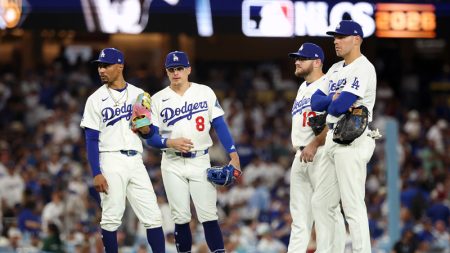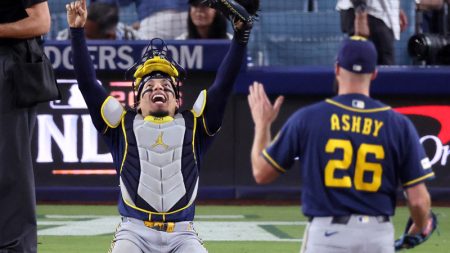




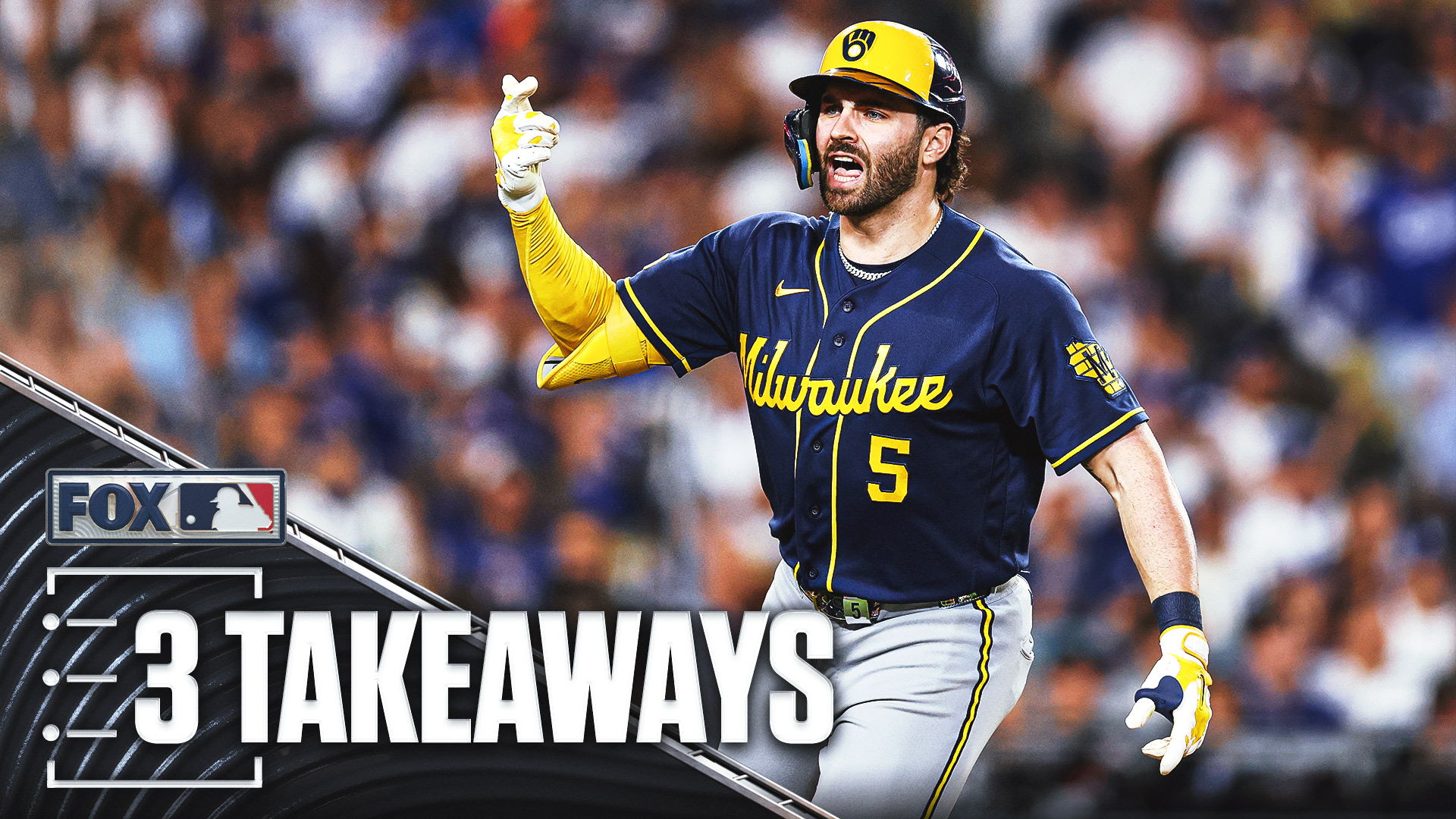
At Dodger Stadium, the air felt different from the start—charged with tension, then drained of belief. The Milwaukee Brewers came into Game 3 of the NLCS with a 2-0 lead and left with a 3-0 stranglehold, one victory from their first World Series appearance since 1982. Their 6-2 win over Los Angeles was not a fluke or a fortunate bounce. It was a comprehensive, cold-blooded statement from a team that had spent a full season building toward this exact moment. The defending champion Dodgers, the modern juggernaut chasing a three-peat, suddenly looked slow, tight, and strangely ordinary. The Brewers, meanwhile, were everything their opponent was not: loose, confident, and relentlessly aggressive. They got timely hits against one of baseball’s best pitchers. They hit home runs from unexpected places. They answered every Dodgers rally with immediate, devastating counterpunches. Last year, these same teams met in the NLCS, and Los Angeles walked away with a series victory. But this is a different Milwaukee team. It is older, more polished, and fueled by the memory of that failure. As the Dodger Stadium crowd shuffled toward the exits in stunned silence, the story was already taking shape: the Evil Empire was on the brink, and the small-market underdogs from Milwaukee were ready to finish the job.
Blake Snell entered Game 3 as one of the most unhittable pitchers on earth. In nine regular-season starts after coming off the injured list, he had not allowed a single home run. He had a 3.23 ERA in 19 career playoff games, and he had a reputation for turning October into his own personal torture chamber. None of that mattered to Jackson Chourio. The first pitch Snell threw was a 97.6 mph fastball, straight down the middle, as if he were testing the young left fielder. Chourio answered with a swing that sent the ball 106.1 mph off his bat and into the right-field seats, giving the Brewers a 1-0 lead before most fans had even settled into their seats. It was an ambush, and it was not an accident. In last year’s NLCS, against Yoshinobu Yamamoto, Chourio did the same thing—first-pitch swing, deep right-field home run. He has a gift for making the biggest stage feel like his personal playground. The homer also gave him 18 career postseason RBIs before turning 23, the most in baseball history at that age. Andruw Jones had set the mark decades ago with 17 RBIs in 45 playoff games. Chourio needed only 19. The blast rattled Snell and completely changed the game’s opening act. Although Snell would eventually settle in and retire 14 straight batters, the damage was deeper than the scoreboard. The Brewers had proven they could hit anyone, anytime, anywhere, and the Dodgers knew it.
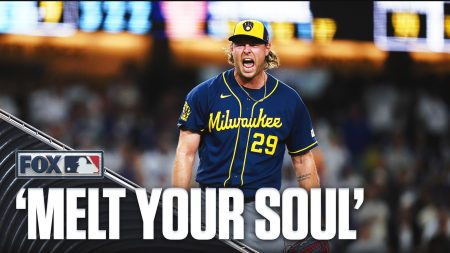
Snell’s brilliance in the middle innings gave the Dodgers hope. They scratched out a 2-1 lead, and Dodger Stadium began to breathe again. But in the seventh inning, the game turned into a nightmare for Los Angeles, and it started with Jake Bauers. Two days earlier, Bauers had frustrated Yamamoto in an epic 12-pitch at-bat that ended in a walk. Against Snell, he was even more annoying. Pitch after pitch, Bauers fouled them off, watching fastballs, sliders, curveballs and changeups, refusing to chase anything close. The at-bat lasted 11 pitches, and by the end, Snell looked exhausted. The final pitch was a meatball—a fastball over the heart of the plate, nearly identical to the one Chourio had crushed in the first inning. Bauers did not miss. He launched it into the right-field seats for a two-run home run, flipping the score to 3-2 and sending the Brewers’ dugout onto the field in celebration. It was his first homer of the postseason, and it could not have been better timed. Then Garrett Mitchell stepped in, and Snell had no time to recover. On what felt like the cruelest pitch of the night, Mitchell hit a solo shot to right field, making it back-to-back home runs and extending the lead to 4-2. Snell, who had not allowed a single home run all season, had now given up three in one night. The look on his face was one of disbelief. He had prepared, studied the Brewers, tried to steal any advantage. None of it mattered. The bottom of Milwaukee’s lineup had broken him, and with it, the Dodgers’ hold on the series.
For one brief, shining spell, the game seemed to belong to a Dodger who desperately needed it. Will Smith had been lost at the plate all October. He was 1-for-23 with eight strikeouts, and his batting order spot had fallen from third to fifth to seventh by Game 3. Brewers manager Pat Murphy, oddly enough, was the one who insisted Smith looked better than the numbers suggested, pointing to his swing and approach. In the sixth inning, Smith made Murphy look like a prophet. The Brewers bullpen had been virtually unhittable all postseason, carrying a 0.31 ERA, but Abner Uribe walked two batters, and another walk loaded the bases. With the stadium on its feet, Smith took a breath and sliced a two-run double into the gap, giving the Dodgers a 2-1 lead and sending 50,708 fans into sheer bliss. The scuffling catcher had finally delivered. The Dodgers had finally come through with runners in scoring position. For a moment, it felt like the tide was turning. But then the old failures returned. Dave Roberts emptied his bench, summoning pinch-hitter after pinch-hitter, but the Dodgers could not add on. Max Muncy struck out. Kiké Hernández struck out. Tommy Edman struck out. The lead stayed at one run, and the wasted chances hung over the stadium like a storm cloud. When the seventh inning arrived, the lead was gone, and so was the momentum. Smith’s heroics became a footnote, another what-if in a series that was slipping through Los Angeles’s fingers.
The two defining themes of the series were on full display in Game 3. First, the Dodgers’ offense had completely frozen at the worst time. They entered the night just 2-for-26 with runners in scoring position this postseason, and both of those hits had belonged to Andy Pages—who was pinch-hit for in the sixth inning with two runners on and the game still tight. It was a desperate move by Dave Roberts, and it backfired. The Dodgers kept putting runners on base, but they could not deliver the hit that would put the game away. Strikeouts, weak groundouts, pop-ups—the same failure repeated itself again and again. It was the kind of collective choke that no amount of superstar talent could fix. Second, and more importantly, the Brewers simply looked better. Their pitching was strong when it needed to be, from Robert Gasser’s five scoreless innings to a bullpen that bent but never broke. Their lineup was relentless, with contributions from the bottom of the order, the top of the order, and everywhere in between. They found power from unexpected places, they extended innings with gritty at-bats, and they never let the Dodgers feel comfortable. Murphy’s team had been building toward this all season, combining timely hitting, solid starting pitching, and an unbreakable belief in each other. The Dodgers had spent years being the team that always found a way. Now, against a Milwaukee club that looked every bit their equal, Los Angeles was the team with more questions than answers, and the clock was running out.
Now the Brewers stand one win away from history, and they insist they will not take that last step lightly. They remember last year, when the Dodgers sent them home. They remember the emptiness of coming so close and knowing it was not enough. That memory has fueled everything: the back-to-back homers, the first-pitch ambushes, the relentless pressure applied to baseball’s most expensive roster. Milwaukee is not celebrating yet. The job is not finished. But history has never been kind to teams down 3-0, and every logical sign says the Dodgers are done. Only once in baseball history has a team overcome a 3-0 deficit in a best-of-seven series, and that was more than twenty years ago. The Dodgers have the talent and the payroll to make things interesting, but they no longer have the belief. The silence in Dodger Stadium at the end of Game 3 said it all. A team that had become synonymous with October magic looked completely out of answers. The Brewers, meanwhile, have everything going for them: momentum, confidence, a dynamic young star in Chourio, a gritty veteran in Bauers, a bullpen that has been nearly untouchable, and a manager who has pushed all the right buttons. They are playing with the freedom of a team that has nothing to lose and everything to gain. One more win. That is all that stands between Milwaukee and the World Series. And after what they have done to the defending champions in four short days, there is no reason to think they will let that chance slip away.