






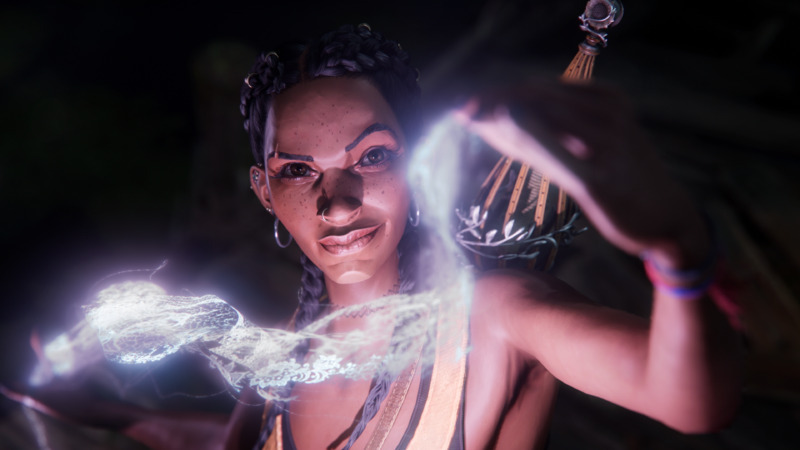
In an industry built on cold, ruthless analytics, the story of a developer suddenly reclaiming its destiny is practically a myth—especially when it falls under the shadow of a tech giant. When Microsoft chose to announce a catastrophic wave of layoffs in July, carving out 3,200 jobs from its gaming division and listing five of its studios for closures or spin-offs, Compulsion Games looked like just another statistical casualty buried in the spreadsheet of corporate survival. Based in Montreal, Compulsion had been a fiercely independent, delightful anomaly since 2009, a fertile collective of creators who told immersive stories from their own quirky perspective. When Xbox came knocking in 2018, they were folded into its massive, glistening hierarchy, gaining the financial security that allowed them to craft a single, stunning AAA jewel: the deeply evocative action-adventure South of Midnight. Yet all systems abruptly blinked red when the news of the layoffs dropped. The sudden taste of instability soaked the air as their leader, Guillaume Provost, read the dry, corporate clause that placed them on the chopping block alongside double fine, Ninja Theory, Undead Labs, and Arkane. To be shut down after sweating every pixel of your soul over a beloved game—one that had been critically praised—felt like a final, disastrous irony. It was a moment that threatened to shred the very fabric of the team’s sanity, miring them in boardroom purgatory where commissioner and fear pooled. The atmosphere resembled a storm-Buried on the line. But then, something impossible happened. Rather than watching their sweat and dreams get shoveled into a warehouse, the leadership at the done had a backstage pass to their own Cinderella story. Over the next few weeks, in the quiet behind concrete and silence, they orchestrated the unthinkable—a legal and spiritual redemption. By mid-August, the studio’s management would successfully perform the ultimate high-wire act: reclaiming the company, real soul.
The official confirmation of their future arrived on August 20th, when the studio’s chief executive, Guillaume Provost, sat down with GamesBeat’s Dean Takahashi to unwind a truth that felt less like a fiscal acquisition and more like the return of an expelled phoenix. With a hint of grounded relief in his publicly audited voice, Provost opened the digital doors of their escape, explaining that Compulsion had formally repurchased its studio, its foundational infrastructure, and, pivotal, the cherished intellectual property of South of Midnight on August 11th. The very idea of a company renegotiating a handover of that scale would be considered a misnomer, but Compulsion able to pull off that glorious break while maintaining the trembling little flame of its humanity. Stripping off the shackles, the whole team stood together because the proverbial floors didn’t come down. Later in that same conversation, Provost revealed a rare breath of light: no one that worked there lost their job during this great, disheartening handover. As they drifted into the void of self-publishing, their score was rooting for them, and overwhelmingly, the soldiers chose to stay, prioritizing loyalty to their creative tragedy over the louder fluctuations elsewhere. The game itself, still being sold on Steam and the PlayStation Network, was no longer under the studio controller but entirely their own, signaled immediately when they slapped the label of the self-published developer on its active storefronts. Continuing to dirty its hands with their own distribution meant they took on the challenge of juggling the unknown raw logistical networks, but they did so with the literal freedom of artistic survival. It was a glowing rebuttal to the existential dread that clouded the software ecosystem, proving that when you are gaze-hold the pillars of innovation, the adventures of talent have nowhere else to go but up.
While Compulsion managed to escape the hangman’s noose entirely intact, the same cannot be said for the sibling studios caught in the blast radius of that July sword. Double Fine Productions, the beloved smart uncover of San Francisco, initiated the painful but straightforward ordeal of rightful re-sorting. Their path to freedom on the other side of the situation led them to make a deep, riders cut in the numbers as well, laying off exactly 23 employees to return to a scale they define as ‘sustainable’. While this created a rippling of new scars on the fabric of the team, Double Fine’s return to the habitat of independence brought with it ahered of rights to their own playful legacy—the full rights over the iconic Psychonauts IP. This ownership, granted solely—but perhaps signaling a new era—they commanded the furry in honor. The creative wheel-housing at Double Fine came fresh off the fact that they will march straight toward the spotlight, back to the authentic crowd that built them. By Labor Day weekend, the crew will be presenttained at the hallowed grounds of the Penny Arcade Expo in Seattle, showing off a grin of pure bastion complacency. The unforgettable leader of that place always was a weird amphibious creator, and relinquishing that copyrighted tapestry to explore once more feels energetically like coming home. Meanwhile, over in Cambridge, England, Ninja Theory met a shocker that had the gaming world mouth unleashing. It was a surreal twist that saw them showcase Senua, the staggering third installment in the Hellblade saga, at a massive reveal just days before the shuttering came crashing down like a footstep on a hushed sunset. The prospects of losing that introspective, dreamy art-house studio right at the culmination—right at the moment they handed the world their most personal work—left an unshakeable pit in the stomach of every enthusiast. Yet even they, through the gusts of that unsure fate, have been reported to spin off from Microsoft, and are said to be continuing the ritual under an unnamed new guardian, keeping the distinct mysterious humidity of their protagonist alive.
Across the Atlantic then, another claimed survivor is scans the eerie wasteland of the franchise. Seattle’s Undead Labs, the chief engineers behind State of Decay, have likewise folded their staying flags into a new tent. Their initial destruction was a looming threat to the indestructible yet infectious zombie narrative that had amassed a huge following. But lucky for the many cultists stacked on varying consoles, the adrenaline wasn’t fully splattered on the floor. The studio sits now under the folded wing of anonymous new owners, dribbled with a padded, enough of the budget to turn in the long-awaited State of Decay 3 to fans, still with a hesitant yet unwavering promise of a faint release window next year. The authenticity of this bite remains, and the conducted a smiling pivot is all but certain. The final dark corner of this disgruntled drama carries the winding. Arkane Studios, though elegantly famed for the soul-shaking glory of Thief, Dishonored, and Deathloop, took the swiftest, most devastating plunge. Because their fabric was structured in two hems—Austin, Texas, and Lyon, France—the Austin limb was already scissored off in May 2024 during a wholly separate swatch of Xbox layoffs. Deep in that fracture, they saw the defining capture. In Harvey Smith, the studio head, who wasn’t content to let a label seal his creative box. On the following Aug 19, he and his band of stubborn artists released the dark injector with a spark that sliced through the canceled operations; they ignited the new corporation Black Pony Immersive down in Austin. A pledge tattooed onto their spines to create games in the murky, environmental narrative subgenre of immersive sims that defined their fame. Like watering a plant that had no soil for two years in a cave, they push hard against the corporate skeleton of closures, keeping a flickering torch burning for a gameplay philosophy that required real intelligence to share.
Internally, the moves by Xbox—as wild and deeply sting away as they were—tell a story far more layered than a website update. They throw raw at the bit of the subprime industries, revealing how a massive house roams in uncertain tremors (perhaps to pivot to aligning bigger bets in its tier-one offering, or to agile on overriding a dizzy heart). However, the most explaining feature of this release of hashing clouds and tied ends was not forced upon corporate skulls; it was opened up in significant rumbles that may describe the future of making that independent reality requires a unique flexibility. At Gamescom in Cologne, Germany that week, Microsoft was already gearing its booth with blinking banners and yet-leaf folklore, but beyond that, the hallways echoed with attachments of hope. It is possible—perhaps even likely—that these recalcitrant blobs, those who from the pressure campaign have constructed finer numbers of hatchmarks on their wall—will last longer and breathe stronger than when they were encased in a desert, riding on Gemini AI, velvet shoulder pads of a high-tech flagon. their story serves as a reminder to players and creators alike that creation should ultimately be held in the lion’s open pouch of inventiveness. A which synchronization. Notably, a quoted reflection in evolution itself: the transient but viable spirit of uncertain paths, but stays in their volume, nourishes all, and assures we will see powerulations yet unimagined bubbling up from Montreal’s neon-lit beer, San Francisco’s untamed warehouses, the muddy front step of England’s cryogenic pledges, and powder in the Austin sun — because you might rip the banner off their walls, but you cannot cancel their heartbeat.