





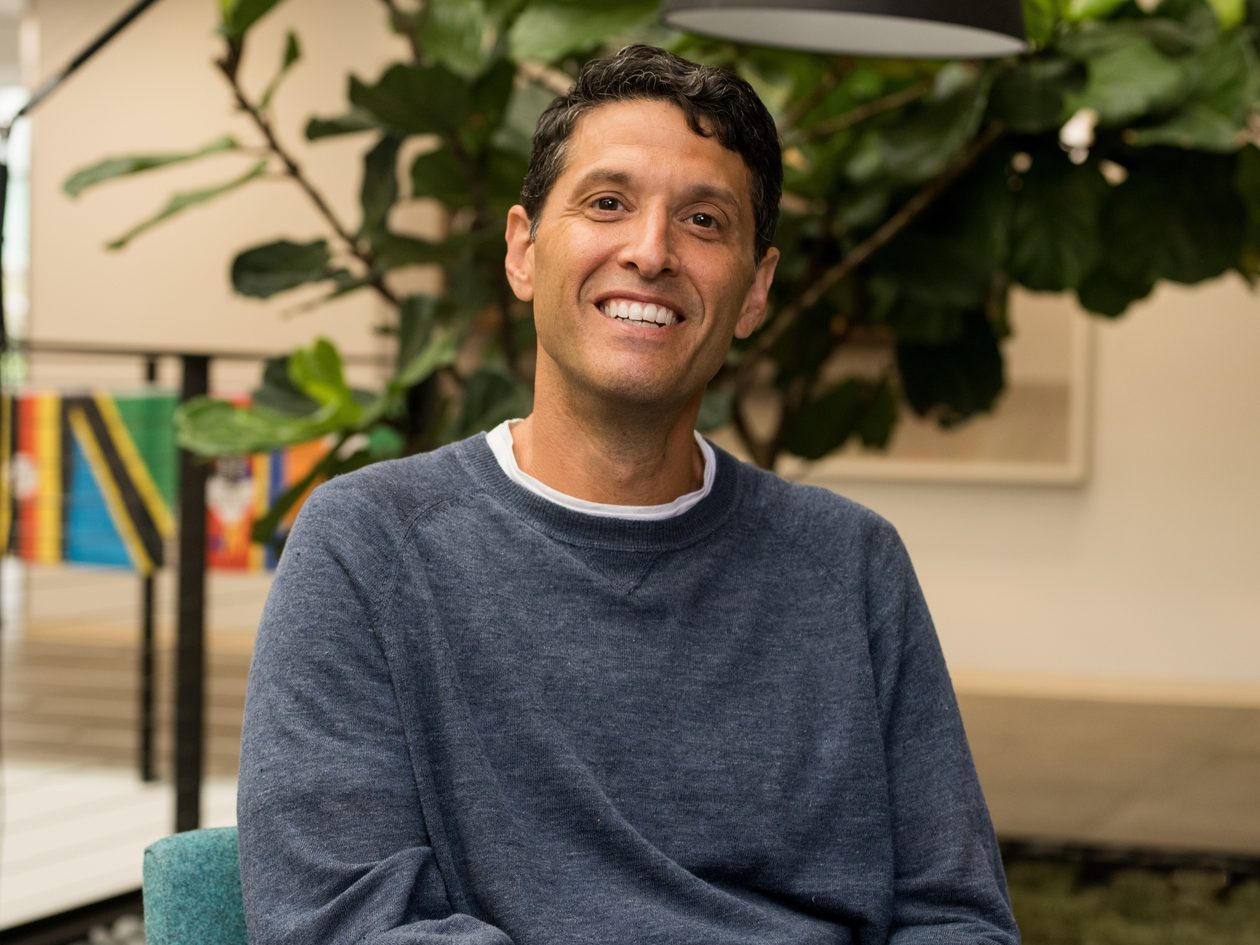
Terry Myerson has never been the kind of person who coasts. During his years at Microsoft, he was known for an intensity that could fill a conference room, for pushing teams to ship, to compete, to win. When he left the company in 2018, after leading the Windows and Devices Group, he didn’t slow down for long. He became a venture partner at Madrona, and then, in the early chaos of the pandemic, he co-founded Truveta, a health data company with an audacious mission. Now, at 54, Myerson is doing something that might surprise anyone who knows his reputation: he is retiring. At the end of September, he will step down as CEO of Truveta, the Bellevue, Wash.-based company that has grown to 500 employees and a valuation of more than $1 billion. His co-founders, Jay Nanduri and Ryan Ahern, will take over as interim co-CEOs while the board searches for a permanent leader. Myerson will become an advisor and step down from the board. He says he is leaving not because the company is in trouble, but because it is doing well and because his co-founders are ready. “If things were not going well, I would not do this,” he told GeekWire. “I’d be grinding it out. But things are going really well.” There is also a personal dimension to the decision. He and his wife, Katie, are empty nesters, and they want to travel, to spend time together, to enjoy a chapter of life that doesn’t revolve around board meetings and product roadmaps. It’s a reminder that even the most driven executives are, at the end of the day, human—and that sometimes the most confident thing a leader can do is know when to pass the baton.
Truveta’s origin story is deeply tied to the pandemic, and it begins with a phone call. Rod Hochman, then the CEO of Providence, the Seattle-area nonprofit health system, reached out to Myerson with a proposal. Health systems across the country were drowning in data—millions of patient records, including those from people sick with a virus that scientists were still struggling to understand. But that data was fragmented, locked in different systems, and difficult to compare. Hochman asked Myerson to build something that could unite health systems around a common data pool for research. Myerson, who had joined Madrona after leaving Microsoft, took on the challenge. Around the same time, Ryan Ahern was working on the front lines at NewYork-Presbyterian/Weill Cornell Medical Center in New York, where the pandemic was hitting with terrifying force. “We were giving out hydroxychloroquine, not knowing that it was actually harming patients,” Ahern said. “It was the first time in my career that we were learning a new disease from scratch.” The connection between Myerson and Ahern came through Jerry Grinstein, a Madrona co-founder, former Delta Air Lines CEO, and Ahern’s uncle by marriage. It was one of those improbable, serendipitous connections that define startup origin stories. GeekWire first reported on Truveta in October 2020, and the company launched publicly in February 2021 with 14 health systems. What began as an urgent pandemic project has become a lasting institution. Truveta now counts 30 large U.S. health systems as partners, and its database covers more than 140 million patients. The company’s mission has expanded beyond COVID-19 to encompass the broader promise of real-world evidence: using the experiences of millions of patients to make medicine smarter, safer, and more personalized.
At its core, Truveta does something both simple and incredibly hard. It takes de-identified patient records from electronic health records, standardizes them, and updates them daily, creating a living, longitudinal view of health across the United States. Drugmakers, medical device companies, researchers, and government agencies pay for access to this data, along with analysis and AI tools, to study how treatments work outside the controlled confines of clinical trials. That kind of real-world evidence can answer questions that trials often can’t: How does a drug perform in older patients with multiple chronic conditions? Are there rare side effects that emerge only when thousands of people take a medication? What does a treatment actually do in communities that are typically underrepresented in research? Truveta has already shown the power of this approach. It published the first peer-reviewed real-world comparison of Ozempic and Mounjaro for weight loss, a study that generated headlines and landed the company on the Today Show. In 2025, Truveta raised $320 million in a round that included Regeneron and Illumina, bringing its total funding to $515 million. That capital is helping fund the Truveta Genome Project, an ambitious effort to sequence leftover blood samples from consenting patients and link the resulting genetic data to de-identified medical records. The hope is to accelerate precision medicine—to understand not just what works on average, but what works for whom, and why. It’s the kind of work that can change lives, and it’s why the company’s employees gathered for an all-company “Homecoming” meeting this spring with a sense of shared purpose. For Myerson, the transition of leadership is happening at a moment when the company’s mission has never been clearer.
Myerson is careful to emphasize that he isn’t leaving because of any strategic crisis. Truveta is not yet profitable, but it doesn’t need to raise more money. An IPO is not on the near-term horizon, he said, because revenue isn’t yet large enough for the public markets. That leaves the company in an unusual and enviable position: it has options. “One of the problems with a business that’s doing well is you’ve got all those options,” Myerson said. “We’re blessed with a lot of options,” Ahern added. The leadership change comes after a period of transition at the board level. In March, Robin Damschroder, an executive at Henry Ford Health, succeeded Hochman as Truveta’s board chair after Hochman retired from Providence and affiliated entities. In January, the company hired Johnathan Lancaster, an oncologist and former Regeneron executive, as president and chief scientific officer. Asked whether the board changes played a role in his decision, Myerson praised both Hochman and Damschroder, describing her as a disciplined board chair, and said the transitions are all part of Truveta moving into its second chapter. When it comes to CEO succession, he said, the question is who will commit for the next five to seven years. “It’s easier for me to say, gosh, Jay and Ryan have earned this,” he said. “Bet on them for the next five to seven years versus betting on me.” The sentiment is striking from a leader who has spent his career betting on himself. But Myerson seems genuinely at peace with the decision, confident that the company he helped build is in good hands.
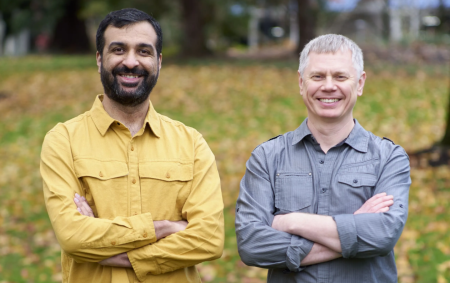
Nanduri and Ahern are an unlikely but complementary pair. Nanduri, a former Microsoft technical fellow, has been the architect of Truveta’s technology, leading engineering, product, and the data systems that make the whole platform possible. Ahern, a physician who still teaches part-time at the University of Washington, has been the voice of the customer, leading sales, marketing, and the evidence services team that helps clients navigate regulatory requirements. Nanduri describes their partnership in terms of supply and demand. “Ryan takes care of demand,” he said. “I make sure that the supply and the ecosystem and everything thrives.” It’s a fitting division of labor for a company at the intersection of healthcare and technology. One founder thinks in terms of infrastructure, data quality, and scalability; the other thinks in terms of patients, clinicians, and the real-world decisions that can mean life or death. Together, they are steering Truveta into a new era, one that is increasingly focused on artificial intelligence. In April, the company launched Truveta Intelligence, a tool that lets researchers ask questions of its clinical data in plain English. The promise is enormous, but so is the responsibility. Ahern said a key challenge is showing that AI-generated answers can be trusted for high-stakes decisions such as drug safety and label expansion. Nanduri noted that every major AI lab is doing some health-related work, and “they have approached us too.” The board has discussed how Truveta can coexist with these tech giants—whether as a data provider, a partner, or something else entirely. In July, the company also opened a development center in Hyderabad, India, expanding its engineering capacity and global reach. The next chapter of Truveta will be defined as much by these strategic choices as by the technology itself.
Myerson’s competitive streak, well known from his Microsoft days, hasn’t faded. Truveta is currently No. 3 on the GeekWire 200, our list of the top Pacific Northwest startups. When GeekWire once sent him a congratulatory note about the company’s standing on the list, Myerson responded with a link to a YouTube clip of the famous line from Talladega Nights: “If you ain’t first, you’re last.” Even as he discussed his departure, he couldn’t resist making his case for the top spot, calling Truveta “an amazing Pacific Northwest success story” and noting that more than 200 of its 500 employees are in the Seattle area. “It’s a Pacific Northwest story that’s having global influence,” he said, “and so I think it should be number one on the list.” But there is also a softer side to his farewell. In a LinkedIn post announcing his retirement, Myerson noted that Truveta started “with an idea and no employees, no technology, no customers, and no data.” What he’ll remember most, he wrote, are “the hundreds of Truvetans who took a chance on an ambitious idea and turned it into something real.” It’s a reminder that even the most hard-charging leaders understand that companies are ultimately made of people, not just products. At this stage of his life, Myerson didn’t rule out the possibility of another professional chapter. But asked about his immediate plans, he said he’s hoping for “a great ski year.” After everything he’s built—first at Microsoft, then at Truveta—he has earned the right to measure success in snow, not stock prices. And if there’s one thing his career suggests, it’s that he’ll approach that next adventure with the same intensity he brought to everything else.