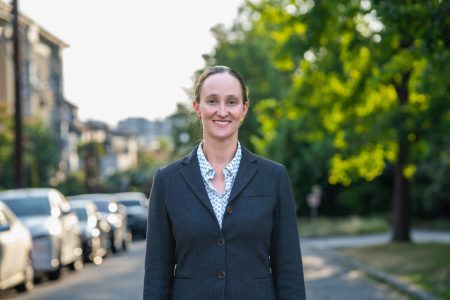





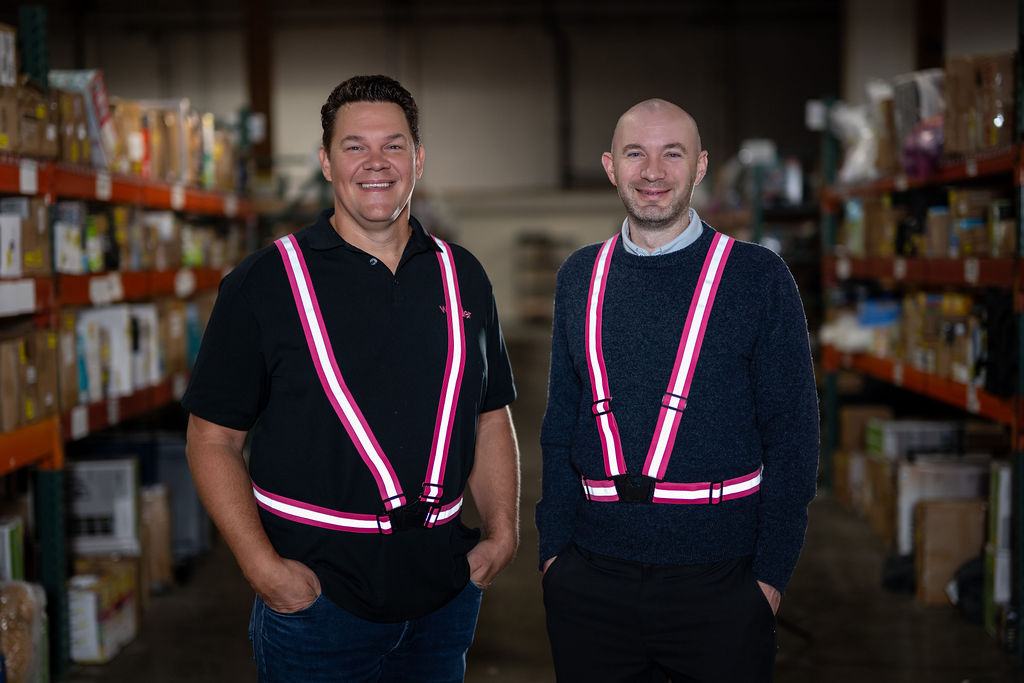
There’s something almost poetic about a returned item. It gets ordered online, shipped across the country, opened with excitement, and then, for any number of reasons—wrong size, duplicate gift, a change of heart—it goes back. Most people never think about what happens next. But Jordan Allen and Brock Kowalchuk did. They saw a mountain of perfectly good products being treated like trash, and they built BuyWander to rescue it. The company, founded in 2023, is an auction-based online marketplace for returned and overstocked retail goods from giants like Amazon, Target, Walmart, and Home Depot. And it just got a major vote of confidence: a $21 million Series A funding round led by Madrona Venture Group and Inspired Capital, bringing total funding to $28 million. For Allen and Kowalchuk, this is validation of a belief that has driven them from day one: that so-called “misfit inventory” deserves better than a landfill. They call it the intersection of “the weird meets the wonderful,” and they’re betting that shoppers will fall in love with it too. At a time when household budgets are tight, BuyWander offers an escape hatch—a place where bidding starts at $1 and ordinary people can walk away with extraordinary deals.
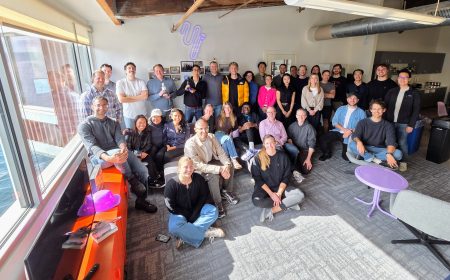
The funding announcement is about more than money. It’s also a story about roots, growth, and the hard choice to leave a place you love. BuyWander started in Spokane, Washington, where Allen and Kowalchuk were living when the idea took shape. Spokane was the perfect testing ground: small enough to get quick feedback, close enough to the founders’ hearts to feel personal. But as the company scaled, they realized they needed something bigger. In August, BuyWander officially moved its headquarters to the Seattle area, setting up shop in Kent, Washington, where 45 employees now work. The move wasn’t an insult to Spokane—it was a love letter to the company’s future. Kowalchuk put it plainly: “Spokane was a wonderful place to start the company… But getting to the size where we are today and building out that leadership team really requires a little bit more talent density that Seattle can provide with deep roots in retail and deep roots in tech.” The region has already rewarded that faith. BuyWander started with a cramped local facility to test demand, then upgraded to a massive 52,000-square-foot warehouse capable of processing three to five times more volume. Across eight fulfillment locations nationwide, the workforce has grown to 325 people, most of them in hands-on roles like intake, stocking, and customer service. It’s a long way from two founders with a laptop and a hunch.
For shoppers, BuyWander feels less like a typical online store and more like a treasure hunt that never ends. Every item starts at $1, and auctions run for exactly seven days. There are no shipping costs, because buyers pick up their winnings directly from local fulfillment centers. It’s a model that saves money for customers while eliminating the logistical headache of shipping returned goods back and forth across the country. And the inventory is gloriously unpredictable. In any given week, you might find commercial ice cream machines, log splitters, electronic cow milkers, hair dryers, air fryers, or a 12-foot skeleton that arrived just after Halloween. Allen loves the unpredictability. “It is probably one of the best product discovery platforms out there,” he says, predicting the company will eventually sell a bit of everything listed on the internet. The average discount is 75% off retail, which means shoppers are getting real value, not just novelty. In the past month alone, BuyWander sold nearly 500,000 unique items across its eight warehouse locations. The platform now counts 50,000 active and winning customers who have saved a cumulative $200 million—roughly $4,000 per person. And perhaps most striking, the growth has been almost entirely organic. Nine out of ten shoppers hear about BuyWander through word of mouth. People don’t just use the service; they tell their friends, their neighbors, their coworkers. They become evangelists for the strange joy of rescuing a great product at an even better price.
Behind the curtain, technology is doing something remarkable. Historically, resale platforms struggled with a simple problem: manually listing thousands of unique items is slow, expensive, and riddled with errors. Poor photos and bad descriptions kept inventory moving too slowly and hurt the customer experience. BuyWander has turned to artificial intelligence to smash that bottleneck. Automated tools now identify returned products, pull in retail valuations, and generate detailed listings with a single click. AI optimizes auction scheduling, appointment bookings, and even the timing of when items go live. Allen describes the operation as a strange mashup of old-world warehouse grit and futuristic automation. “It feels like World War II and Star Trek at the same time and we’re merging these two worlds together,” he says. That merger is paying off. The company is growing at 400% year-over-year, a blistering pace that would be impossible without the technology layer. But the AI isn’t replacing the human touch—it’s amplifying it. Real people still inspect, stock, and hand off the items. Real people answer questions and help customers navigate the auctions. The technology simply removes the boring, repetitive parts, freeing the team to focus on the stuff that makes BuyWander feel alive.
There’s a deeper mission here, too, and it has nothing to do with profit margins. Retail returns are a massive environmental and economic problem. In the United States alone, returns total roughly $850 billion every year, driven by online shopping return rates that hover near 20%. For retailers, processing a single return can eat up anywhere from 20% to 65% of the item’s original price once shipping, inspection, and restocking are factored in. Faced with those numbers, many brands simply give up. They throw returned goods away, not because the products are broken, but because their systems aren’t built to handle them locally. Allen finds this almost criminal. He points to a simple example: a Seahawks jersey gets returned by mail to a distribution center in Kentucky, then loaded onto a truck and shipped to Miami, where it might sit unsold for months. “The stars really align when the stuff can be sold locally where the demand already was to begin with,” he says. BuyWander’s model keeps those goods in their own communities. Instead of crisscrossing the country, a returned tool or television stays in the metro area where it was first purchased, gets listed on the platform, and finds a new home within a few miles of its original destination. It’s better for the planet, better for the retailer, and better for the buyer. Roughly 80% of the returned goods BuyWander receives arrive in “appears new” condition, with only minor packaging damage. That means the waste isn’t just unnecessary—it’s avoidable.
Looking ahead, BuyWander has no intention of slowing down. The new funding will fuel technology investments and accelerate a nationwide market expansion, following recent warehouse launches in Denver and Chicago. But this isn’t just about adding locations; it’s about getting closer to customers. In the Puget Sound region, Allen notes that traffic and geography often create barriers between communities, so the company plans to open four to five warehouses across the greater Seattle area over the next few years. The goal is simple: make pickup so convenient that shopping on BuyWander feels effortless. The customer base is already a healthy mix—about 80% are everyday consumers using the platform for normal household shopping, while the remaining 20% are local resellers who have built small businesses around the steady stream of discounted goods. It’s a community that Allen and Kowalchuk have nurtured with care, and they believe they’re just scratching the surface. “This is blue ocean right now,” Allen says. “Nobody’s really built an incredibly strong consumer brand in this retail return space.” With $28 million in the bank, a team of 325 people, and a growing network of warehouses, BuyWander is positioned to become that brand. But at its heart, the company remains what it was on day one: a second chance for products, a way to save money for families, and a small but meaningful answer to the enormous problem of waste. For the shoppers who refresh their screens at midnight to catch a new auction, it’s not just about the deal. It’s about the delight of finding something wonderful in the strangest of places.