





1. A Historic Dawn in Lagos: The People’s Refinery Opens Its Doors
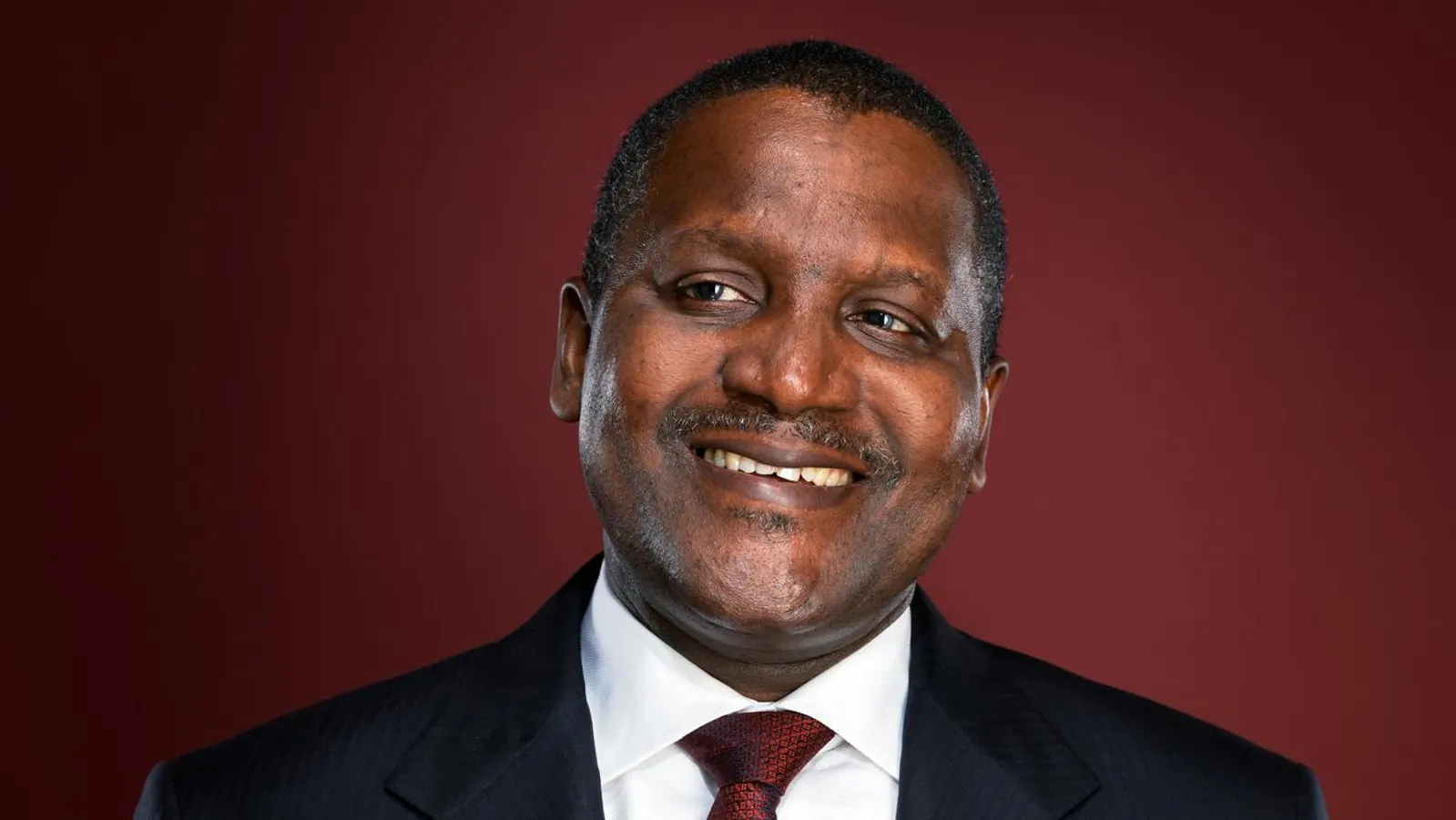
On the surface, Monday, September 14, might have looked like just another date on the business calendar. But for Aliko Dangote, it was a moment of profound personal and national meaning—the day his colossal, privately controlled oil refinery would, for the first time, open its doors to everyday Nigerian investors. This was never just about capital. It was about a promise, a legacy, and a radically different kind of wealth creation. Just weeks earlier, the world had witnessed an astonishing display of financial faith: a $2.5 billion private placement that became so oversubscribed that it ballooned to $3.7 billion, forcing Dangote to return $1.2 billion of unallocated funds to investors who were practically begging to be part of the story. That single transaction added a staggering $20 billion to his net worth, pushing him past the $50 billion mark and rocketing him from the world’s 76th to 36th richest person in the blink of an eye. Yet even as fortunes swelled and global rankings shifted, Dangote’s focus remained fixed on something more intimate: the idea that ordinary Africans—the market women, the young graduates, the small traders of Lagos and Kano—could own a piece of the continent’s industrial future. He had promised to attend an investment summit in Canada, where Prime Minister Mark Carney was waiting to host him. But when the IPO date finally arrived, after months of uncertainty and last-minute preparations, Dangote knew there was only one place he needed to be. “We have D-Day on Monday,” he told Forbes, with a mixture of relief and gravity. He would be late to the summit, he admitted, but he wouldn’t miss this historic moment for anything. It was, after all, the culmination of a dream that had been decades in the making.
2. A Tiny Entry Fee and an Unimaginably Big Vision: The Mechanics of Making Millionaires
The details of the public offering were deliberately designed to be as inclusive as possible. Dangote Refinery, the crown jewel of his sprawling business empire, would offer individual investors up to 4.1 billion shares—roughly 3.3% of the company—at a price of 40 U.S. cents (or 525 Nigerian Naira) per share. The order book would remain open until October 13, giving ordinary Nigerians a full month to participate. What made this truly revolutionary, however, was the remarkably low barrier to entry: a minimum purchase of just ten shares, which worked out to a shockingly modest four dollars. In a country where large swathes of the population are still striving to make ends meet, this was an unmistakable signal that Dangote wanted this to be a genuine people’s offering. It wasn’t just the wealthy elite or foreign institutional investors who would have a seat at the table; it was the factory worker, the university student, the local shopkeeper. The stock was expected to begin trading on the Nigerian Stock Exchange in November, and anticipation was already building. But for Dangote, the symbolic importance of this moment went far beyond the mechanics of the stock market. He drew direct parallels to the tech giants that had transformed the American economy and made legions of ordinary investors wealthy along the way. “Selling these shares now is us making sure that we create wealth for other people,” he said. “Just like what Amazon and Microsoft have done. That kind of thing but for an African company.” It was a profound statement, especially when contextualized by the sobering findings of the 2026 UBS Global Wealth Report, which noted that Africa still accounted for the smallest share of global wealth. For too long, wealth generated on the continent had flowed outward, enriching foreign shareholders and international conglomerates. Dangote wanted to invert that equation, building an industrial champion that would lift the fortunes of everyday Africans and prove that homegrown success stories could be transformative on a massive scale.
3. The Private Placement That Shook the World: A $42 Billion Valuation and a Fortune Transformed
To truly grasp the significance of the upcoming IPO, one has to rewind just a few months to the private placement that changed everything. Dangote had initially sought to raise $2.5 billion to help scale up his refining operations and strengthen the company’s balance sheet. But when the offering closed, the demand was nothing short of astonishing. Investors, both local and international, had subscribed to more than $3.7 billion worth of shares, forcing the company to return $1.2 billion in unallocated funds. It was a chaotic, wonderful problem to have—so much appetite that Dangote had to deliberately set aside some of the demand to ensure there would be enough shares left for the public markets. The sale had diluted his personal stake in the refinery to 87%, but the real surprise was the valuation. The market had spoken, and it valued the Dangote Refinery at an eye-popping $42 billion. That single number had a seismic effect on Dangote’s personal fortune. Overnight, his net worth jumped by $20 billion, reaching $51 billion, and catapulting him from near-obscurity in the global billionaire rankings to the upper echelons of the world’s richest people. The refinery—huge, complex, and still ramping up—had become the majority of his wealth, dwarfing the combined value of his cement, fertilizer, and sugar businesses. And if the public IPO went as well as everyone expected, the upside could be even greater. If everyday investors snapped up all 4.1 billion shares, Dangote’s stake would drop to just over 84%. If it was oversubscribed, his ownership could fall to 83.5%. But this was no cause for concern; it was the entire point. A slightly smaller slice of a much larger pie would ultimately make him richer, not poorer. The valuations were becoming self-reinforcing: the more people believed in the refinery, the more it was worth, and the more it was worth, the richer Dangote became, giving him even more resources to pursue new ventures. It was a virtuous cycle, driven not just by financial engineering, but by a fundamental belief in Nigeria’s economic potential.
4. From Kano’s Ancient Streets to the Pinnacle of African Capitalism: The Making of an Industrialist
Dangote’s remarkable journey did not begin in a gleaming skyscraper in Lagos. It began in the ancient, bustling city of Kano, Nigeria’s second-largest metropolis, a place that has been a commercial crossroads since the 10th century. Situated on the edge of the vast Saharan desert, Kano had always been a hub of trade, where merchants from across North Africa and the Sahel converged to exchange gold, leather, salt, and grain. It was here, in the early 1950s, that Aliko Dangote was born into a prominent business family. His grandfather, Sanusi Dantata, was a legendary entrepreneur who had built a considerable fortune trading commodities like grain, oats, and rice. In a distinctive northern Nigerian cultural practice, Dantata took his young grandson under his wing, raising him as his own child. It was an arrangement that would shape the course of Dangote’s life. From a very young age, he was steeped in the language of commerce, observing how his grandfather negotiated deals, managed relationships, and navigated the complexities of the market. The lessons began early and were remarkably practical. At age eight, Dangote was already displaying the entrepreneurial instincts that would later define his career. Using his modest allowance, he would buy bags of sweets and then recruit local children to sell them on his behalf, keeping a cut of the profits for himself. He had, in essence, built a small distribution network before he was ten years old. “When you are raised by an entrepreneurial parent or grandparent, you pick up that aspiration,” he once reflected. “It makes you much more aggressive, to think anything is possible.” That mindset carried him through his education, first at Al-Azhar University in Cairo, where he studied business, and then back to Nigeria, where he was ready to strike out on his own. He approached his grandfather and asked for permission to move to Lagos, the commercial capital, and received a loan of $500,000 from an uncle to begin trading. He started with rice, sugar, and cement—basic commodities with immense demand—and officially incorporated Dangote Group in 1981. He first appeared on Forbes’ World’s Billionaires List in 2008, the same year he listed his flour business on the Nigerian Stock Exchange, just a year after taking his sugar company public. Today, Dangote Group employs over 30,000 people and generated $18.2 billion in revenue during 2025, with the refinery serving as its undeniable centerpiece.
5. A Colossal Bet on the Future: The Refinery That Took 13 Years, $20 Billion, and Unshakable Conviction
The road to the refinery’s completion was not a smooth one. For over thirteen years, Dangote poured money, time, and heart into a project that many critics dismissed as doomed. The facility, located in the Lekki Free Zone, about an hour outside of Lagos, was a mammoth undertaking, requiring billions of dollars in infrastructure, cutting-edge technology, and an immense amount of patience. With a total investment exceeding $20 billion, it was one of the largest industrial projects ever attempted on the African continent. There were countless obstacles, financing difficulties, regulatory hurdles, and a global pandemic that threw the entire world into chaos. But Dangote never wavered. Finally, in 2024, the refinery began processing crude oil, and since then, it has been scaling up at an impressive pace. It now processes an extraordinary 700,000 barrels of crude per day, a figure Dangote hopes to double by 2029. The financial results are beginning to reflect this massive operational capacity. According to the prospectus released just a week before the IPO, the Dangote Refinery posted a net profit of $1.82 billion in the first half of 2026, a stunning turnaround from the $476 million loss recorded in 2025. Annual earnings before interest, taxes, depreciation, and amortization (EBITDA) are projected to hit $6 billion, up from $545 million the previous year. But the refinery’s true advantage lies in its technical sophistication. Tomiwa Adeniji, a senior oil and gas analyst at CardinalStone, highlighted that the refinery has a processing capability score of 11.5, significantly higher than the 9.5 of U.S. peers like Valero or Marathon Petroleum, and far above the 8.9 average for emerging-market competitors. This complexity score gives Dangote a structural edge, allowing him to mix multiple crude grades and optimize procurement based on global margins. However, the operation is not without its friction. A significant portion of Nigeria’s crude is still controlled by the state, and if Dangote cannot secure enough domestic supply, he will be forced to source from the international market, which would squeeze his profit margins. To combat this, he has already chartered three ships to ensure a steady supply, but he remains vulnerable to external shocks, including spiking global crude prices and geopolitical instability.
6. The Unfinished Empire: Looking Toward 2029 and a Lifetime of Betting on Himself
As with any visionary, Dangote is already thinking far beyond the current IPO. He has indicated that he is considering a possible overseas listing as early as 2029, with the Middle East or New York City as the most likely destinations. “The U.S. market understands more about refineries than London,” he quipped, demonstrating a sharp awareness of the international investment community’s preferences. But this future ambition is rooted in a much deeper philosophical conviction: he has always, unequivocally, bet on himself. The journey to this historic moment has never been easy, and Dangote’s confidence was not always shared by those around him. “Even my bankers didn’t believe me,” he recalled, his voice tinged with both pain and pride. In the early days, when funding the refinery felt like an impossible task, he was forced to put up everything he owned as collateral. Real estate, company shares, personal assets—all of it was laid on the line. But even that wasn’t enough to satisfy his lenders. “I gave them everything, and then at the end of the day, I gave them myself as a guarantee,” he said. It was a poignant and deeply human admission, a reminder that behind the dazzling net worth and global headlines, there was a man willing to put his entire reputation and future on the line for a cause he believed in. Today, that wager looks more prescient than ever. By opening up the refinery to ordinary Nigerians, Dangote is not just divesting—he is pioneering a new model of African capitalism, one where the wealth generated by the continent’s natural resources is shared more equitably among its people. The structure of the IPO, with its low minimum investment, is a masterclass in financial inclusively. It is designed to ensure that the benefits of industrialization are felt not just by a privileged few, but by the common man and woman who have always been the backbone of Africa’s informal economy. When the stock begins trading on the Nigerian Stock Exchange, its performance will be watched by millions, not just as a measure of corporate success, but as a barometer of market confidence in the future of the continent. And whatever happens in the short term, one thing is certain: Aliko Dangote has already secured his legacy. He built the largest oil refinery in Africa, created billions of dollars in value, and propelled himself into the upper echelons of global billionaires. But perhaps more importantly, he has given hope to a new generation of African entrepreneurs who now know that impossible dreams are not just possible—they are achievable. His story is far from over; it is, in many ways, just beginning.