






Paragraph 1: The Reveal and the Weight of Expectation
In late August 2026, beneath the pulsating lights and thumping bass of Gamescom’s Opening Night Live in Cologne, Germany, an expectant hush settled over the crowd. This is the moment where the video game industry holds its collective breath, where billion-dollar bets are suddenly unmasked to millions of watching fans. Wizards of the Coast, the imposing titan of tabletop fantasy, chose this massive European stage to rip the veil off its most ambitious interactive project yet: Warlock: Dungeons & Dragons. It is a decision that screams confidence, but also carries the jittery tremor of immense risk. Wizards, headquartered in Renton, Washington, is the profit engine keeping the entire Hasbro ship afloat, bringing untold billions in revenue from Dungeons & Dragons rulebooks and the irresistible trading card economy of Magic: The Gathering. However, when it comes to triple-A video games, their track record has been wildly inconsistent. There is the flash of genius that produced the phenomenal Baldur’s Gate 3, which redefined what a modern role-playing game could be. But there are also the scorched craters, like the 2021 Dark Alliance, a brief, confused co-op title that missed the tabletop magic entirely and vanished into the night sky of gaming history without a trace. Against this bipolar backdrop, the trailer began to play—and the room went silent. The visuals promised epic scale, sweeping landscapes, and a heroine who was not ascending in glory, but falling into a desperate deal. As the lights came back up, a new chapter was being written in the history of both Hasbro Dow big bet on digital expansion, and the internet was instantly on fire with theories, hopes, and a few healthily guarded anxieties. The announcement itself, dated August 25, 2026, quickly became the defining moment of the festival season, a statement that Wizards knows exactly which door they need to walk through. The gate swings open to an open world that is entirely new in the D&D multiverse, yet familiar in the echoing spirit of tabletop venturing. Wired with a release set for 2027, the trailer functioned more like a pledge, a promise to a fandom that has been hurt before, and a bold declaration to competitors that in this age of sprawling fantasy sagas, the original dragon still roars.
Paragraph 2: The Hero’s Desperate Bargain and the Unknown World of Darkon
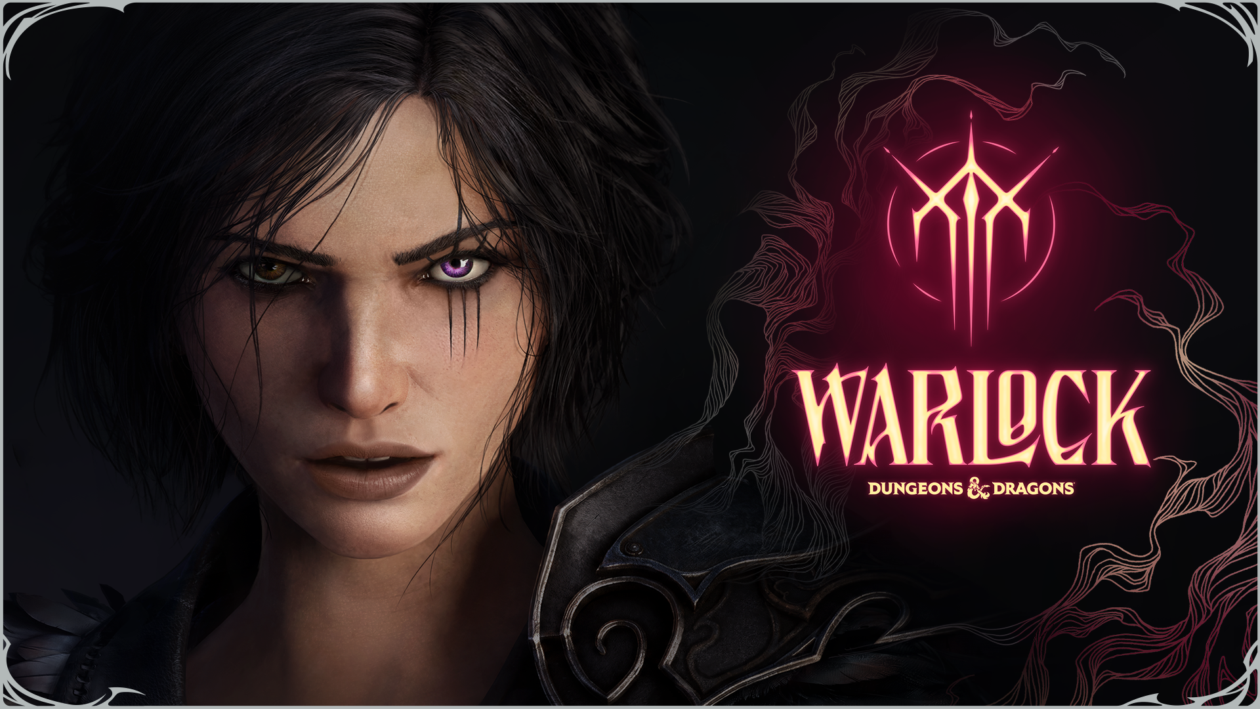
Warlock introduces players to an original fantasy realm called Darkon—a territory that feels less like the idyllic meadow of most high-fantasy tales and more like the brutal frontier where beauty has been scarred by conflict and age-old secrets. We step into the worn boots of Kaatri, a combat veteran and swordswoman cloaked in the weight of visible trauma and past battles. She is not a wide-eyed princess thrust into destiny, nor a chosen one blessed by divine sunlight; she is a survivor, a grim counselor and muscle-bound soldier who has seen perfectly well exactly how the horrors of warfare can break a soul. She carries her years in the way she holds herself, in the restrained generosity of her sword arm. Portrayed with layered warmth and gritty determination by Tricia Helfer, the celebrated actress from Battlestar Galactica, Kaatri represents the very best of sandbox storytelling—a protagonist that is fundamentally human. Yet her story is steeped in the escalation of desperation. In the ruined corners in Darkon, facing an enemy she cannot outfight, or deadlines that her sword cannot grab, she decides to look beneath the surface, to walk to the edge of the world and seek help where ordinary gods will not answer. She finds a source of quaking power through a pact, a demon-like arrangement that is central and literal to her character. The game’s nomenclature, Warlock, speaks to the nature of this arrangement; unlike the elders who labor for knowledge or the sorcerers who are born with innate magic, a warlock does not argue for spirit. They forge a binding contract with an impossibly powerful being, borrowing an alien and terrifying strength in exchange for a fettered promise. This establishes Kaatri as an outsider, a woman who has traded a part of her soul for the ability to survive another day, to walk across the kingdom and challenge whatever is quietly trying to crush her. As she swings into action, you can feel the familiarity of her warrior training backed up by a new, coursing, electric courage that wants to consume her. This thread of materiality—the juxtaposition of a woman trying to control her chaotic frame against the relentless temptation of supernatural shortcuts—is the emotional lodestar that will anchor the player as they wander the brooding, cavernous reaches of Darkon.
Paragraph 3: The Archmage and the Architecture of a Cactus Haskell
Yet, no warlock story is ever truly a duet unless we acknowledge the force that is pulling the strings across the astral plane. In the trailer, Kaatri’s deal is firmly sealed with a historic—and incredibly potent—presence from the D&D cosmology. Her patron is none other than the infamous and charismatic archmage Tasha, voiced by the mesmerizing Maggie Robertson, who carved a corresponding terrifying legacy as the haunting Resident Evil Village vampire. Tasha is a wonderful multivector piece of the D&D mystique, having appeared throughout decades of lore, most notably in Tasha’s Cauldron of Everything, a beloved supplementary rulebook. She is playful, chaotic, mysterious, and ruthless, operating from the world of Toril—the central hub of D&D’s sprawling fantasy. The reveal that Kaatri’s powerhouse is Tasha reveals a huge potential for storytelling, because Tasha is not simply a wind-up wizard forcing her pawn to do battle. The dynamic between the two women is created in real-time, showing a mutual entanglement, dancing between subtle mentor, saucy co-conspirator, and unknowable master. As we watch in the trailer, Tasha’s goals are explicitly withheld; what she genuinely desires from Kaatri is the weapon’s sharpest hook. This pact between a desperate swordsplay and a renowned archmage is a fascinating crucible. In combat, players will notice that a warlock’s magic is wildly distinct from a wizard’s—it’s seamless, instinctive, dispensed directly through their connection. This magical muscle memory layers into the very core of the game, giving Kaatri a unique repertoire that includes the invocation of telekinesis, the immense flexibility of short-distance teleportation, and the curiosity to detect and dissect sources of arcane energy lingering throughout the landscape. This is not just a loot and upgrade arc; the entire narrative is a riddle wrapped in a single divine promise. Tasha will dangle carrots, threaten, insinuate, and perhaps even confuse, forcing the protagonist (and by extension, the player) to question who really wields this terrifying influence. But time to spin is that, the game makes you feel that every spell you cast, every enemy you die, is an offense against the bond. Are you a tournament of The Goddess, or simply a valuable pawn? This uncertainty is a monumental leap forward in the often-unsubtle world of video game companion fantasies, promising to craft a story rarity in the shining obscured.
Paragraph 4: The Mechanics of Choice—Sword, Shadow, and Eldritch Blast
Beneath the richly developed narrative spine, Warlock promises to oblige a player’s absolute command over the battlefield. It’s vital to understand that classic D&D features a heavy element of thrift; players are always deciding whether to talk, climb, sneak, or fight. In the live action of a video game, this translates into a tactical sandbox. Invoke Studios seems determined to honor this that screen. The traditional set of innovational powers explicitly have to be woven into versatile gameplay loops. The telekinesis isn’t just a garnish—it gives the players the ability to physically manipulate the environment. You can open conflict with a mewele blast, fling enemies off cliffs, or drag heavy masonry to construct a temporary barricade. The Memory of e ing rooms of foolishness is matched with poise. Meanwhile, the teleportation behaves like a glorified mobility tool, allowing access to concealed nooks and crannies, or repositioning behind an armored behemoth mid-swing. You can approach every encounter with coward or audacity. The game is designed to offer simultaneous pathways: if a garrison is deemed too strong, a cunning player might scout a shadow, bait guards away, or just step out the trapdoor, allowing the whole structure. And, in homage to the mainstay of the warlock, the fiery, self-empowered eldritch blasts—a signature just about every D&D warlocks player knows—hurls streaks of potent purple energy, converting into ranged offense capable of melting skin or knocking an opponent off a bridge with satisfying long-range recoil. The game is not threat-upons to force players into any one engagement to be the same twice. This reinforces the term “open-world” as not just a spacious, pretty map, but as a place with feeling. Every encounter is a cognitive puzzle. Do you swing your sword, or incite a physics glitch by sliding a tower into your adversaries? The setup conformance matter in a wide network of grand adventures; the trick is what you do with the space, and that robust, hotwired spellwork anchored in status means there will always be a moment to try a brazen move. It’s the kind of ambition players demand in a panic of gaming, and a welcome synthesis of ht ml roleplaying creativity with the brutal immediacy of live action.
Paragraph 5: The Crucible of Development, and the Eternal Survival of Dark Alliance’s Ashes
Creating this game has been a monumental feat of resilience, a journey that mirrors the darker themes helming the game’s own narrative. Invoke Studios, an understandably smaller team based in Montreal under the umbrella of Wizards, wasn’t just hastily put together for a blank Check. This team was rebranded in 2022 from the very studio that delivered the disastrous Dark Alliance—a chick that tanked hard in 2021, earning warm reviews for its clunky mechanics and lack of the tabletop spirit. Instead of dissolving the organization after that failure, Wizards desperately needed to re-field it, risky foundation. The new ownership inherited that baggage, but has been empowered to carrying the future of D&D to big-budget action. It hasn’t been a smooth. These were two massive crises of conscience: the studio saw multiple executive shakeups and, in early 2023, witnessed the cancellation of two other D&D video game projects; it’s a shadowy act that pushed job security to the brink, and whole studios have crumbled under that suffocating weight. Yet, Invoke survived with its own bearing throughts—a team of programmers, artists, and designers who harnessed their anger and the wasted flame. They sheppard this project through the laussalt of corporate restructuring, layoffs echoing through Hasbro, and the end of the office chrome. It humanizes the title heavily; this is not the product of a relaxed bureaucracy. It’s the work of a team fighting for the absolute survival of its narrative, tasting the creep and cynicism of the boardroom but pushing through to stick to the tabletop roots. The game’s location under these crises makes the leap to 2027 bold. It’s a promise that creative gaming has realized a gamble on a silver lining. It feels as if the game itself is a ritual weapon, not just for Kaatri, but for the visionaries who decided to assemble one more time from the embers of old corporate failure and, honestly, make a lasting impression.
Paragraph 6: The Long Wait, The Fragile Hope, and The Promise of 2027
As the dust settles on another fan-frenzied summer, we are now facing the patient horizon of the 2027 release arr, aimed at the comprehensive family of PC, PlayStation 5, and Xbox Series X|S. The teases of this campaign and the deep integration of a beloved arc have successfully created an anticipatory hive of punk. But we must acknowledge what a ticking thin gaze this is. Baldur’s Gate 3 cast a long shadow: it was a masterpiece that validated hard work and devotion, and set expectations almost impossible to meet. The risk here is that in burning toward that brighter ideal, the open-world could end up as a shallow tech demo, letting the primary narrative get lost in the desire for a brighter world. Yet, from the glimpse we got, this IP arises from a weird, fascinating gut. The soul of D&D lies in interpersonal drama: the chubby friend, the risk, the betrayal of a pact. In Warlock all of that is embodied within the emotional knot of two women at once, wound together in a dark pact. If they can thread the needle of Kaatri’s stark struggle, Tasha’s enigmatic motives, and the rusty but deep world of Darkon, we could be holding a tragic shepherd’s tune to a realm we thought we knew. The timing feels hopeful, perfectly tuned for a pre-global expansion. It will be a major gamble—the biggest since Baldur’s Gate 3, in fact—and the market is watching. Yet somehow, in the bruises left by years of hostile workplace upheavals, and the sheer talent boiled across that sharp Montreal studio, carries to live this are sky. The future beyond the trailer is also a hodgepodge of fury, imagination, and a refusal to turn back. Ultimately, this is a title that amplifies the definition of “game” — a cocktail of myth, new physics, and high human drama. It’s a pledge that in a world full of eyebrow-rushing sequels, you can still make a deal with the devil and tell a story you’ve never heard. With breath held, 2027 can’t come soon enough.