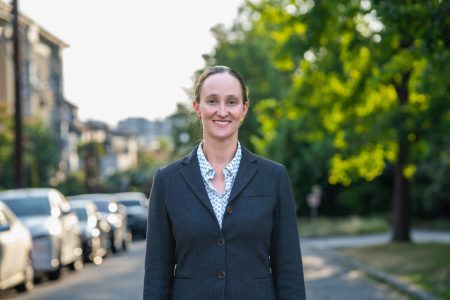



The modern corporate landscape is undergoing a profound structural shift, as seasoned executives increasingly choose to step away from the comfortable, hyper-scaled corridors of established tech giants to embrace agile, mission-driven ventures designed to tackle some of the world’s most urgent ecological crises. A prominent example of this inspiring migration is Hannah McClellan Richards, who recently closed a remarkable fifteen-year chapter at Amazon to assume the mantle of Chief Operating Officer at the global micromobility pioneer Lime. Having navigated the incredibly complex labyrinth of Amazon’s worldwide operations—from orchestrating the high-stakes logistics of its pharmacy division to serving as the technical advisor and chief of staff to the CEO of Worldwide Amazon Stores—McClellan Richards is uniquely equipped for monumental operational challenges. For her, the transition to Lime is not merely a lateral career move, but a passionate alignment of professional mastery with environmental stewardship. She expressed deep excitement about the logistical puzzle of ensuring that hundreds of thousands of light electric vehicles are meticulously charged, maintained, and strategically distributed precisely where and when urban commuters need them. This desire to align operational excellence with planetary health is mirrored in the green energy sector, where Eric Williams has departed Bellevue-based nuclear innovator TerraPower to join its competitor, Hadron Energy, as Executive Vice President of Engineering. Having spent twelve years pioneering modular nuclear reactor designs and securing rigorous federal regulatory approvals at TerraPower, Williams’s transition to Hadron highlights a deeply personal commitment to proving that advanced nuclear technology can be practically engineered, safely licensed, and rapidly deployed in the United States. His shift represents a broader executive trend where veteran builders are leaving established institutions to commercialize first-of-a-kind microreactors, proving that the future of clean energy depends on bold leaders willing to step out of their comfort zones to champion disruptive technologies that safeguard our collective future.
At the same time, the breathtaking acceleration of artificial intelligence is acting as an irresistible gravitational force, drawing premier talent away from traditional digital services and toward the uncharted frontiers of cognitive computing and safety. Ankur Sinha’s transition from Chief Product and Technology Officer at the cross-border digital remittance platform Remitly to his new role as Head of Enterprise and Verticals at Anthropic, the leading AI safety and research corporation, beautifully illustrates this intellectual migration. Having spent over four years guiding Remitly through its noble mission of financial inclusion, preceded by high-impact engineering tenures at Google and Microsoft’s Xbox division, Sinha represents the archetype of a leader who views complex technology through a deeply empathetic lens. For Sinha, the pivot to Anthropic is guided by a profound realization: transitioning from transforming individual lives through borderless financial transactions to helping humanity safely navigate the revolutionary transition to transformative AI requires an unwavering commitment to trust and safety. This exact philosophical current has also swept up Richard Tso, a veteran product marketer who spent nearly a decade cultivating software ecosystems at Microsoft, guiding the market positioning of vital tools like Azure, Microsoft Viva, and PowerPoint. Tso’s new appointment as Senior Director Analyst of AI Marketing Strategy at Gartner underscores the critical global need for objective, human-centric interpretation of AI’s actual capabilities amidst overwhelming hype. By leaving the developer trenches to guide the broader industry, leaders like Sinha and Tso are demonstrating that the true value of the current artificial intelligence renaissance lies not in raw computational metrics, but in how thoughtfully and ethically these technologies are integrated into the fabric of daily human life.
Behind every virtual breakthrough and cloud-based miracle lies a complex network of physical infrastructure and disciplined financial management, areas where veteran female executives are currently stepping up to make a transformative impact. Celeste Grebe’s appointment as Senior Vice President of Financial Planning and Analysis at Crusoe highlights the skyrocketing demand for climate-conscious AI infrastructure. Grebe, who brings an exceptional professional pedigree from her tenure as the Chief Financial Officer of cloud and AI data centers at Microsoft, alongside a recent high-level stint at CoreWeave, joins Crusoe’s newly established Bellevue office with a rare and comprehensive understanding of the massive capital expenditures required to fuel next-generation data centers. Her career move is motivated by a desire to work at the intersection of scale, sustainability, and technological innovation, helping Crusoe pioneer computing solutions that dramatically reduce the environmental impact of the AI revolution. In a parallel effort to navigate complex market realities, Christine Chambers has officially taken the financial helm as the Chief Financial Officer of Redmond-based lidar manufacturer MicroVision. Stepping into this critical role during a period of corporate reorganization—following strategic workforce reductions aimed at streamlining engineering and technical operations—Chambers brings a wealth of hard-won wisdom forged during her previous CFO roles at Fusemachines, PetMeds, and RealNetworks. Her mission is as vital as it is challenging: to steer the financial strategy for a company developing the advanced sensory perception hardware and software necessary to make autonomous driving and public safety systems reliable, proving that the long-term viability of revolutionary hardware depends entirely on steady, strategic, and resilient fiscal leadership.
As enterprises across every imaginable industry scramble to integrate these advanced computational tools and automated systems into their daily operations, the role of strategic consulting has never been more essential, requiring visionaries who can humanize complex architectures. Recognizing this crucial market demand, global business and technology consulting giant Slalom has appointed Dan Garrison as its new Chief AI Officer. Garrison brings a staggering three decades of technology consulting experience from Accenture, where he most recently drove digital innovation as the Chief Technology Officer for Accenture Song, focusing heavily on the practical enterprise integration of quantum computing and generative AI. Garrison’s unique strength lies in his ability to blend profound technical depth with an energetic, entrepreneurial spirit, helping organizations transform their operational models while ensuring that technology always serves to enhance, rather than replace, human connection. This philosophy of prioritizing human experiences through digital design is equally central to the education sector, where Seattle-based EdTech provider Gravyty has simultaneously brought on Margaret Onisick Lawless as Chief Product and Technology Officer and Brandon Stec as Senior Vice President of Marketing. Lawless, joining from TeachTown, and Stec, coming from Frontline Education, will both work remotely, bringing a wealth of specialized knowledge in building and scaling digital products that empower educators, support students, and foster community engagement. By focusing on intuitive product design and empathetic market communication, these leaders act as vital bridge-builders, ensuring that whether an organization is a global enterprise adapting to generative AI or a local school district implementing learning software, the technology remains accessible, empowering, and deeply rooted in human needs.
While lateral shifts across the tech industry often capture public attention, a series of remarkable internal promotions and regional leadership appointments serve as a powerful reminder of the immense value of homegrown talent and localized operational stewardship. At Conga, an innovative company specializing in revenue lifecycle management, Seattle-based financial strategist Ian Wathen has been deservedly elevated to the position of Chief Financial Officer, demonstrating that deep, institutional knowledge and a proven track record within a company are invaluable assets during times of corporate expansion. Similarly, Salesforce has reinforced its commitment to navigating the delicate and complex intersection of technology and public policy by promoting Brittany Jarnot to Senior Manager of State and Local Government Affairs for the Western region, emphasizing the need for collaborative dialogue between tech giants and local communities. In the high-stakes and deeply personal arena of public healthcare, Kristy Carrington’s promotion to Chief Executive of the North Division for Providence places her at the helm of vital operations across Western Washington and Alaska, a demanding role that requires not only operational precision but also a profound, mission-driven dedication to community well-being and patient care. Meanwhile, on the international stage, Seattle-based risk intelligence platform Factal has expanded its global presence by naming Colin Dale as its London-based Director of Sales, illustrating the growing international demand for real-time, verified safety data. These promotions collectively underscore a fundamental leadership truth: while fresh external perspectives are valuable, nurturing internal talent and empowering regional advocates who intimately understand local markets, regulations, and community needs is the ultimate key to sustaining long-term organizational trust and operational integrity.
Ultimately, this vast wave of executive reshuffling serves as a poignant reminder that behind every corporate announcement, strategic realignment, and financial projection are real human beings navigating the delicate balance between professional ambition and personal well-being. Nowhere is this truth more clearly reflected than in the recent, high-profile leadership restructuring at real estate tech giant Zillow, where Chief Financial Officer Jeremy Hofmann’s responsibilities were expanded to include the role of Chief Operating Officer, following the sudden step-down of Jun Choo. Choo, who had only recently assumed the COO mantle in 2024, made the deeply courageous and vulnerable decision to step back from the intense demands of the position to focus entirely on his health, transitioning into an advisory role through the end of the year to ensure a seamless leadership transition. This transition, marked by mutual respect, corporate transparency, and a smooth handoff of operational responsibilities, highlights a broader, highly positive cultural evolution within the modern workforce—one where prioritizing physical and mental health is no longer viewed as a professional vulnerability, but as an act of authentic, mature, and responsible leadership. As we examine the collective tapestry of these executive movements—ranging from Hannah McClellan Richards’ green logistics mission at Lime to Jun Choo’s health-focused transition at Zillow—it becomes abundantly clear that today’s leaders are actively redefining the metrics of success. It is no longer just about climbing the corporate ladder or achieving maximum scale; it is about seeking personal alignment, fostering sustainable innovation, protecting human well-being, and ensuring that as our technology races forward, we never lose sight of our shared humanity.