





Paragraph 1: The Thunderbolt in Kirkland
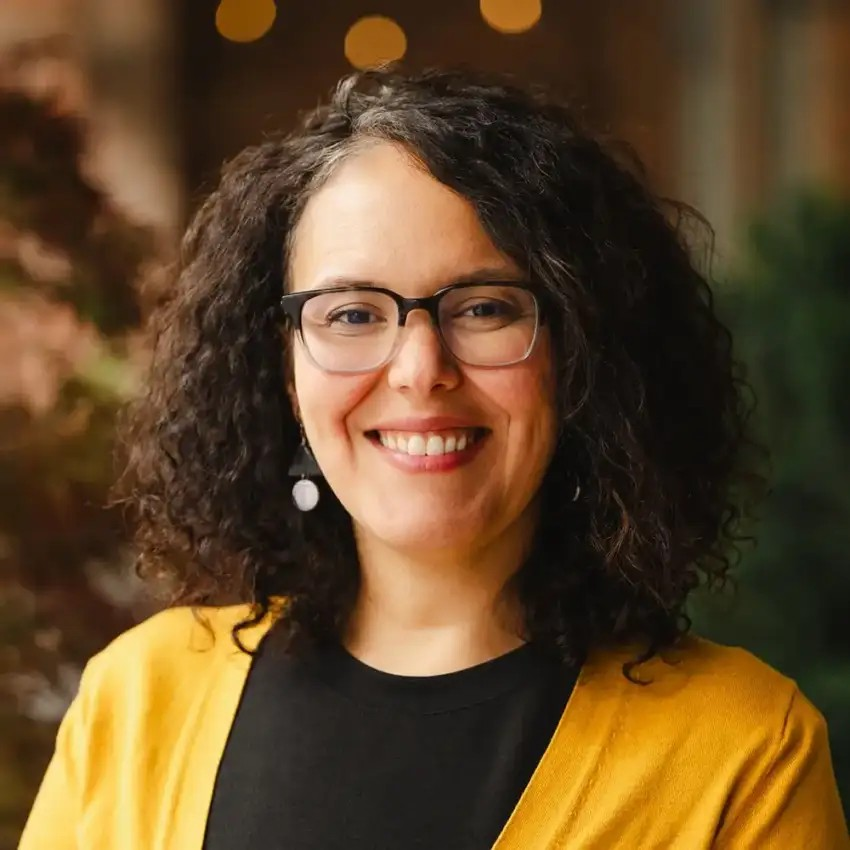
On a characteristically grey morning in the Pacific Northwest, the biotech community of Kirkland, Washington, received a jolt of rare, unfiltered optimism. EIT Pharma, a privately held company tucked away in the evergreen suburbs across Lake Washington from Seattle, announced that it had secured a substantial $35 million Series A financing round. In an era where venture capital has become increasingly risk-averse, skittish about the long and brutal timelines of drug development, such a raise is itself a minor miracle. But the announcement carried an extraordinary subtext that transcended the bare numbers of spreadsheets and term sheets. The lead investor was Propel Bio Partners, a Los Angeles-based venture firm, and presiding over both the company and the investment was Leen Kawas, a figure whose career embodies one of the most dramatic arcs of redemption and resilience in the modern biotech landscape. This was not merely a business transaction; it was a declaration of war against her own past. The press release was terse, mandated by the protocols of corporate communications, but the story it told was rich with ambition, scandal, bankruptcy, and the relentless pursuit of unrealized potential. For Kawas, this funding round represented a triumphant return to the helm of a drug development enterprise, a position she had been forcibly ejected from just a few years prior under a cloud of scientific misconduct allegations. The money, earmarked for pushing a promising hepatitis D treatment through the final gates of regulatory approval, was more than just capital—it was confidence, forgiveness, and a massive bet that a broken past could build a flawless future.
Paragraph 2: The Unlikely Orphan Drug and the Bankruptcy Fire Sale
At the heart of EIT Pharma’s strategy lies lonafarnib, a fascinating pharmaceutical oddity with a history as unlikely as its current application. Originally developed decades ago by Merck as a potential cancer therapy and later approved for the ultra-rare genetic disease Hutchinson-Gilford progeria syndrome—a condition that causes children to age rapidly—lonafarnib works by inhibiting a specific enzyme, farnesyltransferase, which is critical to the replication of certain viruses and cellular processes. EIT Pharma, however, has recontextualized this molecule entirely, aiming it directly at chronic hepatitis D, a severe and aggressive form of viral hepatitis that affects millions worldwide, though tragically often undiagnosed and underserved. Hepatitis D is a “defective” virus that requires the hepatitis B virus to replicate, making co-infection the most severe form of chronic viral hepatitis, frequently leading to rapid progression to cirrhosis, liver failure, and hepatocellular carcinoma. The U.S. Food and Drug Administration (FDA) has recently agreed to review EIT’s New Drug Application (NDA) for lonafarnib as an oral treatment for this condition, setting the stage for a potential approval decision in the near term. The drug was acquired to EIT Pharma through a fascinating, almost defiant act of corporate salvage. In 2024, Eiger BioPharmaceuticals, the previous owner, filed for bankruptcy, forced into insolvency by the severe market reality of developing niche infectious disease therapies. In a court-supervised, fire-sale auction that closed in September of that year, Kawas and her team swept in to purchase not only lonafarnib but also peginterferon lambda, another drug candidate for severe respiratory infections. This acquisition strategy—buying distressed, late-stage assets at a fraction of their intrinsic value—is a hallmark of a certain breed of biotech leadership, and Kawas proved adept at capitalizing on the tragedy of one company to build the foundation of another.
Paragraph 3: The CEO and the Investor—One and the Same
What sets this financing apart from a standard Series A is the startling degree of convergence between the leadership of the company and the investor consortium. Kawas is not merely a hired CEO brought in to execute a vision; she is the co-founder and a managing general partner at Propel Bio Partners, the very firm that spearheaded this investment. In the rarified air of venture capital, this is a remarkably symbiotic, though inherently delicate, structure. Normally, a company’s management is accountable to a board of directors, who answer to investors who hold the purse strings. But when the CEO is also a principal of the lead investor, the traditional checks-and-balances of corporate governance blur. Kawas has effectively funded her own comeback. This creates an undeniable alignment of interests—her personal capital and reputation are directly tied to the success of EIT Pharma, as are the limited partners who have entrusted their funds to Propel Bio Partners. It signals a fervent, uncompromising belief in the pipeline and the science, a “skin in the game” that is absolute. Yet, it also invites scrutiny. In a field marred by aggrandizement and hubris, is there adequate independent oversight? Can a CEO-investor objectively evaluate the data when the destiny of her own fund depends on it? Kawas has navigated this criticism with characteristic tenacity, arguing that the fusion allows for quicker decision-making and a more streamlined, mission-driven approach. In her view, this isn’t a conflict of interest; it is the ultimate form of conviction. By betting her own fund on her own company, she has rendered her personal fate and her professional ambition indistinguishable, an audacious gambit that can either catapult her to fame or lead to a far more spectacular failure.
Paragraph 4: The Fall from Grace at Athira
To fully appreciate the weight of this announcement, one must revisit the scandal that nearly destroyed Kawas’s career just a few years earlier. Before EIT Pharma, she was the celebrated, charismatic CEO of Athira Pharma, a Seattle-area biotech darling focused on Alzheimer’s disease, one of the most challenging frontiers in neuroscience. Athira had raised hundreds of millions of dollars and was on the cusp of clinical breakthroughs, generating immense hype and anticipation. However, in 2021, the bubble burst with devastating finality. A board investigation, prompted by concerns raised about scientific integrity, found that Kawas had altered images in research papers she had co-authored as a graduate student at the University of California, Los Angeles. The altered images, notably in Western blot experiments, were a cardinal sin in the scientific community, where data integrity is the currency of trust. The news sent shockwaves through the industry. Kawas resigned from her position as CEO, stepping down as the stock cratered and the company’s reputation eroded. Her defense was that the changes were merely cosmetic “enhancements” meant to improve the visual clarity of the figures, and that the underlying data remained fundamentally intact and truthful. Regardless of the intent, the optics were ruinous; in a domain governed by rigorous reproducibility and policed by image forensics, even the appearance of manipulation is a landing gear failure. She was publicly branded as a scientist who had betrayed the fundamental tenets of her profession. In the cold, unforgiving ecosystem of institutional investment, she was effectively exiled. The next year was a purgatory of quiet consultation and reconstruction, a period where she reflected on the fragility of reputation and the unforgiving nature of public opinion.
Paragraph 5: The Rebranding of Athira into LeonaBio
Meanwhile, the wreckage of her former empire underwent a silent, telling transformation. Athira Pharma, having severed its ties with its founder, did not simply languish. It underwent a profound corporate metamorphosis, shedding its old name in favor of a fresh identity: LeonaBio. This rebranding was more than a legal formality; it was a desperate cleansing ritual designed to erase the taint of the past. Alongside the new name, the company pivoted its entire strategic focus away from Alzheimer’s disease—a field where it had suffered significant clinical setbacks—to oncology, specifically targeting breast cancer. This pivot is emblematic of the broader biotech ecosystem’s pragmatic ruthlessness. LeonaBio essentially buried the legacy of Kawas, distancing itself from the scandal by repositioning its science toward a more tractable and quantifiable therapeutic area. For Kawas, watching her former company shed its identity must have been a poignant, sobering lesson in humility. The new entity, unencumbered by the ghost of the past, pursued a new pipeline, leaving no trace of the altered images that had threatened to define the old one. The contrast between LeonaBio’s quiet retreat into oncology and EIT Pharma’s aggressive acquisition of infectious disease assets highlights the divergent paths taken by the two halves of the broken company. While LeonaBio sought to bury the past, Kawas sought to resurrect her name through the bold possession of a vital new drug. LeonaBio’s existence serves as a constant reminder of her fall, a mirror reflecting the cost of a single lapse in judgment.
Paragraph 6: The Road Ahead and the Nature of Redemption
As EIT Pharma strides toward the FDA’s decision on lonafarnib, the stakes could not be higher. The ultimate prize is not merely the approval of a niche drug; it is the vindication of an entire career narrative. Chronic hepatitis D is a devastating disease, and the current therapeutic landscape, dominated by the injectable Hepcludex (bulevirtide) approved by the FDA in May of this year, leaves much to be desired in terms of convenience and efficacy. An oral pill like lonafarnib, if approved, would represent a significant leap forward in patient care, offering a more attractive alternative to injections. The market, while not blockbuster-level in the traditional sense, is substantial and desperate for options. But the path to approval is fraught with peril. The FDA’s advisory committee could still raise questions about the clinical data, and the commercial manufacturing scale-up is a logistical hurdle in its own right. However, for Kawas, the $35 million raised is a public validation. Her quote in the release—that the round validates the founding belief that “advancing important medicines is about recognizing unrealized potential”—is a double-edged sword. It speaks to the drug’s hidden promise, removed from the failing portfolio of a bankrupt company, but it also serves as an unspoken manifesto for herself. She is the unrealized potential. In a world that often treats failure as a terminal diagnosis, she has engineered an extraordinary second act, proving that resilience is the most potent drug in the pharmaceutical arsenal. Whether she succeeds or fails in the coming years, Leen Kawas has already rewritten the script of her own redemption, evolving from a pariah into a pioneer, one clinical trial at a time.