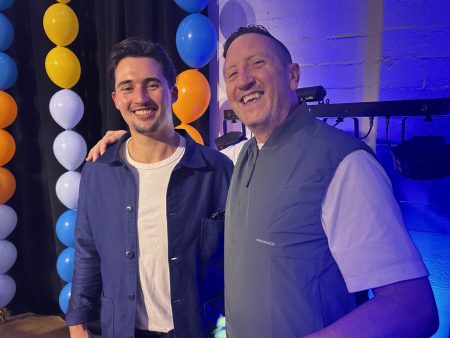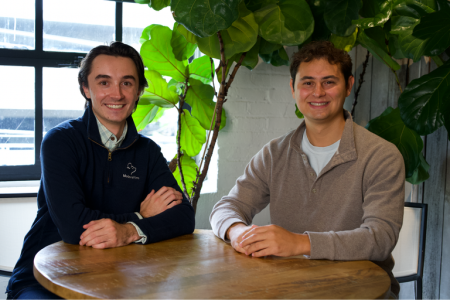






In the heart of Seattle’s bicycle commuter universe, a young electric mobility startup has quietly made itself at home. Also, a fast-growing company born inside electric vehicle maker Rivian, has planted its flag just north of Lake Union, in a sprawling 17,459-square-foot space at 1300 N. Northlake Way. The building sits directly on the Burke-Gilman Trail, at the lively seam where Fremont and Wallingford meet, and its neighbors are some of the most recognizable names in Pacific Northwest outdoor and active lifestyle culture: Brooks Running’s headquarters and the flagship store for outdoor retailer Evo are just across the street. Ben Steele, Also’s chief commercial officer, is the one tasked with making this new outpost feel like home. A nine-year REI veteran, Steele joined the startup because he was drawn to its mission-driven vision for the future of micromobility, and he has been building out the company’s business operations, marketing, and customer functions from scratch. Before he could do any of that, though, he had to find the right place to do it. For Steele, the choice was obvious. He calls this stretch of Seattle the hottest spot in the No. 1 bike commuting city in America, a claim he backs up with data from Strava heat maps showing bike commuter activity concentrated in a white-hot glow right around this neighborhood. “If you do the heat map in Strava for bike commuting, that is the white-hot spot,” Steele said during a tour of the office. “When we said where do we want to be, we want to be where our customers are, where they’re working, where they’re living, where they’re shopping. And we want to be where bike commuters are. And this is that hot spot.” The building itself has previous high-tech pedigree—it once housed Overland AI, a startup building military-grade autonomous vehicles—but now it is becoming a hub for a different kind of transportation revolution. On a typical day, 38 employees work out of the space, though the number often swells past 50 when cross-functional teams visit from other regions. A second floor, with sweeping views of Lake Union and the downtown skyline, offers room to grow to around 60 people. The mix of cycling culture, software engineering talent, and deep consumer retail roots is exactly why Also chose to build a major presence here, far from its Silicon Valley roots.
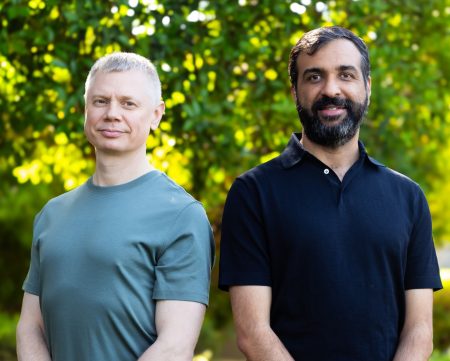
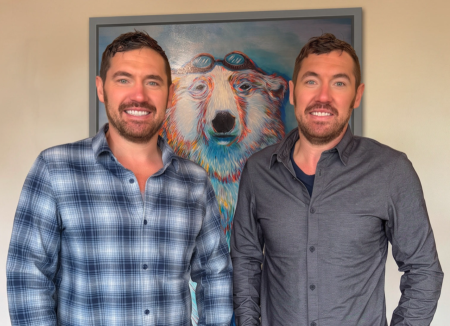
Also’s origin story is unusual even by startup standards. More than three years ago, the company began as a special projects group inside Rivian, the electric vehicle maker known for its R1T pickup truck and R1S SUV. That group was incubated with a bold question: What would it look like if a deeply capable EV company turned its attention to smaller, nimbler, software-defined vehicles for everyday travel and last-mile delivery? From that question, Also was born. In March 2025, the startup officially spun out as an independent company, and it has already climbed to a $1 billion unicorn valuation, a striking milestone that gave it the capital to fund vehicle development and scale commercial operations. Its pedigree is considerable. Also was co-founded by RJ Scaringe, Rivian’s founder and CEO, alongside Chris Yu, Rivian’s former vice president of future programs, who now serves as Also’s president. Scaringe’s visionary reputation in the EV world has followed the spinoff, attracting serious investor attention and an ambitious workforce. The company now employs roughly 350 people across Palo Alto, Seattle, and a newly established commercial team in Ghent, Belgium. In Seattle, the team is a hybrid operation, with employees asked to come into the office three days a week. That requirement has not made recruitment difficult; in fact, the company has pulled talent from some of the Seattle area’s most storied companies, including REI, Brooks, Rad Power Bikes, Sonos, and Amazon. For Steele, the ability to draw on that talent pool is one of the most compelling reasons to be in Seattle. “If you think about retail and commercial talent, innovative companies like Nordstrom and Amazon and Starbucks and yes, REI, the talent pool that we have to draw from for this part of the business, this is really the sweet spot to do it,” he said. The office is still new—it officially opened in April—but it has already taken on a distinct personality. It is not a satellite outpost or a sales office in the traditional sense. It is intended to be the beating heart of Also’s commercial and customer-facing operations, a place where strategy and human experience intersect on a daily basis.
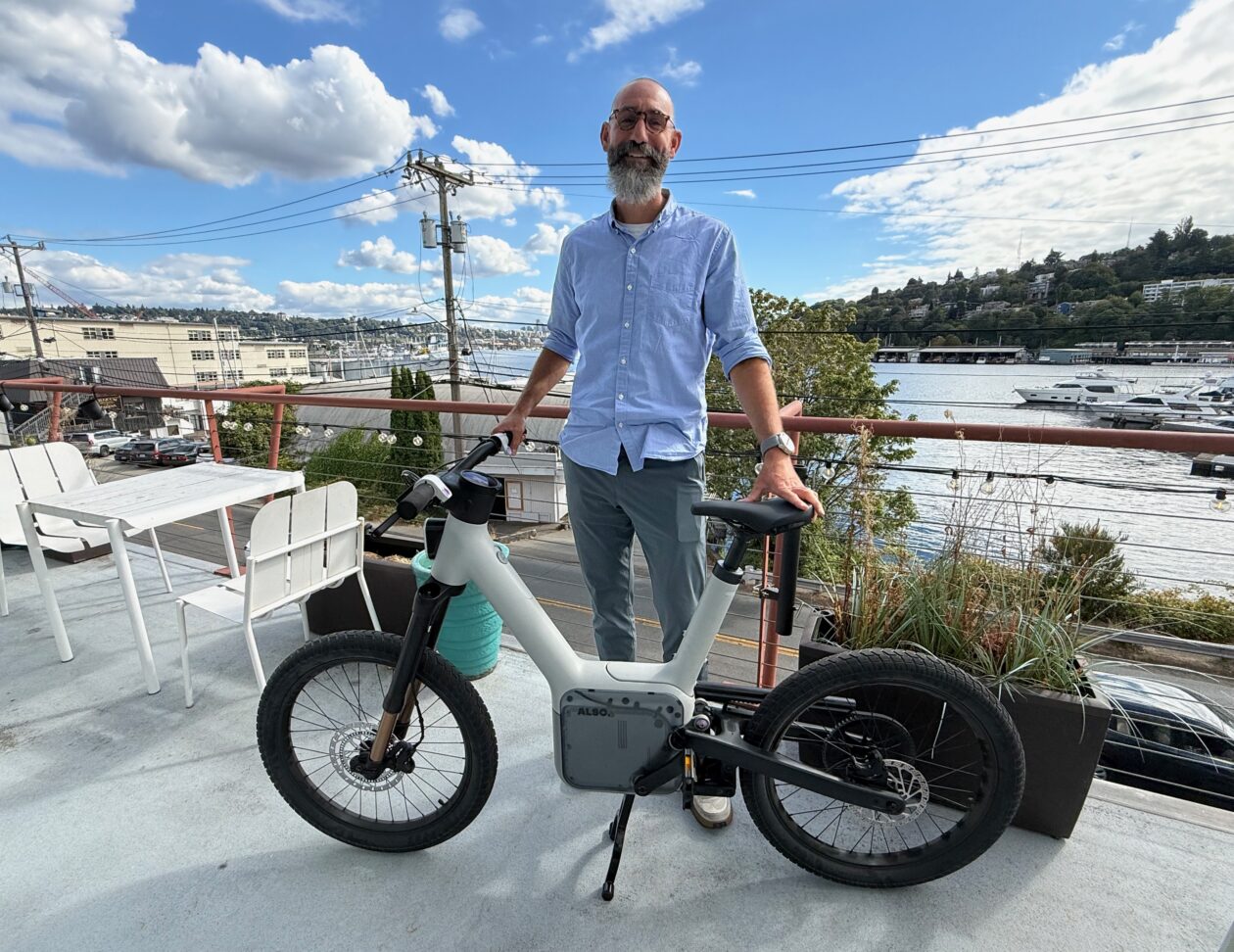
The building’s ground floor will eventually become something no other e-bike company quite has: Also’s first dedicated retail store and customer service bay, with room for a co-working partner or a food and beverage operation. For Steele, that design is deliberate. He wants the commercial team to be constantly grounded in real interactions with real riders, not stuck in abstract strategy meetings about customer experience. “The theory is, we want our team really living that experience with our customers,” Steele explained. “To have our retail and our office together really means we’re not theorizing about what does that experience look like with our customers. We’re living it every day.” That ethos is visible even before the store opens. Right now, local riders can try Also’s flagship e-bike, the TM-B, through a pop-up located across the street at Evo, just steps from the Burke-Gilman Trail. The bike starts at $3,500 and is distinctly high-tech; it is designed with automotive-grade components and software-defined architecture, a far cry from the simple battery-on-a-bicycle approach that has defined much of the consumer e-bike market to date. The TM-B is not just a commuter bike; it is a statement of intent. Since launch, the company has conducted more than 10,000 test rides nationwide, with mobile sales teams deploying dedicated vans, coffee shops, and partner locations like Evo and Rivian spaces across 10 initial U.S. markets. Seattle is one of those markets, and the response has been strong enough to push the company toward a more ambitious plan. Soon, Also will launch a national “test spin tour” that will bring ten bikes and dedicated staff to 20 cities over six weeks. The idea is not to build a traditional retail empire overnight, but to meet people where they are. Steele is careful to avoid the trap of assuming that one successful model can be copied and pasted into every city. “I don’t want to be beholden to a single model,” he said of the expansion plan. “The thing I wanted to not do is say let’s go build 10 stores and then see if that’s right. Long-term vision is to be really adaptable and really agile with how we do it, and to have what’s the right solution in each market versus a single model that we try to drop in everywhere.”
Beyond personal e-bikes, Also is aiming much bigger: transforming commercial delivery in dense urban centers. The company has entered into a high-profile, multi-year collaboration with Amazon, whose South Lake Union headquarters sits just across the lake from Also’s new office. That partnership was announced last fall and centers on a customized pedal-assist e-cargo quad called the TM-Q. The vehicle looks something like a miniature Rivian delivery van, and it is designed for a very specific job: navigating crowded downtown streets and operating comfortably within dedicated bike lanes. Steele sees this as the future of urban freight, particularly in cities like Paris that have aggressively restricted car traffic. “If you think about a city like Paris, where they’ve closed a lot of Paris down to cars, you can use a vehicle like that to get into the city,” he said. The TM-Q is built on automotive-grade technology, which means it can carry heavy delivery loads and climb steep hills without relying on the traditional bike chains and derailleurs that require constant maintenance. Later this year, Also plans to roll out prototype units with Amazon in two cities, with broader expansion expected in 2027. That timeline reflects the careful, methodical approach the company is taking to commercial partnerships. In addition to Amazon, Also is collaborating with DoorDash to test autonomous last-mile delivery using smaller form-factor vehicles capable of reaching up to 30 mph on streets, hopping curbs, and maneuvering onto sidewalks to bring packages or food directly to a customer’s door. These autonomous vehicles are still in early testing, but they point toward a future where micromobility is not just about moving people, but about rethinking how goods flow through cities. For Steele, the commercial side of the business is deeply intertwined with the consumer side. The same software-defined architecture that makes the TM-B a joy to ride for a daily commuter also makes the TM-Q an efficient delivery vehicle for a logistics giant. It is all part of a broader mission to replace short car trips and make cities more livable, safer, and less congested.
Also is entering the market at a moment of significant turmoil and reinvention for the e-bike industry. Seattle was once ground zero for Rad Power Bikes, a pioneering consumer e-bike company that helped make electric bicycles a mainstream phenomenon. Rad Power experienced explosive growth during the early pandemic, but as the world reopened, demand cratered, and the company suffered a steep downturn that eventually culminated in a Chapter 11 bankruptcy filing and an asset sale earlier this year. It is a cautionary tale that has reverberated across the entire industry. Steele watched Rad Power’s rise and fall from his perch leading retail operations at REI, and he has been explicit that Also is taking notes from the missteps of its predecessors. Rather than treating e-bikes as standard bicycles with batteries bolted on, Also is doubling down on custom automotive-grade hardware and deep software integration. The bikes are designed to feel less like conventional bicycles and more like intelligent mobility devices that happen to have pedals. Critically, the company is also staying intentionally lean on retail overhead. While many e-bike startups rushed to open dozens of stores, incurring massive real estate and staffing costs, Also is taking a more measured approach. Customer orders are now converting, and the initial Launch Edition bikes are shipping over the coming weeks. The company plans to use a mix of fixed hubs like the North Lake Union location and mobile tours to build brand awareness without overextending itself. This adaptability is central to Steele’s philosophy. He believes the future of micromobility requires not just great products but also a retail and service model that can flex with changing market conditions. “Building the best e-bike is not our mission,” Steele said. “Building the future of micromobility is our mission. And the first thing we’re building is the best e-bike.” That framing distinguishes Also from its competitors; the product is important, but it is only the first step in a much larger transformation.
For Steele, bringing Also to Seattle has never been just about office space or market access. It is about embedding the company into the daily rhythms of the city and the neighborhood. He lives near the University of Washington, and every morning he rides an Also e-bike down the Burke-Gilman Trail to get to work. It is a commute that happens to cut right through the very heat map hot spot he talks about, and it gives him a genuine, lived relationship with the product he sells. Sitting in traffic on Montlake is replaced by a peaceful glide along the lake, arriving at the office calmer and more centered. “I arrive at work less stressed out on the Burke-Gilman Trail,” Steele said. “I’m living the product benefit every day. It’s pretty awesome.” That personal experience shapes how he thinks about the company’s role in Seattle. He wants Also to be a contributing member of the community, not just a business that happens to be there. He talks about the vibrancy of the neighborhood, the idea that the office and future retail space should feel like a natural extension of the trail and the shops and the daily bustle of Fremont and Wallingford. “We want this to be a part of that vibrancy of the neighborhood, not just a place you go by,” Steele said. The vision is an integrated one: a company where the commercial team can hear the sounds of the trail outside the door, where a rider can test an e-bike in the morning and return in the evening for service, where the lines between work, community, and transportation blur in a way that feels genuinely new. As the startup continues to grow, its Seattle office may become a model for how other mobility companies build local roots: not by dropping in a sterile corporate branch, but by showing up where people already live, work, and ride. For Steele, that is the only way to truly understand what the future of micromobility should look like. And every morning, as he glides along the Burke-Gilman Trail with the wind off Lake Union, he gets to test that future firsthand.