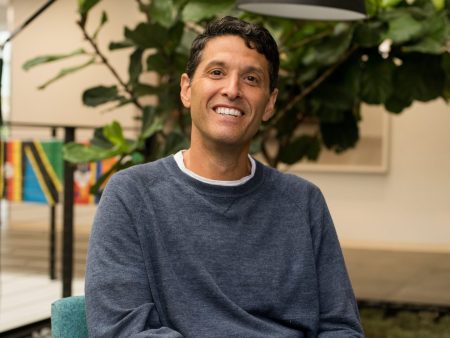






On a Tuesday morning that felt like a quiet turning point for the clean energy sector, Sila, a pioneering startup dedicated to rewriting the physics of energy storage, announced a fresh $300 million capital infusion. For founder and CEO Gene Berdichevsky—who cut his teeth as employee number seven at Tesla during its most volatile, early days—this milestone is more than just a financial victory; it is a profound validation of a decades-long pursuit to solve one of humanity’s most pressing engineering bottlenecks. Having previously raised a staggering $1.3 billion and commanded a valuation hovering around $2 billion, this latest round signals that the investment community remains intensely committed to Sila’s mission despite a shifting macroeconomic landscape. Backed by heavyweights like Atreides Management, Sutter Hill Ventures, 8VC, Bessemer Venture Partners, Matrix Partners, and funds managed by T. Rowe Price Associates, Sila is not merely aiming to survive the notorious “valley of death” that claims so many hardware startups. Instead, with a dedicated team of 400 scientists, engineers, and manufacturing specialists, the California-based company is systematically building the physical infrastructure required to transition the world from fossil fuel dependency to an electrified future. This new capital acts as a vital bridge, turning complex laboratory science into high-volume, tangible industrial output that will soon find its way into the products we use every day.
At the heart of Sila’s technological revolution lies a microscopic triumph over a material that has remained largely unchanged for three decades: graphite. Traditionally, the anodes of lithium-ion batteries—the component responsible for storing lithium ions when a battery charges—have been constructed using graphite, a material that is heavy, bulky, and increasingly entangled in global geopolitical supply chain disputes. Sila’s team spent years perfecting a proprietary silicon-carbon composite material that replaces graphite entirely, offering a masterclass in modern materials science. Silicon has long been the holy grail of battery chemistry because it can hold vastly more lithium than graphite, but it possessed a fatal flaw: when charged, silicon particles swell up to three times their original size, fracturing the battery’s internal structure and causing rapid failure. Sila’s engineers solved this fundamental physics problem by designing a nanostructured carbon scaffold that encapsulates the silicon, allowing it to expand and contract internally without damaging the surrounding battery cell. The human impact of this breakthrough cannot be overstated. For the average person, this complex atomic engineering translates to electric vehicles that can travel hundreds of miles further on a single charge, smartphones that do not require mid-day top-offs, and crucial weight reductions in medical devices and power tools, ultimately reshaping our daily interactions with technology.
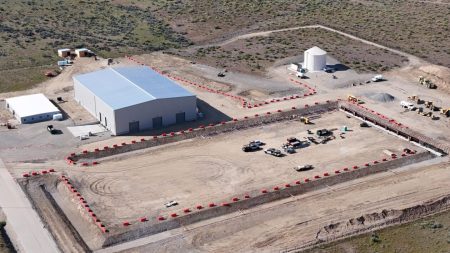
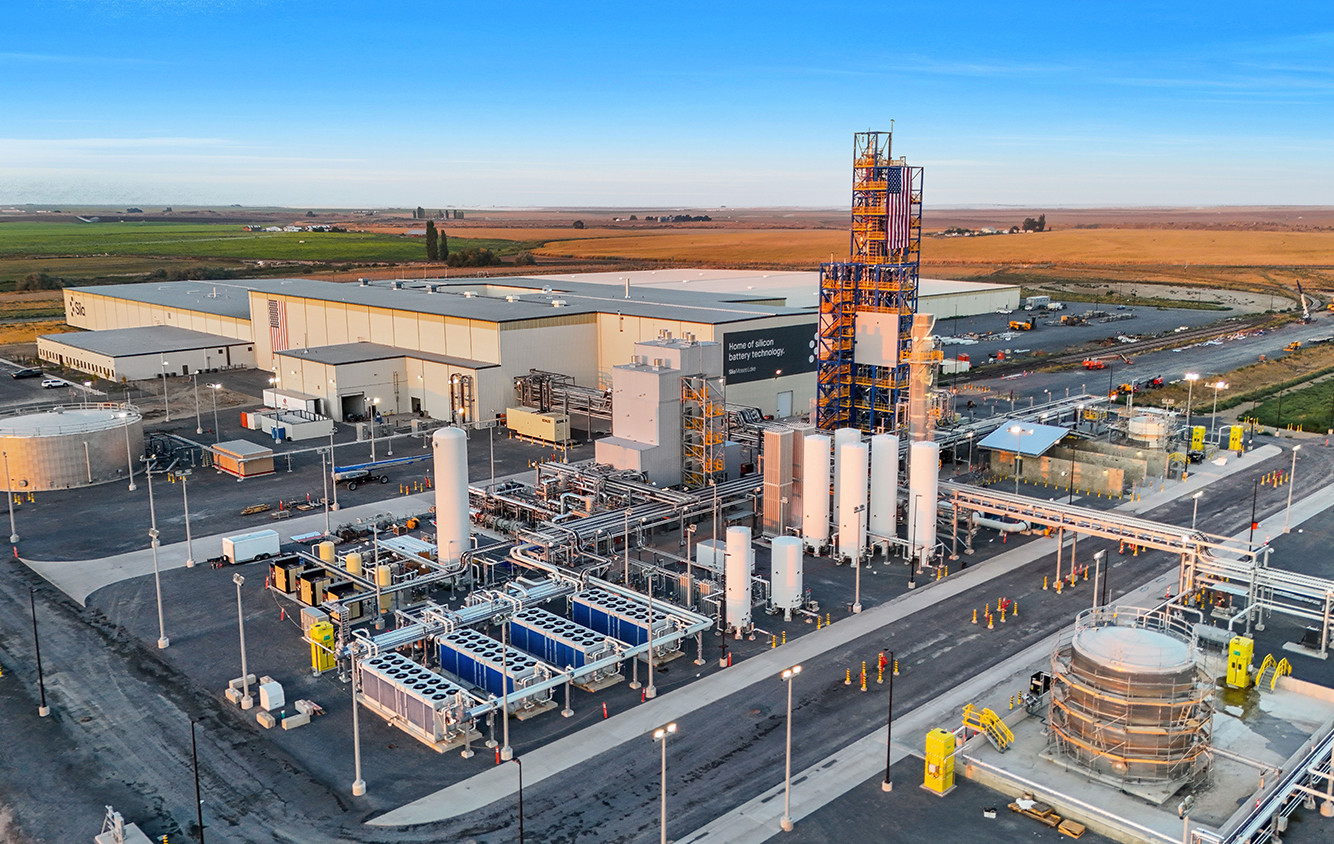
This ambitious vision found its physical home in the wind-swept plains of Moses Lake, Washington, where Sila commenced operations at its state-of-the-art plant last September. Once dominated by agricultural fields, cold storage warehouses, and aerospace testing grounds, Moses Lake is rapidly transforming into a premier hub for the American clean tech renaissance, largely driven by the region’s abundant, cheap hydro-power from the Columbia River basin. This facility represents the very first commercial, automotive-scale silicon-anode plant in the United States, representing a monumental achievement for domestic manufacturing. Sila is already shipping its advanced sample anode materials from this facility to global automotive manufacturers and consumer electronics customers for rigorous, real-world validation testing. Currently operating at a production capacity of roughly 2 gigawatt-hours—enough to power anywhere from 20,000 to 50,000 electric vehicles depending on the battery size—the company plans to use this newly acquired $300 million to initiate a massive expansion. The long-term physical goal is breathtaking in its scale: Sila aims to increase its production volume more than 100-fold. This expansion will turn the Moses Lake facility into a critical pillar of national security, helping the United States secure its own supply chains and reduce its dependence on foreign battery components.
Executing an industrial expansion of this magnitude requires navigating a volatile and highly unpredictable socioeconomic environment. In recent months, the domestic market for electric vehicles has cooled considerably, particularly as federal incentives and policy support waned following President Trump’s return to the White House. This shifting political landscape has forced many clean energy firms to reevaluate their strategies, but Sila’s leadership remains steadfast in its belief that superior technology will always win the day, regardless of political headwinds. This resilience is particularly striking when compared to Sila’s neighbor and rival in Moses Lake, Group14 Technologies, which has chosen to temporarily pause its domestic manufacturing scaling efforts to focus heavily on its joint-venture commercial plant in South Korea. While Group14 successfully delivers commercial-scale volumes for customer testing overseas, Sila is doubling down on its domestic footprint, betting that maintaining a robust, localized manufacturing base in Washington state will yield superior long-term dividends. By choosing to build, expand, and employ locally, Sila is proving that advanced manufacturing can flourish on American soil, offering stable, high-tech jobs to local communities while setting a global standard for supply chain integrity.
Furthermore, Sila’s market resilience lies in its diversified engineering philosophy: its revolutionary anode material is not a one-trick pony reserved exclusively for the passenger car market. While electric vehicles represent the most visible and celebrated application, the high-performance attributes of silicon-carbon anodes are desperately needed across a wide spectrum of modern human infrastructure. In consumer electronics, where devices continue to get thinner and more power-hungry, Sila’s materials offer a way to pack more energy into smaller, lighter enclosures without risking safety. On a grander scale, the rapid rise of artificial intelligence, high-performance computing, and cloud networks has triggered an unprecedented surge in the energy demands of global data centers. To prevent widespread grid instability, these massive facilities require incredibly reliable, high-capacity stationary battery installations that can store excess renewable energy and discharge it during peak demand. By positioning its silicon-carbon technology as a solution for both the pocket-sized devices that connect families across oceans and the megawatt-scale battery grids that protect metropolitan infrastructure during extreme weather, Sila is building an incredibly resilient corporate moat that is largely insulated from fluctuations in any single consumer sector.
Ultimately, Sila’s journey in Moses Lake is a poignant reminder of what is possible when human ingenuity, patient venture capital, and local communities align toward a shared, sustainable destiny. Gene Berdichevsky’s vision of “American innovation” is not a hollow marketing slogan; it is represented by the steel, concrete, and high-precision machinery operating day and night in Central Washington, transforming raw materials into the building blocks of a cleaner world. This $300 million investment is more than a line item on a balance sheet; it is an investment in clean air, stable jobs, and a future where humanity’s technological progress no longer comes at the expense of our planet’s health. As Sila embarks on its path to scale its production capacity a hundred times over, it is writing a new chapter in the history of industrialization—one where we transition from simply extracting resources from the earth to inventing elegant, synthetic materials that harmonize our insatiable need for power with our duty of stewardship. Through perseverance, scientific precision, and a deep-seated commitment to localized manufacturing, Sila is not just preparing for the future of clean energy; they are actively building it, one molecule at a time.