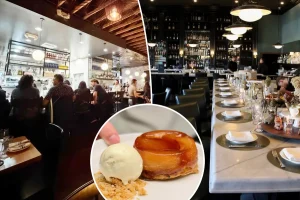





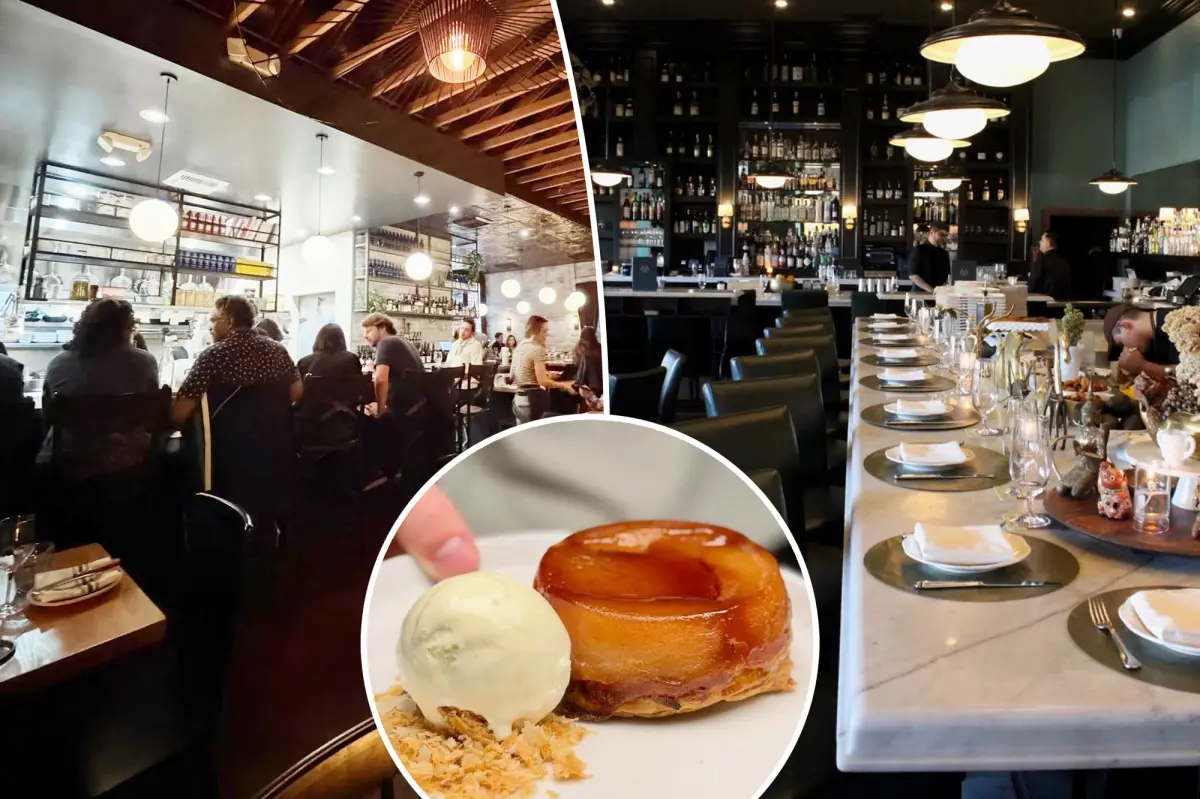
In Los Angeles, the idea of a “cheap night out” has been quietly rewritten, and for anyone who remembers when a fancy dinner meant saving up for a $60 steak, the new numbers are enough to make you blink. The Infatuation recently released an updated guide to the city’s best affordable tasting menus, and its definition of “affordable” is a meal that hovers around $150 per person or less. Let that sink in. A multi-course tasting menu, the kind that once felt like a once-a-year splurge, is now considered reasonably priced if it doesn’t creep past $150. The guide is careful with its language, calling these spots “relatively” affordable rather than bargain finds, and that little modifier says everything. It’s a sign of how dramatically the cost of a fancy meal in Los Angeles has soared. No one is pretending $150 is pocket change, but in a dining scene where omakase counters routinely charge $400 or more and Michelin-starred temples treat $500 dinners as a starting point, a meal under $150 can feel like a rare stroke of good luck. The whole situation forces a strange realization: “cheap” is now entirely in the eye of the beholder, and in 2025 Los Angeles, the beholder is squinting at price tags and feeling grateful for anything that doesn’t require a second mortgage.
This shift didn’t happen overnight, but it happened fast enough to make your head spin. As recently as 2024, Time Out Los Angeles published its own roundup of tasting menus under $100, and even back then it acknowledged that restaurant prices had been creeping upward. That article promised meals that wouldn’t “break the bank,” while also admitting that spending $100 per person on dinner was already out of reach for a lot of Angelenos. A year later, that $100 ceiling has almost become a punchline. Inflation has eaten away at everything, but restaurant costs have been hit especially hard. Ingredients cost more, commercial rents in Los Angeles are astronomical, labor costs have risen, and then there are the service fees that seem to appear on every bill like uninvited guests. All of these pressures have been baked into the menu prices, and the result is that yesterday’s special-occasion indulgence has become today’s baseline. The old frame of reference is gone. A tasting menu that costs $90 or $100 used to be a splurge; now it’s practically a steal. The Infatuation’s decision to set the bar at $150 is not a sign that the city has gotten more affordable. It’s a sign that the entire scale has shifted, and what once seemed like an extravagance now reads as reasonable. In a city where the top end of fine dining has become so expensive that it feels like a different universe, the middle ground is a place where $140 gets you dinner and a quiet sense of relief.
At the pricier end of the Infatuation’s list sits Baroo, a Korean restaurant in the Arts District that has built its reputation on fermentation and bold, inventive cooking. For $140, diners get seven courses that feel more like a journey through a lab of flavors than a traditional Korean meal. The menu changes with what’s fermenting and what’s in season, but you might encounter wagyu strip loin with a deeply savory fermented black bean sauce, or vegetables that have been transformed by time and brine into something you’ve never tasted before. Then there’s Holbox, which has become an insider darling for good reason. Tucked inside a South Los Angeles market hall, Holbox is a counter, not a white-tablecloth room, and its eight-course tasting menu runs $130 per guest—before tax and an 18 percent service charge, so you’ll want to mentally add that in. Holbox has earned a Michelin star and endless national accolades by focusing on razor-sharp Mexican coastal-style seafood. Think uni tostadas that taste like the ocean in its purest form, pristine ceviches with bright citrus and chile heat, and smoky grilled fish that makes you wonder why more places don’t cook over open fire. The seats face the open kitchen, and they’re hard to snag, but the experience is worth the effort. The room is casual, the food is anything but, and the contrast between the market-hall setting and the caliber of the cooking is exactly what makes Holbox special. Both Baroo and Holbox sit right near the top of the “affordable” range, yet neither feels like a bargain in the traditional sense. They feel like what you get when a talented chef decides to strip away the luxurious trappings and let the food do the talking.
Not every spot on the list flirts with the $150 ceiling, though, and that’s where the guide starts to feel genuinely hopeful. In Beverly Hills, the steakhouse Matu offers tasting menus that range from $64 to $115, all centered around grass-fed wagyu. It’s a place where you can get that rich, buttery beef without the usual price tag that makes your chest tighten. Over in Santa Monica, Crudo e Nudo proves that tasting menus don’t have to be stuffy or formal. For $95, you get a five-course seafood experience called “Neptune’s Flight,” and the vibe is relaxed enough that you don’t feel like you need to whisper or wear a jacket. Nancy Silverton’s Osteria Mozza, a Michelin-starred establishment, has a secret that insiders already know: head to the Amaro Bar on a weeknight and order the Pasta Tasting. For $80, you get four different pastas plus dessert, which is the kind of deal that feels almost illegal in this economy. You’re eating at one of the city’s most respected restaurants, surrounded by the warmth and polish that Silverton’s name guarantees, but the price is closer to a casual dinner out than a special occasion blowout. These restaurants understand that affordable doesn’t have to mean cheap in quality or experience. They’re offering real cooking, real hospitality, and real flavor at prices that don’t require a celebration to justify. It’s a reminder that a tasting menu is just a format, not a decree of how much you have to spend, and these chefs are using that format to give diners a way to taste a little bit of everything without emptying their accounts.
The list also includes some of the city’s most exciting smaller spots, proving that a $79 dinner can be just as memorable as one that costs twice as much. In Mar Vista, Electric Bleu brings French culinary chops to a five-course tasting menu for $79, where you can enjoy steak au poivre and pâté en croûte—that wonderful creation of pâté baked in a pastry crust—without the usual fine-dining sticker shock. It’s approachable French cooking that doesn’t sacrifice technique or flavor for the sake of a lower price. Meanwhile, in Koreatown, Chef Gary Menes has turned an intimate ten-seat counter at the Hotel Normandie into a celebration of local farming. His six-course menu clocks in at $95 and is constantly in rotation, reflecting whatever the farmers are bringing in that week. Menes challenges the white-tablecloth notion of fine dining, offering instead an experience that’s up close, personal, and deeply tied to the land. The room is tiny, the conversation is easy, and the vegetables are treated with the kind of reverence usually reserved for luxury ingredients. It’s a meal that makes you reconsider what fine dining is supposed to be. And then there’s Firstborn, chef Anthony Wang’s sleek Chinatown spot, which might be the best bang for your buck on the entire list. For just $68, you get an inventive four-course prix fixe menu that includes things like lamb neck terrine and dry-aged duck breast. That works out to about $17 a dish, which in today’s Los Angeles is almost like getting a free meal. It’s the kind of value that feels detached from reality, especially when you consider the creativity and precision involved. These restaurants are proof that you don’t need a $150 price tag to have a tasting menu that feels special. They’re proof that affordability and ambition can coexist, and that some of the best chefs in the city are choosing to work with smaller menus, smaller spaces, and smaller prices to make their food accessible.
In the end, The Infatuation’s guide is less a list of bargains and more a snapshot of a dining culture that has been turned upside down. We now live in a city where $150 a head is described as affordable, where people compare notes on how to stretch a tasting menu budget, and where the phrase “under $100” has gone from a promise to a nostalgic memory. But there’s something hopeful in these listings too. The restaurants on this list aren’t cheap because they’re cutting corners. They’re affordable because they’ve made deliberate choices—skipping the extravagant decor, keeping the dining rooms small, cooking from simple ingredients, and focusing on the experience rather than the status. They remind us that the worth of a meal isn’t measured in the price on the receipt. It’s measured in the moment when you take the first bite and everything else falls away. Los Angeles dining is expensive, no question about it, and the pressure on both restaurants and diners is real. But for every $400 omakase counter, there’s a tiny counter in a market hall serving world-class seafood for half that. For every celebrity chef restaurant with prices that make your eyes water, there’s a ten-seat room in Koreatown turning beautiful vegetables into art. The guide might stretch the definition of “affordable,” but it also offers a way back in—a reminder that a tasting menu can still be a doorway to something exciting, something delicious, and something you don’t have to go into debt to experience. In a city that’s becoming harder and harder to navigate for food lovers, that’s not just a value. It’s a small miracle.