




There is a morning every September when East Los Angeles wakes up early, before the sun has completely climbed over the San Gabriel Mountains, and the streets begin to hum with a sound that is older than any living memory. It is the sound of mariachi trumpets being warmed up, of mothers folding flags into strollers, of grandfathers adjusting their fedoras, of teenagers laughing as they unroll cases of red, white, and green fabric. The East LA Mexican Independence Day parade has been happening for 80 years now, and in a city that is always changing, always being rebuilt and reimagined, this annual gathering remains a joyful declaration: we are still here, and we still celebrate. Mexican Independence Day is September 16, not May 5, and for Mexican-American families across Los Angeles, it is a day to honor the courage of ancestors who fought for freedom and to pass that history to children born in a different country. The parade is not simply a civic event. It is a homecoming, a family reunion, a living classroom, and a feast for the senses all rolled into one long, loud, colorful procession through the neighborhoods that have nurtured Mexican-American culture for generations.
The story behind the celebration goes back more than two centuries, to September 16, 1810, when the priest Miguel Hidalgo rang the bell of his church in the small town of Dolores and called on the people of Mexico to rise up against Spanish colonial rule. That cry, the famous Grito de Dolores, was not a single moment of victory but the beginning of a long and painful struggle for independence. When Mexican immigrants and their descendants settled in East Los Angeles, they brought that memory with them, along with their language, their recipes, their songs, and their religious faith. Over time, the parade became a way to keep the story alive in a new land. For eighty years, the route has been lined with people who may not have been born in Mexico but who understand that their identity is woven from both sides of the border. They are Mexican-American, Chicano, Latino, Californian, Angeleno, and all of those identities are honored on the second half of September. The parade has witnessed enormous changes in the world around it, wars and economic crises, waves of immigration and waves of backlash, the rise of the Chicano Movement, the gentrification of historic neighborhoods, and the arrival of new generations who express their culture in new ways. Still, it has endured, because the need to belong to something larger than oneself never goes out of style.
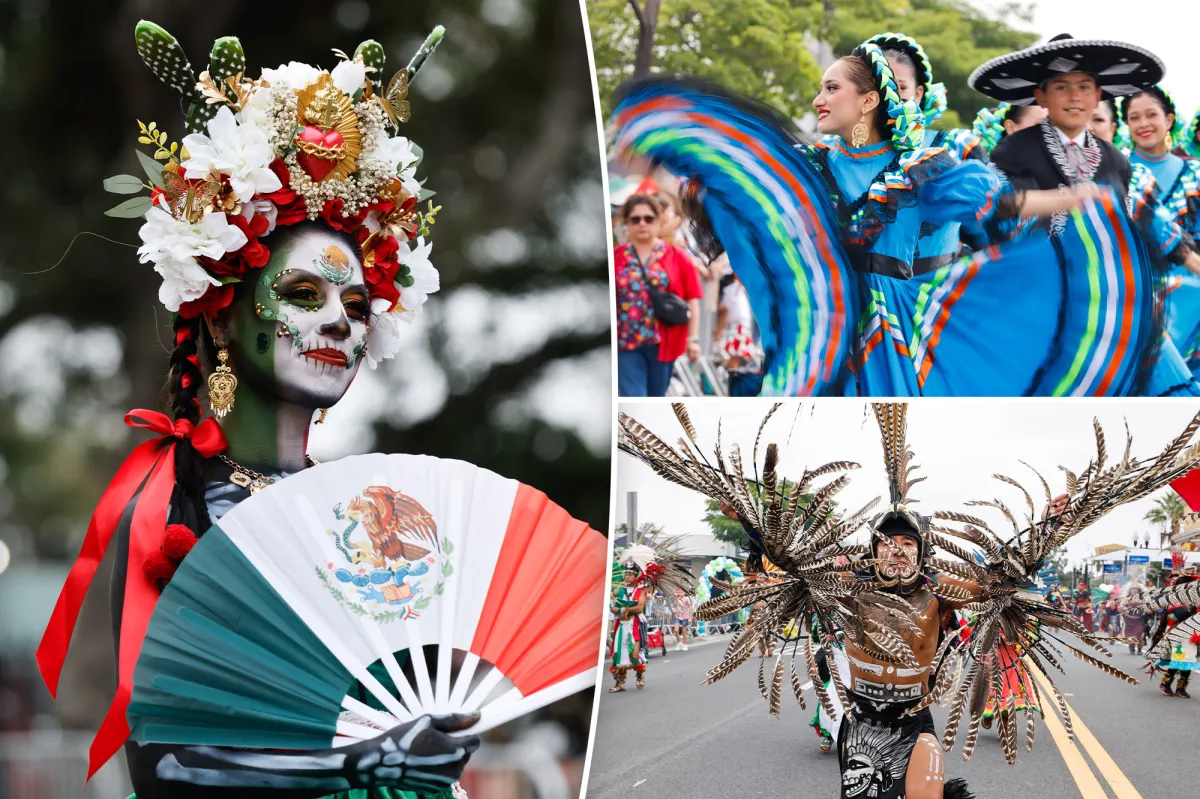
To walk along the parade route on the morning of the celebration is to be pulled into a swirl of color, music, and delicious chaos. The floats are works of community art, decorated with papel picado, fresh flowers, and elaborate paintings of Mexican heroes, Aztec symbols, and images of the Virgin of Guadalupe. Some floats carry young women in glittering crowns and long gowns, representing their schools or community organizations, waving to the crowd with the practiced grace of queens. Others are simpler, a pickup truck full of children waving flags, an old bus covered in crepe paper, a surprised neighbor who was recruited at the last minute to drive a group of folklorico dancers. The dancers themselves are treasures, their skirts flaring in brilliant reds, greens, and golds as they execute the complicated steps of dances from Jalisco, Veracruz, and other Mexican states. The music is everywhere and impossible to ignore. A high school band plays a cheerful march, and then a group of aging musicians from a local mariachi group answers with a soaring rendition of “El Son de la Negra.” Lowriders roll by at a slow, proud pace, their chrome bodies reflecting the California sun, their hydraulics lifting and dropping in a rhythm that feels like a heartbeat. Children sit on their fathers’ shoulders, wearing tiny charro hats and waving miniature Mexican flags. Older women in lace dresses watch from lawn chairs, fanning themselves and remembering parades from fifty years ago.
The human stories at the parade are as rich as the music. There is always a group of veterans, many of them now in their eighties and nineties, wearing their military uniforms with medals gleaming on their chests. They have served in World War II, Korea, Vietnam, Iraq, and Afghanistan, and on this day they are honored not only as soldiers but as members of a community that has sacrificed for both countries. There are teachers who bring their students to see the parade as a lesson in history and pride. There are grandmothers who arrive at dawn to save a spot on the sidewalk, folding chairs in hand, a cooler of aguas frescas at their feet, ready to greet every neighbor who passes by. There are young artists who have painted their faces with sugar skulls or Aztec designs, carrying signs that speak of justice, dignity, and remembrance. There are families who have participated in the parade every year since it began, and families who are marching for the very first time, nervous and beaming. When an especially good float goes by, the crowd cheers. When a favorite song begins, the whole block sings along. When a child gets tired and starts to fuss, a stranger offers a piece of candy. The parade is not a polished television production. It is a living community project, built by volunteers and sustained by love, and its imperfections are part of its beauty.
What makes the East LA parade so powerful is the way it unites an entire city. Los Angeles is famously divided by freeways, neighborhoods, class lines, and the enormous geography of the region itself, but on this day, people come from everywhere to share in the celebration. Families from the Westside pack into cars and drive east, curious tourists wander up from downtown, politicians of every background show up to shake hands and give speeches, and schoolchildren from dozens of different school districts arrive on yellow buses to learn about a culture that is central to the story of California. The parade is a reminder that Mexican-American history is not a niche subject or a side note. It is woven into the very fabric of Los Angeles, from the names of its streets to the flavors of its restaurants to the music that plays in its coffee shops. The city itself was founded on land that was once part of Mexico, and the Southwestern United States still carries the fingerprints of Spanish and Mexican influence. The parade asks everyone, regardless of their own background, to recognize that shared history and to celebrate it together. For one morning, the usual differences fade into the background. A banker and a farmworker stand side by side on the curb. A child from Koreatown and a child from Boyle Heights run up to the barricade for the same handful of candy thrown from a float. The applause is loudest not for the grandest entries but for the most meaningful ones, the veterans, the seniors, the neighborhood groups, the ordinary families who are extraordinary simply for showing up.
As the parade approaches its eighth decade, it does not feel like a museum piece or a nostalgic relic. It feels alive and necessary. The young people marching in it are already imagining the day when they will be the ones carrying the banners, and the oldest marchers look on with the quiet satisfaction of people who have kept a promise. Eight decades is a long time for any tradition to survive in a city that loves to reinvent itself, but the East LA Mexican Independence Day parade has survived because it is built on something deeper than nostalgia. It is built on identity, memory, and the stubborn belief that culture is worth passing on. When the last float turns the corner and the final song fades into the afternoon traffic, the streets of East Los Angeles become quiet again, but the feeling does not disappear. It goes home with everyone who was there. It lives in the stories told over dinner, the photographs shared online, the recipes remembered, and the handshake between a grandfather and a grandchild who agreed to come next year. And next year, the mariachis will tune their instruments again, the dancers will lace up their boots again, and the people of Los Angeles will find their way to the same sidewalks, ready to wave their flags and shout with all their hearts: ¡Viva México!