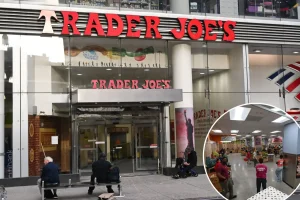






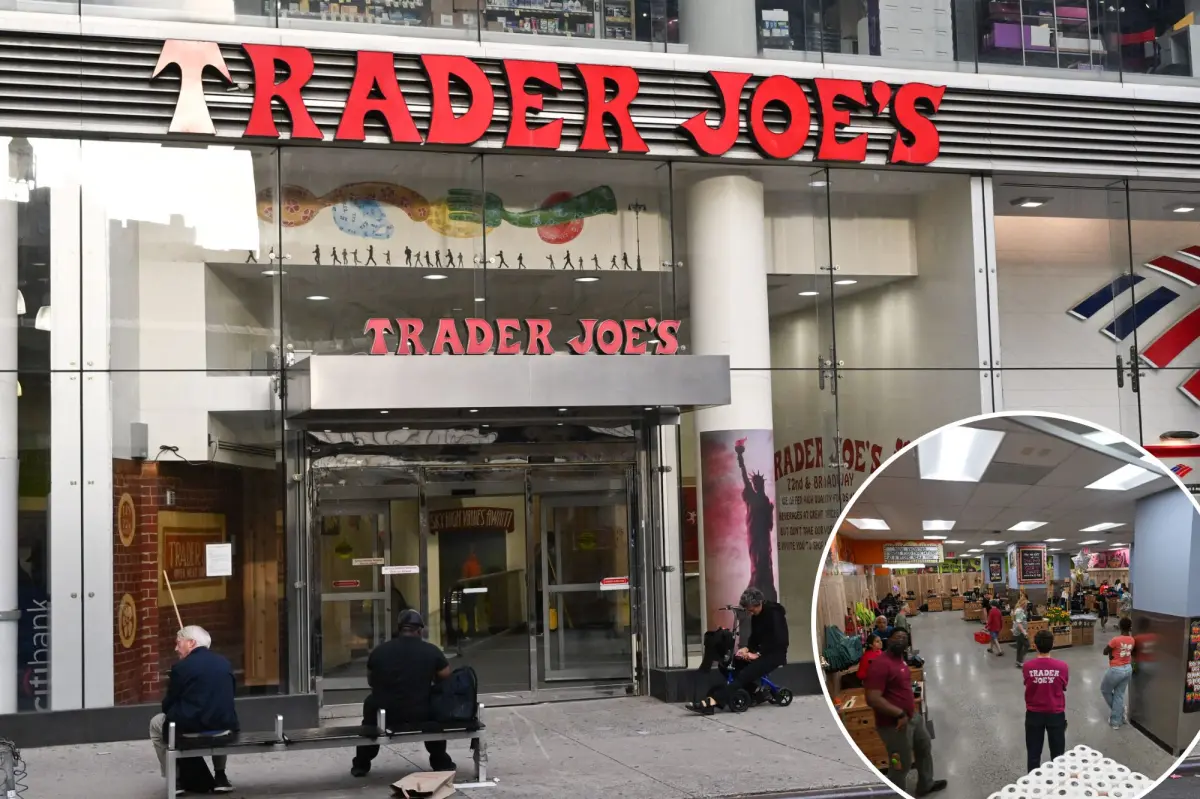
After five months of waiting, the Trader Joe’s on the Upper West Side finally reopened last Saturday. The news spread quickly through the neighborhood, which had been making do without its beloved specialty supermarket since the store shut its doors for a complete renovation. By mid-morning, the line was already snaking down Amsterdam Avenue: parents with strollers, seniors with wheeled carts, college students with backpacks, and more than one dog. It was the kind of crowd that would never wait this long for anything else, but this was no ordinary grocery store. This was the location sometimes called the busiest Trader Joe’s in the world, a title earned not just by the number of shoppers but by the upscale, family-friendly neighborhood around it. The anticipation was enormous. Five months is a long time in grocery-store years. Loyal customers had strong opinions about what the renovated space should include: wider aisles, a bigger produce section, an expanded cheese room, maybe even a better checkout flow. Everyone had a dream. So when the automatic doors opened, the crowd moved inside with genuine excitement, expecting a transformed, fully stocked paradise. What they found instead was a beautiful, clean, spacious store with almost nothing on the shelves. Both floors, the whole of it, had been renovated. But “space” was all they got. The renovation had clearly succeeded in making the place look better, and that only made the emptiness feel worse. Whistles and murmurs of appreciation died quickly as shoppers fanned out and discovered shelf after shelf of empty real estate. The aisles were uncommonly navigable, not because the layout had been radically improved but because there was no inventory to get in the way. It was like arriving at a famous restaurant after months of anticipation only to be served a menu with one item scratched out, then another, then another.
Inside, the mood swung from excitement to confusion to something that can only be described as hangry. The fresh polish of the renovation was everywhere: new signage, clean shelving, a layout that felt more open. But the aesthetic improvements only made the emptiness more glaring. The frozen food aisle, which would normally be cold and crowded, was nearly deserted. A young woman stood there scanning the glass doors in search of a single frozen package of gnocchi. After opening the same door twice, just to make sure she wasn’t hallucinating, she sighed and said, “It’s giving gulag.” It was the kind of comment that might have felt overly dramatic on a full stomach, but with no gnocchi in sight, it made perfect sense. A few aisles over, another shopper was having a more fundamental complaint. She had come for salt. Not a specific kind of salt, not a celebrity-brand salt, just a standard bag of salt. The shelf where salt used to live was bare. “They don’t even have bags of salt,” she said, as if the store had failed at the most basic definition of being a grocery store. Around her, other shoppers were having similar revelations. The pasta aisle was missing too many things. The tomato sauce section looked picked over. The meat coolers seemed half asleep. “What do they actually have?” someone asked, more to herself than to anyone else. It was a fair question. The employees, wearing their usual tropical shirts, were doing their best to direct people to what was available, but even they seemed a little stunned. They kept repeating the phrase “delayed shipments” like a mantra, as if saying it enough times might make the boxes appear. It didn’t.
By Sunday afternoon, a second wave of shoppers had arrived, hoping the reopening weekend might have brought a fresh delivery overnight. It had not. The store was still missing many of the pantry staples that keep New York kitchens running. Couscous, rice, and orzo were absent, or at least absent from their usual spots. Most varieties of tomato sauce were gone, which meant a Sunday pasta night was no longer a simple plan. The meat case was even grimmer: all kinds of bacon had disappeared, and most raw chicken was gone too. Ground chicken, whole chicken thighs, whole chicken breasts—take your pick, as long as you picked something else. Yogurt lovers found only a few of the less popular flavors. Mango, anyone? If you were not in the mood for mango, you were out of luck. The frozen food section had become a memorial to abandoned dinner plans. Asian specialties like chicken shu mai and scallion pancakes were missing. Mexican favorites like beef, chicken, and vegetarian tamales had vanished. Every kind of frozen pizza was gone. Nearly every variety of mac and cheese had failed to appear. The only thing more consistent than the emptiness was the look on shoppers’ faces: a blend of hunger, confusion, and disbelief. Even the cookie aisle, normally a source of simple joy, was struggling. One small girl, a devoted fan of the Sesame Street set, stared at the sparse shelves and then delivered a verdict that could have served as a slogan for the entire reopening: “Long line for no cookies.” She walked away empty-handed, biscuit-less, her disappointment echoing through the store. For parents, this was somehow the worst part. The children could endure only so much disappointment before they turned into tiny philosophers. “Long line for no cookies” was destined to be repeated for days.
Trader Joe’s employees are famous for their almost impossibly cheerful demeanor, and the staff at this location did not let the chaos break them. They stood by the shelves, answering questions, offering suggestions, and trying to spin the situation in a positive light. When a shopper asked about tomato basil sauce, one employee offered a look of genuine sympathy. “There were some delayed shipments, unfortunately,” he said. “But most of the new stuff is here.” He gestured toward a stack of frozen dishes and recommended the new Chicken Florentine Lasagna. It was a cheese-and-pasta creation that, according to him, was “actually amazing.” It was a generous recommendation, though perhaps not entirely objective. After all, the lasagna was one of the only prepared pasta dishes they had. If you wanted a hot meal, it was either that or whatever else happened to be sitting in the dismal freezer section. Still, the employee spoke with the confidence of a man who believed in his product, and several shoppers, hungry enough to be swayed, added one to their baskets. There was also one notable success story: garlic shrimp chips. These hotly anticipated, Asian-inspired snacks had fully sold out at other New York City locations, but this store had a robust pile of them, sitting there crisp and waiting in their bags. For a moment, the chips felt like a tiny miracle, proof that the store was not entirely cursed. Shoppers grabbed them with something approaching greed, grateful for at least one win. But the wins were rare, and the questions kept coming. When would the rest of the food arrive? The employees could only shrug. “Definitely later this week,” they said.
Unfortunately, “later this week” was the best anyone could offer. There was no definitive timeline for when the store would be fully stocked, and that uncertainty made the whole situation harder to accept. Trader Joe’s on the Upper West Side first opened its automatic doors in 2010. It took about ten minutes for it to become an institution. The store earned its reputation as the busiest Trader Joe’s in the world not just because of the sheer number of customers who squeezed through its doors, but because it served a neighborhood full of families who needed affordable groceries, wine, and frozen pizza in equal measure. It was the kind of place where you always ran into someone you knew, where the checkout line was a social event, and where the employees remembered your favorite snack. For five months, that institution had been closed, its doors covered in plywood, its faithful customers forced to shop elsewhere. The reopening should have been a triumphant moment. Instead, it was a strange, half-empty homecoming. The store looked like a place that had just moved in: clean and organized, but with none of the personality that comes from full shelves. The silence was perhaps the strangest part. A Trader Joe’s with empty shelves is like a bakery with no bread, a bank with no cash, a library with no books. The busiest Trader Joe’s in the world had become, for a few days, a very quiet place. Shoppers wandered through with half-full baskets, checking their lists a second and third time, as if the items might have magically appeared in the aisle they had just left. They didn’t.
So what is a hungry Upper West Sider supposed to do in the meantime? The best answer, for now, is to get creative. If you are desperate for strawberry gummy candy, or if you have been dreaming about pumpkin spice samosas, you may need to make a pilgrimage to the Chelsea location. Those items, sadly, were also missing from the renovated store. The Chelsea store, apparently, still has them, at least for the moment. And if you do go, maybe grab a few extra bags of garlic shrimp chips while you can. You never know when the next delayed shipment might hit. If there is a lesson in this strange weekend, it might be that even the best-loved institutions can stumble. A renovation is a lot of pressure. A reopening is even more. Delayed shipments will happen, to Trader Joe’s and to everyone else. What matters is how a community responds. The people of the Upper West Side responded the way they always do: with grumbles, with humor, with a little bit of melodrama, and with the unshakeable determination to come back and try again. Somewhere in the middle of it all, a young woman grumbled that the store was giving gulag. A small girl declared that a long line was not worth a cookie-less visit. A foodie discovered the garlic shrimp chips and felt a tiny spark of joy. These moments are what turn an ordinary shopping trip into a neighborhood story. Eventually, the salt will come back. The gnocchi will return to its rightful place in the freezer. The couscous, the rice, the orzo, the bacon, the chicken, the tamales, the frozen pizza, the mac and cheese—all of it will return. The shelves will be full again, and the Trader Joe’s on Amsterdam Avenue will once again live up to its title as the busiest, most beloved, and most joyful grocery store in the city. Until then, as one shopper observed, they need some shelf help. They do. But the shelves, like the neighborhood, won’t stay empty for long.