






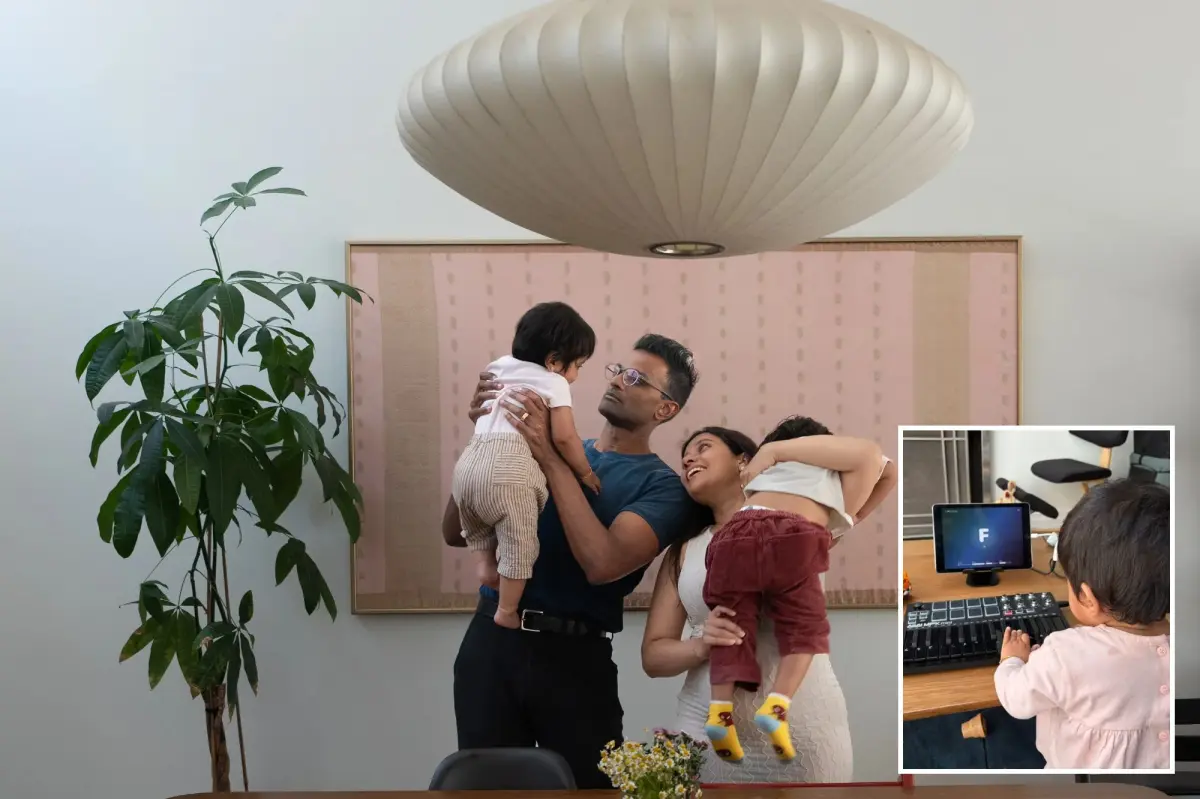
In the hills of San Francisco, where venture capital flows as freely as fog, a quiet educational revolution is taking root—one that looks nothing like the stereotypes of homeschooling that once dominated the American imagination. These aren’t rural families driven by religious conviction, nor off-grid hippies rejecting modernity. They are elite techies, engineers, investors, and AI researchers who have decided that the traditional classroom is no longer good enough for their children. Mrugesha Sathappan, a 32-year-old mother of three living in the city’s Nob Hill neighborhood, embodies this shift. She and her husband, Kartik, are part of a small but growing cohort of families using artificial intelligence to craft custom lessons, child-led projects, and real-world adventures they believe will give their kids something more precious than a transcript: agency. “I just want to be able to pay as much attention as possible to what my kids are learning, what are the values they’re learning—whether that is being adaptable, being kind, being useful,” Mrugesha says. For her, education is no longer about landing a future job; it’s about raising human beings who can bend without breaking, who can meet whatever comes next with curiosity and courage.
A typical day for the Sathappan household doesn’t look like a classroom. It starts with about twenty minutes of phonics or math, often transformed into custom games generated by AI, then spills into the world—museum visits, park expeditions, excursions to tech offices, and collaborative outings with other homeschooled families. Their preschool-age son, whose interests are taken seriously, recently became obsessed with rockets. Instead of waiting for a science unit to roll around in second grade, his parents bought him a rocket kit and together they plan to build and launch a model that will soar five hundred feet into the air. “You can’t really do that when you’re in school,” Kartik notes, a shrug of a statement that carries the entire philosophy of this movement. The couple has also launched a meetup group for families who are delaying or skipping traditional school, creating a small community of like-minded parents who trade resources and ideas. Their son devours fifteen to twenty books in a single sitting, not because he’s forced to, but because learning has become something that belongs to him. The theory underneath all of this is simple: traditional schools stifle creativity by trapping children in repetitive tasks, forced stillness, and arbitrary schedules, instead of offering hands-on problem solving that gives kids a real sense of ownership over their own growth.
The pandemic, strange and terrible as it was, cracked open a door that many parents had never noticed before. When school moved into living rooms, millions of families got an unfiltered look at what their children were actually doing—and not doing—for six hours a day. A fast-growing number of “normie” parents, as Kartik puts it, came to the conclusion that they might do just as well themselves, or better. The numbers are striking: homeschooling has skyrocketed from around three percent of American children in 2019 to more than six percent today, making it the fastest-growing form of alternative education in the country, according to the educational reform nonprofit EdChoice. In California alone, public school enrollment dropped by 612,000 students between 2015 and 2025 as charters and “microschools” multiplied. Even the mega-wealthy have joined in. Mark Zuckerberg famously ran a small school pod out of his Palo Alto home during the pandemic, and tech founder Jesse Ganet homeschools his four children with the help of AI agents. This is not a fringe movement of radical outsiders; it is increasingly a choice made by people with resources, networks, and the confidence to chart their own course. The pandemic didn’t create this desire for agency, but it gave it permission.
What’s striking is that many of these families could easily afford private school—yet they’ve concluded that even the most prestigious institutions aren’t worth it. Jamie Heston, a homeschooling consultant based in the Bay Area, says she’s fielding more and more calls from wealthy families who are underwhelmed by what posh private schools offer for $30,000 a year or more. They look at the price tag, the packed classrooms, the one-size-fits-all curriculum, and decide there has to be a better way. But in California, that choice comes with complications. Unlike states such as Arizona and Florida, which offer cash reimbursements to homeschoolers for textbooks and educational resources, California provides no stipends or “school choice” vouchers for families who opt out of public school. A legislative proposal that would have offered $8,000 school choice accounts failed to advance this year. Families can qualify for roughly $2,200 to $3,800 in annual funding if they homeschool through an established charter school, but that money comes with strict testing and tracking requirements that many parents find antithetical to the freedom they’re seeking. Despite these obstacles, families keep arriving—driven not by a hatred of institutions but by a deep desire to tailor education to the actual human being in front of them Mandarin. Heston insists this is not some scary movement, but a path toward building “creativity, critical thinking and executive functioning” in students who might otherwise fall through the cracks. “It’s not just the individualized education,” she says. “Bullying, drugs—you can avoid a lot of that. And you can change on a dime and tailor the education.”
At the heart of this lifestyle is a philosophical conviction that schools, by their very design, disrespect childhood. AI researcher Brady Neal, another San Francisco homeschooling dad, puts it bluntly: “Schools can be disrespectful of kids’ time, and parents want their time to be used widely.” That word—time—keeps coming up. Time wasted sitting still, waiting for the pace of the slowest student, filling out worksheets that have no connection to a child’s actual passions. Time that could be spent building rockets, reading twenty books, wandering through museums, or learning to think like a scientist by actually doing science. The Sathappans are careful not to be categorically anti-school. They are not mounting a crusade against teachers or public education. But they are radically redefining what education means: not the transfer of information, but the cultivation of adaptability, kindness, and usefulness. Kartik, who invests in alternative education companies through his fund, Families Fund, sees the trajectory clearly. The pandemic gave parents a glimpse of a different possible relationship with their children’s learning, and once you’ve seen it, it’s hard to unsee it. The rise of AI has made it even easier: a bot can generate a phonics game, a history lesson, a STEM challenge in seconds, tailored to a specific child’s interests and level. This isn’t about rejecting technology; it’s about wielding it to give kids the one thing traditional schools often deny them—the agency to shape their own minds.
The Sathappans’ decision is also personal, rooted in their own painful memories of education. Kartik spent his childhood in a traditional classroom that left him bored and over-medicated, a square peg hammered into a round hole. Mrugesha grew up in a crowded school in India where personal instruction was a luxury no one could afford. Both know what they don’t want for their children, and both are determined to offer something better. But they’re also humble about the future. They might eventually consider options like Alpha School, a chain of private and charter schools founded in Austin, Texas, that combines AI bots with “life skill workshops” where kids assemble IKEA furniture or solve a Rubik’s cube. And if their son, when he’s older, decides he wants to go to traditional school for his own reasons, they’ll see that as a success, not a failure. “If at some point he just tells us, ‘Hey guys, I really want to go to school for X, Y, and Z reason,’ then it’s like, okay we succeeded because he has the agency to make the decision for himself,” Mrugesha says. “And that’s fine.” In that quiet sentence lies the whole ethos: education isn’t about control or outcome. It’s about raising kids who know themselves, trust their instincts, and have the freedom to choose—whatever comes next.