




Travel is an act of vulnerability. At home, we know the unspoken rules: how close to stand, when to ask for help, what to say to a shopkeeper. Abroad, all of that disappears. We are tired, hungry, disoriented, and suddenly every interaction feels heavier than it should. A flat tone can feel like a slap. A blunt answer can feel like rejection. That’s why conversations about the “rudest” places in the world are so tricky. Experts who study cross-cultural behavior often point out that what we experience as all-out rudeness is usually not cruelty at all. It is a cultural difference, a mismatch of expectations, a collision between two very different ways of moving through the world. One side might see directness as honesty, while the other sees it as aggression. One might value efficiency above all, while the other values warmth. The same poll that highlights which countries seem cold to tourists also found that many Europeans regard Americans as rude and entitled. So the whole business of ranking rudeness is deeply subjective. A French person may find American small talk exhausting. An American may find Parisian brevity humiliating. Neither may be wrong, and both may be missing the point. We are all, in our own ways, failing to understand each other. Travel, after all, is not a contract where locals owe us friendliness. It is an invitation, and sometimes the invitation feels conditional. Still, there are destinations that consistently make travelers feel unwelcome, and listening to those stories tells us less about the locals than about the strange, fragile meeting point between visitor and host.
Nowhere is that meeting point more notoriously uncomfortable than in Paris. It surprises no one that the City of Light is often crowned the rudest destination on Earth. The stereotype is old and stubborn, and like all stereotypes, it has a kernel of truth buried under layers of exaggeration. Parisians, according to etiquette experts, do not always have the friendliest attitude toward tourists, especially those who do not speak French. Even when they can speak English, many refuse to do so on principle. The visitor’s ignorance of the language, reluctance to engage in cheek-kissing greetings, insistence on air conditioning, and aversion to offal and other French delicacies do not help. For a traveler, this can feel like being locked out of a beautiful house. You stand on the doorstep with your suitcase and your phrasebook, and no one opens the door. But here is the thing: the rudeness may be more regional than national. Step beyond the glittering arrondissements and into the countryside, into smaller villages and simpler cafes, and the warmth that Paris is said to lack often appears. The Parisian attitude is not so much a national character flaw as a deeply rooted cultural loyalty. It is a refusal to bend entirely to the demands of tourism, a quiet insistence that the city belongs to those who live in it, not only those who photograph it. Seen that way, the coldness becomes something more understandable. It is not hatred. It is exhaustion, pride, and a complicated relationship with a world that wants to consume a place without learning its language. And for the traveler, the lesson is humbling: we cannot expect a city to perform hospitality endlessly. At some point, we must meet a place halfway, or risk feeling like an uninvited guest.
Italy ranks second in the rundown, and this one stings a little because so many of us arrive in Italy expecting la dolce vita. We imagine warm olive groves, grandmothers waving from windows, and waiters who treat us like family. Instead, many travelers report curt interactions, impatient sighs, and dirty looks. One Redditor described being surprised by how unwelcoming locals seemed, with interactions that felt harsh and cold, and a few people who appeared to glare at them for no reason other than being American. It was disappointing, they said, especially because they had traveled widely and never felt such tension before. But the sage reply from another traveler was quick and practical: remember that you are visiting some of the most heavily touristed places in the entire world, and local jadedness is almost inevitable. Recent viral footage has shown swarms of people squeezing through Italy’s famous spots, causing human traffic jams, blocking streets to take photos, and leaving locals trapped in their own neighborhoods. When home becomes a tourist attraction, patience wears thin. The resentment is rarely about you personally. It is about the thousand people who came before you, and the ten thousand who will come after. In Italy, American tourists enjoy a strange and contradictory reputation. Some tour guides say the high-end travelers who stay at luxury hotels are among their most difficult clients: self-entitled, rude, demanding, and always late. Others praise American visitors for tipping generously and showing genuine appreciation for Italian food, wine, and history. This split says a lot. It suggests that the problem is not nationality but behavior. The wealthy and demanding tourist, the kind who treats the country as a backdrop for personal whims, will feel unwanted wherever they go. The curious, humble traveler, the one who savors the pasta and lingers in the piazza, will find the doors opening. Italy is not a hostile country. It is a country that has been loved too hard, too publicly, and too often by people who want everything from it but offer nothing back.
Germany and South Korea may seem like unrelated places, but both reveal how cultural style can masquerade as rudeness. There are entire Reddit threads dedicated to the perceived unfriendliness of Germans, especially toward Americans. Travelers describe visiting tourist information desks, train stations, and stores, where simple requests for help are met with eye rolls, blank stares, and instructions delivered in German even after the visitor has admitted not speaking the language. It feels personal, and it can be humiliating. But many Germans and longtime expats explain that the issue is not dislike of tourists. It is a distaste for idle chatter. Germans tend to keep to themselves and are not interested in small talk. They do not smile at strangers on the street, they do not ask how your day is going, and they do not pad their responses with pleasantries. To an American, conditioned to equate friendliness with conversational warmth, this can feel like rejection. But to someone from Germany, it is simply respect for boundaries and efficiency. The same dynamic plays out in South Korea. Travelers have described being snapped at, pushed in crowds, and made to feel like burdens. One visitor said the constant lack of personal space and the reluctance of staff to help made them feel unwelcome. But other travelers push back with stories of extraordinary kindness, of locals going out of their way to help strangers, of sweet interactions that left them feeling moved. A long-time expat offered the most balanced view: living in Korea for ten years, they said, depends on many things. Who you are, what race you are, what you are wearing, how old the people being rude to you are, and whether you were breaking cultural norms you should have learned before arriving. You cannot come, act like you are still home, and expect everyone to be okay with it. That is the heart of it. What we call rudeness is often just the consequence of the world not bending to us. Germany and Korea both ask visitors to pay attention, to observe before speaking, to respect the rhythm of the place. If we arrive with expectations of constant warmth, we will be disappointed. If we arrive with humility, we may be surprised by the depth of connection available.
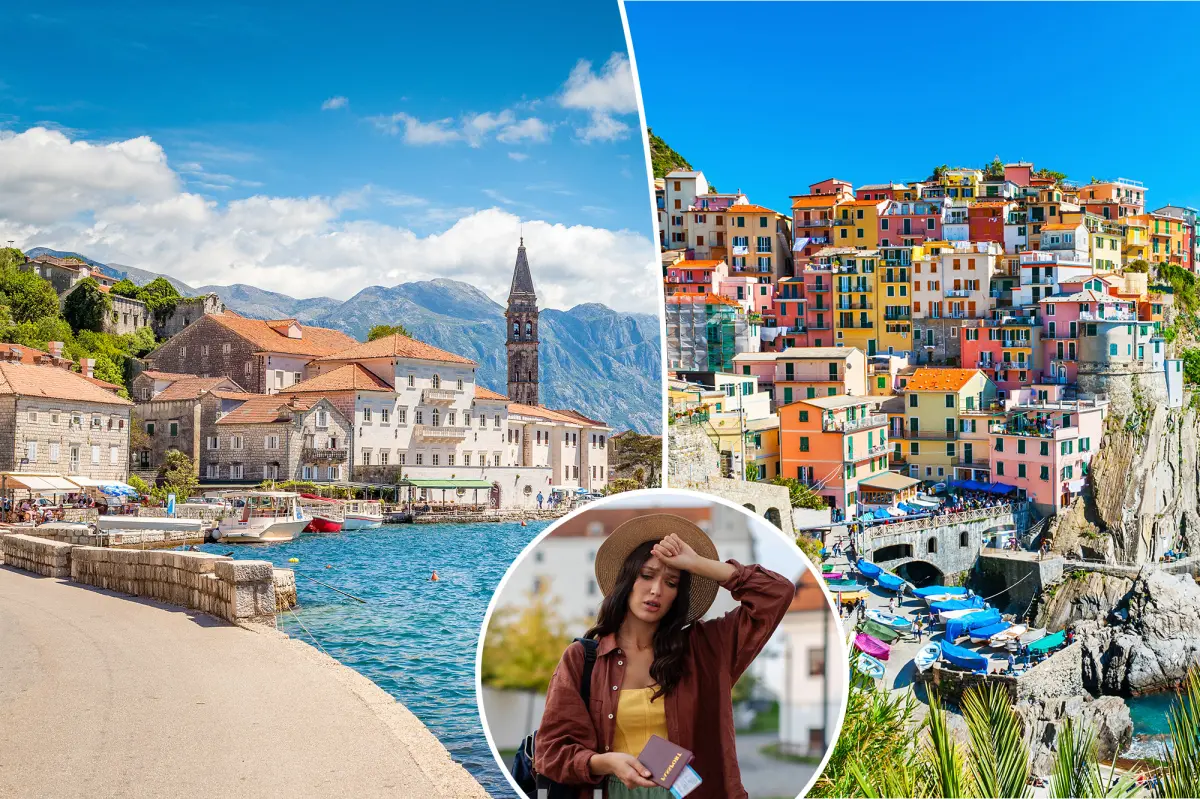
Back on American soil, New Yorkers have a reputation that is practically a tourist attraction in itself. A Business Insider study found that more than a third of Americans believe New Yorkers are unfriendly. One TikTok user asked, genuinely baffled, why people in New York seem so unhappy and why so many interactions feel mean. The comment section, however, offered a mountain of defense, and it was full of wisdom. New Yorkers insisted they are not unhappy; they just do not have time to walk slowly or make small talk. They are always on the go, always moving, always carrying too much. Etiquette in New York, they explained, is about not wasting other people’s time and not encroaching on their space. Efficiency is favored over pleasantries. But in a crisis, New Yorkers rally together like no one else. They are kind in ways that matter, not in ways that perform. One commenter famously and perfectly replied: “Respectfully, if everyone is rude, you’re not acting right.” Another, with a playful jab that summed it all up: “We don’t have time to coddle strangers.” And the best one, the one that made everyone laugh: “This isn’t Ohio.” There is something beautiful in that bluntness. It is not warmth in the traditional sense, but it is honest. And across the Atlantic, the small Balkan nation of Montenegro offers a more complicated case of perceived rudeness. Once a hidden gem, Montenegro now attracts millions of visitors each year, and with that influx has come friction. Travelers report being stared at, mocked for being tourists, and made to feel like nuisances simply for existing there. One Redditor said they were leaving early and would never come back, despite loving the food and the landscape. But a more thoughtful voice offered context: Montenegro’s history is built on resistance to foreign domination. For centuries, this little country fought to keep outsiders out. The wariness toward foreign authority, and toward foreigners in general, is not random hostility. It is a cultural memory, worn into the bones of the nation. Understanding that history does not excuse every rude encounter, but it explains them. A tourist demanding welcome is, perhaps unwittingly, repeating a pattern of presumption that Montenegrins have experienced for generations. The beauty of the country remains, but the welcome is filtered through a long and complicated past.
In the end, every place on this list teaches the same lesson from a different angle. Rudeness is real, but it is also relative. A global ranking of unfriendly destinations is a snapshot of miscommunication, not a verdict on a national soul. There is no country whose people are uniformly awful, and no country whose people are uniformly angelic. Awful is a human condition, scattered unevenly across every continent, found in every language and culture. Sweeping generalizations are just that: generalizations. They smooth over the kindness of one Parisian grandmother, the patience of one German ticket clerk, the compassion of one Seoul convenience store owner, the unexpected generosity of one Montenegrin fisherman. Travel is not a service that locals are meant to provide. It is an exchange, and like all exchanges, it works best when both sides bring something to the table. We bring respect, curiosity, and a willingness to laugh at ourselves. They bring their home, their culture, and the accumulated exhaustion of thousands upon thousands of visitors before us. Maybe the best way to travel is not to expect a warm welcome everywhere, but to try to earn one. Learn a few words. Slow down. Read the room. Apologize when you blunder. Tip well. Smile even when you are tired. And remember, when the world feels cold, that you are a stranger in someone else’s sanctuary. The least you can do is knock gently before walking in. If you do that, you might find that even the rudest places have soft spots, and that the people who seemed so distant are just waiting for a reason to trust you. That is the real magic of travel. It does not promise you kindness. It offers you the chance to understand why kindness sometimes hides, and why, when it finally appears, it is worth everything.