





In the not-too-distant future, the Moon may be more than just a glowing rock in the night sky; it could be a place where humans go to work, build things, and harvest resources that are vanishingly rare on Earth. That vision is at the heart of Interlune, a Seattle-based startup that just took another significant step toward making it real. The company announced that it has raised an additional $5 million through a Simple Agreement for Future Equity, or SAFE — a popular funding mechanism for early-stage ventures in which investors provide cash upfront in exchange for shares to be issued later, when the company raises a priced round at a formal valuation. It’s the second time this year that Interlune has raised $5 million this way, and the money is intended to support an evolving business plan that reaches far beyond its original focus on space mining. According to CEO Rob Meyerson, the continued confidence from both existing and new investors reflects real momentum. “The company’s continued traction with government contracts, along with major milestones across the space ecosystem over the past year, makes this a beneficial approach ahead of our next priced round,” Meyerson said in a statement. In plain terms, Interlune is positioning itself to be a major player in the emerging lunar economy — not just by digging up valuable materials, but by helping build the infrastructure and services that future Moon missions will need to survive and thrive.
Interlune was founded in 2020, a time when the idea of extracting natural resources from another world still felt like science fiction to many people. But the company had a very specific and compelling target from the start: helium-3, a rare isotope that is far more abundant in lunar rocks and soil — known as regolith — than it is here on Earth. Helium-3 is not a household name, but it’s a substance with extraordinary potential. It is prized for a range of cutting-edge applications, from medical imaging and quantum computing to the long-sought dream of fusion power, which could one day provide clean, nearly limitless energy. The price tag for helium-3 can exceed $9 million a pound, which makes it one of the most valuable materials imaginable. That scarcity and value explain why Interlune initially focused so heavily on developing technologies for extracting the isotope from lunar regolith. The Moon, after all, has been battered by solar wind for billions of years, and that constant exposure has embedded helium-3 in its surface layers in concentrations that are extraordinarily high compared to those found on Earth, where helium-3 is mostly produced in tiny amounts as a byproduct of nuclear weapons maintenance and other processes. For Interlune, the Moon is not just a destination; it’s a literal mine in the sky, rich with a resource that could help transform industries on Earth.
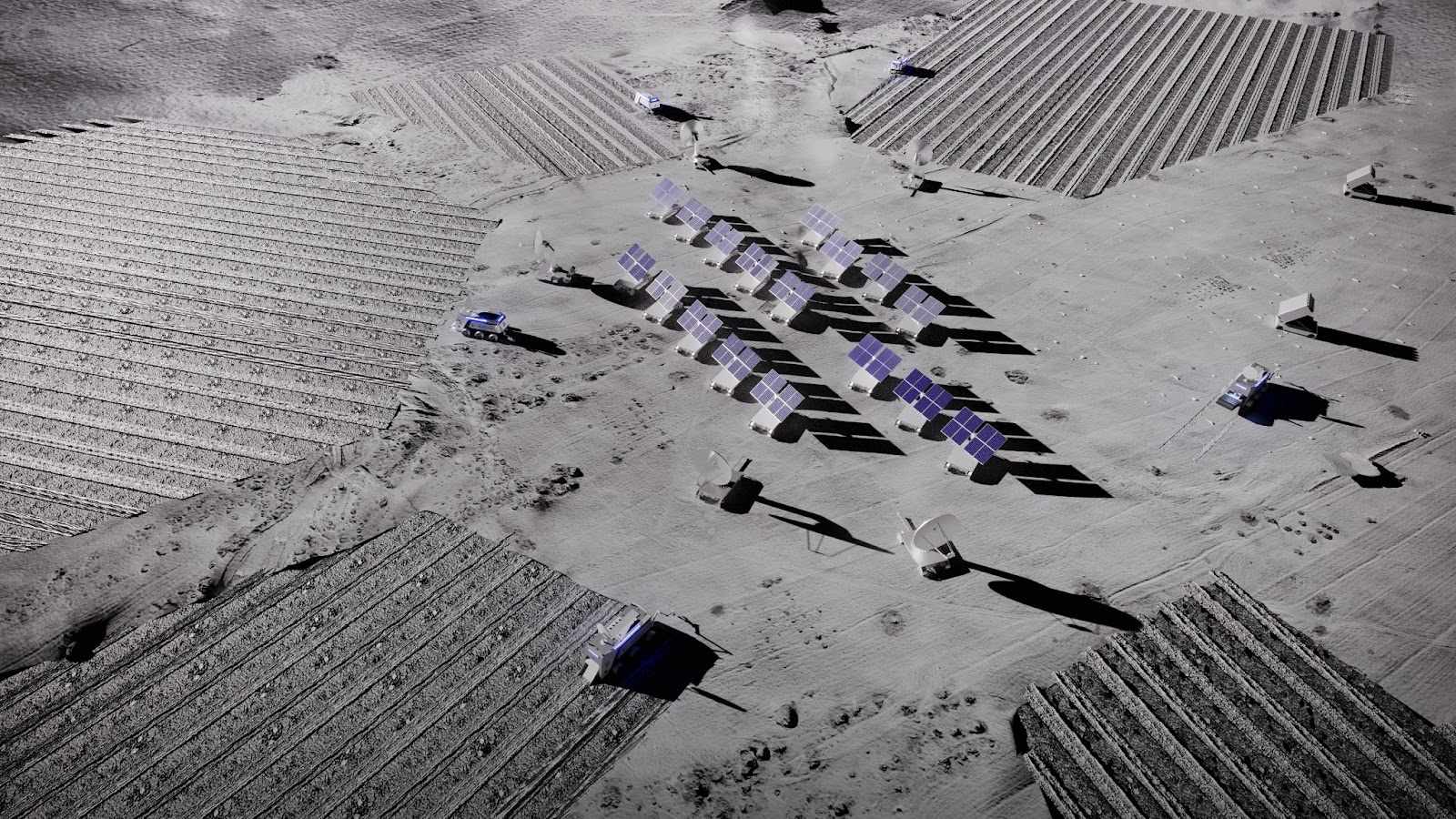
But as the company has matured, its vision has broadened. In response to growing demand across the space sector, Interlune has expanded beyond resource extraction to include space infrastructure and survival services. That may sound abstract, but in practice it means building the equipment, systems, and capabilities that will allow humans and machines to operate on the Moon for extended periods. “In response to growing market demand, we’ve expanded our product offering to include space infrastructure and survival services, leveraging the same technologies we’ve been developing to harvest natural resources from space,” Meyerson explained. The logic is simple: the technologies needed to dig, process, and handle lunar materials are essentially the same ones needed to build roads, landing pads, habitats, and other structures on the Moon. If you can learn to work with the harsh lunar environment — extreme temperatures, deep darkness, fine dust that gets into everything, and the lack of atmosphere — then you can provide essential services to other missions, from NASA to commercial ventures. This pivot is also a smart business move. Government contracts and large-scale initiatives, particularly NASA’s ambitious plan to build a long-term Moon base, represent billions of dollars in potential revenue. By positioning itself as both a mining company and a construction and services partner, Interlune is trying to become indispensable to the broader lunar ecosystem.
One of the most concrete signs of this expanded strategy is Interlune’s strengthening partnership with Vermeer, an Iowa-based industrial equipment manufacturer known for making heavy machinery like trenchers and drills used in terrestrial construction. The two companies announced in July that they are working together to develop construction tools specifically designed for use on the Moon. This is no small challenge. Lunar equipment must be lightweight enough to launch, robust enough to withstand the harsh conditions, and capable of handling regolith, which is abrasive and electrostatically charged. But the payoff could be enormous. NASA has laid out a 10-year, $30 billion initiative to build the infrastructure for a Moon base, and construction tools will be a critical piece of that effort. Landing pads, shelters, roads, blast shields, and even power plants will all need to be built from local materials or assembled on site. By partnering with Vermeer, Interlune gains access to decades of earth-moving expertise, reimagined for a world where gravity is one-sixth of Earth’s and the construction crews are more likely to be robots than humans. It’s a fascinating example of how industries born on Earth are beginning to branch out into space — not in some far-off future, but with partnerships being forged right now, in boardrooms and engineering labs.
Interlune’s near-term roadmap is equally ambitious. Later this year, the company plans to send its first payload to the Moon aboard Voyager Technologies’ Griffin-1 lander. That payload is a mineralogical mapping instrument, designed to take a closer look at the composition of the lunar surface and identify the best places to focus future mining efforts. It’s a reconnaissance mission, in the spirit of the old geological surveys that helped fuel the American West. Once Interlune knows where the richest deposits are, the follow-up missions will begin. These next steps involve characterizing the Moon’s helium-3 reserves in detail, then testing technologies for excavation and extraction — actually digging up the regolith and pulling the precious isotope out of the soil. Each mission will be more complex than the last, building on the lessons learned from the previous one. The ultimate goal is to start harvesting lunar helium-3 and bringing it back to Earth in the 2030s. That timeline may sound ambitious, but Interlune’s leaders believe it’s achievable if the company keeps moving steadily, testing its technologies in increasingly realistic conditions, and lining up the right funding and partnerships along the way. Of course, there are enormous risks — launch failures, technical setbacks, regulatory hurdles, and the simple fact that operating on the Moon is brutally difficult. But Interlune is betting that these challenges can be overcome, and that the rewards will be more than sufficient to justify the effort.
At its core, Interlune’s story is about a shift in how we think about space. For decades, the Moon was a place humans visited briefly and then left behind. Now, a growing number of companies and governments are treating it as a place to stay, to build, and to use. Interlune’s expansion from mining to infrastructure and survival services reflects that broader shift — from exploration to settlement, from flags and footprints to roads and factories. The funding round that Interlune just closed is not just about keeping the lights on; it’s about sustaining a long-term vision in which the Moon becomes an integral part of humanity’s economic sphere. The company is positioning itself to supply the materials and services that will make that vision possible, whether that means helium-3 for fusion power on Earth, or construction tools for a lunar base, or the life-support systems and other survival services that future crews will depend on. It is a vision that requires patience, capital, and a willingness to take big risks. But it is also a vision that is slowly becoming more concrete with every funding round, every partnership, and every payload that is built and launched. The Moon is no longer just a symbol of wonder; it is increasingly a place where the future is being built, one careful step at a time. And Interlune, with its feet on the ground and its machines aimed at the sky, intends to be part of that future.