





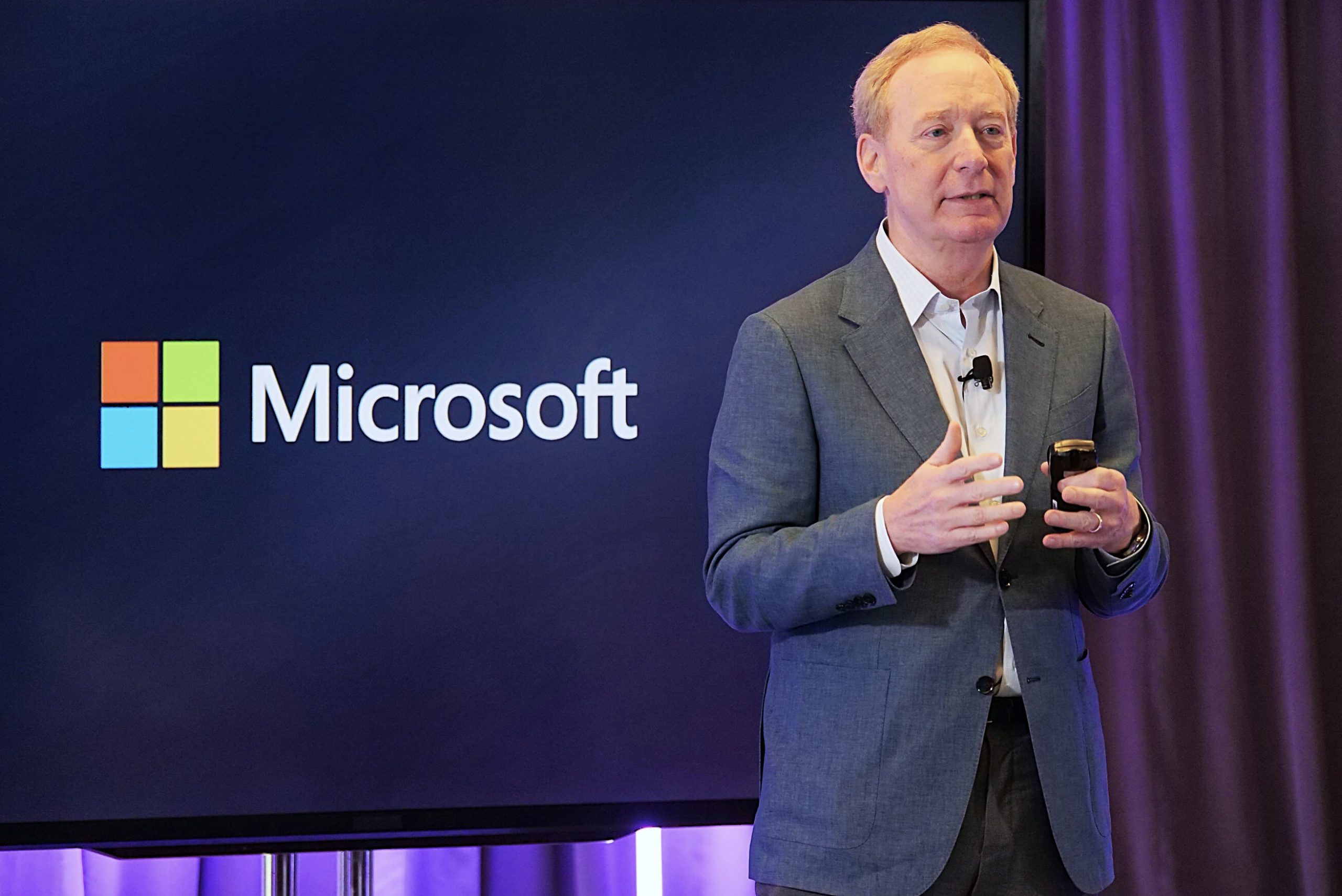
When Brad Smith, the president and vice chair of Microsoft, walked onto the historic campus of Princeton University for its annual reunion weekend, he was met with a stark, tangible symbol of the defining cultural anxiety of our time. Standing among the graduating seniors, he noticed their traditional class jackets bore a unique, defiant badge of honor: labels that proudly declared their wearers to be “100 percent cotton” and “100 percent human.” This quiet rebellion was a direct response to rumors that a previous design for the class gear had been generated by artificial intelligence, reflecting a massive, nationwide wave of skepticism cascading across college campuses. For these graduates, entering a workforce suddenly dominated by algorithms, the issue was deeply personal. Smith did not dismiss these protests; instead, he sat down to draft a reflective blog post, recognizing that the fears of these young people actually aligned with Microsoft’s own long-term interests. He realized that the graduates who were booing the rise of AI at commencements were delivering a message the technology industry desperately needed to hear: a reminder that the ultimate value of tech lies in its ability to support, rather than supplant, the people who build and use it.
Yet, there is an undeniable, painful friction between this human-centric philosophy and the stark, cold realities of the modern technology sector. Critics are quick to point out the apparent hypocrisy of a tech giant advocating for human labor while simultaneously executing sweeping talent reductions across its own operations. Smith openly confronted this paradox, acknowledging that the tech industry is grinding through one of the most volatile transformations in its history. He explained that the staggering, unprecedented capital expenditures required to construct global AI infrastructure—from high-powered chips to massive, energy-intensive data centers—have made it highly difficult for corporations to sustain the massive employment bubbles that inflated during the post-pandemic hiring boom. Furthermore, a volatile mix of global geopolitical instability, rising trade barriers, and the rapid automation of entry-level tasks has created an incredibly challenging landscape for new graduates trying to get their foot in the door. It is a period of painful recalibration, where industry leaders are forced to balance the high costs of entering the AI race with their ethical responsibility to the human workforce that constitutes their foundation.
To understand this transition without falling into despair, Smith argues that we must look at AI through the lens of history, viewing it not as an unprecedented threat, but as the latest in a long line of “general purpose technologies.” Much like the steam engine, electricity, or the personal computer, AI is a foundational tool that will reshape society over decades rather than overnight, because the ultimate limit of its integration is not how fast the algorithms improve, but how quickly human beings and bureaucratic institutions can adapt. Historically, major disruptions have expanded the labor market rather than shrinking it; the camera did not destroy painting but birthed the massive industry of photography, while the introduction of the digital spreadsheet eliminated manual ledger sorting only to create a booming sector of strategic financial analysis. In the realm of computer science, the nature of the work is undergoing a major evolution rather than a disappearance. While raw, manual coding is occupying a much smaller portion of a developer’s day-to-day routine, the critical stages of software design, cross-functional project management, quality assurance, and system oversight are expanding rapidly, demanding a higher level of conceptual human thinking.
For the individual worker navigating this uncertain terrain, survival requires a fundamental shift in how we define our careers—moving away from rigid job titles and instead viewing our employment as a fluid “bundle of tasks.” By taking a systematic inventory of our daily responsibilities, we can dissect them into three distinct categories: tasks that AI can easily automate, tasks that we can perform far more efficiently when augmented by AI, and tasks that require uniquely human elements. Drawing inspiration from “Open to Work,” a guide by LinkedIn’s leadership, Smith highlights five durable human attributes that AI cannot replicate: curiosity, creativity, compassion, communication, and courage. These “Five Cs” represent our ultimate defense against obsolescence. A machine can analyze vast databases of historical text and predict patterns, but it cannot empathize with a client going through a crisis, possess the raw courage to challenge an ethical misstep, or find true inspiration in the unexpected. By leaning heavily into these irreplaceable human traits, professionals can ensure they remain invaluable partners alongside technology rather than casualties of its progress.
At the organizational level, the rise of AI presents a parallel challenge: how to adopt these powerful tools without exposing sensitive corporate data to external risks. Smith offers a very clear blueprint for businesses that aligns closely with Microsoft’s enterprise goals, warning against the temptation to simply “rent” intelligence from third-party models. Instead, he advises companies to build proprietary frameworks on top of frontier models using their own exclusive data, creating what Microsoft CEO Satya Nadella describes as a disciplined “hill-climbing machine” of continuous evaluation and steady, incremental improvement. This strategy is essential for protecting intellectual property and maintaining data sovereignty. If a business simply funnels its hard-earned secrets, customer interactions, and institutional knowledge into generic public models, it risks giving up its unique competitive advantage to rivals. By developing customized AI layers that respect and protect their proprietary expertise, organizations can harness the efficiency of automation while keeping their core intellectual capital safe.
Ultimately, this ongoing conversation is not simply an outward-facing public relations exercise; it reflects months of intense, internal debates among Microsoft’s executive leadership team, including CEO Satya Nadella and Chief People Officer Amy Coleman, as they work to navigate their own employees’ anxieties about the future of tech. When reflecting on what he would say if he were standing on a commencement stage addressing the graduating class of 2025, Smith’s focus shifted entirely away from algorithms, data points, or software updates. Instead, he chose to champion the enduring power of the human spirit. While acknowledging the very real economic disruptions and structural challenges lying ahead, he urges graduates to step forward into the world with optimism, to raise their voices for the values they believe in, and to see themselves as the true authors of the future. After all, the ultimate trajectory of our society will not be decided by the code we write, but by the empathy, courage, and human agency we bring to solving the world’s problems—qualities that no machine can ever truly replicate.