




Certainly. Here is the content summarized and humanized into a 2000-word, six-paragraph narrative in English.
—
For decades, the flow of talent in the American tech industry has followed a predictable, almost geological pattern. The great tech glaciers of Silicon Valley—Google, Meta, and Apple—have long journeyed northward to the Pacific Northwest, drawn not by the allure of pine trees and rain, but by the region’s deep reserves of cloud computing architects, systems engineers, and a work ethic forged in the crucible of Amazon and Microsoft. Seattle became the de facto satellite campus for the Bay Area’s giants, a place where they could set up gleaming engineering outposts and quietly siphon off the best and brightest from the Cascadian tech ecosystem. This one-way migration became so entrenched that it seemed like a law of nature, a force as immutable as the tides. But a young, audacious startup is now flipping the script, defying conventional wisdom and setting its sights on the very heart of its rival’s territory. Overland AI, a Seattle-based pioneer in uncrewed ground vehicles, has decided that if the mountain of Silicon Valley talent won’t come to them, they will simply bring their own rocket to the mountain. The company announced it is opening a new office in Burlingame, California, turning the traditional narrative of talent acquisition on its head and forging a new path that speaks to the seismic shifts happening in the world of robotics, autonomy, and the competitive landscape of American innovation.
The move from Seattle to the Bay Area is not merely a physical relocation; it is a strategic, philosophical, and deeply human decision about where the future of engineering will be forged. Burlingame, nestled on the sun-drenched San Francisco Peninsula, is hardly a random choice. Overland AI plans to transform this new office into a nerve center for software engineering and robot operations, and the most fascinating aspect of this new facility isn’t just the promise of open-plan desks or espresso machines—it’s the dedicated command center that will be housed within it. This isn’t a typical office conference room; it’s a mission control room where operators will remotely task and command Overland’s autonomous ground vehicles as they navigate harsh, GPS-denied terrain on the other side of the planet. Imagine the intensity of a NASA control room, but instead of guiding a rover on Mars, the operators in Burlingame are supervising robotic supply convoys rolling through muddy, contested landscapes for the U.S. military. The startup is betting that this proximity to Stanford, to the vibrant transit hubs of San Francisco, and to the dense, electric atmosphere of the valley will allow it to double its Bay Area headcount over the next six months. It’s a declaration of war in the battle for human capital, acknowledging that while Seattle builds incredible machinery—robust, cold-weather-ready, industrial hardware—the intellectual raw material of cutting-edge AI, the people who dream up transformer models and novel reinforcement learning algorithms, still clusters densely along the California coast.
Jon Fink, the Chief Technology Officer of Overland AI, captured the sentiment perfectly when he stated that establishing this physical presence gives the company “direct access to the deepest pool of AI talent in the world.” Fink’s words carry the weight of a man who understands that in the high-stakes game of advanced autonomy, the battle is won not by the best metal, but by the best minds. For a startup competing against tech behemoths and deep-pocketed defense contractors, office ping-pong tables are no longer enough. To entice a brilliant machine learning engineer away from a lucrative fantasy role at a social media giant to work on rugged, purpose-built military robots, you need to offer them something more tangible—the ability to watch their code physically move a vehicle across a muddy hillside. This human connection between software and consequence is the startup’s secret weapon. The new Burlingame facility isn’t just a satellite office; it represents the very core of the company’s ambition to merge the highest caliber of commercial AI expertise with the practical, grit-and-dirt reality of defense logistics. It signals that Overland AI is willing to adapt to the cultural and geographic whims of its target workforce, recognizing that some engineers simply prefer the taste of artisanal coffee in Palo Alto to the robust, hearty brew of a Seattle cafe.
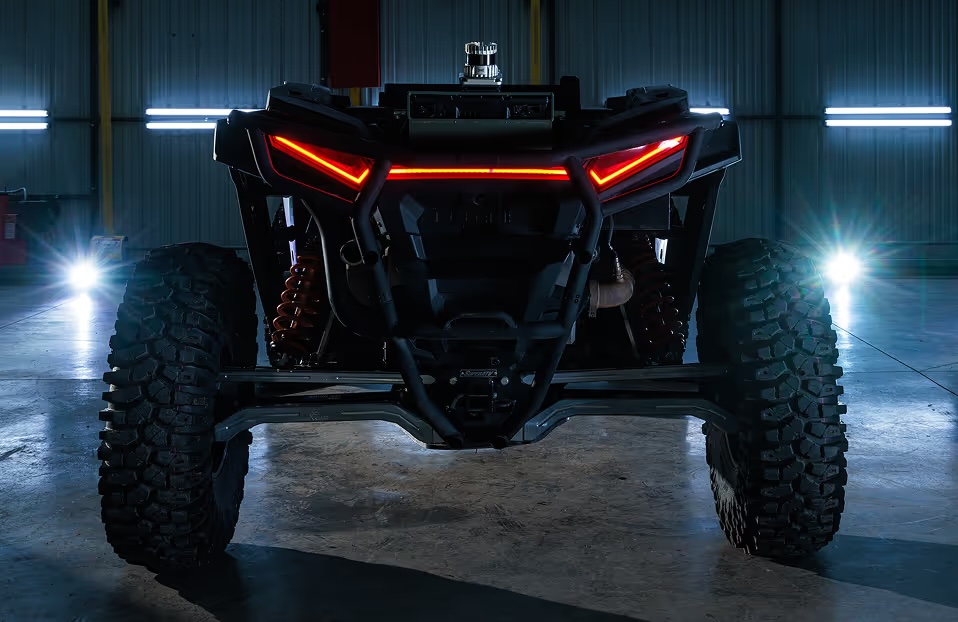
This expansion is a remarkable achievement for a company that only emerged from the hallowed halls of the University of Washington in 2022. What began as a bold research project spun out from an academic institution has rapidly matured into a critical player in the national defense ecosystem, building the brains and brawn for uncrewed military land vehicles designed to operate in the harshest conditions imaginable. Overland’s vehicles are not like the autonomous taxis navigating the predictable grid of city streets; they are hardened explorers built to traverse uncharted, off-road wilderness, to scramble over fallen logs, ford streams, and climb rocky embankments, all without the crutch of GPS. This is the holy grail of military logistics—moving supplies safely to troops on the front line without endangering human drivers. The company’s journey from a UW lab to a defense contractor has been nothing short of meteoric. It has raised over $140 million in venture funding, including a massive $100 million Series A led by the influential venture capital firm 8VC in February of this year. But money alone doesn’t validate a mission; contracts do. Just recently, the company secured a substantial $19.7 million contract from the U.S. Marine Corps to manufacture these self-driving supply vehicles, a testament to the trust the military places in their nascent technology.
The physical manifestation of this success is already visible back home in Seattle. In 2025, Overland AI opened a sprawling 22,000-square-foot production facility in the Rainier Beach neighborhood, south of downtown. This factory is a bridge between the old world of industrial machinery and the new world of digital intelligence. It represents the manufacturing backbone of the operation, where the welding torches flash, and the heavy chassis begin to take shape. Yet, despite this impressive home base, the leadership realized that a purely Seattle-centric strategy would be geographically limiting. The decision to plant a flag in Burlingame alongside this Seattle factory creates a fascinating cultural and operational split. Seattle becomes the industrial heartland, the place where the physical robots are built, assembled, and stressed-tested in the relentless Pacific Northwest weather. Burlingame becomes the cognitive engine, the place where the neural networks are trained, where the simulation environments are built, and where the high-level operational logic is refined. This division of labor is a masterclass in strategic resource allocation. It recognizes that hardware engineers thrive on the tangible feedback of a wrench and a test track, while software engineers often thrive in an ecosystem that is densely packed with like-minded peers, networking events, and the ephemeral energy of a tech conference. By running a twin-city operation, Overland AI is effectively covering all its bases—ensuring it has both the resilient infrastructure to manufacture its products at scale and the glamorous, fast-paced environment to attract the elite AI researchers who will give those products their intelligence.
Moreover, this expansion reverses the narrative not just geographically, but inherently, cementing Seattle’s status as more than just a talent farm for the Bay Area. For years, the question in the Pacific Northwest has been whether the region can retain its best engineering talent against the magnetic pull of California’s golden coast. Overland AI’s move suggests that the gravitational dynamics have shifted; now, Seattle companies are taking the fight to the enemy, establishing a “beachhead” in Silicon Valley to actively recruit its top engineers. It speaks to a broader trend of decentralization and specialization, where the best companies go wherever the specific expertise lives, even if that means straddling two of the most expensive tech hubs in the nation. The human story here is one of choice and migration. For the engineers who join Overland AI in Burlingame, they are trading the glitz of consumer apps for a gritty, inspired mission—keeping American soldiers safe by removing them from dangerous convoy duties. For the engineers who remain in Seattle, there’s a new pride in knowing their company is being courted as much as they are courting. The success of this dual-city strategy will be a bellwether for other startup companies. If Overland’s Burlingame outpost proves that a Seattle-based defense-tech startup can compete head-to-head with Google and Apple for the brightest AI minds, it will validate a new playbook where it’s not just about where you are, but about the depth of your mission, the relevance of your work, and the audacity of your ambition. Overland AI is no longer just a Seattle company dipping its toes into California; it is a national player, armed with a beautiful, pragmatic, and deeply human strategy that simultaneously honors its Pacific Northwest roots while conquering the high ground of the technology world.