


The Big Announcement and the Billion-Dollar Bait
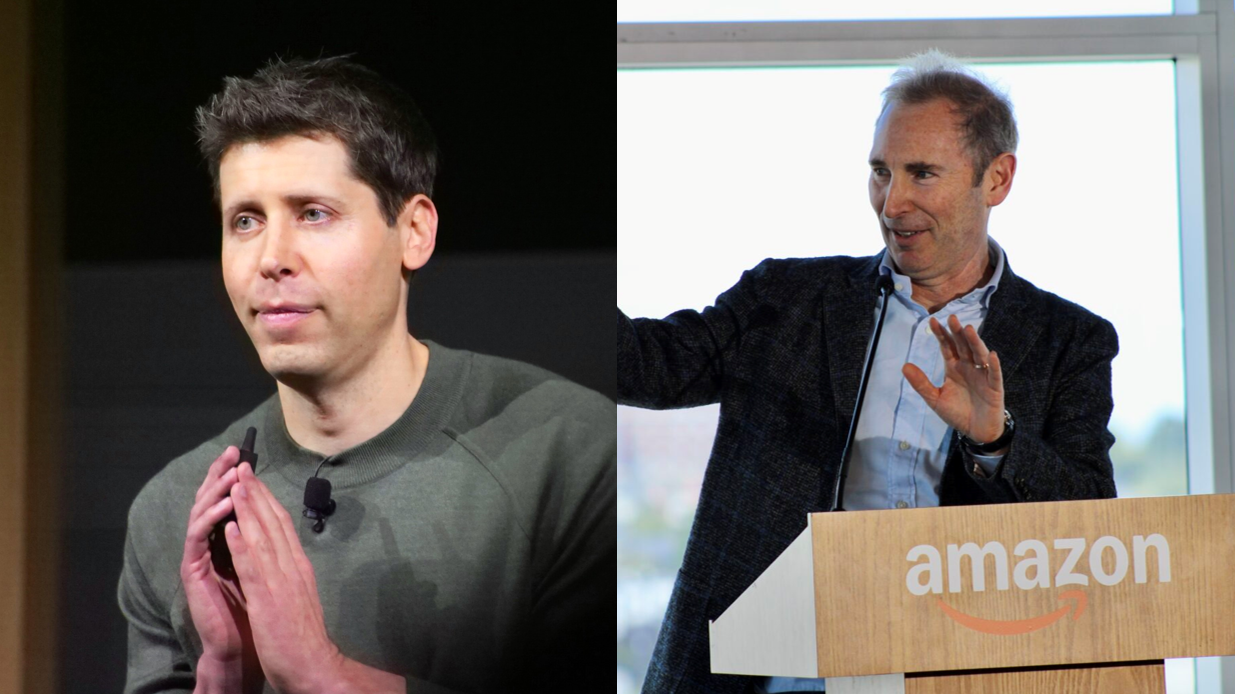
Picture this: It’s Friday, and the tech world is buzzing like a beehive that’s just been poked with a stick. Sam Altman, the sharp-eyed CEO of OpenAI, steps up alongside Amazon’s Andy Jassy, the mastermind behind the online retail giant’s cloud ambitions. They’re in front of cameras, smiling like they’ve just cracked the code to the universe. News breaks: Amazon is plunking down a whopping $50 billion into OpenAI, a strategic hug that’s more than just cash—it’s a partnership that could reshape how we think about AI. But peel back the headlines, and it’s not as simple as writing a check. The deal unfolds in stages, starting with $15 billion slotted for a special kind of stock called Series C Preferred, due by March 31. That’s the easy part. The real kicker? Another $35 billion hanging in the balance, triggered by specific events. And get this—it’s actually $34,999,999,447.98 because, well, math doesn’t always divide neatly, leaving about $552 short. Doesn’t that add a quirky human touch to billion-dollar deals?
This isn’t isolated; OpenAI’s pulling in a massive $110 billion haul overall, valuing the company at $730 billion before this round. SoftBank and Nvidia are each chipping in $30 billion, matching Amazon’s slice. Other investors are still expected to jump on board as things progress. It’s a funding fiesta, but here’s where it gets intriguingly layered: Microsoft, OpenAI’s biggest backer so far, hasn’t dipped into this round yet. There’s chatter they might still have an option to join. OpenAI and Microsoft issued a united statement affirming their solid partnership remains intact. Meanwhile, Microsoft sprinkled $5 billion into Anthropic last year, so now both Seattle titans—Amazon and Microsoft—have skin in the game with AI heavyweights like Claude from Anthropic and ChatGPT from OpenAI. It’s like a high-stakes poker game where everyone’s betting on the future of intelligence, and no one’s folding yet. The air’s thick with anticipation, as these moves signal a shift from rivalries to a tangled web of alliances, all while average folks ponder what this means for everyday gadgets and gizmos.
Triggers, Timelines, and the Small Print Drama
Let’s dive into the mechanics, because nothing in big deals is straightforward—there’s always a catch. Amazon gets to snap up the remaining shares whenever it feels like it, no strings attached at first glance. But two plot twists can force their hand, mandating the full $35 billion investment within a mere five business days. One’s dubbed a “Mandatory Funding Event,” but oh, the filings play coy—it’s redacted, shrouded in secrecy. Could it be hitting some elusive artificial general intelligence milestone, where AI starts thinking like a superhuman? Speculation’s flying, with hints of AGI clauses in similar deals. The other trigger? An OpenAI IPO. If they file privately with the SEC and give Amazon the heads-up, Amazon must buy in, with up to four weeks to pull the trigger or five days after the S-1 goes public—whichever comes later. Altman himself hinted during an CNBC chat that OpenAI’s receptive to going public “at the right time,” leaving investors on tenterhooks.
What form does this investment take? If Amazon ponies up before any IPO bells ring, it’s more Series C Preferred Stock. But post-public offering, it morphs into common stock—equality in the shareholder spotlight. The clock’s ticking, though; this whole extra commitment clock expires December 31, 2028. If by then, no triggers have prodded Amazon and the cash hasn’t flowed, poof—it vanishes. Breachville gets accommodated too: Damages cap at the unfunded amount, and either side can go court to enforce, nixing jury trials for streamlined speed. It’s like a binding handshake deal among giants, where trust is currency, but contingencies ensure no one’s left high and dry. Imagine the boardrooms where legal eagles sort this out—late nights, coffee runs, and debates on what “material breach” really means. In a world racing toward AI dominance, these clauses feel like safeguards in a rollercoaster ride, balancing bold bets with pragmatic brakes.
The Cloud Empire Expands, Powered by Chips and Dreams
Beyond the dollars, there’s a parallel universe of cloud computing tying it all together. On the same sun-kissed Friday, Amazon and OpenAI inked not one, but two new deals—a Joint Collaboration Agreement and an expanded cloud pact. OpenAI was already locked into a $38 billion multi-year AWS gig, but this ramps it up to a jaw-dropping $100 billion over eight years. That’s not monopoly money; it’s reshaping how AI gets built and deployed globally. A standout detail? OpenAI vows to gulp down 2 gigawatts of power via Amazon’s Trainium chips. For context, a beefy nuclear plant churns out about 1 gigawatt, so we’re talking computational horsepower on a planetary scale—enough to train AI models that could, well, change everything.
Trainium’s Amazon’s in-house AI chip, pitched as a budget-friendly rival to Nvidia’s GPUs, and interestingly, Anthropic’s already warming up its Claude upgrades on them. OpenAI’s leap makes it the second big AI outfit to hitch its wagon here. Together, they’re even co-creating a “Stateful Runtime Environment” fueled by OpenAI’s brains, embedded in Amazon’s Bedrock AI platform. This isn’t your basic chatbot; it’s about AI agents that remember past interactions, juggle multiple tasks seamlessly, and flow across systems—launching soon, per OpenAI’s roadmap. The partnership dips into custom AI models tailored for Amazon’s front-end magic, like enhancing Alexa or other consumer apps, layering onto Amazon’s Nova AI lineup. It’s a symbiotic dance, where cloud power meets cutting-edge brains, promising smoother, smarter user experiences. For everyday users, this could mean virtual assistants that genuinely “get” you over time, turning futuristic hype into tangible conveniences right in our pockets.
History’s Echoes and the Path to This Moment
Rewind the tape, and you’ll see Amazon and OpenAI’s flirtation predates this splashy reveal. Public filings nod to a nondisclosure agreement from May 23, 2023—nearly three years ago, just months before Amazon dropped $4 billion into Anthropic. Why the delay? Enter Microsoft, wielding veto power over OpenAI’s compute partnerships and product collaborations. Picture OpenAI as a key player in a tech tug-of-war, restrained from romancing other clouds or co-developing with outsiders. That all loosened in October 2025, when Microsoft and OpenAI redesigned their bond. Restrictions lifted, allowing third-party dev deals and scrapping the compute exclusivity clause. OpenAI sweetened the pot with a pledge for an extra $250 billion in Azure services, a multibillion-dollar balm to soothe any ruffled feathers.
In their CNBC powwow, Jassy casually mentioned chats with Altman had been “for a while,” and this OpenAI tie-in was already baked into Amazon’s $200 billion capital spending blueprint for the year. It’s storytelling gold: tech titans conversing over coffee dates, strategizing in hushed tones, while the world makes memes about AI doomsdays. These backstories humanize the giants— they’re not cold machines strategizing; they’re people navigating alliances, histories of hiccups, and the thrill of innovation. For us onlookers, it reveals how partnerships evolve, driven by ambition and necessity, turning potential standoffs into collaborative feasts where everyone wins slices of the AI pie.
The Mysteries and Microsoft’s Muted Role
Now, for the juicy bits left shrouded: the filings are a redaction fest, shielding what exactly spurs that $35 billion “Mandatory Funding Event” or what could nix the deal entirely. “Material breach” terms? Conditions for extra buy-ins? It’s all blacked out, fueling wild theories that it might hinge on OpenAI conquering artificial general intelligence—a fuzzy frontier of human-level smarts across domains. There’s an AGI tie-in in Microsoft’s deal with OpenAI, but Altman shot that down swiftly on air: “We’re not doing new deals that stop when AGI gets reached.” It’s pragmatic wisdom; why cap boundless potential? Still, the secrecy stokes curiosity, making us all amateur detectives poring over clues in a high-tech mystery novel.
Microsoft’s subplot adds intrigue. Amid the fanfare, they released a joint statement with OpenAI, clarifying that Azure stays the go-to for stateless APIs—The basic, one-off prompt-response exchanges. Stateful stuff? That’s getting delegated. Their IP license endures too, powering tools like Copilot and Bing, with revenue shares intact—even from OpenAI’s cloud flings with others. Frontier, OpenAI’s agent-building platform? It runs on Azure, but AWS gets the nod for third-party distribution to enterprises. Bottom line? Microsoft’s clutching the core engine room, while Amazon grabs peripheral perks. It’s a nuanced divorce in partnership-land, proving flexibility beats fierce fidelity in the AI race. For consumers, it means more choice and innovation, as barriers erode and ecosystems intermingle.
Wrapping It All: A New Era of AI Alliances, No Sides Left Untouched
In the grand tapestry, exclusive AI flings are so last season. Microsoft’s got its claws in OpenAI’s foundational bits—the APIs, the revenue flows, the intellectual goldmine. Amazon snags the juicier add-ons: that Trainium-fueled model training, the co-crafted Stateful Runtime for Bedrock, and even exclusive rights to peddle Frontier to cloud-seeking enterprises. Both Big Tech neighbors are knee-deep in Anthropic investments, hedging bets like savvy traders. OpenAI? It’s now a jackpot everyone’s angling for, with funding flowing from every corner. No more black-and-white loyalties; it’s a colorful mosaic of collaboration, where the lines blur and opportunities multiply.
This shift feels evolutionary, almost inevitable—like how the internet once morphed from walled gardens to open highways. Big players like Amazon, Microsoft, and others aren’t just playing chess with pawns; they’re assembling coalitions to outmaneuver the uncertainties of tomorrow’s AI landscape. For us humans, it sparks optimism: accelerated advancements in healthcare, education, creativity—think AI tutors that adapt or assistants that anticipate needs. Yet, it whispers caution too—guardians over fairness, ethics, and access. As Altman and Jassy’s deal simmers into reality, it’s a reminder that beneath the billions lie human stories: ambition, rivalry turned to synergy, and the unrelenting quest for progress. The AI world isn’t a zero-sum game anymore; it’s a bustling marketplace where innovation thrives on shared risks and rewards. So here’s to the sparks flying from these partnerships—may they light up a smarter, more connected future for all.