






Paragraph 1 — The Big Shift and the Giant Bet
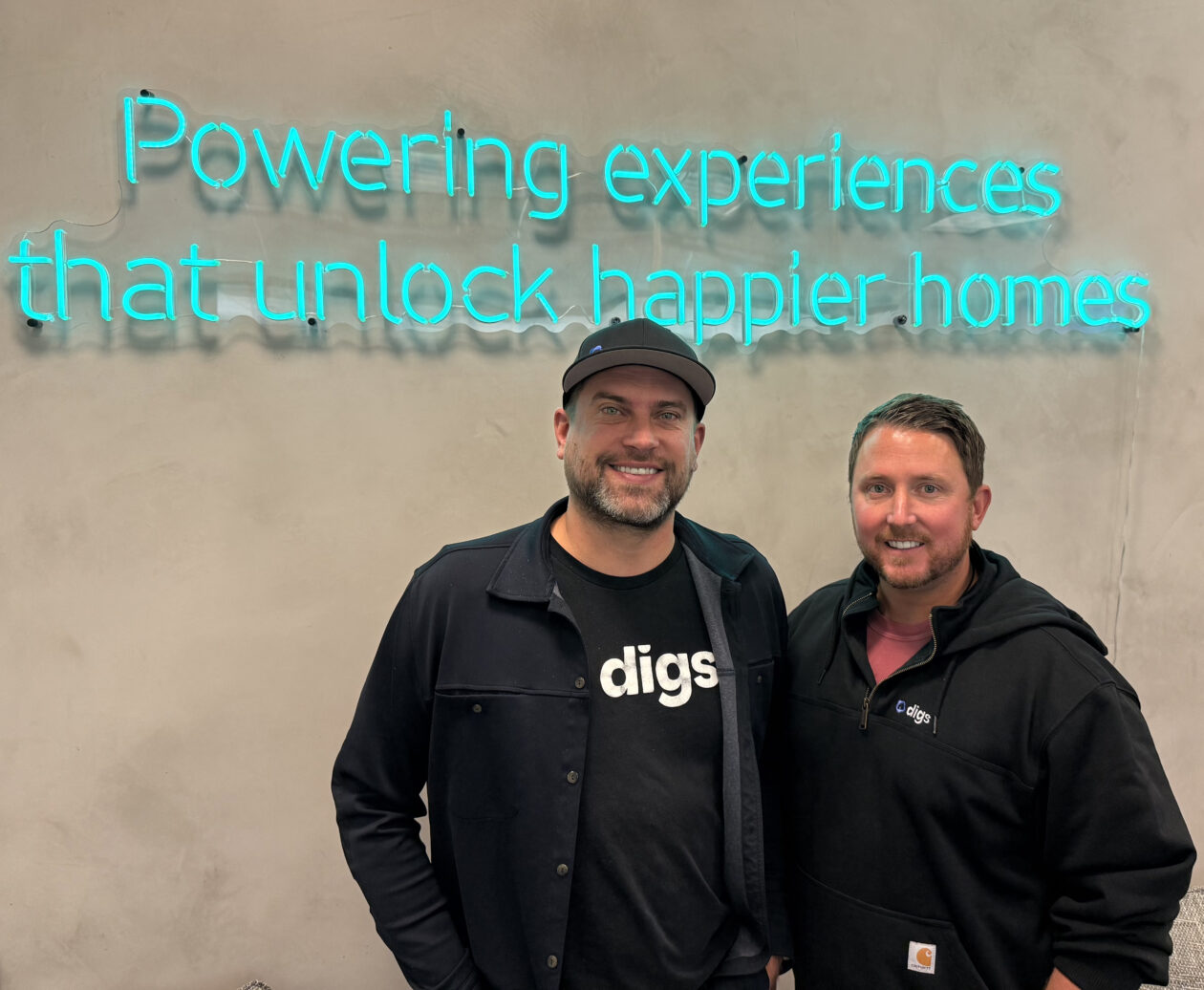
It’s a typical Monday morning in the average construction office. Dixie cups of coffee sit beside dog-eared blueprints that stretch across drafting tables like old maps of undiscovered countries. On the job site, a superintendent squints over a faded floor plan, trying to align it with a change order from two weeks ago, shouting instructions over the sound of nail guns. This is the age-old rhythm of homebuilding—a deeply human, messy, tactile industry that has historically been luckier with a hammer than with a laptop. That’s precisely why the announcement made on a Tuesday morning in late August sent waves through both the tech and construction worlds. Digs, a quietly determined startup based in Vancouver, Wash., unveiled a massive $25.3 million Series A financing round, co-led directly by the industry’s absolute heavyweight: Builders FirstSource, the nation’s largest supplier of structural building materials to residential construction. But this is more than a cash injection. It’s a full-throated commitment, a five-year strategic agreement that will fold Digs’ powerful AI platform into the daily lives of 140,000 professional homebuilders. The goal is not simply to digitize, but to obliterate the suffocating confines of the physical paper jungle that has weighed builders down for decades. By bringing cloud intelligence to pre-construction estimates, dynamic blueprint sharing, and even the messy back-and-forth of project calls, Digs is finally giving the residential homebuilding industry the 21st-century toolbelt it deserves. But for the founders, Ryan Fink and Ty Frackiewicz, this moment is more than a mere product launch—it is the beginning of something far more profound: the creation of a single, living, breathing digital twin of every home we build, one that stays alive long after the crew packs up and the final coat of paint dries.
Paragraph 2 — What it Actually Does: From Paper Piles to a Living Home
To truly understand why a construction giant is putting its money and muscle behind this startup, you have to step inside the mind of a modern builder. For way too long, the residential building process has mirrored a game of telephone, with floor plans being drawn, scanned, copied, emailed, handed off, and inevitably lost. Digs steps into that chaos with a mission to turn a lifelong transient operation into an organized, transparent ecosystem. At its core, the software serves as a robust central nervous system for the entire construction home lifecycle. Builders input their presentations, permits, supplier invoices, and material lists into a deep and structured platform. From the very first go at an estimate, the system uses AI to calculate costs with a precise accuracy, not just in a single room but across the entire structure, catching the subtle nuances that often lead to major budget overruns. Blueprint collaboration no longer means driving to Sir faxing a PDF across town; instead, architects, framing teams, electricians, plumbing, and the site superintendent all interact on the same updated model, real-time. This saves months of time and prevents the “sticker shock” that happens the day a homeowner walks through the framed bones of their future house and notices something is horribly, irreparably wrong. But the true beauty of Digs, the part that struck a chord with investors, is the “post-move-in” magic. Using what they call a digital spec sheet, the system tracks the entire birth certificate of the home structure: the brand of HVAC, the exact capacity of water heater, the location of every shutoff valve, the underslab plumbing layer beneath the concrete, the finite model of breaker panel. Fink likes to describe it as a “CarFax for the home” — a place where the next homeowner or service tech can instantly call up the data that dictates everything about maintenance. No more guessing, no more calling back the builder to ask if a specific flange or a fine wire exists. The cost of homeownership plummets to manageable, proactive prevention rather than reactive surprises.
Paragraph 3 — The Creator Partnership: Builders FirstSource Steps In
This funding round isn’t a clasp of hand; it’s the embrace of an industry around a much-needed upgrade. The lead backer, Builders FirstSource, headquartered in Irving, Texas, controls an eye-watering coastline of the construction supply chain. It stands in the U.S., nestled comfortably in the Fortune 500, operating roughly 565 locations densifying along 43 states, delivering lumber, trusses, windows, and deftly packaged itemization to pro homebuilders in 91 of the top 100 metropolitan markets. That sheer armored scale means that when BFS agrees to knock down its doors and offer its tech to hundreds of thousands of builders, it isn’t just a nod of support—it’s an explosion of implementation. President and CEO Peter Jackson framed the synergy not as a contract, but as moving the entire industry toward a better quality of life. “Our customers are looking for seamless technology that helps them operate more efficiently and deliver a better homeowner experience,” he noted. He emphasized that this is the bridging of the physical and digital, a successful marriage of “Builders FirstSource’s scale” with “Digs’s AI platform” to streamline the workflows that have clogged the pipes of progress for generations. For Digs, the integration is more than just a “door opener”; it’s the validation that someone with actual material might stand up and say, “we believe the AI software will be just as critical as the lumber itself.” It is an incredible turnaround for a two-year-old startup that had to fight tooth and pass along a threadbare sales pitch at regional trade associations, and now suddenly finds itself plugged into the data center powering the largest home construction runs in the country—a heartbeat that’ll keep functioning for five years and beyond.
Paragraph 4 — The Founders: Two Paths Converged on Ornamental Walls
Trailing the polish of the press release lies a sharp story of two men, of two foundations, who had been navigating the tectonic shift of digital realities years before the general public knew AI was coming. The cofounders, Ryan Fink and Ty Frackiewicz, didn’t stumble upon the idea for Digs one quiet evening. Instead, they’re a durable oath born from the pliable soil of their struggles. Their paths had intertwined previously at an AR (augmented reality) startup called ONtheGo Platforms, pulled into the industry when it was acquired in 2015. But while most elevator pitches died in the parking lot, they have worked with the fierce blow-torch of experience. Fink then went to forge Streem, a household service augmented reality app used by plumbers and handymen to diagnose the home through a phone camera, which was eventually swallowed by the home-service platform Frontdoor in 2019. During those years, he bore witness to the gulf of information lay on the ground between the manufacturer and the person standing in front of a boarded-over home. He saw the frustration of carers who had to figure out a construction answer from a scan, because the tracking misalignment and interdisciplinary paperwork was so burdensome. Frackiewicz contributed a distinct grit— an excavation-grade, hands-forward knowledge of structural engineering and contractor luxury. That construction-savvy “grit” rarely sees it in the Silicon Valley, and became the true north for the tech product. They didn’t set out to simply run spreadsheets at a faster click rate; they were fixing their perpetual wound: the silent owner, the construction of actual graft and the long memory that Fink believed a house could carry. Their combined pain was the matrix that built the bridge between a 2D spec sheet and an immersive, accessible hub, laying bricks from experience, but from the grout of real human friction.
Paragraph 5 — The Numbers, The Hiring Rollercoaster, and a War-Chest of Funds
While the giant lead injection of $25.3 million seems like a rock punch to the gut of industry, it compounds Digs’ impressive portfolio. The startup launched in 2022 so this Series A instantly pushes the company’s total amount raised to more than $47 million, adding significant bandwidth from earlier backing by the West King Regional funds like Fuse, Flying Fish, Oregon Venture Fund, and Cascade Seed Fund. That bump of cash is allowing Fink and Frickiewicz to transform the ebb and flow of velocity. The startup currently has a tight still-about 37 engaged employees, working in a variety of wiring for engineering, design, and product. But those numbers are planned to be aggressive sprint chart into the sky. By the end of the year, they aim to double to around 60 people, thrusting the open headcount heavily into engineering and design, with a slight for sales and marketing. Fink paints a picture of a start-up on the borderline of a recruiting pressure wave, the kind where the Cubboards are stacked with couches, and the boilerplate code sits beside safety vests. That expansion isn’t an arbitrary stretch—it’s a direct interval based on the tangible number of thousands of residences that are living on their platform already. They’ve reached a steady, organic metabolism, the plans running across all 50 states. The adoption is happening house by house, sometimes a road builder is convinced, and they immediately share it with the electrician. The SaaS price tag, a subscription model familiar to tech, but rare in this niche, creates a sustainable loop—a recurring wonder for the improvement of the labor force, which can no longer say that the software is just a play.
Paragraph 6 — The 6,000-Word Vision: The Digital Twin That Breathes
In six paragraphs of history, construction has never been quite flashy; stone and steel are not made for the heavy app storefronts. But standing in their Vancouver office, looking at a future where walls genuinely know you, Fink leans into the grander arc of his legacy. The vision trail leads to providing America the “first scalable true digital twin built inside a home that lives and grows and syncs with a floorplan.” This isn’t just a natural extension—it is a radical restructuring of the relationship we have with our spaces. When a new family gets the keys, instead of a leftover purchase binder filled with photocopies, they receive a secure digital vault that contains the memory of the composition: the exact hidden pipe, the flooring batch weight, the last furnace tune-up from 2030. If a leak gushes in the bathroom at midnight, the homeowner isn’t left staring helplessly at a closed door; they pull up the app, see the wire maps, the water valve location, and he knows exactly what to shut off. This turns the house into an embodied database—a treasure map for resale, an ultimate accurate asset for insurance, and a assistant for sustainable retrofit, since the supply chain ends up on a raw platform. Fink and Frackiewicz believe they aren’t just solving a pricey tech customer service issue; they are changing the weight of the American Dream. They are converting a sloppy, thought-based occupancy into a precise, queryable custody. Their partnership with gigantic BuildersFirstSource won’t just plaster software across the architectural footprint; it makes the digital nerve system. It marks the end of the paper blueprint age and the dawn of an era where your floorplan does not acquire dust—it evolves alongside your life, guarded and forever at your very fingertips.