





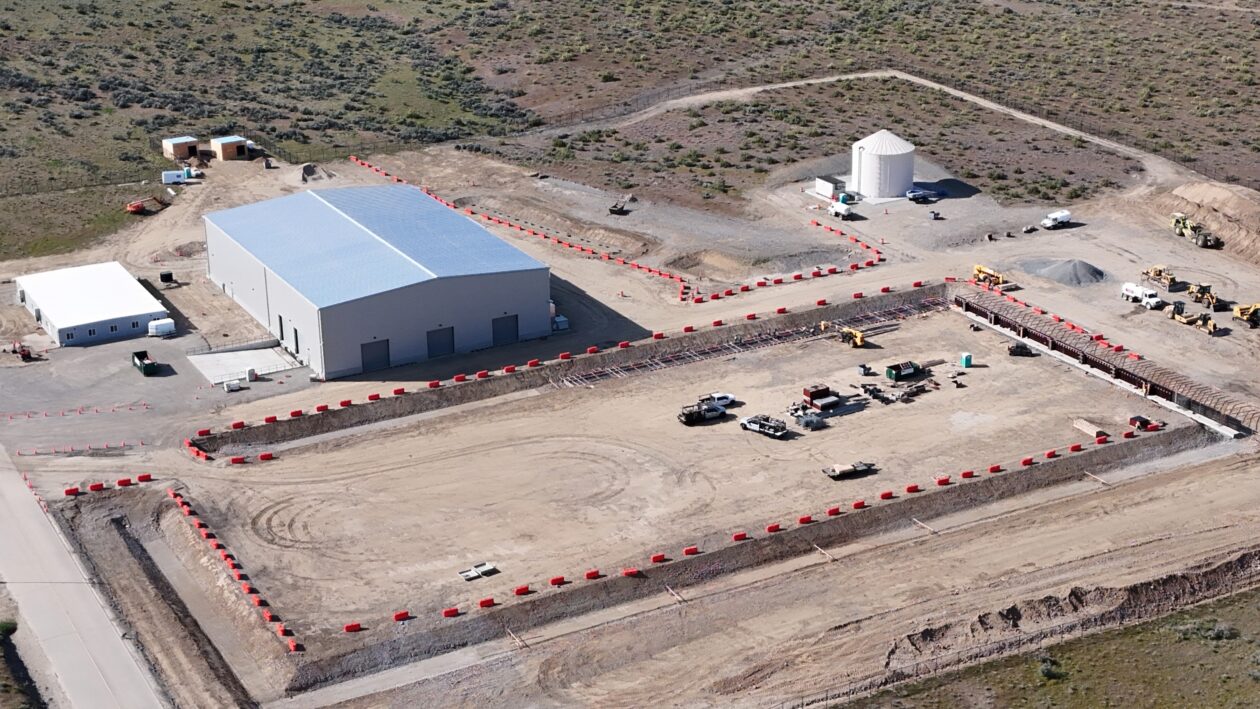
In the quiet, scenic landscape of Malaga, Washington, where the Columbia River winds through dry hills and agricultural valleys, a profound transformation is quietly unfolding that could redefine humanity’s relationship with energy forever. Helion Energy, an ambitious fusion power startup based in Everett, Washington, recently made history by securing the world’s first-ever regulatory operating licenses for a commercial magnetic fusion facility. This landmark milestone represents a massive leap forward, transitioning what was once considered science fiction into a tangible, legally sanctioned reality. The Washington State Department of Health officially issued a duo of critical authorizations: a Radioactive Materials License and a Radioactive Air Emissions License. Together, these certifications signal that Helion’s planned facility, named Orion, has successfully proven to state experts that its designs, safety protocols, operational personnel, and environmental containment strategies meet rigorous public safety standards. For decades, the pursuit of fusion energy—the physical process of fusing atomic nuclei that powers our sun and the distant stars—has been plagued by the cynical joke that it is always thirty years away. However, with the physical foundation of Orion taking shape since its ground-breaking last year, the dream is finally materializing. The aerial views of the construction site in Central Washington do not just show a building; they capture the cradle of a potential new industrial revolution. By clearing this massive legislative hurdle, Helion has shown that the path to clean, unlimited power is no longer just a theoretical physics equation but a practical engineering project. This monumental regulatory green light represents a watershed moment, shifting the global dialogue from whether fusion will happen to when it begins powering our homes. The achievement offers a profound sense of hope to a world desperate for decarbonization, demonstrating that deep, collaborative human effort can successfully bridge the gap between speculative science and the highly structured, real-world regulatory systems designed to protect human communities and ecosystems.
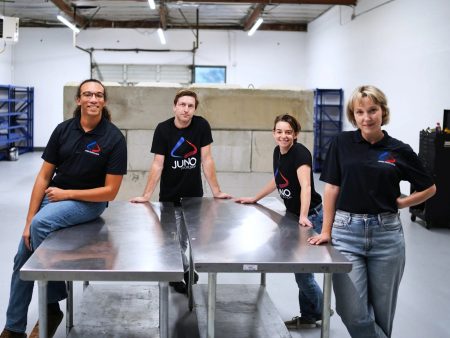
Behind the complex legal framework and advanced physics of the Orion facility lies a story of remarkable human collaboration and mutual trust between visionary innovators and state regulators. To secure these first-of-the-kind licenses, Helion Energy worked hand-in-hand with the Washington State Department of Health over an extended period of meticulous evaluation. This was not a typical, adversarial regulatory battle, but rather a cooperative partnership aimed at establishing entirely new safety paradigms for a technology that has never existed on a commercial scale. David Kirtley, the passionate Chief Executive Officer of Helion, emphasized that this milestone was the culmination of countless hours of transparent data-sharing, rigorous testing, and earnest educational outreach. On the other side of the table stood state officials who recognized both the profound responsibility of their role and the historical weight of the moment. Jill Wood, the director of the Department of Health’s Office of Radiation, expressed immense pride in the partnership, noting that leading radioactive regulatory oversight for the emerging fusion industry in Washington State is both a distinct honor and an essential duty for protecting public health while simultaneously advancing clean energy. Wood’s perspective highlights a crucial modern philosophy: protecting the public does not require stifling innovation. Instead of letting bureaucracy paralyze progress, the department chose to actively engage with the science, working with Helion’s engineers to ensure that the safety of the Malaga community remained absolute. This spirit of mutual respect and shared mission between the public sector and private industry serves as an inspiring blueprint for how governments can safely foster technological leaps. Through collaborative communication, they have developed a gold standard of safety regulations that other regions will undoubtedly study and adopt. It reminds us that behind every grand biological or physical breakthrough are real people—civil servants, visionary physicists, local safety officers, and environmental advocates—sitting in conference rooms, analyzing complex risks, and working together to build a safer, cleaner home for us all.
The physical scale, financial backing, and commercial implications of Helion’s grand vision are as breathtaking as the science itself, demonstrating a massive real-world commitment to reshaping the energy grid. Located in Malaga, right near the roaring Columbia River, the Orion plant is designed to ultimately produce 50 megawatts of electricity—a capacity that, while modest compared to massive traditional power stations, carries immense symbolic and practical weight as the world’s premier commercial proof of concept. The geography of this facility is particularly poetic, positioned in a region famous for its massive hydro-power structures that historically energized the Pacific Northwest, thereby bridging the clean energy of the past with the revolutionary tech of the future. The project’s urgency is driven in part by an unprecedented, high-stakes agreement signed three years ago with tech giant Microsoft. Under this daring contract, Helion committed to begin delivering commercial fusion power to one of Microsoft’s nearby, energy-hungry data centers by 2028. This deal sent shockwaves through the global energy sector, as it placed a hard, near-term deadline on a technology that many veteran observers believed was still decades away from commercial viability. To turn this ambitious timeline into a working reality, a massive influx of global capital has poured into the Everett-based venture. Helion recently closed an impressive $463 million funding round, pushing its total investment pool to a staggering $1.5 billion. This immense war chest, backed by prominent tech visionaries, has allowed the company to hire world-class talent, construct cutting-edge facilities, and bypass traditional bottlenecks. This massive capitalization shows that the private sector is no longer waiting for governmental initiatives to act on environmental solutions. This financial backing reflects a profound realization among modern enterprises: to sustain the immense energy demands of our digital, AI-driven future without destroying the planet, we cannot merely rely on intermittent power; we must actively invent a safe, endless, and reliable baseload energy source.
Helion is not embarking on this radical journey in a vacuum; it is currently the frontrunner in an intense, highly watched international marathon to conquer one of physics’ greatest challenges. Worldwide, more than 40 private companies and numerous elite academic institutions are locked in a friendly but fierce race to crack the fusion code, utilizing wildly different scientific approaches to unlock what many consider the ultimate holy grail of clean technology. The core scientific stubbornness of fusion lies in achieving true “net energy gain”—the elusive threshold where a system produces significantly more usable energy from the thermonuclear fusion reactions than the massive amount of external electricity required to heat, magnetize, and confine the volatile plasma in the first place. While experimental programs like the federally funded National Ignition Facility in California have achieved brief moments of scientific net energy gain in highly controlled laboratory settings, no commercial entity has yet constructed a continuously operating machine that delivers a net surplus of electricity to an active public power grid. This persistent historical struggle has bred a healthy contingent of skeptics. Renowned energy economists frequently argue that even if Helion or its industry peers successfully conquer the monumental engineering challenges of plasma containment, the astronomical costs of constructing, maintaining, and fueling these highly complex machines will prevent them from ever being cost-competitive with heavily subsidized solar panels, wind turbines, and modern battery storage. Yet, this persistent skepticism has only served to fuel the burning passion of the scientific and entrepreneurial communities. It is an audacious race against time, but one driven by the ultimate prize of preserving a hospitable biosphere for global civilization. The human effort driving Helion is powered by a profound conviction that finding a reliable, abundant, and zero-carbon energy source is the single most important task of our generation, motivating brilliant minds to dedicate their careers to converting this noble scientific dream into an everyday reality.
The rapid acceleration of the fusion sector has forced a parallel, equally critical revolution in how governments think about safety, ultimately demystifying a scientific word that has historically evoked deep anxiety in the public consciousness. For many people, the word “nuclear” immediately conjures up troubling mental images of catastrophic meltdowns, radioactive fallout, and toxic waste pools associated with traditional nuclear fission—the process of splitting heavy uranium atoms. However, fusion is physically different and inherently safer; it cannot cause a runaway meltdown, and any physical disruption simply causes the superheated plasma to instantly cool and the reaction to stop completely. Recognizing these massive, fundamental safety distinctions, the U.S. Nuclear Regulatory Commission made a pivotal, highly progressive determination in 2023. The federal agency ruled that commercial fusion technology is physically and operationally more akin to particle accelerators and advanced hospital radiation equipment than to traditional, high-risk nuclear fission plants. Consequently, the commission decided that regulatory oversight of fusion facilities should be primarily handled by state-level public health departments rather than treated under the heavy-handed, costly regulatory frameworks designed for fission reactors. Washington State quickly seized upon this regulatory clarity, establishing itself as a proactive trailblazer in clean energy governance. State lawmakers pushed forward and passed landmark legislation, including House Bill 1924 and House Bill 1018, which legally clarified fusion’s status as a clean energy source and established clear, predictable permitting rules. These actions sent a powerful message to innovators, showing that Washington is ready to lead. By dismantling the regulatory roadblocks that have historically stymied nuclear innovation, the state has opened a major gateway for transformative energy investments. This proactive approach has created a safe environment where cutting-edge modern science can flourish under the watchful eyes of community health advocates, proving that intelligent, adaptive legislative policy is just as essential to solving the climate crisis as the physical engineering of the reactors themselves.
As we look to the horizon, the historic regulatory milestones achieved by Helion Energy in Malaga, Washington, represent far more than just a local corporate victory; they offer a profound beacon of genuine hope in our collective, global fight against the escalating climate crisis. For decades, the necessary transition away from polluting fossil fuels has felt like a grueling, uphill battle characterized by scarcity, sacrifice, and mounting public anxiety over the stability of our existing power grids. The realization of commercial, zero-emission fusion power promises to radically transform this narrative, presenting a future of clean energy abundance rather than physical and environmental limitation. Within the local community of Malaga, the physical construction of the Orion plant is already creating high-quality jobs, bringing economic vitality and a sense of deep pride to a region that is now standing at the absolute vanguard of global technological innovation. The local utility crews, concrete mixers, and electrical workers are not merely building another industrial facility; they are laying the physical, structural foundation for a healthier planet. As Helion works feverishly to meet its historic 2028 operational deadline with Microsoft, the eyes of the global scientific, political, and financial communities remain fixed on this quiet stretch of Central Washington. The ultimate success of the Orion plant would ignite a massive domino effect, inspiring other nations, regulatory bodies, and young scientists to redouble their clean energy efforts. Whether Helion achieves its ambitious dream of grid connectivity by 2028 or encounters unexpected engineering hurdles along the way, the bravery shown by these pathfinders in tackling the impossible is an inspiring reminder of what humanity can achieve when we unite scientific passion with political will. By working to bring the magnificent power of the stars down to Earth, we are proving that our species possesses the collective brilliance, empathy, and determination to engineer a vibrant, sustainable home for generations to come. Ultimately, the journey of Helion shows that the greatest power in the universe resides not just in the stars, but in our shared human resolve.