






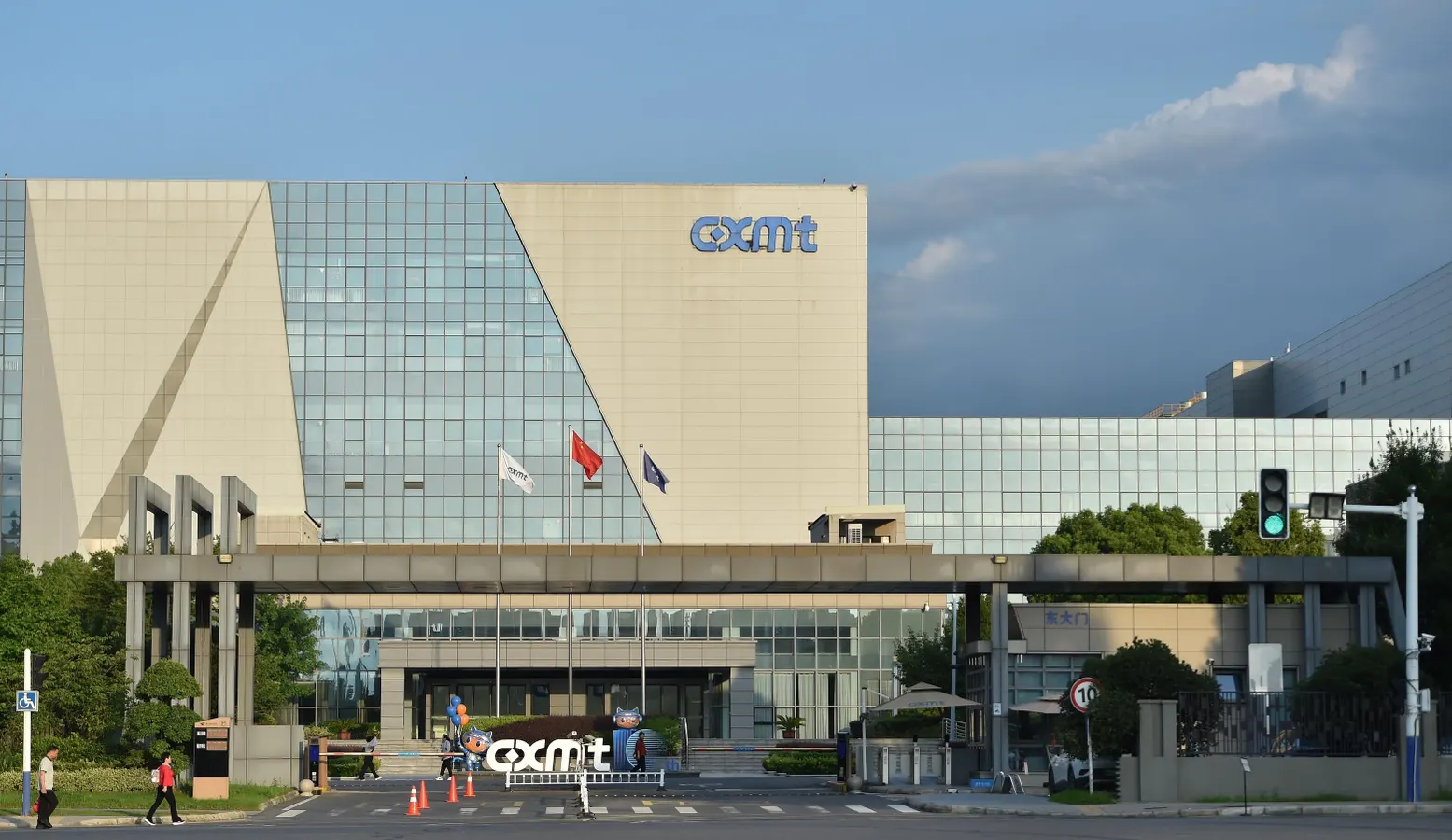
On a crisp Monday morning in Shanghai, the local stock exchange became the stage for one of the most remarkable wealth-creation events in modern tech history, catapulting 54-year-old physicist-turned-entrepreneur Zhu Yiming into the stratosphere of global billionaires. As the trading bells rang, shares of ChangXin Memory Technologies (CXMT) defied gravity, skyrocketing by over 500% and instantly adding more than $12 billion to Zhu’s personal fortune. For Zhu, a quiet, analytical man who earned his degrees at Tsinghua University before crossing the Pacific to study at the State University of New York at Stony Brook, this monumental payday was the culmination of a decades-long journey. Once a Silicon Valley engineer working behind the scenes at companies like iPolicy Networks, Zhu was driven back to his homeland by a profound, nagging realization: China was importing over 90% of its memory chips, leaving its technological future entirely dependent on foreign powers. Fueled by a quiet determination to change this paradigm, he returned home, founded the flash memory firm GigaDevice in 2004, and eventually took the helm of CXMT. Today, with a combined net worth of $15.9 billion, Zhu stands not just as a newly minted mega-mogul, but as the face of a self-reliant technological renaissance that is reshaping the global semiconductor landscape.
The frenzy surrounding CXMT’s market debut, which saw its valuation swell to an astronomical 3.7 trillion yuan ($546.4 billion), was far more than a standard financial feeding chain; it was a deeply emotional expression of national pride. In what stands as Asia’s largest initial public offering so far this year, the Hefei-based company successfully raised 57.9 billion yuan ($8.6 billion) under the gaze of global investors, selling billions of shares to fund its aggressive manufacturing and research roadmaps. For local retail and institutional investors, acquiring a piece of CXMT was seen as a patriotic duty and a rare opportunity to block-buy into a company standing on the frontline of China’s high-stakes technology stand-off with the United States. As Shen Meng, a Beijing-based managing director at boutique investment bank Chanson & Co., observed, the spectacular market rally was entirely expected because CXMT represents the country’s best hope for breaking the foreign monopoly on memory silicon. By funneling this newly raised capital directly into advanced fabrication facilities and experimental research, the company hopes to build a protective shield around China’s domestic hardware supply chain, ensuring that local electronics makers survive whatever geopolitical storms lie ahead.
This triumph, however, was preceded by years of grueling financial precarity, high-stakes gambles, and immense capital destruction. Founded in 2016, CXMT was born into a world where memory manufacturing was considered a fool’s errand for latecomers, requiring billions of dollars in upfront infrastructure spending with absolutely no guarantee of success. Year after year, the company burned through mountain ranges of cash, posting massive, disheartening losses that would have broken any standard venture-backed startup. Supported by heavy-hitting state funds like the China Integrated Circuit Industry Investment Fund (widely known as the “Big Fund”), the municipal government of Hefei, and Alibaba’s cloud computing division, the firm persevered through the dark years, only turning its very first profit last year. The ultimate lifeline came from the explosive global boom in generative artificial intelligence, which has sparked an insatiable demand for the specialized memory chips that store and feed the colossal datasets required by massive AI language models. With memory supply chain shortages predicted to stretch past 2030, CXMT suddenly found itself swamped with orders from domestic internet giants like Tencent, ByteDance, and Alibaba, alongside ubiquitous hardware brands like Xiaomi and Lenovo, propelling its projected first-half revenues for this year to an astonishing 120 billion yuan.
The secret weapon behind Zhu Yiming’s ability to weather these years of heavy financial losses and scale CXMT into a global player lies in the unique economic ecosystem of Hefei, a city that has become legendary for its deployment of “patient capital.” Unlike Western venture capital, which often demands quick returns and rapid exits, Hefei’s municipal government operates on a model of strategic, long-term stewardship, famously bailing out the struggling electric vehicle maker Nio and bankrolling display pioneer BOE Technology. This unwavering financial backing gave Zhu the flexibility to execute highly ambitious international maneuvers, such as acquiring an extensive treasure trove of crucial patents from Qimonda, a German memory giant that disintegrated during the 2008 global financial crisis. Armed with this intellectual property, Zhu systematically recruited highly skilled engineers and industry veterans from across the globe, importing invaluable operational know-how to build a world-class manufacturing line from scratch. This potent combination of local state endurance and global talent acquisition enabled a once-obscure Chinese firm to leapfrog decades of trial and error, propelling it into the global arena as a genuine challenger to the established semiconductor order.
Despite the euphoria of the Shanghai listing and the staggering wealth of its founder, CXMT still faces a mountain of technical hurdles and geopolitical traps on its journey to global dominance. Industry analysts, including Neil Shah of Counterpoint Research, point out that a “generational technical gap” still separates the Chinese chipmaker from the global “Big Three” cartel of Samsung, SK Hynix, and Micron, particularly in the realm of high-bandwidth memory (HBM) chips which are essential for advanced AI processing. While CXMT has rapidly captured an impressive 8% of the global memory market, positioning itself as the world’s fourth-largest player, it remains pinned down by severe US-led trade restrictions that block its access to the cutting-edge extreme ultraviolet (EUV) lithography machines required to manufacture the smallest, most efficient circuits. Consequently, analysts like Jing Jie Yu of Morningstar warn that the company may find itself temporarily confined to its home market, with international clients pointing to geopolitical tensions and technical lag as barriers to widespread adoption. Over 97% of CXMT’s current sales originate from the Greater China region, showcasing the reality that while the firm has conquered its homeland, a truly global footprint remains an elusive, heavily guarded prize.
Yet, Zhu Yiming has spent his entire career proving skeptics wrong, and his vision for CXMT goes far beyond merely surviving within the borders of domestic demand. With projections from research firms like SemiAnalysis estimating that the company could generate upwards of $50 billion in sales this year alone, and reports circulating of quiet interest from global product standard-bearers like Apple, the momentum behind the Chinese memory pioneer appears formidable. Zhu’s journey—from a young physicist studying the fundamental laws of nature in New York, to a Silicon Valley engineer, and finally to a billionaire industrialist spearheading his nation’s tech independence—mirrors the broader shift in the global technology balance of power. As the dust settles on the historic Shanghai listing, CXMT stands as a monument to what can be achieved when immense state funding, strategic intellectual property acquisition, and relentless human ambition converge. The road ahead will undoubtedly be defined by fierce technological competition and diplomatic friction, but under Zhu’s quiet, calculated leadership, China’s memory giant has permanently carved its name into the silicon foundation of the digital age.