





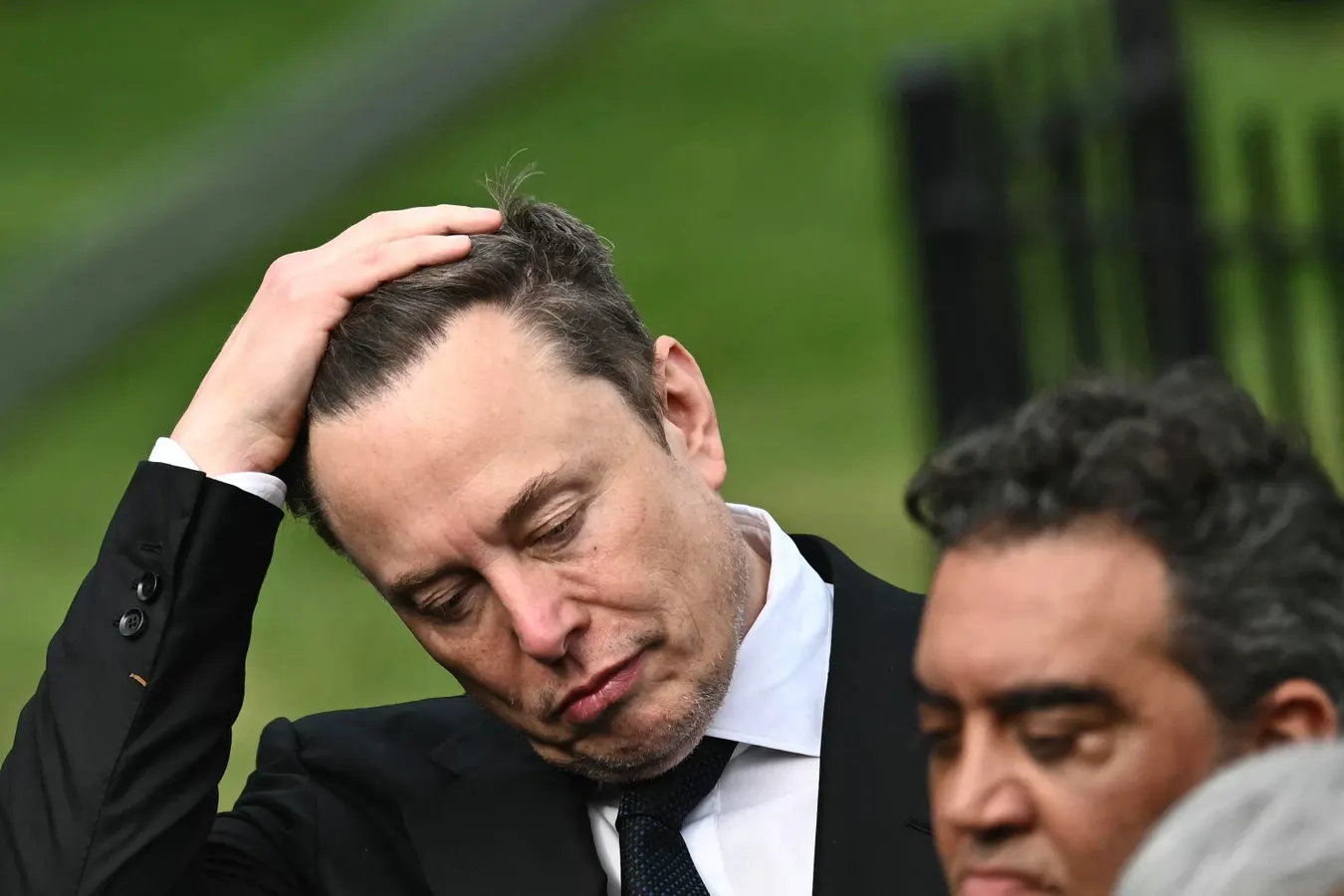
There are bad mornings, and then there are mornings where you wake up and watch billions of dollars evaporate from your personal balance sheet. For Elon Musk, Wednesday was one of those mornings. According to Forbes’ real-time tracking, Musk’s net worth dropped by more than $21 billion by mid-morning, a 2.04% decline that brought his total fortune down to roughly $1.03 trillion. That might sound like a strange thing to call a setback, but context matters: just two days earlier, Musk had officially crossed back into trillionaire territory, a status he has now regained and lost multiple times as the markets breathe in and out. The trigger for Wednesday’s sudden reversal was not a scandal, a lawsuit, or a tweet, but rather a sobering piece of financial news involving one of his most valuable companies. SpaceX, the rocket-and-satellite giant that has become the centerpiece of Musk’s empire, was reportedly in talks with banks and investors to raise a staggering $40 billion in new financing. The purpose? To buy artificial intelligence chips from Nvidia. The report, first published by the Financial Times, sent ripples through the markets, and by 11:35 a.m. EDT, SpaceX shares had fallen about 2%, trading at $168.86. For most people, a 2% drop in a single stock is barely worth mentioning, but when you are Elon Musk, and your wealth is tied up in a handful of high-flying companies, even a small percentage move can translate into tens of billions of dollars in personal losses. It is a vivid reminder that the ultra-wealthy do not simply hoard cash in vaults; their fortunes are often built on the shifting sands of public markets, investor sentiment, and the ever-changing story of what the future might be worth.
The details of the proposed SpaceX deal are enough to make anyone’s head spin. According to the Financial Times, citing people familiar with the matter, SpaceX is planning to borrow $40 billion to purchase AI chips from Nvidia, the semiconductor company that has become the beating heart of the artificial intelligence boom. The plan reportedly involves raising $30 billion in investment-grade debt and $10 billion in bank loans, with asset management giant Apollo Global Management leading the charge. Pacific Investment Management Co., better known as PIMCO, is also said to be involved. It is important to note that the deal is still in its early stages and could fall apart entirely, but if it goes through, it is expected to close in 2027. The sheer scale of the borrowing is remarkable, especially for a company that has historically been seen as a pioneer in space exploration rather than a conventional tech borrower. But Musk has made no secret of his belief that artificial intelligence is the next great frontier, and he has been pouring resources into building the computing power needed to train and run increasingly sophisticated AI models. Nvidia’s chips are the gold standard in this field, and demand for them has been absolutely explosive, with companies around the world scrambling to secure supply. For SpaceX to be willing to take on $40 billion in debt to buy chips suggests that Musk is thinking far beyond rockets and satellites. He appears to be positioning his companies for a future in which AI is not just a tool, but a foundational layer of everything they do. The report also aligns with Musk’s recent public musings about renaming SpaceXAI to “SpaceXSI,” a nod to President Donald Trump’s preference for the term “super intelligence” over “artificial intelligence.” Whether that name change actually happens remains to be seen, but the direction of travel is clear: Musk is betting big, very big, on the idea that intelligence, artificial or otherwise, will define the next era of human progress.
The immediate market reaction to the news was a study in interconnectedness. SpaceX shares slipped around 2%, but the damage did not stop there. Nvidia, the very company that would benefit from the massive chip purchase, saw its stock drop less than 1%, trading at around $237 by mid-morning. That might seem counterintuitive—you would think a $40 billion order would be great news for Nvidia—but markets are strange creatures, and investors may have been worried about the risks SpaceX is taking on, or the broader implications of such a massive debt-fueled spending spree. Tesla, meanwhile, was also down about 1.5%, trading at $375.38. Because Musk owns nearly 11% of Tesla, that decline further contributed to his morning losses. It is a fascinating illustration of how intertwined Musk’s various ventures have become. SpaceX, Tesla, Nvidia, and even the broader AI ecosystem are all connected in a web of investor sentiment, and when one thread tugs, the whole tapestry moves. For Musk, this means his net worth is not just a measure of his personal success; it is a real-time barometer of how the market views the future of technology itself. A good day for AI is a good day for Musk. A bad day for one of his companies is a bad day for all of them, at least in the eyes of traders who see his empire as a single, sprawling bet on the future. The fact that he lost $21 billion in a single morning—while still remaining a trillionaire—is a testament to both the extraordinary scale of his wealth and the extraordinary volatility that comes with it.
What makes Wednesday’s drop particularly dramatic is how quickly the narrative flipped. Just two days earlier, Musk was riding high. On Monday, both SpaceX and Tesla shares rose sharply, pushing his net worth up by over $30 billion and giving him the trillionaire title once again. SpaceX stock had jumped more than 5% after Morgan Stanley analysts called the stock “cheap,” a bold statement for a company that is already valued in the hundreds of billions. The Monday rally was a moment of triumph, a reminder that Musk’s empire, despite all its controversies and challenges, still commands enormous confidence from investors. But markets are fickle, and the euphoria did not last long. By Wednesday, the mood had shifted, and the same investors who were cheering SpaceX on Monday were now digesting the implications of a $40 billion debt plan. It is a classic case of whiplash, and it underscores the degree to which Musk’s fortune is at the mercy of news cycles and analyst opinions. One day you are a trillionaire; two days later, you are a trillionaire who lost $21 billion. The difference between those two states, for Musk, is little more than a shift in sentiment. It also highlights the strange role that debt plays in the modern economy. For most people, borrowing $40 billion would be unthinkable, but for a company like SpaceX, it is apparently a viable option, especially if the investment is seen as necessary to stay ahead in the AI race. Whether the deal ultimately closes or not, the mere possibility of it has already moved markets and reshaped the conversation around Musk’s ambitions.
Even after the drop, Musk’s fortune remains almost incomprehensible in its scale. At $1.03 trillion, he is firmly in first place on Forbes’ Real Time Billionaires list, with Jeff Bezos trailing in second at an estimated $374 billion. To put that in perspective, Musk is worth nearly three times as much as the founder of Amazon, and his net worth is larger than the gross domestic product of many countries. The trillionaire club is an exclusive one, and Musk has now entered and exited it multiple times, a feat that would have seemed absurd just a few years ago. But the gap between Musk and everyone else also highlights how concentrated his wealth is. Unlike Bezos, who has a diverse portfolio of assets, Musk’s fortune is heavily tied to the performance of a few key companies: Tesla, SpaceX, and to a lesser extent, his other ventures like xAI and Neuralink. This concentration is a double-edged sword. When things go well, his wealth can balloon by tens of billions in a single day. When things go poorly, it can shrink just as quickly. The $21 billion he lost on Wednesday is more than most people will earn in a thousand lifetimes, but for Musk, it was just a small dent in a fortune that still exceeds a trillion dollars. It is a reminder that the super-rich live in a different reality, one where the numbers are so large that they lose all intuitive meaning. A billion is hard to grasp; a trillion is almost impossible. And yet, for Musk, these are the stakes he plays with every day, as he pushes the boundaries of space travel, electric vehicles, and artificial intelligence.
In the end, this is a story about the strange, high-stakes world of modern wealth and technology. Musk’s $21 billion loss is not a tragedy; it is a fluctuation, a blip on a chart that trends ever upward over the long run. But it is also a window into the immense risk and uncertainty that define his life and work. SpaceX’s reported plan to borrow $40 billion for Nvidia chips is a bet on the future of AI, a future that Musk clearly believes will be transformative beyond anything we can imagine. Whether that bet pays off remains to be seen. The deal could fall through, the chips could become obsolete, or the AI boom could turn out to be overhyped. But one thing is certain: Musk is not afraid to take enormous risks. He has built his career on doing things that seemed impossible, from reusable rockets to electric cars that outsell their gas-powered rivals. The $40 billion chip deal, if it happens, would be another chapter in that story, a bold move that could either cement his legacy as the architect of the AI era or become a cautionary tale about overreach. For now, the markets have spoken, and Musk is a little poorer than he was on Tuesday. But in the grand scheme of things, $21 billion is a small price to pay for the chance to shape the future. And as long as Musk continues to command the attention of investors, the media, and the public, his fortune will remain a living, breathing reflection of the hopes and fears of the age. Whether he is a trillionaire or a mere billionaire, one thing is for sure: the world will be watching his next move.