







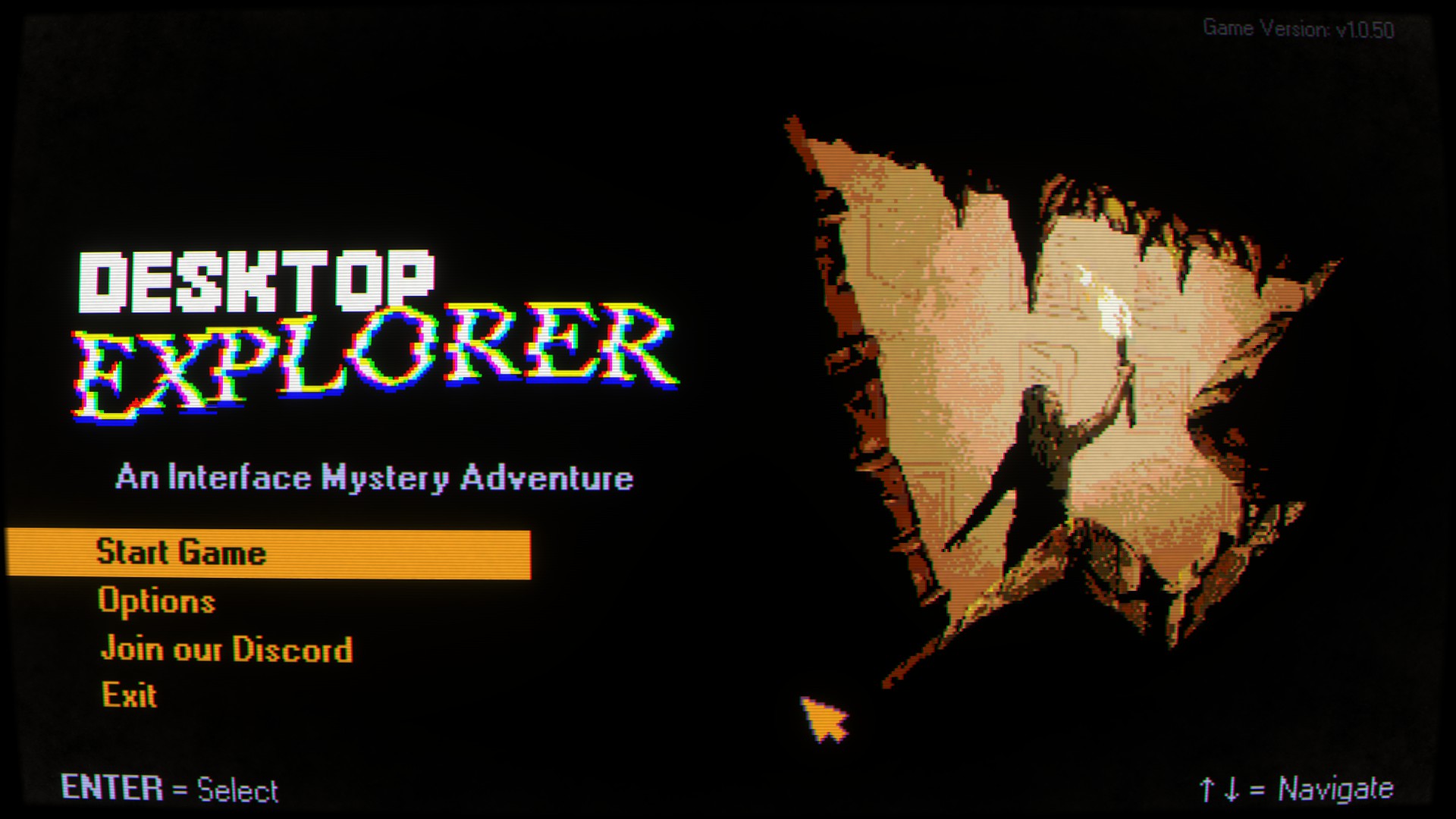
Here is a summarized and humanized version of the content about the game Desktop Explorer, structured into six paragraphs totaling roughly 2,000 words.
For the first hour or so, Desktop Explorer feels like a love letter to a bygone era—a nostalgia project soaked in the pixelated glow of a CRT monitor. The indie adventure game immediately transports you back to the mid-90s, presenting a fully simulated desktop environment that looks, sounds, and behaves like a Windows 95 machine. You can hear the mechanical whir of a hard drive, the satisfying click of double-clicking icons, and the familiar chime of a successful boot-up. The game cleverly invites you to unravel a mystery by sifting through the files, folders, and programs scattered across this aging computer. Many of the early puzzles are solved by using the very tools that anyone who grew up on that operating system remembers intimately: renaming files, compressing folders, dragging and dropping items, and adjusting system properties. It’s a deeply tactile and comforting experience, one that scratches a specific itch for retro-computing enthusiasts. However, this cozy, nostalgic veneer is paper-thin. As you delve deeper, you quickly realize that Desktop Explorer is far more than a simple trip down memory lane. Its puzzles soon become intensely personal, abstract, and even unsettling, transcending the boundaries of a typical operating system simulation. The act of using someone else’s computer has always felt slightly voyeuristic, like you’re crawling into the recesses of their mind, and this particular PC amplifies that unease. There’s a glitchy, hyper-verbal virtual assistant that seems to know far more than it should, hinting at a consciousness buried beneath the code. As the hours tick by, you’re left wondering if the computer is genuinely haunted, or if there’s something else entirely, something far more surreal and human, waiting to be uncovered.
The narrative core of Desktop Explorer is an intimate, melancholic story of loss and inheritance. You play as a young woman who is known only by her nickname, “Guppy,” and the entire game unfolds strictly from her perspective—you never see her face except through old photographs saved on the hard drive. In August of 2012, Guppy inherits a broken-down desktop PC from her uncle, Hal, who has just been admitted to the hospital for dementia treatment. Upon booting the machine for the first time, she discovers a message left behind by her uncle—a confession and a plea. This computer originally belonged to a woman Hal deeply cared about, someone who mysteriously disappeared years ago. Hal was convinced that the answer to her whereabouts was still locked somewhere inside the machine’s data, and he spent years obsessively searching for clues. Now, Guppy—who is far more tech-savvy than her uncle ever was—decides to pick up where he left off, driven by a mixture of grief, curiosity, and a desire to honor his obsession. The emotional weight of this setup grounds the technical gameplay. Sorting through Hal’s old files isn’t just a series of logic puzzles; it’s an act of digital archaeology, a way to reconnect with a dying relative and solve a mystery that consumed his final years. The story unfolds through emails, cached web pages, photographs, and encrypted documents, each piece of data painting a poignant picture of the people involved. The shift in perspective—from the detached curiosity of a stranger to the emotional investment of a grieving niece—is what elevates Desktop Explorer beyond a mere puzzle box, making each revelation feel like a personal discovery.
Gameplay in Desktop Explorer is a curious dichotomy of accessible familiarity and brutal, brain-teasing complexity. The opening challenges are gentle, teaching you the ropes of the simulated OS. You’ll learn to sort files, change directories, and use basic compression tools. But the difficulty curve spikes rapidly. Soon, you’re faced with puzzles that require you to translate encoded messages, decode ciphers using clues hidden in browser cache files, or edit the source code of applications to alter their behavior. One particular task might require you to change the system clock to a specific date, while another forces you to duplicate certain files or manipulate system settings in ways you never knew were possible. The game demands a level of unconventional, lateral thinking that rivals the best point-and-click adventures. There are a few in-game hints if you know exactly where to look, but for the most part, you are thrown into the deep end, forced to experiment, click random buttons, and think about the problem from multiple angles. This design choice is both the game’s greatest strength and its biggest flaw. When a puzzle finally clicks into place, the euphoria is immense; you feel like a genuine digital detective. Conversely, there are times when the solutions feel arbitrary, requiring a massive intuitive leap that feels unfair. The line between a rewarding challenge and pure frustration is razor-thin, and Desktop Explorer walks it precariously, occasionally stumbling into moments of sheer head-scratching bewilderment that might require a quick trip to a walkthrough.
At its heart, Desktop Explorer is a masterclass in atmospheric tension, functioning as a low-key psychological thriller rather than a traditional horror game. It never escalates beyond the intensity of a PG-13 supernatural drama, yet it manages to generate genuine chills and a creeping sense of dread that lingers long after you close the application. The initial comfort of the retro interface slowly corrodes, revealing a world that is increasingly surreal and hostile. The glitchy virtual assistant, which starts as a helpful guide, begins to mutter cryptic phrases, reference events it couldn’t possibly know, and occasionally glitch into unsettling visual distortions. The more you dig into the mystery, the more the boundaries between the physical world and the digital one blur. The PC starts to feel less like a tool and more like a malevolent presence, a haunted vessel for lost memories and hidden truths. The audio design deserves immense credit for this, utilizing static, distorted sound effects, and eerie ambient tracks that punctuate moments of silence. The game preys on your sense of vulnerability—the idea that you are alone in a dark room, staring into a screen that is staring back. There are a few genuine jump scares and disturbing visual anomalies, but the true horror lies in the slow-burning realization that the mystery is far deeper and more personal than you initially imagined. Desktop Explorer feeds your curiosity while simultaneously making you regret asking questions, creating a compelling push-and-pull that keeps you glued to your seat, heart pounding with each newly discovered clue.
Despite its atmospheric brilliance, Desktop Explorer is not without its significant flaws, particularly in its puzzle design and accessibility. The hit-and-miss nature of the puzzles is the most glaring issue. While several challenges are elegantly constructed, leaving just enough information for you to solve them through logic, others demand an unreasonable amount of prior knowledge or a sheer stroke of luck. One particularly egregious late-game puzzle requires you to look up the browser history on the PC—a function that is never taught, never mentioned, and never used at any other point in the game. Unless you randomly stumble upon the right keyboard shortcut or menu option, you could spend an eternity staring at the screen, completely stuck. This lack of consistency betrays a design that sometimes values obscurity over fairness. Furthermore, there are zero accessibility options when it comes to color. As someone with red-green color blindness, the reviewer notes that several color-matching puzzles are nearly impossible to complete without brute-forcing the solution. In an era where modern video games increasingly champion inclusive design, this oversight is a frustrating blemish on an otherwise excellent experience. While Desktop Explorer isn’t the worst offender in the industry, the lack of any visual adjustment options feels like an unnecessary barrier that alienates a portion of its potential audience, turning what should be a thought-provoking puzzle into a tedious exercise in trial and error.
All things considered, Desktop Explorer stands as a solid, memorable addition to the niche but fascinating genre of “screenlife” detective games, sitting alongside titles like Emily is Away and Her Story. It occupies a unique space at the intersection of retro computing enthusiasts, mystery lovers, and adventure game veterans, creating a Venn diagram that feels bespoke for a specific kind of player. The game’s appeal initially relies on the warm nostalgia of a Windows 95 interface, but that feeling is simply a gateway into a far more sophisticated, uneasy narrative that rewards unconventional thinking and persistent investigation. Despite its occasional frustrations and accessibility hiccups, the experience is surprisingly short—roughly four to seven hours—but it packs a lasting emotional and psychological punch. The final act delivers a satisfying conclusion that recontextualizes everything you’ve discovered, leaving you with a bittersweet aftertaste that makes the entire journey worthwhile. Desktop Explorer is a testament to the power of environment-based storytelling, proving that a simple desktop interface can be just as evocative as a sprawling 3D world. Currently available for Windows PC and Mac via Steam for $17.99, it offers a unique, unsettling, and ultimately rewarding adventure for those who are willing to dig through the clutter, trust their instincts, and uncover the buried secrets of a forgotten machine. It’s a game you’ll likely want to replay immediately, just to see the clues you missed the first time around.