





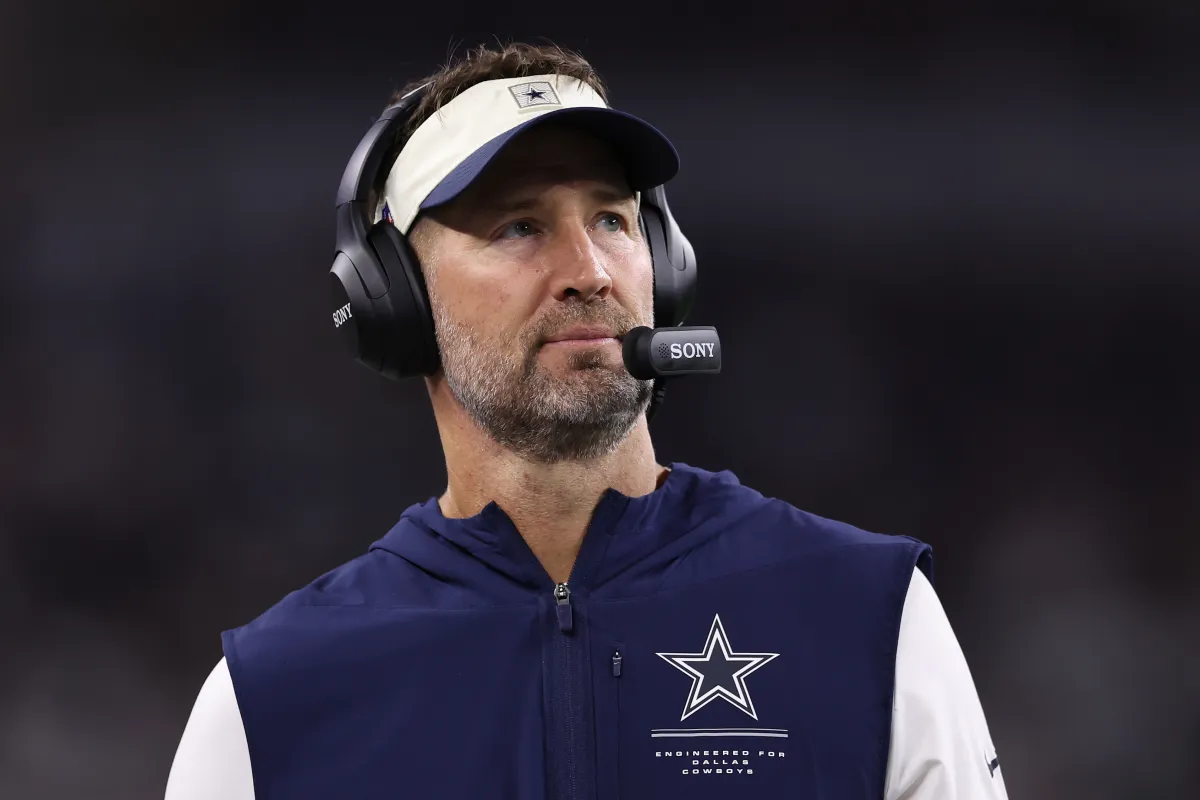
There is a particular kind of hope that Dallas Cowboys fans carry into every season, and this offseason that hope was louder and more desperate than it had been in years. After watching their defense surrender more points than any other team in the NFL in 2025, fans begged for change, and the front office appeared to listen. A new defensive coordinator, Christian Parker, was brought in to rebuild the system. Talented pieces were added through the draft, including playmaker Caleb Downs, and a bold trade brought defensive lineman Rashan Gary into the fold. For a few months, the narrative shifted from fear and frustration into excitement and optimism. Cowboys fans could finally dream of a defense that could get off the field on third down, force turnovers, and give their high-powered offense a real chance. There was genuine reason to believe. But then Sunday night arrived, and so did the New York Giants. When the game kicked off, the Cowboys defense walked onto the field carrying the weight of every shortcoming from 2025. And by the time the final whistle blew, it felt depressingly familiar. The season-opening loss to the Giants had a defensive performance that looked like a replay of all the bad habits that haunted Dallas a year ago. The players changed. The coordinator changed. The scheme changed. But something essential about the team’s defensive identity still hadn’t changed, and Cowboys fans were left sitting in front of their televisions feeling a sickly mix of anger and déjà vu.
Sunday night felt less like a new beginning and more like an echo of old wounds. The Dallas defense spent most of the evening trying to escape the field, failing repeatedly to slow down a Giants offense that seemed to know exactly where to attack and when to take advantage. New York methodically put together four separate drives that lasted ten plays or more, grinding the Cowboys defense into the ground and leaving them scrambling to catch their breath. In most games, a defense is supposed to be able to create stops, force punts, and provide their offense with favorable field position. But on this night, the Cowboys defense could only get off the field without allowing points on two Giants possessions. Two possessions in the entire game. Everything else became a grueling exercise in survival, and too often survival turned into points for the opponent. What made it even harder to watch was that the failures weren’t all about skill or talent. There were missed tackles at critical moments, tackles that an NFL defense simply has to make. Players were out of position, gap responsibilities were ignored or confused, and communication broke down in the secondary. The result was a defense that seemed to be moving in slow motion while the Giants buzzed past them. There were moments where New York receivers found themselves running completely unguarded, so wide open that onlookers wondered whether the Cowboys were running a different defense entirely. It was the kind of performance that makes a fan throw their hands up in disbelief, not because the opponent was too talented, but because the mistakes seemed self-inflicted and avoidable. And that’s what stung the most. Dallas knew this had to be better. They planned for it, invested in it, and still delivered the same ugly product on the field.
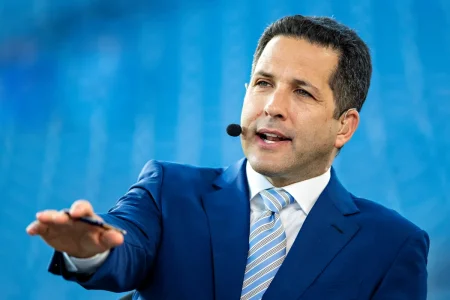
No one could accuse former All-Pro safety Devin McCourty of sugarcoating what he saw. Appearing on the “Up & Adams Show” Tuesday, McCourty didn’t pull any punches when breaking down the Cowboys’ defensive failures. He pointed directly to the most glaring issue: the Cowboys surrendered two touchdowns where they didn’t cover anyone at all. Those aren’t breakdowns that can be excused by scheme or complexity. Those are simple, fundamental failures. “You can’t allow that to happen,” McCourty said bluntly. He then asked a question that cut to the heart of the team’s preparation and pride: “If you are the Dallas Cowboys, what do you prepare for?” It was fair, uncomfortable, and impossible to argue with. McCourty also highlighted the missed tackles that plagued Dallas throughout the night, emphasizing that sound tackling isn’t a luxury in the NFL. It’s the bare minimum required of every player who steps onto the field. During the game, Dallas had multiple chances to limit the Giants’ momentum and gave up extra yardage time and time again because the defensive backs and defenders simply failed to bring ball carriers down cleanly. But McCourty reserved his most serious criticism for the miscommunication. In his eyes, miscommunication is unacceptable in Week 1, Week 2, or any week of the NFL season. There is too much at stake. There is no excuse for players being lost in the defense, waving their arms in confusion as the ball is snapped. McCourty described the frustration he felt watching free runners scoring touchdowns and emphasized that those breakdowns should be embarrassing for any defense. It was a sobering assessment from someone who spent years reading offenses at the highest level and knows exactly what disciplined, disciplined defense requires.
McCourty did not stop at criticism. He went a step further and challenged the Cowboys organization to do something far more difficult than talk: change. “It’s a little bit of ‘we all drank way too much of that Kool-Aid,’” McCourty admitted, acknowledging that optimism during the offseason often distracts from reality. It’s fun to believe in your new coordinator, your new players, and your new schemes. It’s easy to buy into the glossy potential of a team on paper. But the season is not won in July, and it is not won during organized team activities. It is won on Sunday nights when another team is fighting to put points on the board and the crowd is screaming. McCourty urged the Cowboys to “take a look in the mirror” and accept that their defense did not just lose. It regressed to the very mistakes that defined the previous season. He insisted that to become different, Dallas would have to prove it by doing, not by talking. The phrase “look in the mirror” carries a heavy weight because it forces everyone within the organization to ask hard questions. Are the players truly buying into the scheme? Are the coaches putting their players in positions to succeed? Is there enough accountability when players make mental mistakes? Is there enough urgency in practice during the week? Sometimes losing a game feels like a one-off bad night, but sometimes it feels like a revelation, and McCourty’s comments made it clear that Sunday night felt more like the second one. He wasn’t calling for panic. He was calling for honesty. There is a difference between saying you’re going to be better and actually putting in the brutal work required to be better, and right now the Cowboys defense showed that their words meant very little once the lights came on.
The broader issue is that this defense cannot simply shake off a rough start because there is no cushion to fall back on. Last season, the Dallas offense was among the best in football, scoring points in bunches and keeping the team in games even when the defensive unit was falling apart. But even those offensive fireworks couldn’t overcome the historical ineptitude on defense. The Cowboys still missed the postseason, and the reason wasn’t difficult to identify. A team can only spend so much time trading scores and playing slogging shootouts before those pressure-filled moments eventually spiral out of control. Great offense can cover up a lot of sins, but when a defense gives up the most points in all of football, no offense can save the season. That’s the painful lesson the Cowboys learned in 2025. Now, in 2026, they face the exact same trajectory just one game into the season. The lack of attention to detail, the poor tackling, the confusing coverage assignments, and the inability to get off the field on third down all feel like stubborn monsters that refuse to die. The team needs to make adjustments quickly because waiting another year is not an option. Week 2 brings a matchup against another divisional opponent, the Washington Commanders, and division games carry an extra level of urgency and meaning. The Commanders are a physical and competitive team, and if Dallas shows up with the same level of defensive execution they showed on Sunday night, the outcome could be just as ugly. This isn’t just about wins and losses in September. It’s about developing the identity that will define the team for the rest of the year. Early-season issues can sometimes be fixed with practice and corrections. But they can also be signs of a deeper sickness if ignored. Dallas needs better positioning against Washington, better communication in the secondary, and far more reliable tackling from every player who steps onto the field. Above all, the team needs to rediscover pride in the basic fundamentals before the season spirals further out of control.
Of course, no one should declare the Cowboys’ season over after one week, because the NFL is long and narratives shift dramatically from game to game. Every season offers chances for redemption, for growth, for a team to learn from its early embarrassments and evolve into a better version of itself. But the Cowboys cannot rely on chance. They need to act. They need to practice harder, communicate more clearly, and hold each other accountable for the small details that make defense possible. It starts with correcting the mental errors and getting every player on the same page before the snap. It starts with wrapping up on tackles and refusing to let an opponent gain an extra inch. It starts with being humiliated by the performance on Sunday and letting that drives discipline during the week. The Cowboys spent an entire offseason telling themselves they had moved past 2025. Their talent level is real, and there are players in that locker room capable of excellent football. Christian Parker knows what he wants, and Rashan Gary certainly isn’t a role player; he’s a difference maker. Caleb Downs has the kind of instincts and speed that can change the look of a secondary if properly deployed. But none of that will matter if the defense continues to play like a group of strangers sharing the same jerseys. Fans deserve more, and the players know it. The most powerful thing the Cowboys can do now is stop talking about change and start demonstrating it through their actions. Week 2 is right around the corner, and the Commanders will not feel sorry for Dallas. If the Cowboys can find a way to play with discipline, toughness, and relentless effort, then maybe the defense can finally begin to match the hope that fans carried into the season. But first, the Cowboys have to actually do it. They cannot just talk about it. They cannot keep drinking the Kool-Aid. They have to look in the mirror, acknowledge the embarrassment, go back to work, and prove on the field that they really are capable of being different in 2026.