



As the Seattle summer sizzles and the city’s collective sports psyche oscillates between the agonizing inconsistencies of the Mariners’ bullpen and the giddy anticipation of a new football season, there is a delightful distraction to be found in the intricate mechanics of a quarterback’s throwing motion. For those who find themselves spiraling into anxiety over a late-inning collapse, the more pleasant kind of “spin”—the one that dictates the trajectory of a perfectly thrown football—offers a respite. The Seattle Seahawks, fresh off a Super Bowl triumph and now the focus of HBO’s acclaimed documentary series Hard Knocks, have provided fans with a fascinating glimpse into the science and artistry behind their offensive success. The show, which chronicles the gritty, sometimes mundane, and often profound realities of NFL training camp, has pivoted from the usual drama of roster cuts and contract disputes to a genuinely nerdy, yet captivating, exploration of quarterback Sam Darnold’s extraordinary arm talent. It’s a reminder that beneath the pads, the playbooks, and the brutal physicality of the sport, there lies a beautiful, almost obsessive pursuit of technical perfection.
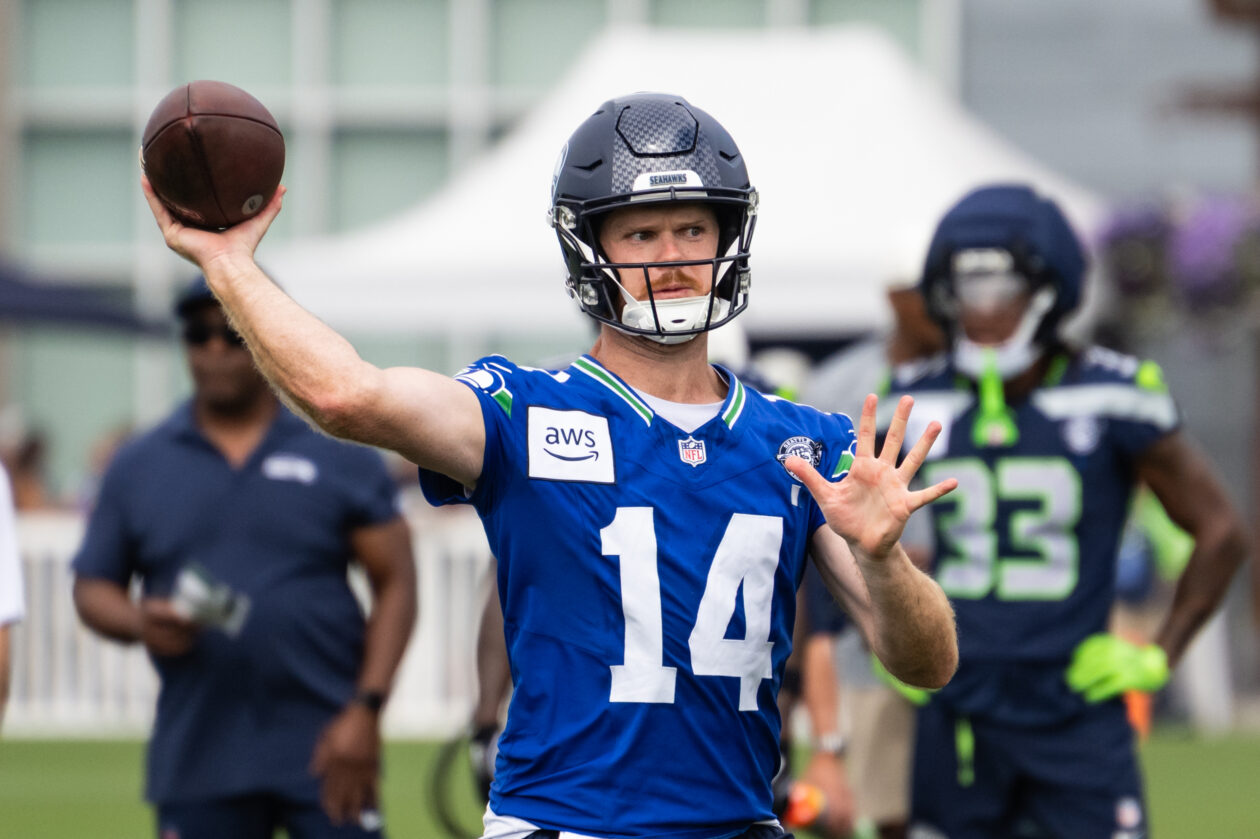
The second episode of the series, which premiered on a balmy Tuesday night, has set the football world abuzz, largely because it dared to turn a dense statistical metric into a compelling character study. The NFL’s Next Gen Stats, which have become as integral to the game as the hash marks themselves, track a peculiar number known as “spin rate.” This metric measures the revolutions per minute of the football as it hurtles through the air, a numerical representation of the tightness of a spiral. The league average for a starting quarterback hovers around 570 revolutions per minute; a solid, workable number. However, Darnold, in his second season with the Seahawks and looking to build on a championship campaign, is not merely average. According to the data highlighted on Hard Knocks, his spin rate is a staggering 639 revolutions per minute—a figure so high that his own passing game coordinator appeared genuinely awestruck, calling it “off the charts.” This is not just a statistical anomaly; it is the physical manifestation of a player who has dedicated a lifetime to mastering a single, fundamental skill, turning a chaotic, violent motion into a thing of aerodynamic beauty.
What makes this revelation so humanizing is the origin story of this incredible talent. Darnold, who carries the quiet, focused demeanor of a surgeon, didn’t develop this ability in high-tech quarterback academies or state-of-the-art indoor training facilities. Instead, as he revealed with a boyish grin on the episode, it was a solitary, almost meditative practice that began in his youth. “From a young age, I’ve just been able to throw the football,” he explained, reminiscing about his childhood. “I’d be laying in bed with the football and just tossing it up to myself and trying to see how much I can spin it. And that’s just something I’ve always kind of been interested in and kind of a geek about.” This confession is a wonderful glimpse into the obsessive nature of elite athletes. While other kids were playing video games or counting sheep, Darnold was lying on his mattress, staring at the ceiling, and quietly experimenting with the physics of a leather prolate spheroid. It paints a picture of a young man who was not just physically gifted, but intellectually curious about his craft, a “geek” who found solace in the feel of the laces and the whip of his wrist.
The tangible benefits of this obsession are best understood through the eyes of the players tasked with catching the ball. A high spin rate means the nose of the football remains perfectly true—it doesn’t wobble, it doesn’t drop, and it cuts through the air with the efficiency of a missile rather than the fluttering of a wounded duck. This is crucial for timing and catchability. Veteran wide receiver Cooper Kupp, a precise route-runner who has built a career on the subtleties of the passing game, offered a fascinating perspective on the show. He admitted that for years, he operated under a long-standing receiver principle: that too much spin makes a ball harder to corral, as the fast rotation can cause the ball to bounce off the hands like a fumbled cue ball. “I’ve now caught the ball from Sam for a year and a half, and now I’m not so sure,” Kupp said with a knowing smile, acknowledging that his long-held belief has been dismantled by Darnold’s sheer velocity and precision. This testimonial speaks volumes. It shows a receiver who has adapted to the unique challenges of his quarterback, and a quarterback who has earned the trust of a superstar by making the difficult look routine. The chemistry between them is no longer just about route concepts, but about the tactile, physical reality of the ball hitting their hands.
Beyond the immediate thrill of a perfectly thrown pass, Darnold’s extraordinary spin rate carries a significant strategic advantage, particularly as the season grinds on. The Pacific Northwest is notorious for its unpredictable, often brutal weather. As the calendar flips from the crisp, dry air of August to the cold, rain-soaked December games at Lumen Field, the football becomes a slippery, heavy object that is vulnerable to the elements. A wobbly, low-spin pass is far more susceptible to being knocked off course by a gust of wind or slicked by a sudden downpour. However, Darnold’s freakish ability to generate torque—the whip-like snap of his arm and the rotation he imparts on the ball—means his passes remain stable and true even in the most adverse conditions. Hard Knocks captured him discussing this exact scenario, explaining that while generating that spin, he is constantly visualizing the future—imagining those late-season playoff games where the turf is slick and the wind howls off the Puget Sound. He is not just throwing a football; he is engineering a weapon that defies the weather forecast. This long-term thinking, this innate understanding of how his physical gifts translate into late-season victories, is what separates a good quarterback from a great one, and it is a treat to see it articulated so clearly.
Ultimately, the beauty of the Hard Knocks episode lies not just in the statistics or the tactical analysis, but in the cinematic artistry that HBO brings to the sport. Known for its ability to capture the human condition within the brute force of football, the production team found the perfect visual metaphor for Darnold’s gift. During the episode, they showcased an extended, high-definition slow-motion shot of one of his passes in flight, the camera following the ball as it spirals majestically against the backdrop of Lake Washington and the Cascade Mountains. The shot is set to a remix of the 1984 new wave anthem “You Spin Me Round (Like a Record)” by Dead or Alive, a cheeky, perfectly timed musical choice that elevates the moment from mere sports footage to pure art. It is a moment that encapsulates the entire episode: the fusion of raw athletic power, painstaking precision, and the sheer joy of playing a game. As the synthesizers swell and the pigskin carves a perfect arc through the air, the viewer is reminded why we watch sports in the first place—not just for the wins and losses, but for these fleeting, perfect moments of human excellence. For Seattle fans, it’s a reassuring sign that their championship quarterback is a meticulous artist, and the entire league is now on notice that the tightest spiral in football is back to defend its crown.