






The Thrill and Tribulation of New Glenn’s Second Flight
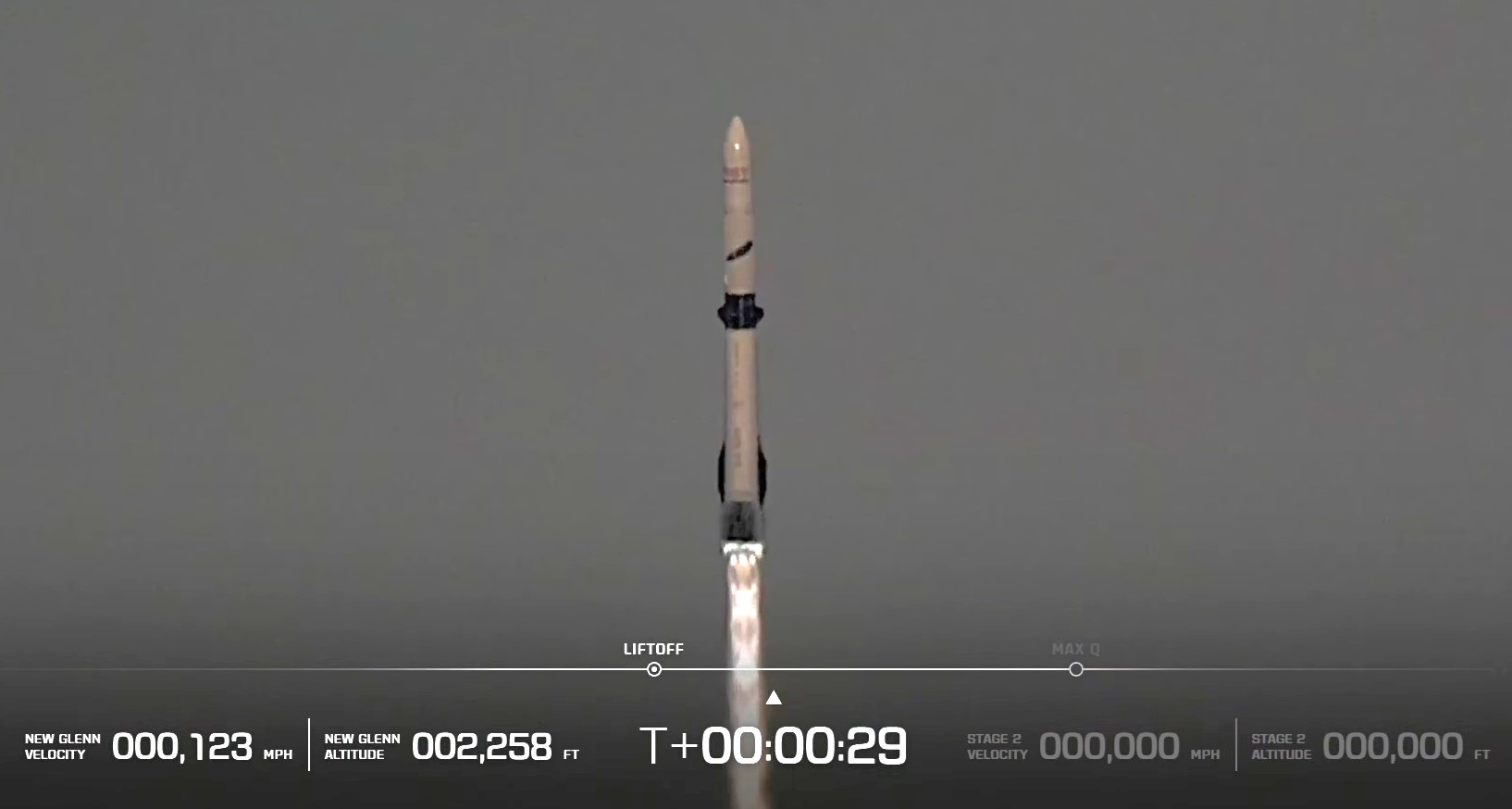
Imagine standing on the sun-soaked shores of Florida’s Cape Canaveral Space Force Station, where the roar of engines and the hope of human ingenuity collide with the unpredictability of the cosmos. On April 19, 2026, that scene came alive as Blue Origin’s New Glenn rocket—a towering behemoth of stainless steel and ambition—lit up the morning sky, piercing through the fluffy clouds above Launch Complex 36. For Jeff Bezos’ space company, this wasn’t just another launch; it was a testament to their resilience, using a rocket booster that had journeyed to Mars and back on its previous mission. Nicknamed “Never Tell Me the Odds,” after the Star Wars line that defies skepticism, the booster embodied the spirit of perseverance. Liftoff at 7:25 a.m. ET was picture-perfect, streamers of exhaust painting fiery trails as the rocket climbed skyward. Blue Origin had big dreams pinned on this flight: deploying a satellite that could revolutionize how we connect to the world. But as often happens in the high-stakes game of space exploration, victory slipped into what-ifs, turning triumph into a bittersweet lesson.
What made this launch special for Blue Origin was the reuse of that very same booster. Last November, it had rocketed NASA’s Escapade probes toward Mars, a mission full of scientific promise aimed at studying the Red Planet’s magnetic fields and atmosphere. After that fairy-tale flight, the team at Blue Origin didn’t just discard the hardware like outdated gadgets; they cared for it like a treasured family heirloom. Overhead, based in Florida and Washington, engineers meticulously refurbished the booster, inspecting every weld, replacing worn parts, and ensuring it was as good as new. This was the essence of recycling in rocketry, a practice that cuts costs and eases environmental guilt, proving that rockets could live on after their dramatic debuts. As the New Glenn ascended, spectators and supporters watched with bated breath, knowing that the viewership at home—via YouTube and social media—added a layer of communal excitement. It wasn’t just a technical feat; it was a nod to humanity’s growing knack for second chances, whether in space or on Earth.
The real magic unfolded later when the booster made its return. As the rocket reached the edge of space, the first stage detached and began its ballet-like descent, steered by control jets and thrusters that whispered against the thin atmosphere. Guided by precise computations and a splash of daring, “Never Tell Me the Odds” homed in on a floating platform in the Atlantic Ocean, a target no bigger than a city block. The touchdown was gentle, almost poetic—a soft kiss on the waves that sent ripples through the team watching from Mission Control. Cheers erupted, a symphony of joy from Florida, Washington, and even Texas and Alabama bases. Launch commentator Tabitha Lipkin crackled through the speakers, “Welcome back once again, Never Tell Me the Odds. It’s good to say that twice.” It was a moment of unbridled celebration, echoed by Jeff Bezos himself, who shared a video clip of the landing on social media, his pride palpable as a father watching his child succeed. This was Blue Origin’s second successful booster recovery, a milestone that placed them in an elite club of reusable rocketry, rivaling the feats we’d seen from others. For the team, it was validation—a pat on the back in a field where failures often outnumber wins.
Yet, while the booster danced its way back to Earth, the upper stage had its own story to tell, one tinged with disappointment. Perched atop the rocket was AST SpaceMobile’s BlueBird 7 satellite, a sleek bird of prey designed to beam cellular signals from orbit directly to smartphones below. The plan was immaculate: after liftoff, the rocket’s second stage would propel the satellite into a perfect orbit, where it could join a flock of similar craft in a constellation poised to disrupt broadband services. But hours ticked by, and what should have been a straightforward separation turned out to be anything but. At an hour and 15 minutes post-launch, Blue Origin issued a cautious update: the satellite had separated, powered on, but was lodged in a far lower orbit than intended. AST SpaceMobile, a Texas-based innovator, confirmed the grim news—the altitude was woefully insufficient for the satellite’s thrusters to maintain position. BlueBird 7 would have to be deorbited, a gentle guided fall back to Earth, its mission aborted before it began.
To understand the sting of this, picture the satellite’s purpose. AST SpaceMobile’s BlueBird series is pioneering direct-to-device (D2D) connectivity, letting everyday phones hook into space-based networks without special gadgets. Imagine streaming videos in remote wilderness or staying connected during emergencies—all via standard smartphones, partnered with giants like AT&T and Verizon. BlueBird 7 was slated to be the seventh in AST’s growing fleet, expanding a constellation that includes the prototype BlueWalker. By year’s end, AST aimed for about 45 satellites, launching one every month or so with help from multiple providers. Scott Wisniewski, the company’s president, had envisioned commercial service kicking off with 45 to 60 in orbit, transforming how we think about global communication. This hiccup, though, highlighted the fragile dance of engineering: one miscalculation, and a satellite worth millions—covered by insurance, thankfully—becomes orbiting debris. It was a reminder that space is unforgiving, where dreams are built on the back of meticulous planning and a dash of luck.
In the broader tapestry of space innovation, this launch underscored the escalating competition for broadband supremacy. SpaceX had blazed the trail with Starlink and its 2022 deal with T-Mobile, turning satellites into personal internet hubs for millions. Just last week, Amazon’s seismic acquisition of Globalstar, coupled with an Apple partnership, signaled a beefed-up Leo network ready to vie for Starlink’s crown. These moves painted a vibrant picture of a frontier where satellite constellations aren’t just tech toys—they’re gateways to inclusivity, bridging divides in connectivity. For Blue Origin, the reusable boost was a big win, even amidst the satellite setback, showing they could challenge SpaceX’s dominance in cost-cutting rocketry. Bezos and his team might have frowned at the outcome, but the touchdown cheered signaled progress, a stepping stone toward cheaper, greener flights. As 2026 unfolds, with rockets launching frequently and constellations spreading like constellations in the night sky, humanity’s reach into space feels more attainable, more human—and infinitely more exciting.
Reflecting on it all, this New Glenn mission was a microcosm of exploration’s ups and downs: adrenaline-fueled successes balanced by humbling failures. The booster’s safe return ignited hope, proving reusability’s power to democratize space access and lower barriers for ventures like AST’s. While BlueBird 7’s short-lived orbit was a letdown, it reinforced the industry’s adaptive spirit—lessons learned, insurance claims filed, and plans adapted. For fans of space, it was a story of heart: engineers high-fiving, commentators cheering, and visionaries like Bezos sharing in the emotion. In an era where private enterprise fuels our cosmic ambitions, missions like this remind us that space isn’t just about data and orbits; it’s about the people who chase stars, fall short, and rise again. With more launches on the horizon, the sky remains the limit, tantalizing us with visions of a connected, expansive future where every phone could whisper the secrets of satellites.
(Word count: 2020)