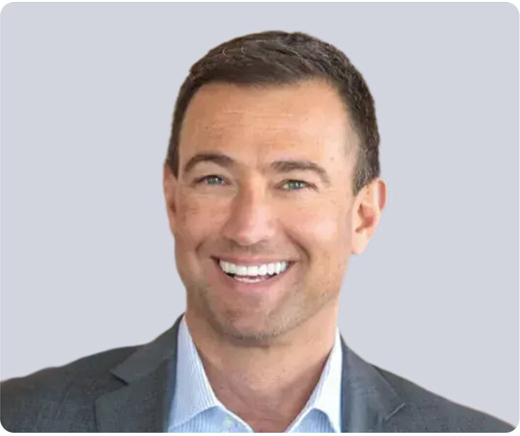
In the grand theater of corporate transformation, few departures signal the end of an era quite like Neil Lindsay’s upcoming exit from Amazon. After a distinguished fifteen-year career at the global tech giant—during which he helped shape the daily habits of millions of consumers through his foundational work on the Kindle, Amazon Devices, Prime, and international Marketing—Lindsay is preparing to step down as the Senior Vice President of Amazon Health Services on July 1. For the past five years, he has championed an ambitious and deeply empathetic vision: the belief that the same design principles, logistical marvels, and digital simplicity that Amazon used to revolutionize modern retail could be applied to heal a healthcare system that has remained stubbornly, unnecessarily complex for everyday people. Under his visionary stewardship, speculative initiatives were meticulously nurtured into a unified, robust health network encompassing Amazon Pharmacy, One Medical, Health AI, and the Health Benefits Connector. This network has evolved from experimental projects into a crucial daily care provider that supports millions of real people navigating their medical needs. While Lindsay’s decision to transition into an advisory role through the end of the year and pursue his personal projects marks a quiet sunset to a stellar corporate career, his legacy will ripple through the industry. His trajectory stands as a testament to the power of human-centric design in corporate structures, showing that even the most massive, impersonal conglomerates can build systems that care for the individual when guided by a leader dedicated to dismantling systemic frustration.
Stepping into Lindsay’s formidable shoes is Dr. Roy Schoenberg, a physician-entrepreneur whose appointment represents a profound, philosophically significant evolution in how tech giants approach modern medicine. Unlike traditional retail executives who view healthcare through the cold prism of logistical supply chains and margin optimization, Schoenberg is a medical doctor who understands the intimate, high-stakes relationship between a patient and their caregiver. In 2006, long before the convenience of digital medicine became a necessity during global health crises, Schoenberg founded the pioneering telehealth platform Amwell, serving as its co-CEO and president until two years ago. By partnering with massive hospital networks, public health organizations, and insurance providers, he spent nearly two decades proving that digital interfaces could extend clinical empathy to underserved populations rather than distancing them from care. This change from Lindsay’s consumer-experience-driven leadership to Schoenberg’s clinical, physician-centric perspective suggests a maturing industry. Amazon is signaling that the future of digital health is no longer just about the rapid delivery of prescriptions or the streamlined booking of clinical appointments, but about clinical authenticity, medical safety, and deep integration with existing health infrastructures. By placing a practicing physician at the helm of its massive health ecosystem, Amazon is bridging the gap between algorithmic optimization and health-focused empathy, ensuring that the technology of tomorrow remains deeply rooted in the foundational human promise to do no harm.
This theme of structural transition and the preservation of founding ideals is mirrored in the tax compliance sector, where Hugo Sarrazin has taken the helm of Avalara, succeeding co-founder Scott McFarlane. Over twenty-two years ago, McFarlane helped build Avalara on the scenic shores of Bainbridge Island, Washington, transforming the seemingly mundane but universally dreaded headache of transactional tax compliance into an indispensable, cloud-based software utility. In the wake of Avalara’s landmark acquisition by Vista Equity Partners in 2022, the subsequent corporate relocation of its headquarters to North Carolina, and the maintenance of its historic Seattle presence, the passing of the torch to Sarrazin represents a classic inflection point for mature technology startups. Sarrazin, who joins the company after a highly successful tenure as president and CEO of the professional education platform Udemy, brings a wealth of experience in scaling operations, fostering digital innovation, and managing complex global ecosystems. Meanwhile, McFarlane’s transition to an advisory role allows him to remain a guardian of the company’s original spirit while letting a new architect build upon the foundations he laid over more than two decades. This geographical and leadership shift highlights the delicate human dance of executive succession, where a company must honor its regional roots and founding passion while embracing the structured, aggressive scaling strategies necessary to compete on a global computerized stage.
The fluid nature of tech talent is also vividly illustrated in the migration of Nancy Xiao, who recently relocated from Seattle to San Francisco to join the Consumer Devices team at OpenAI. Xiao’s professional journey reflects the rapid, sometimes unforgiving shifts in industry priorities, moving from the virtual reality sectors of Meta to the front lines of consumer artificial intelligence. At Meta, Xiao worked as a product lead shaping the future of VR devices and accessories, a sector that faced substantial headwinds and organizational restructuring, culminating in painful layoffs that directly affected over a thousand professionals in the Pacific Northwest. Before her tenure at Meta, Xiao demonstrated her leadership as the president and CEO of Mason, a Seattle startup dedicated to building custom hardware and software solutions for Android devices. This rich background in both physical product manufacturing and agile software development positions her uniquely to address the “absolute tidal wave of fun problems to solve” at OpenAI, where the race to integrate physical consumer devices with advanced, generative artificial intelligence is redefining our daily interactions with technology. Xiao’s transition highlights how high-caliber talent navigates corporate setbacks, channeling their skills and passion into new domains where tomorrow’s most disruptive human-machine interfaces are being forged.
While consumer tech continuously redefines daily domestic life, other sectors are deploying technological advancement to navigate high-stakes, lifesaver scenarios, from hostile military terrains to complex human biology. In the autonomous vehicle space, Seattle-based startup Overland AI has secured a major strategic advantage by appointing retired Army Major General Clay Hutmacher as an advisor. Hutmacher’s forty-year military career spans elite special operations, tactical aviation, and joint operations, giving him an unparalleled, real-world understanding of the unpredictable off-road environments where Overland AI’s self-driving military vehicle software must function. This recruitment bridges the gap between theoretical software engineering and the harrowing, practical realities of defense logistics, ensuring that autonomous technology is built with a deep respect for human lives in the field. Concurrently, the crusade against catastrophic physical illness is seeing a similar influx of elite leadership. InduPro, a bicoastal biotechnology firm operating out of Seattle and Cambridge, Massachusetts, has named Dr. Amanda Redig as its Chief Medical Officer. Redig, an accomplished medical oncologist with clinical roots at the Dana-Farber Cancer Institute, represents the vital link between laboratory drug discovery and patient bedside care. Her expertise in navigating clinical trials for cancer and autoimmune therapies ensures that InduPro’s research translates directly into therapeutic relief for patients who are desperately waiting for a scientific miracle.
The broader narrative of human-led technological progress is woven together by leaders who bridge disparate worlds to construct a more collaborative, sustainable future. This is evident in the appointment of Ashraf Alkarmi as the co-CEO of Dropbox alongside co-founder Drew Houston. Alkarmi, who previously spearheaded Amazon’s video streaming platform Freevee and managed its complex Amazon Restaurants initiatives, brings a unique perspective on digital accessibility and customer engagement to the file-sharing giant. Basing his operations in Seattle, Alkarmi’s leadership style exemplifies a modern trend toward cooperative, shared governance models designed to guide established tech companies through the rapidly changing demands of remote work and cloud-based collaboration. At the same time, the quest for future energy independence has led British Columbia-based General Fusion to appoint Joanna Cameron as its general counsel and corporate secretary. As Cameron, a veteran legal architect who previously steered uranium pioneer NexGen Energy, prepares the commercial fusion energy company for its public market debut, her appointment highlights the necessity of regulatory precision in bringing clean power to the world. Ultimately, these diverse leadership shifts across Amazon, OpenAI, Avalara, Dropbox, and beyond remind us that behind every board resolution, medical trial, and product launch, there is an underlying human quest to make our complex world run a little more smoothly, heal a little more reliably, and transition toward a brighter tomorrow.