





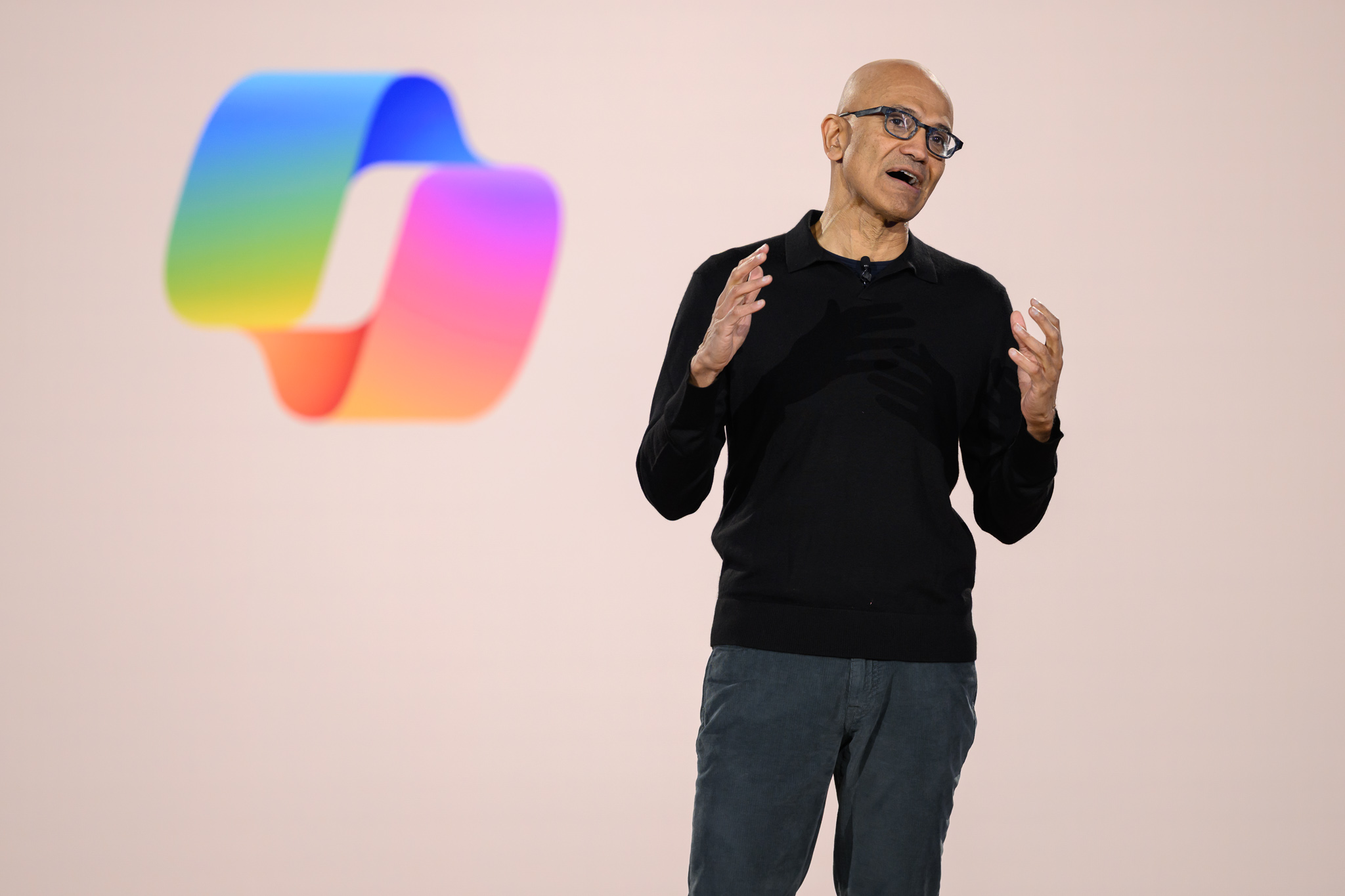
Microsoft is quietly doing something that sounds like routine software housekeeping but is actually the first step toward a much bolder ambition: it is merging its consumer and business Copilot apps into one unified product, a single digital assistant that can follow you from your kitchen table to your office desk and back again. For anyone who has used Microsoft’s AI tools recently, this is a significant moment. At first glance, the change seems simple enough—two apps become one, a new name, a new icon, a slightly different web address. But beneath that surface lies a strategic pivot. Microsoft wants to transform Copilot from a sprawling collection of experimental AI features into a coherent, daily companion in the same league as ChatGPT, Gemini, and Claude. The company’s chief executive, Satya Nadella, has been telling investors and developers that the endgame is a “Super App,” a single destination that will house chat, coding help, collaborative tools, and autonomous agents. He promised it would arrive by the end of September. This merger is the structural foundation for that promise. But it is also an admission of a slower, more human reality: most people do not keep their work lives and personal lives in clean, separate boxes anymore. You answer a work email while making dinner. You plan a vacation on the same laptop you use for spreadsheets. Microsoft is finally acknowledging that the assistant you use at the office and the one you use at home are probably the same “you,” and the product should behave that way.
The path to this unified app is gradual, and if you are a regular Copilot user, you will likely notice the transition happening at different times depending on your device. Microsoft says migration begins this week with a small group of Windows Insiders, then expands more broadly the following week. Mobile and web users around the world will see the change in mid-August, while Windows and Mac desktop apps will follow in mid-September. Not everyone will get the update simultaneously, and Microsoft says that is expected—so if your neighbor’s Copilot looks different from yours, don’t panic. The important part is what the new experience looks like. The consumer app and the commercial app are becoming one, known simply as Microsoft Copilot, with a refreshed icon. The commercial web address is shifting from m365.cloud.microsoft to copilot.cloud.microsoft, with automatic redirects starting in late August. For users who worry about privacy, there is a reassuring message: even though the apps are unified, your work and personal lives remain separate. You can sign in with a personal account, a work or school account, or both, and switch between them inside the app. But data will not flow between the two worlds. Your employer cannot see your personal chats, and enterprise security, compliance, and administrative controls are staying exactly as they were. Your chat history, images, and other content from the old consumer app will migrate to the new one, so you won’t lose your memories. Files shared with or generated by Copilot will live in OneDrive, though additional storage beyond your plan will require a paid subscription. Think of it like moving to a new home: your furniture and photographs come with you, but you might need to rent a storage unit for the extra boxes.
Of course, not everything is moving with you. This consolidation is also a kind of housecleaning, and some of the more experimental, whimsical features that Microsoft introduced over the past year are being swept out. The most emotional farewell is to Mico, the expressive little blob that was unveiled less than a year ago to accompany Copilot’s voice mode. Mico was charming, playful, and vaguely like a character from a Pixar movie, but it is disappearing from the consumer app after August 18. Microsoft says the blob may still appear in some educational features, so maybe not a complete goodbye. But for people who had grown fond of the little creature, it is a reminder that in the fast-moving world of AI, even the cutest experiment can be sacrificed for focus. The same goes for Copilot Podcasts, a feature that turned websites and uploaded documents into AI-generated audio discussions. If you have any episodes saved, you will need to download them individually from the podcast library before the cutoff, because they are going away. Group Chat is also being retired, and its threads, messages, and images will disappear entirely after August 18. This is the hardest loss for anyone who used it to collaborate or just to play around with friends. Then there is Deep Research, which searched the web and produced long, detailed reports by pulling sources together. For consumers, Deep Research is being retired. There is a replacement, a similar tool called Researcher, but it will only be available to subscribers of Microsoft 365 Premium, which is a higher tier than the regular Personal and Family plans. If you have a Personal or Family plan, you can still open your old reports from chat history and export them to Word, but you cannot create new ones. All of this removal can feel abrupt, especially if you loved one of these features, but Microsoft is deliberately cutting away things that did not gain enough traction. Jacob Andreou, the former Snap executive who now leads Copilot, reportedly told his team in early July that the company needed to move on from features that were not catching on and “earn and respect the right to exist in our customers’ lives.” That is a corporate way of saying: we want to be so useful that you cannot imagine life without us, and we are willing to let go of the cute experiments to get there.
For business users, the story is much quieter. Microsoft is calling the commercial changes mostly cosmetic. The Microsoft 365 Copilot app will simply become Microsoft Copilot, with a new icon and a new web address. The underlying enterprise tools, security controls, and administrative settings will remain largely the same. But the commercial side of the house still matters enormously to Microsoft’s strategy. Last month, the company announced that Microsoft 365 Copilot had surpassed 30 million paid seats, up from 20 million in April, with net seat additions more than doubling quarter over quarter. That sounds impressive, but it is only about 7 percent of the more than 450 million commercial Microsoft 365 paid seats that the company reported in January. In other words, Microsoft has barely scratched the surface of its own installed base. On the consumer side, the company does not disclose user numbers, but the analytics firm Sensor Tower estimated that the Copilot app had about 38.5 million monthly users in July. That sounds like a lot until you compare it to ChatGPT, which has roughly a billion monthly users. Microsoft is still the underdog in the race for everyday AI assistants, even though it has spent billions of dollars and partnered with OpenAI to build some of the most powerful models in the world. This unification is an attempt to turn that underdog status around by leveraging the one thing Microsoft has that its rivals do not: a deep, trusted presence in workplaces and schools around the world. The company is betting that people who use Copilot at work will eventually see it as their natural assistant at home, too. The upcoming Super App is designed to accelerate that habit by combining chat, AI coding, a new collaboration feature called Cowork, and a set of autonomous agents called AutoPilot into a single, seamless experience. Nadella has promised the Super App will be out this quarter, meaning by the end of September. That is an ambitious timeline, and the current merger is only the first step, but it shows how serious Microsoft is about making Copilot the center of daily life, not just another tab in a browser.
There are some practical wrinkles that everyday users and IT departments should prepare for. During the migration, some consumer users may temporarily lose access to Copilot Health, a feature that helps track wellness and health-related information. Microsoft says it will come back, and that heavy users will be migrated later specifically so the feature will be waiting for them when they arrive. That is a small grace, but it also points to a broader truth about this transition: the experience may feel inconsistent for a few weeks. The app might look different, ask you to sign in again, or behave in ways that seem slightly off. Free users should also know that limits may tighten. Microsoft says core Copilot chat will remain free “subject to capacity and limits,” but some users will hit those limits sooner than they do today. If you find yourself blocked, the company’s suggestion is to buy a paid Microsoft 365 plan, such as Personal or Family, which come with higher usage limits. This is a familiar pattern in the AI industry, where free access is always a little uncertain and paid plans are the escape hatch. For IT administrators, there is a specific task that could easily be forgotten. Recall, the Windows feature that periodically captures screenshots of your activity so you can search for things you have seen, now allows organizations to exclude certain apps from those screenshots. If your organization had previously excluded the old Copilot app, you will need to reapply that setting to the new unified app. The exclusion will not carry over automatically. That is the kind of small but important detail that can trip up an entire enterprise if nobody remembers it. The bigger lesson is that even a “cosmetic” change can have hidden consequences, and the people responsible for keeping systems secure will need to pay close attention over the coming weeks.
Looking beyond the technical details, this merger is really about Microsoft’s grand vision for the future of personal computing. The company is no longer content to be the invisible software underneath your work documents or the cloud platform that powers other people’s apps. It wants a direct, personal relationship with you. The Super App is the centerpiece of that ambition. By the end of September, Microsoft hopes to deliver a single app that can handle your casual questions, write your code, join your meetings, manage your tasks, and, eventually, act autonomously on your behalf with agents that can take care of entire projects without constant supervision. Whether you find that exciting or a little unsettling probably depends on how much you trust AI with your daily life. But there is no denying the scale of the bet. Microsoft is betting that the future of AI is not a thousand specialized bots scattered across different websites and apps, but one central assistant that knows you, understands your context, and moves seamlessly between work and home. It is also betting that its long history in business software gives it an unfair advantage—that people will trust Copilot with sensitive work data in ways they might not trust a consumer-focused chatbot from a company with no enterprise roots. That is not crazy. The average office worker already lives inside Microsoft’s ecosystem: Outlook, Word, Excel, Teams, OneDrive. If Copilot becomes the face of that ecosystem, it could quietly become one of the most used software products in the world. The challenge is that people have to want to use it, not just have it installed. Features like Mico were fun, but they did not create daily habits. The Super App is Microsoft’s attempt to build something that people wake up and reach for, the way they reach for their phone’s home screen. In the end, the success of this unification will not be measured by the elegance of the app’s architecture or the cleverness of its icon. It will be measured by a far more human metric: whether you, in the middle of a busy day, think to yourself, “Let me ask Copilot,” and feel like it actually helps. That is the promise of the Super App—and the weight of its challenge.