





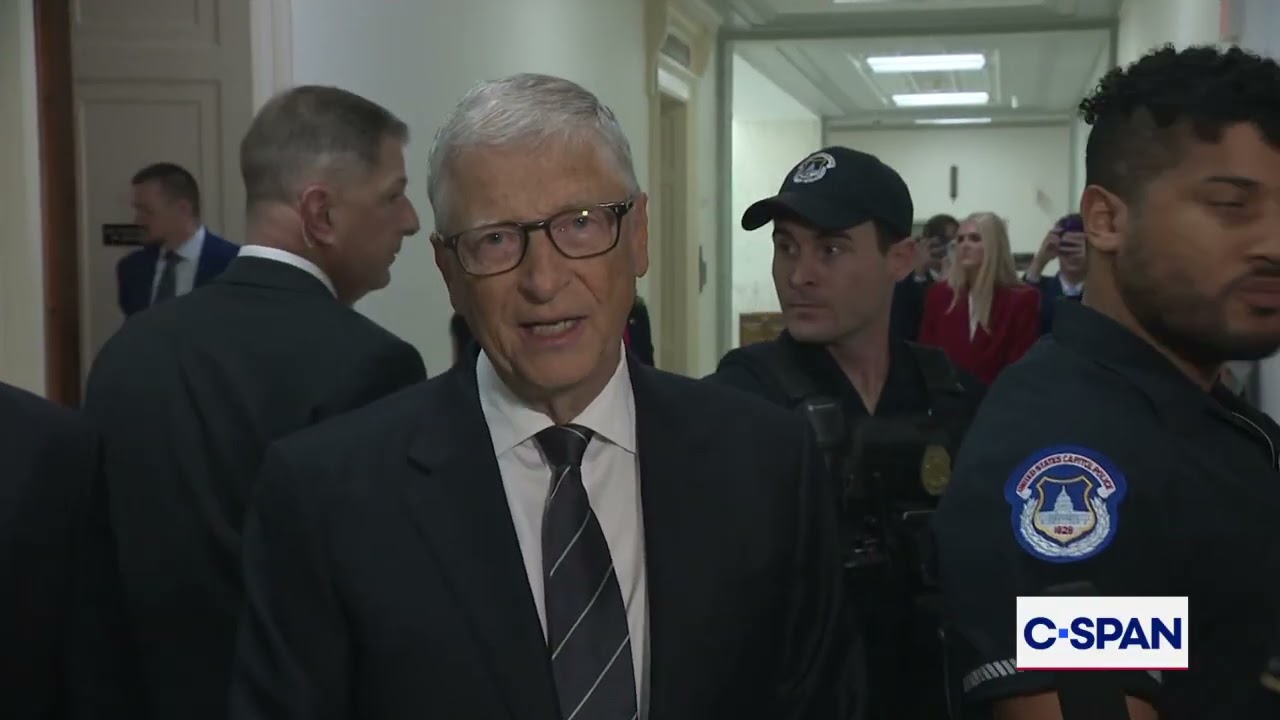
On Wednesday morning, June 10, 2026, a quiet yet profound shift occurred in the public narrative surrounding one of the world’s most prominent philanthropists and technological pioneers. Bill Gates, the co-founder of Microsoft and the driving force behind some of the globe’s most ambitious humanitarian initiatives, walked voluntarily into a closed-door meeting with investigators from the House Oversight Committee. Away from the glare of television cameras and the sensationalism of a public hearing room, Gates participated in a transcribed interview to answer lingering, painful questions regarding his historical association with the disgraced financier Jeffrey Epstein. For a man who has spent the better part of the last three decades meticulously crafting a legacy defined by intellectual rigor, global health advocacy, and unprecedented generosity, this congressional appearance represented a deeply sobering moment of reckoning. It was a stark reminder of how a single, catastrophic error in judgment can ripple through an individual’s life, casting a long and complicated shadow over the very structures, charities, and businesses he spent a lifetime building. This voluntary testimony was not just a legal formality, but a humanizing moment of vulnerability for a global icon, illustrating that even the most powerful individuals must eventually confront the consequences of their associations in the court of both government inquiry and public opinion.
In a comprehensive and deeply reflective statement released in advance of his congressional testimony, Gates offered his most transparent and detailed public account to date, attempting to unpack the complicated circumstances that led him into Epstein’s social orbit. Gates explained that he was initially introduced to Epstein in 2011, lured by the enticing and noble promise of cultivating a new, unprecedented wave of global health philanthropy. According to Gates, Epstein positioned himself as a unique conduit capable of raising billions of dollars from wealthy donors to fund critical initiatives in developing nations, a prospect that appealed directly to Gates’ single-minded determination to eradicate preventable diseases. Driven by the hope of securing these vital funds, Gates maintained an intermittent relationship with Epstein for three years, a decision he now views with immense, agonizing regret, before permanently severing all contact in the winter of 2014. Looking back on those meetings, Gates did not offer excuses, instead calling his willingness to engage with Epstein a “grave error in judgment” that ultimately put his life’s philanthropic work at serious risk. He expressed a deep and searching sorrow for any unearned credibility his presence may have inadvertently bestowed upon a known predator, stating, “If the time I spent with Epstein lent him any credibility, I am deeply sorry.”
The narrative surrounding their association took a highly personal and fraught turn as Gates addressed the painful intersection of his private life, his personal fallibility, and Epstein’s calculated attempts at Manipulation. During his testimony and in previous public acknowledgments, Gates addressed the reality of his marital infidelity, which had become a focal point of investigative reporting and public speculation. Specifically, Gates had previously acknowledged having extramarital affairs with two Russian women, confessions he of necessity shared with his own staff during a highly emotional, internal Gates Foundation town hall meeting. It was this private vulnerability that Epstein allegedly discovered and attempted to weaponize, using the knowledge of Gates’ infidelity as leverage in a desperate bid to extort the billionaire and force him back into his social and philanthropic network. Despite the immense personal and professional risks involved in defying a master manipulator, Gates steadfastly refused to capitulate to the blackmail, choosing instead to permanently lock Epstein out of his life. Through his spokesperson, Gates emphasized that while he deeply regrets the initial meetings, he was never a participant in, nor a witness to, any of Epstein’s illegal actions, and that he welcomed the opportunity to cooperate fully with the committee to support their ongoing oversight work.
This complex web of personal missteps and extortion attempts has created profound structural and cultural challenges within the Bill & Melinda Gates Foundation, the crown jewel of Gates’ philanthropic endeavors. The shockwaves of the association have forced the foundation to engage in a painful period of self-reflection and systemic reform. Earlier this year, the foundation’s leadership took the extraordinary step of commissioning an exhaustive external review to examine its historical connection to Epstein and radically tighten its vetting processes for future global partners. The internal atmosphere at the foundation has been described as deeply somber, characterized by a sense of institutional grief and betrayal among employees who have dedicated their careers to the noble pursuit of global equality and health. During an emotional town hall, Mark Suzman, the Chief Executive Officer of the Gates Foundation, candidly admitted to staff that he felt “somewhat sullied” by the association and acknowledged that the controversy had made their vital global mission far more challenging to execute in an increasingly skeptical world. The foundation has issued official apologies expressing deep regret that any of its staff members were ever exposed to or interacted with Epstein, highlighting the painful challenge of preserving institutional integrity when a founder’s personal history becomes compromised.
The systemic fallout of Gates’ past associations has reverberated far beyond the realm of philanthropy, disrupting several of his most innovative commercial, scientific, and climate-focused enterprises. At TerraPower, an advanced nuclear energy company founded and chaired by Gates, anxious employees recently organized an intense, open-forum meeting to confront leadership about the ethical implications of the association, particularly concerning the ties of both Gates and Nathan Myhrvold, the former Microsoft Chief Technology Officer who serves as the company’s vice chairman. Simultaneously, Breakthrough Energy, Gates’ high-profile investment firm focused on pioneering climate change solutions, has reportedly struggled to secure commitments for a new fund, with several prominent, climate-conscious investors expressing hesitation due to the reputational risks associated with the Epstein connection. This corporate and social distancing was further emphasized within the cultural fabric of Microsoft itself; Gates did not participate in the tech giant’s prestigious annual CEO Summit, and his customary, highly anticipated dinner party at his private residence did not take place. While Microsoft spokespersons politely minimized the absence by extending a warm invitation for his return next year, the temporary isolation illustrated a stark reality: even the most influential figures in technology and business are subject to the cold, defensive calculus of modern corporate public relations.
As the House Oversight Committee prepares to release the full transcript of Gates’ closed-door interview, the public is left to grapple with a deeply human story of ambition, vulnerability, and the fragile nature of trust. It is vital to recognize that Gates has never been charged with any crime, nor has he been accused of any personal wrongdoing or abusive behavior by any of Jeffrey Epstein’s survivors; rather, his transgression lies in the quiet, tragic normalization of a predator in the pursuit of philanthropic capital. His voluntary appearance before the committee represents a crucial, humbling step in a long, highly personal journey toward accountability, proving that true leadership requires standing tall in the face of one’s past errors. The humanization of Bill Gates through this crisis of reputation reminds us that behind the grand narratives of global change and technological progress lie fallible human beings who, despite their brilliance, are capable of making devastatingly simple mistakes. As he works to rebuild confidence across his vast network of institutions, Gates’ ongoing reckoning serves as a profound warning to the powerful about the company they keep and a quiet testament to the enduring, difficult path of earning back public trust.