





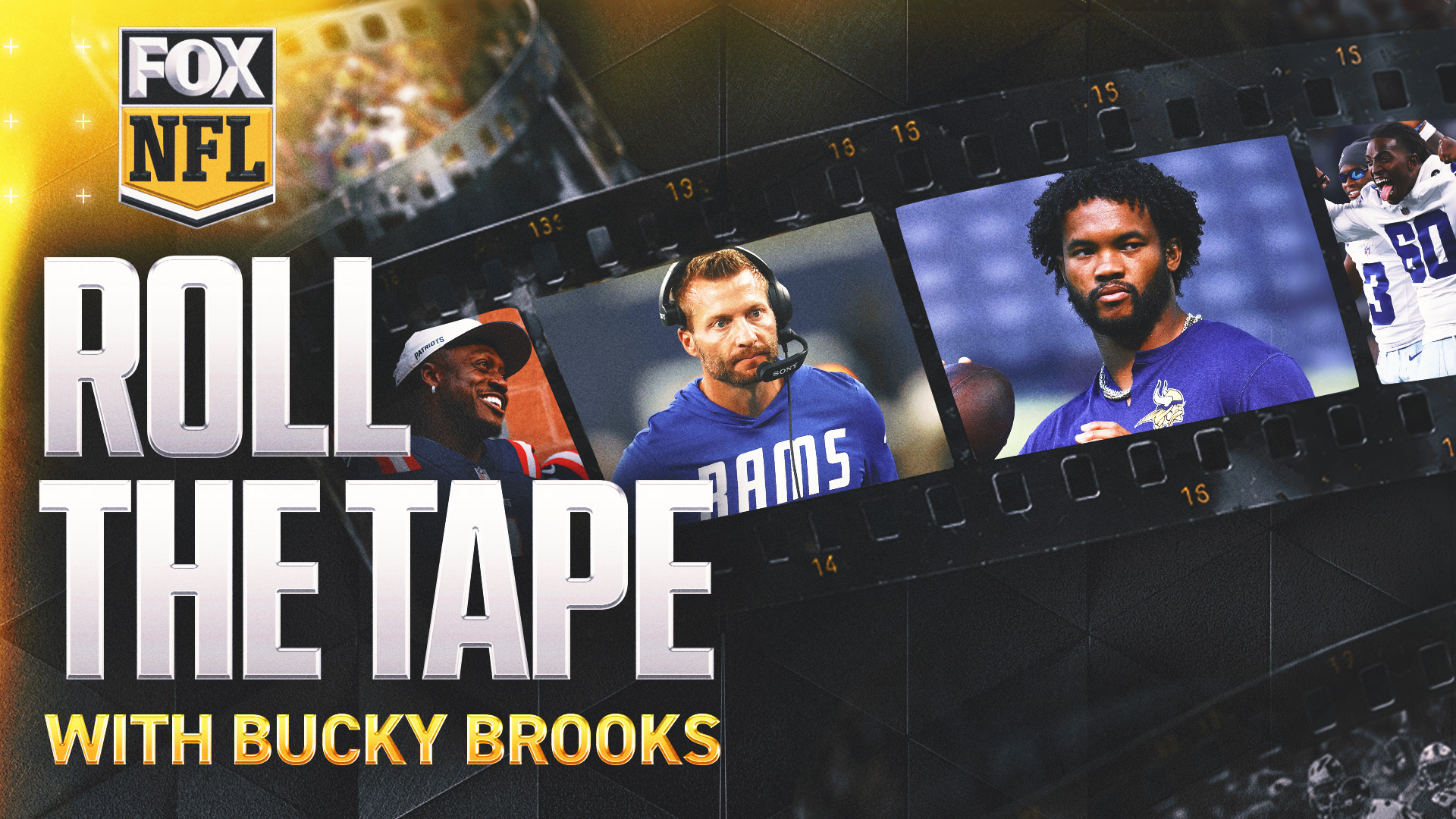
NFL 2026 Season Preview: Five Storylines That Could Define the Year
The 2026 NFL season has finally arrived, bringing with it a wave of anticipation and excitement that has been building since the final whistle of last year’s championship game. As teams hit the field this fall and winter, football fans everywhere are eager to see how the strategic innovations and roster moves from the offseason translate into on-field success. This year promises to be particularly fascinating, with several emerging trends that could fundamentally reshape how the game is played at the highest level.
The Rise of Heavy Personnel Packages
One of the most intriguing developments to emerge from last season was the Los Angeles Rams’ innovative use of their 13 personnel package, which features one running back, three tight ends, and one wide receiver. This formation captured the imagination of offensive coordinators across the league who were searching for creative solutions to counter the two-high safety shells that have become increasingly prevalent in modern defenses. By deploying what traditionally looks like a running formation in normal down-and-distance situations, offensive playcallers are essentially forcing defensive coordinators to choose between staying in their base packages or scrambling to adjust their personnel on the fly. The beauty of this approach lies in its versatility, as the Rams demonstrated when they lined up three big-bodied tight ends on the perimeter who could both block effectively at the line of scrimmage and flash surprising route-running ability down the seams or across the middle of the field.
The specific talent on the Rams’ roster made this strategy particularly effective, with tight ends Tyler Higbee, Colby Parkinson, Terrance Ferguson, and Davis Allen all contributing their unique skills to create mismatches that defenses simply couldn’t handle. Head coach Sean McVay proved himself a master of deception, using max protection schemes and play-action passes to create big-play opportunities for quarterback Matthew Stafford while keeping defenses guessing about what was coming next. The numbers tell a compelling story, with Stafford completing nearly 70 percent of his passes and throwing 20 touchdowns from this personnel grouping alone. By lining up in bunch formations and clustered alignments that created unbalanced offensive lines and extra gaps in the running game, McVay essentially discovered a cheat code that his offense exploited to light up scoreboards across the league.
Now, as the Rams’ success has become the talk of the coaching world, teams across the NFL have spent their offseasons studying this approach and making roster decisions with heavy personnel packages in mind. The 2026 draft saw a whopping 22 tight ends selected, including nine within the first 100 picks, with several teams doubling up on the position to give themselves the flexibility to experiment with this formation. The Jaguars, coached by McVay disciple Liam Coen, made particularly aggressive moves to position themselves for this style of play. As more teams embrace multiple tight-end sets to create and exploit mismatches both on the ground and through the air, the increased adoption of this strategy appears to be the number one trend to watch in the early part of this season.
The Patriots’ New Dynamic Duo
The reunion between A.J. Brown and his former Tennessee Titans coach Mike Vrabel in New England is shaping up to be one of the most exciting storylines of the season. The acquisition of an All-Pro receiver with six 1,000-yard seasons under his belt, including two campaigns where he surpassed 1,400 yards receiving, gives the Patriots a legitimate number one target to anchor their passing game. Brown’s exceptional physical attributes of size, strength, and physicality make him a natural fit at the X position, where he can overpower defenders who are bold enough to try pressing him at the line of scrimmage. His career numbers are truly impressive by any measure, as he stands among only four players in NFL history to average more than 75 receiving yards per game while also maintaining a 15-plus yards per reception average.
What makes Brown particularly dangerous is his ability to consistently defeat bump-and-run coverage on the perimeter, as evidenced by his remarkable 34.7 percent target rate against press coverage and his 2.6 yards per route average, which ranked fifth in the entire league. During his years with the Eagles, he actually led the NFL with a 3.4 yards per route average against press coverage, the most of any receiver with at least 100 such routes during that span. Offensive coordinator Josh McDaniels has even gone so far as to compare Brown to the legendary Rob Gronkowski, drawing parallels between their superior physical dimensions and dominant playmaking abilities on the perimeter. This comparison hints at how the Patriots might deploy their newest weapon, potentially lining him up on the backside of various 3×1 formations and empty sets to force opponents to declare their coverage schemes and potentially telegraph double teams.
This strategic deployment should help third-year quarterback Drake Maye take his game to another level, as Brown’s presence opens up easier throws on the perimeter by commanding so much defensive attention. Maye already showed tremendous promise last season, leading the league in completion percentage and passer rating even without a true number one receiver at his disposal. The addition of Brown should add a dimension to an offense that came up just short in the AFC Championship Game and Super Bowl LX. Expect McDaniels to use creative movement to prevent defenses from using simplistic schemes to minimize Brown’s impact, potentially lining him up in the slot where his speed and quickness against nickel backs and linebackers becomes a matchup nightmare. Brown’s blocking skills will also prove valuable in creating running lanes on the edges, and his route-running abilities will be tested early when New England faces a Seattle defense that likes to challenge receivers with aggressive bump-and-run tactics.
Myles Garrett’s MVP Campaign
It has been forty years since a defensive player last won the NFL’s Most Valuable Player award, when Lawrence Taylor captured the honor in 1986 following a spectacular campaign that saw him record 20.5 sacks while leading the Giants to a 14-2 record and a Super Bowl victory. This year, all-world edge defender Myles Garrett appears well-positioned to make a serious run at that elusive prize as the Rams’ new defensive cornerstone. With fellow future Hall of Famer Aaron Donald also returning, the football world is paying closer attention than ever to how the two-time Defensive Player of the Year makes his mark on a team with legitimate Super Bowl aspirations.
Over the past three seasons in Cleveland, defensive coordinator Jim Schwartz masterfully moved Garrett around to prevent opponents from knowing exactly where he would line up before the snap. The five-time All-Pro can win with basic maneuvers from a three-point stance or get creative with a collection of athletic moves that showcase his remarkable agility and athleticism. While most teams typically send a second or even third blocker in his direction, Garrett now finds himself playing alongside a group of blue-chip pass rushers who will punish opponents for overcommitting to stop him. Kobie Turner, Byron Young, and Donald are all capable of registering double-digit sacks with their own array of one-on-one moves that will expose any blocker who lacks the talent or technique to win without help.
The individual and collective dominance of this defensive front will force opponents to make incredibly difficult decisions about when and how to double-team Garrett. Defensive coordinator Chris Shula faces the enviable challenge of creating a playbook that functions like organized chaos, allowing Garrett to freelance without compromising the defense’s overall structure. Given that Los Angeles has traditionally played a 3-4 scheme with various nickel and dime sub-packages, Shula must delicately balance the desire to play to his superstar’s strengths while keeping the scheme simple and consistent for the rest of the lineup. It’s certainly a nice problem to have for the Rams, and potentially a nightmare scenario for the San Francisco 49ers, who must face this formidable defense in Week 1.
The Vikings’ New Quarterback Era
Kevin O’Connell has established himself as one of the NFL’s premier quarterback whisperers, with an impressive track record of coaxing Pro Bowl-caliber performances from veterans like Kirk Cousins and Sam Darnold, and even getting passable production from emergency substitutes Nick Mullens and Josh Dobbs when injuries struck. Though the offense sputtered somewhat under J.J. McCarthy in 2025, the acquisition of Kyler Murray gives Minnesota an electric starting quarterback with the potential to light up the scoreboard as both a runner and a thrower from the pocket. Murray represents the most talented player O’Connell has ever worked with in Minnesota, and his dynamic skill set will enable the creative offensive mind to dig deep into the playbook to design plays that maximize his unique abilities.
Before the Vikings get to the more exotic aspects of their offensive scheme, they might initially simplify their approach to allow their new starter to engage in some basic pitch-and-catch football with a talented collection of receivers, including All-Pro Justin Jefferson and Jordan Addison. By encouraging Murray to string together completions on high-percentage throws, the Vikings hope to build a quick-rhythm offense that overwhelms opponents with surgical execution and efficiency. While skeptics have questioned whether Murray can operate within a highly structured offensive system after spending most of his Arizona career freelancing and hunting for big plays, this basic approach actually better suits his skills as a pinpoint passer with outstanding accuracy and impressive range.
With Murray expected to attack the entire field with a variety of rhythm throws that stretch defenses from sideline to sideline, defensive coordinators must decide whether to play soft, umbrella coverage with defenders paying close attention to Jefferson and Addison while leaving cracks for Murray to exploit on designed runs and scrambles. If opponents opt to load the box or intensify their pass rush to pressure Murray, his explosiveness as a runner and range as a passer could create a big-play bonanza for the Vikings. In a league where explosive plays routinely determine game outcomes, Murray’s big-play potential within a carefully designed offense could be the defining storyline to watch when Minnesota hosts Green Bay in their season opener.
America’s Team Rises Again
The Dallas Cowboys have quietly assembled a roster that makes them legitimate title contenders behind an explosive offense and a retooled defense that could surprise opponents this season. Under the direction of first-year defensive coordinator Christian Parker, a Vic Fangio disciple who spent the past two seasons with the Eagles, the Cowboys have put together a unit perfectly suited to throttle opponents who are forced to chase points against a high-powered offense. The 34-year-old defensive playcaller not only has a talented collection of pass rushers with Pro Bowl experience, including Von Miller, Quinnen Williams, Kenny Clark, and Rashan Gary, but also ball-hawking, high-IQ defenders in the secondary who can read and react to opposing offenses.
This combination of rush and coverage should challenge the patience and discipline of quarterbacks who lack the willingness to grind out short gains against a defensive backfield committed to taking away deep throws and explosive plays. Additionally, the Cowboys want to stuff the run from two-high structures with light boxes, making it difficult for opponents to identify exactly where extra defenders are coming from to plug designated run gaps. By showing an umbrella structure before shifting into airtight zones with single-high, weak-side rotations, Dallas wants to frustrate opponents with a disciplined approach that condenses the field while their defenders play fast and aggressive in the back end.
If this ultra-talented pass rush plays to its potential, with a mix of newcomers and veterans making significant contributions, the Cowboys’ defense could grow into a suffocating unit that wins with simple execution and sound fundamentals. Parker brings a young, modern coaching philosophy that understands how to build a system allowing players to thrive by simply seeing the ball and reacting instinctively. This approach could prove particularly dangerous for opponents who struggle to maintain patience and discipline when facing a defense that gives them few obvious options. For a franchise that has faced persistent criticism about its inability to win in the postseason, this combination of offensive explosiveness and defensive disruption could finally provide the formula needed to make a deep playoff run and potentially bring back the glory days that Cowboys fans have been waiting for.
As the 2026 NFL season unfolds, these storylines promise to deliver drama, excitement, and unexpected twists that define why football remains America’s most beloved sport. From innovative offensive formations and superstar reunions to historic MVP pursuits and emerging powerhouse rosters, the stage is set for a season that fans will remember for years to come. Whether these predictions hold true or unexpected developments emerge, one thing remains certain: the NFL never fails to surprise, disappoint, and thrill us all season long.