





In the heart of Seattle’s misty Ballard neighborhood, an unusual and thoroughly enchanting creature has captured the collective imagination of millions, reminding a weary digital world of the unexpected magic that still thrives in our urban ecosystems. Meet Jimothy, a wild raccoon who has become an overnight global sensation due to an extremely rare physical condition known as short-spine syndrome, which compresses his body into a round, delightfully stocky shape. The phenomenon exploded when local resident Kiana Hall spotted the unique critter and posted a video to Instagram with the exasperated, tender question, “What am I looking at?” The video immediately resonated with viewers, and when security camera footage of Jimothy’s nocturnal adventures surfaced on Reddit shortly thereafter, a tidal wave of affection washed across the internet. People found themselves captivated by this tiny survivor, whose waddling silhouette seemed to defy nature’s ordinary designs. In a world saturated with carefully curated, artificial social media content, Jimothy represented something wonderfully raw, vulnerable, and biological. He became a living muse, inspiring a deluge of memes, handcrafted artwork, tattoos, and poetry as people found comfort in his eccentric charm.
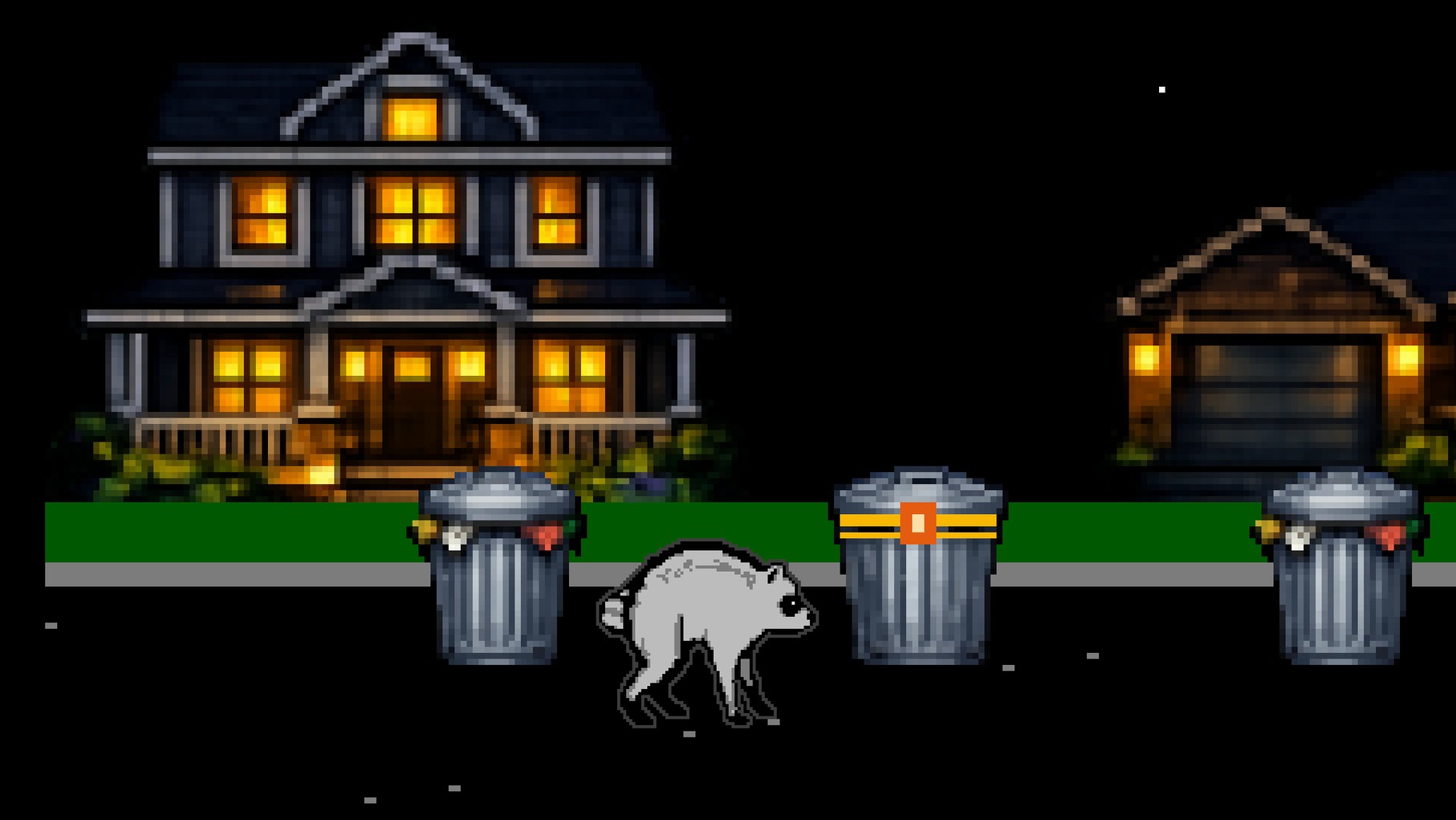
To translate this overwhelming surge of digital love into a safe and immersive experience, Seattle-based tech entrepreneur, creative coder, and lifelong enthusiast Chris Pirillo leaped into action over a single weekend. Recognizing that fans desperately wanted to connect with Jimothy but needed a safe outlet to do so, Pirillo created a retro-style, 8-bit NES video game named after the raccoon himself. In this digital recreation, players step into Jimothy’s tiny paws, guiding him through a series of pixelated, high-stakes tasks inspired by his real-life urban struggles. Players must navigate Jimothy through a hazardous, vehicle-laden street reminiscent of the classic game Frogger, raid tightly sealed suburban trash cans for valuable snacks, outmaneuver the flashing cameras of intrusive virtual paparazzi, and ultimately ascend to the peaceful safety of a towering pine tree. By capturing the simple mechanics of vintage arcade giants like Donkey Kong, Pirillo created an interactive narrative that effectively mirrors the real-life anxieties of being a viral animal celebrity, transforming our collective human curiosity into a playful, interactive tribute.
Central to Pirillo’s motivation for designing the game is a passionate plea for animal conservation, ethical boundaries, and respect for wild creatures that share our urban spaces. The game’s official website explicitly warns players that this simulated screen time is as close as anyone should ever get to the real Jimothy, imploring fans not to seek him out, feed him, or crowd him for photos if they happen to live in his neighborhood. This protective digital boundary addresses a modern ethical dilemma: when wild animals go viral, they are often subjected to harassment by well-meaning but misguided admirers looking for social media fame. By offering a cute, challenging video game as a substitute for real-world interaction, Pirillo’s project acts as a digital sanctuary that satisfies our desire to play with the creature while ensuring the physical raccoon can forage and sleep in peace. This conscious merger of software development and wildlife advocacy humanizes the tech itself, proving that video games can serve as gentle, empathetic tools that teach us how to coexist respectfully with the fragile nature surrounding us.
The speed and ease with which the game was developed highlights a revolutionary shift in the way humans interact with technology, driven largely by modern artificial intelligence. Pirillo built the entire game on a single HTML page using a collaborative process he describes as “vibe-coding,” which allows creators to write and refine complex software code using natural conversational language. Over a frantic Saturday, Pirillo utilized advanced AI systems, encouraging OpenAI’s GPT and Anthropic’s Claude models to build the game engine from scratch. The most amusing hurdle during development was getting the AI to accurately render Jimothy’s physical shape; standard image generators kept outputting generic, long-bodied raccoons because they had never encountered a short-spined variant. Through persistent coaxing and human-guided design tweaks, Pirillo successfully capture Jimothy’s unique, compressed proportions in pixel-art form, illustrating that the future of creation belongs to those who learn to whisper ideas into existence.
This digital experiment has blossomed into a full-scale cultural celebration across the Pacific Northwest, showcasing how a shared appreciation for a humble raccoon can unite an entire community. The local sports world quickly embraced the trend, with the Seattle Mariners featuring a Jimothy mascot during their iconic Salmon Run race, bringing stadium crowds to their feet. Meanwhile, the community’s creative spirit has poured out into charity efforts, with tech giants like Amazon matching open bids on Jimothy-themed fan art to raise vital funds for local food banks. This transitions Jimothy’s story from a simple viral moment into a powerful vehicle for social good, healing dividing lines and encouraging neighbors to support one another. It proves that the internet’s capacity for wholesome, unifying energy is still alive and well, waiting to be unlocked by the right source of wonder.
Looking back on the whirlwind development of the “Jimothy” game, Pirillo encourages other aspiring creators to seize creative moments before they evaporate into the background noise of the web. In the past, creating and distributing a high-quality video game to match a viral trend would have taken months of production, by which time public interest would have completely moved on to the next sensation. Today, the democratization of software building through conversational AI means that anyone with an idea can bring a fully functioning interactive world to life in a matter of hours. As Pirillo prepares to host free community workshops in Seattle to teach others his vibe-coding methods, he leaves us with a hopeful message about our technological future. While standing out in a crowded digital landscape has never been harder, the tools to build, share, and inspire have never been more accessible—proving that a little bit of curiosity, empathy, and code can still bring the whole world closer together.