

Paragraph 1: The stage was set for a European football classic, yet the conversation drifting through the corridors of the Etihad Stadium had little to do with tactics, formations, or the sensational attacking talent on display. Tuesday’s press conference ahead of the Champions League meeting between Paris Saint-Germain and Manchester City should have been a celebration of two of the world’s most extravagant football projects colliding. Instead, it revealed a more uncomfortable truth: that the beautiful game is frequently overshadowed by legal battles, financial accusations, and the murky waters of club ownership. Paris Saint-Germain’s coach, Luis Enrique, a man who knows what it means to lift the Champions League trophy not once but twice, stood before the media with an unexpected message of compassion. Rather than turning the spotlight onto his opponent’s legal troubles and twisting the knife, he chose to defend Manchester City, expressing his sincere hope that the English champions would not be stripped of their titles after being found guilty of breaching the Premier League’s financial rules. It was a moment of unexpected solidarity between rivals, and one that underscored just how complicated and emotionally charged the world of top-level football has become. As City’s players prepared to take on PSG in what promised to be a fiercely contested match, the real drama was unfolding behind the scenes, in boardrooms and court documents, where the club’s past spending habits were being dissected line by line. For the fans, the players, and the coaches, the question was no longer simply about who would win on the pitch, but whether the victories that had defined an era could withstand the harsh scrutiny of financial regulators. The atmosphere was heavy with tension, and even the most optimistic football supporter had to admit that the purity of the game was being severely tested by the machinery of modern football economics.
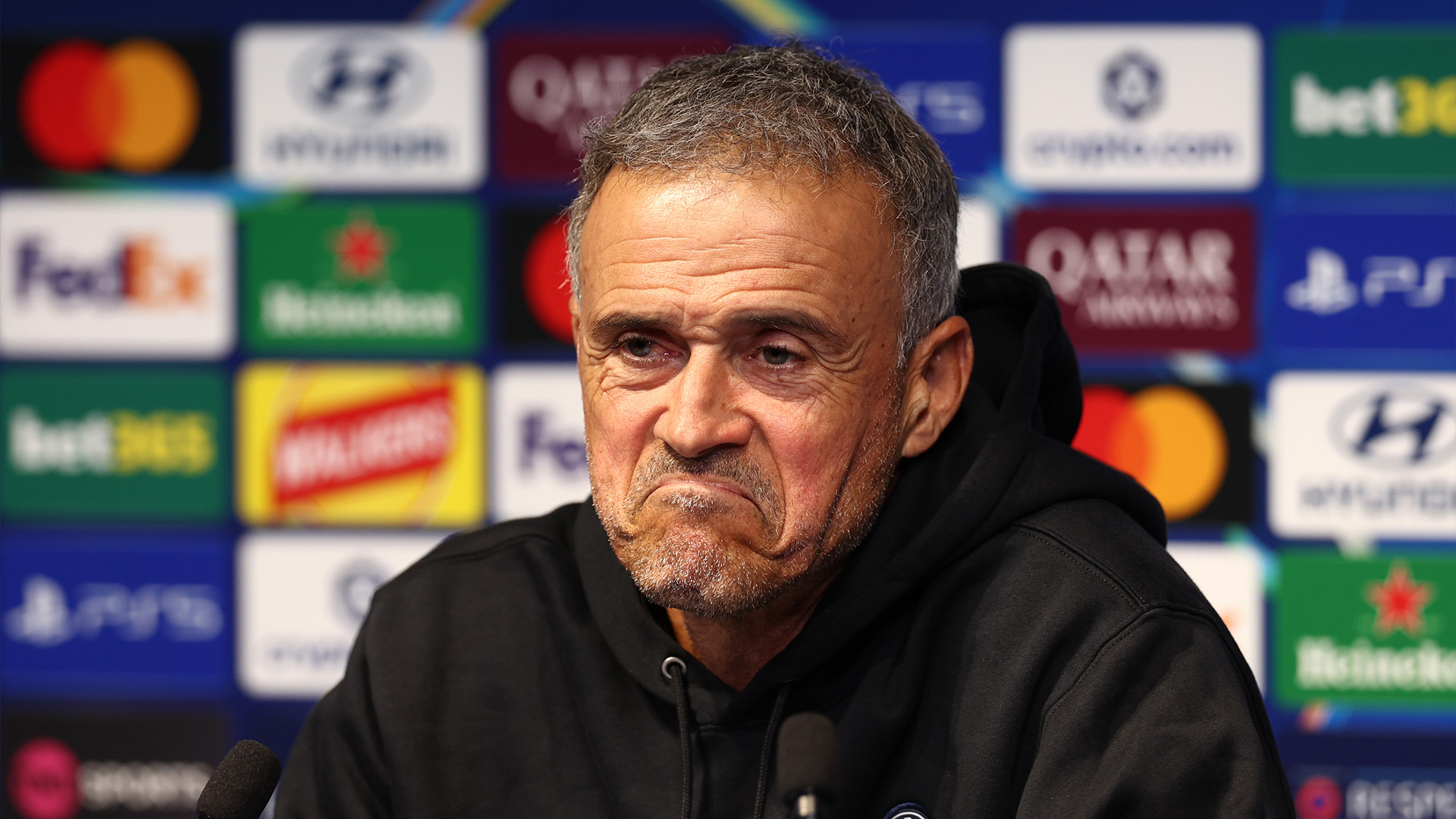
Paragraph 2: Luis Enrique’s defense of Manchester City was not just a fleeting platitude; it was a heartfelt and carefully articulated statement of respect for what the club had accomplished in the sporting arena. In the hours before the Champions League fixture, the Spanish coach made his position clear, telling reporters that he hoped everything would work out well for the English side. His reasoning was grounded in a simple, almost romantic belief that the trophies a team wins on the field should remain theirs, untouched by the messiness of legal rulings and financial disputes. “I hope everything works out well for Man City because I think what they have done on the pitch has been incredible over the last few years and they certainly deserved to win all the trophies they have won,” Luis Enrique said, his words carrying a sincerity that seemed to cut through the usual media-trained responses. He went on to say that the trophies won on the pitch remain on the pitch, a phrase that resonated deeply with those who have long believed that the essence of football lies in the unscripted magic of a goal scored or a trophy lifted, rather than in the fine print of sponsorship agreements and valuations. But he also acknowledged the reality of the situation, conceding that now the world must wait to see what the authorities decide and what the judge will say. It was a delicate balance, a manager defending a rival while also acknowledging that the legal process must run its course. For Luis Enrique, who has navigated the pressures of elite football at Barcelona and PSG, there was a recognition that no club is immune to the forces of regulation, and that the beautiful game must also answer to the rule of law. His comments were a reminder that beneath the fierce rivalries and the relentless pursuit of glory, there exists a sense of shared experience among those who have dedicated their lives to football, a bond that transcends club colors and national borders. By extending his hand to Manchester City, he was not endorsing their actions, but rather affirming his faith in the fundamental value of what they had achieved on the grass, where players had bled, sweat, and celebrated for the badge on their chests.
Paragraph 3: To understand the weight of this controversy, one must look back at the long, complicated history of Manchester City’s financial conduct, a narrative that has been unfolding for years with dramatic twists and turns. The club was found guilty of breaching the Premier League’s financial rules, specifically accused of providing misleading information about its finances over a nine-year period from 2009 to 2018. During that era, City won three league titles, forged under the leadership of manager Roberto Mancini and later the transformative tenure of Pep Guardiola. The accusations claimed that the club artificially inflated its revenue by more than one billion dollars, a staggering figure that, if true, would suggest a systematic effort to deceive the sporting world. Unsurprisingly, the club has vehemently appealed the verdict, refusing to accept the findings and continuing to assert its innocence. The battle has become a gigantic legal saga, with lawyers, economists, and football executives all trading arguments about accounting methods, associated party transactions, and the complex rules that govern how clubs can spend their wealth. For fans, the case has been a source of both anger and anxiety. Many believe that their club’s success is the result of extraordinary management, world-class coaching, and the unyielding talent of players who have become household names. To them, the idea that those achievements could be retroactively stripped away is not only a punishment for the club’s owners but a betrayal of the players who gave everything on the pitch. Yet critics argue that financial fair play exists to protect the integrity of competition, and that artificially inflating revenue gives a club an unfair advantage, distorting the league and harming smaller teams who cannot compete with such immense, hidden wealth. The appeal process has dragged on, creating a cloud of uncertainty that hangs over every match City plays. Each victory, each title, each memorable European night is now viewed through a skeptical lens, with rival fans asking whether it was won fairly or bought with money that was not what it seemed. It is a tragedy of modern football that such extraordinary athletic achievements are now overshadowed by lawsuits, and no one, not even the players themselves, knows how the story will end.
Paragraph 4: The potential consequences of the verdict are staggering, and the speculation surrounding them has only intensified the drama. Manchester City could face sanctions ranging from a massive fine to points deductions, and in the most extreme scenario, expulsion from the Premier League altogether. There have also been persistent calls for the club to be stripped of the trophies it won during the nine-year period under investigation, a punishment that would rewrite the history books and rob the club of its most cherished memories. Such a move would send shockwaves throughout the footballing world, reordering the all-time lists of champions and casting a shadow over the careers of legendary players. Yet the case of Manchester City is not isolated; it exists within a broader ecosystem of clubs backed by state wealth and sprawling business empires. Paris Saint-Germain, City’s upcoming opponent, is itself Qatari-backed, and both clubs have previously been sanctioned by UEFA, the sport’s European governing body, for breaches of Financial Fair Play regulations. This shared history creates an uncomfortable dynamic, as two clubs that have both felt the sting of financial scrutiny face each other on the pitch while their owners take part in a constant game of legal and diplomatic maneuvering. The question of whether football can ever truly be fair is one that has vexed administrators, players, and supporters for decades. On the one hand, there is the ideal that any team, regardless of its size or wealth, should be able to compete on a level playing field, where success is determined by talent, hard work, and the love of the game. On the other hand, the modern football landscape is dominated by billionaires, sovereign wealth funds, and corporate conglomerates, all of whom see the sport as both a passion and a strategic investment. The rules governing financial fair play are an attempt to impose some order on this chaotic system, but they are often criticized for being too complicated, too easily circumvented, or too arbitrarily enforced. As Manchester City and PSG prepare to face each other, they represent not only two formidable football teams but also two of the most debated models of modern club ownership. Their success has inspired awe and admiration, but it has also fueled resentment and a growing sense that something fundamental has been lost in the business of football. In this cloud of suspicion, even the most beautiful pass and the most exquisitely struck goal cannot escape the endless scrutiny of financial interpretation.
Paragraph 5: Amidst all this turmoil, the players themselves have adopted a remarkable attitude of calm, choosing to focus on the only thing they can control: what happens on the pitch. Manchester City defender Ruben Dias addressed the media with a composed demeanor, dismissing the rumors and speculation as noise that comes with the territory of being a professional footballer in the modern era. His words offered a rare glimpse into the psychology of elite athletes who must perform at the highest level while external forces attempt to destabilize them. “I feel like when you build yourself as a player, you build yourself against any kind of noise,” he said. “Personally, and I really feel like I speak for the whole group, we’re very calm. We trust the club, we’re very calm and we’re very focused on enjoying football.” This statement was not just a cliché; it was a declaration of faith. Dias and his teammates are, after all, the ones who step onto the field, who feel the roar of the crowd, who taste the bittersweet agony of defeat and the euphoria of victory. They are not accountants, lawyers, or executives; they are footballers who have spent their entire lives practicing the sport they love. For them, the legal battle is an abstract concept, a distant storm that rages far from the training ground. Their refuge is the game itself, the simple act of chasing a ball, of executing a well-rehearsed move, of feeling the turf beneath their feet. It was no coincidence that Dias brought up the recent 3-0 victory over Liverpool at Anfield, a match in which City silenced one of the most intimidating stadiums in world football. That performance was a testament to the team’s ability to block out distractions and deliver on the biggest stage. While the club’s owners and lawyers prepared for court hearings, the players were preparing for a much more straightforward contest: a battle of skill, stamina, and strategy against one of Europe’s elite sides. In their minds, the legacy of the team must be written on the pitch, not in a courtroom. And for a moment, their calmness was almost contagious, reminding everyone that no matter how complicated the world becomes, there is still something pure about a perfect pass, a courageous tackle, and a goal that makes the entire stadium erupt. That is the football they believe in, the football that has made them champions, and the football they will continue to play no matter what lies ahead.
Paragraph 6: As the two teams prepared to walk out onto the Etihad pitch for their Champions League duel, the broader significance of the encounter was impossible to ignore. This was more than just a match between two heavyweights; it was a clash of philosophies, a collision of narratives, and a momentary escape from a web of legal and financial intrigue that seemed to tighten around the sport with every passing day. For Luis Enrique, his defense of Manchester City was a noble gesture, a reminder that even rivals share a bond, an unspoken understanding that the game is bigger than any individual, any club, or any court case. For Ruben Dias and his teammates, the focus was on doing what they love, playing football with all the passion and intensity they could muster, trusting that the club would handle the rest. For the fans, the match was a chance to sing, to cheer, to lose themselves in the drama unfolding before their eyes, if only for ninety minutes. Yet as the final whistle blew and the players embraced, the underlying uncertainty still lingered like a shadow. Would Manchester City be punished? Would their titles be taken away? Would the club ever truly escape the cloud of suspicion that now hung over its greatest achievements? No one had the answers. The legal process would continue, the appeals would be heard, and the argument over justice in football would rage on. But in that fleeting moment of competition, with the floodlights blazing and the crowd’s roar echoing through the stadium, the beautiful game once again proved its extraordinary power to capture the human heart. It brought together coaches, players, and supporters from across the world, uniting them in a shared passion that no financial scandal could fully extinguish. Perhaps that is the ultimate message of this complex saga: football, for all its flaws and corruptions, for all the money and manipulation, remains a source of joy, a stage for heroes, and a story that is constantly being rewritten by the people who love it. And while the courts may decide the fate of titles and trophies, the memories of those matchdays, the sheer emotion of a packed stadium and the beauty of a perfectly executed attack, will live on, untouchable and eternal. The verdict, whatever it may be, will have consequences, but it cannot erase the poetry written by the boots of players who gave everything for the badge. In the end, both Manchester City and Paris Saint-Germain stand as monuments to ambition and talent, but the true winner, as always, is the game itself. And so the world waits, with bated breath, to see what happens next, knowing full well that in football, as in life, the final whistle never truly brings an end to the drama.