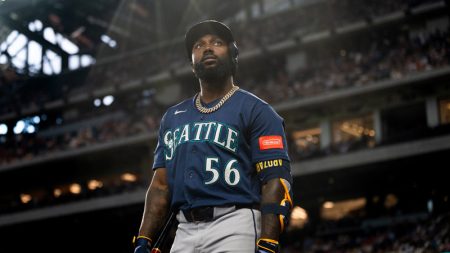



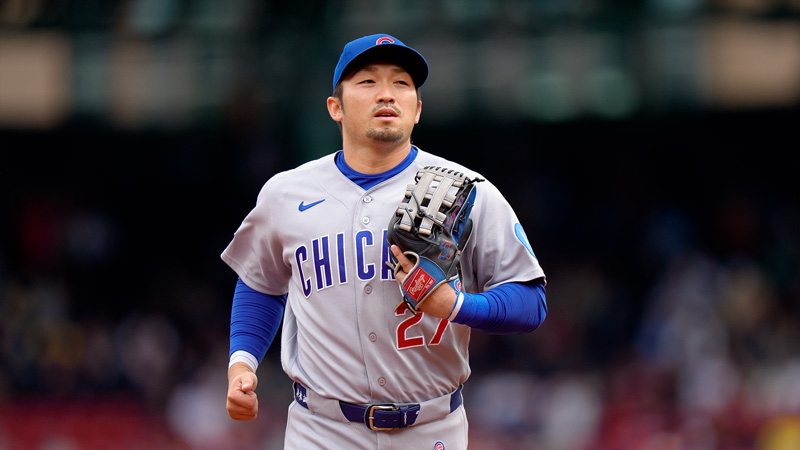
Power. Lots and lots of power. That has always been the calling card of Seiya Suzuki, and right now, at age 32, he’s offering more of it than ever before. If you’re a major league club looking to add a middle-of-the-order bat this winter, Suzuki is arguably the most dangerous right-handed hitter available. He’s not just a slugger who has to hide in the designated hitter slot, either. Coming off what was arguably the finest all-around season of his entire MLB career, Suzuki has proven he can hold his own in right field, logging 110 starts and 111 appearances there while playing with a surprising amount of athleticism for a guy listed at 5-foot-11 and 214 pounds. By the numbers, he was brilliant: a career-best 5.1 wins above replacement, 14 defensive runs saved, 32 home runs, 103 RBIs, a .472 career slugging percentage, and a 128 OPS+ that tells you just how much better he is than the average hitter. He’s the complete offensive package: patient enough to draw walks, aggressive enough to punish first-pitch mistakes, and strong enough to hit the ball out of any ballpark in any direction. But perhaps the most human, relatable thing about Suzuki is that he’s still improving, still adjusting, still tinkering. He arrived in MLB from Japan with enormous hype and huge expectations, and while there were growing pains, he has now settled into a rhythm that makes him one of the more dependable run producers in the game. For any contender, or even a team dreaming of contention, there’s something deeply appealing about signing a guy who has already seen the bright lights of a baseball-crazed country, who has already gone through the transition to an unfamiliar culture, and who still shows up every day with the quiet, controlled intensity of a professional. That’s the kind of presence that doesn’t show up on a stat sheet, but it matters in a clubhouse. And it’s why, if he does leave the Chicago Cubs, the bidding war for him could get very interesting.
The first team that should be picking up the phone is the Cincinnati Reds, if only because they need an actual, reliable, everyday right fielder more than almost anyone else in baseball. The Reds have spent years trying to find consistent production from their outfield, and they’ve failed over and over again. Their offense last season was simply anemic: dead last in hits with 1,231, dead last in on-base percentage at .305, 27th in runs scored with just 666, and 25th in slugging at .394. That’s not a lineup that’s going to scare anyone, let alone compete in a division where the Chicago Cubs, Milwaukee Brewers, and St. Louis Cardinals all have aspirations of playing October baseball. Cincinnati thought they had found a solution in Eugenio Suárez, a beloved former Red who returned for a reunion in 2026, but it didn’t work out. He finished with a disappointing .212/.307/.433 slash line while splitting time between third base and designated hitter, and now he’s a free agent again, leaving another hole in the lineup. Suzuki would slide right in as the starting right fielder, and he would immediately transform the look of this offense. He’s not a guy who’s going to hit .310, but he doesn’t need to. He’s going to hit 25 to 35 home runs, knock in 90 to 100 runs, get on base at a decent clip, and provide veteran assurance for a young core that desperately needs a proven, steadying influence. The Reds have some interesting young pieces, including a kid named Héctor Rodríguez who might eventually take over the right field job, but that’s precisely the kind of flexibility that makes Suzuki so valuable. If the Reds want their young outfielder to get everyday at-bats, Suzuki can open the season as the designated hitter. If that young player struggles or gets injured, Suzuki can move back to right field without missing a beat. He’s a plug-and-play piece, and at this stage of the Reds’ rebuild, they need known quantities, not more lottery tickets. That said, there’s a real possibility Cincinnati talks itself out of this. The Reds finished in last place in the National League Central with a 75-win season last year, and the front office might decide they’re not close enough to contention to justify a nine-figure contract for a player who will turn 33 during the 2027 campaign. They may prefer to let Rodríguez develop, stay cost-effective, and wait for the next wave of young prospects to arrive. But here’s the thing about the Reds: they’ve been waiting for that wave for a long time. At some point, you have to stop waiting and start winning. Suzuki wouldn’t solve every problem, but he would be a massive step in the right direction.
Then there are the Texas Rangers, a team that feels like they’re one good swing away from being really dangerous again. The Rangers won the World Series in 2023, but since then, they’ve been sliding. Last season, their offense was shockingly mediocre: 25th in runs scored with 673, 23rd in hits with 1,296, and tied for 21st in slugging at .396. For a team that’s supposed to be built around young hitters and veteran superstars, that’s not good enough. Add in the fact that designated hitter Joc Pederson is a free agent, and there’s a very natural opening for Suzuki. He could slot directly into the DH spot and give Texas the kind of pop they’ve been missing from the middle of the lineup. But what’s even more interesting is the defensive flexibility. Brandon Nimmo, acquired by the Rangers at some point, has the ability to play all three outfield positions, which means Texas could get creative. If they want Suzuki in right field, they could move Nimmo to center field and slide Wyatt Langford over to left. Or they could keep Langford in center, put Nimmo somewhere else, and let Suzuki take over right field. The point is, there are a lot of ways to make this work. The Rangers need more slugging, plain and simple. Aside from Langford, their touted young position players have struggled to develop as hitters. Carter, for example, hit just .194 across 455 plate appearances last season, and that kind of inconsistency is killing an offense that was once expected to be one of the best in baseball. Suzuki’s bat would change the math. He’s the kind of hitter who can single-handedly make a lineup deeper and more dangerous, and he gives pitchers a nightmare in the middle of the order. Houston won the American League West last season with a .500 record, edging the Rangers by just one game. That’s how tight it was. It’s reasonable to think Texas’s starting rotation, which led Major League Baseball with a 3.41 ERA in 2025, will bounce back in 2027. Jacob deGrom is still capable of being one of the best pitchers on the planet when healthy, and the staff around him has the kind of upside that could be special. Add Suzuki to that equation, and you’re talking about a team that could easily go from also-ran to division champion. The only real hesitation for Texas might be that they don’t want to mess with what they already have. Pederson hit 26 home runs last season with a .487 slugging percentage, and if they can bring him back on a short-term deal, maybe they just keep him at DH and leave the outfield rotation as is. But Pederson isn’t a plus defender, and he doesn’t offer the same kind of all-around package that Suzuki does. Suzuki gives you the offense and the defensive credibility. That’s a rare combination, and the Rangers would be smart to seize it.
The Atlanta Braves are a little more subtle fit, but arguably one of the smartest places for Suzuki to land. On the surface, Atlanta doesn’t have a glaring need in the outfield. They have Ronald Acuña Jr., one of the most electrifying players in baseball, and they have a roster that’s built to contend on an annual basis. But if you look closer, you start to see the cracks. Acuña has been limited to just 251 regular-season games since the start of the 2023 season because of a torn ACL and a series of calf and hamstring issues. That’s a lot of time on the injured list, and at this point, it’s fair to wonder if he can ever be relied upon to play 150 games again. Meanwhile, the Braves were eliminated by the Los Angeles Dodgers in the National League Division Series, and they looked completely overmatched offensively, scoring just eight runs and collecting 18 hits across the four-game series. That’s the kind of failure that forces a front office to re-examine everything. Adding a player like Suzuki would give the Braves a legitimate, proven right-handed bat in the middle of the order, a player who can play right field on days when Acuña needs to be the designated hitter or just needs a break. Suzuki is also a defensive alternative to Acuña, who has actually underwhelmed at the corner outfield position by his own lofty standards in recent years. There have been times when Acuña looked disengaged in right field, and his 14 starts as the team’s designated hitter last season suggest the Braves are already starting to manage his body more carefully. Signing Suzuki would allow Atlanta to ease their homegrown superstar into more DH duty without losing any offensive firepower. It also protects them against the very real possibility that Acuña gets hurt again. Beyond that, the Braves have a few free agents of their own to consider. Mauricio Dubón, Lane Thomas, and Dominic Smith are all leaves of absence from the roster, and while none of them is a star, collectively they represent depth. Suzuki would immediately become the best outfield addition Atlanta could make, and he fits their timeline perfectly. The Braves have a core of players who are primarily in their prime right now: Austin Riley, Michael Harris II, Ozzie Albies, William Contreras. Their window to win is now, not in five years. Signing a 32-year-old slugger isn’t a long-term gamble; it’s a win-now move, and Atlanta has proven they’re not afraid of those. If Suzuki is willing to play in a city that doesn’t have the same glamour as Los Angeles or New York, and if he’s comfortable being part of an ensemble rather than the main attraction, the Braves might be an ideal destination.
Of course, anytime you hand a player in his mid-30s a massive contract, there’s reason to pause. Suzuki isn’t without risk. The strikeouts, the streaky stretches, the inevitable decline that comes with age—those are all legitimate concerns. But let’s humanize this a bit. Suzuki is the kind of player who has made a career out of proving people wrong. He came to Major League Baseball from Japan, where he was already a star, and he didn’t just survive, he thrived. He’s learned how to hit big-league pitching, how to handle tough slumps, how to adapt when teams are trying to exploit his weaknesses. That kind of baseball intelligence is impossible to quantify, but it’s real. He’s also a joyful player, the kind of guy who celebrates his teammates more than himself, who plays with the wide-eyed enthusiasm of someone who never forgot what it’s like to dream of playing in the big leagues. That matters. In a sport that can feel robotic and analytical, Suzuki brings a warmth that endears him to fans and teammates alike. He speaks of his time in the United States with gratitude, embracing the culture and the challenge, and that makes him a great clubhouse presence. When you sign him, you’re not just getting a WAR machine; you’re getting a mentor for younger hitters, an ambassador for the franchise, and a guy who will show up early, stay late, and do whatever it takes to win. There’s no stat for that, but anyone who’s ever been in a clubhouse knows it’s worth something. And on the field, he’s still got plenty to offer. He crushed 32 homers and drove in 103 runs last season, and he did it while proving he could play defense at a right fielder level that gave him a career-high WAR. He’s not a gold glover, but he’s never going to hurt you out there. And if you need him at DH, he can do that too. That kind of flexibility is rare, and it makes him an even more attractive piece for a team with a complicated roster. Yes, the contract will be big. Yes, there’s a chance that by year three or four, you’re paying for past production rather than future performance. But that’s the price of signing a legitimate middle-of-the-order bat in today’s game. The teams that win World Series tend to be the ones willing to take a little bit of risk for a lot of talent. Suzuki is all talent.
So where does he end up? It’s tempting to say the Rangers make the most sense, because their rotation is strong, their offense is desperate, and one or two additions could flip their entire season from disappointing to dominant. If Texas signs Suzuki, they immediately become the favorite to win the American League West, and they’d have the kind of balanced roster that plays well in October. The Reds, meanwhile, might be too far away, and the Braves, while intriguing, might decide they’re already set enough. But baseball is unpredictable, and sometimes the best fit is the one nobody sees coming. What matters is that Seiya Suzuki is going to make some team significantly better next season. He’s going to show up in a new city, with a new uniform, and the same old approach: swing hard, work hard, and never take a single at-bat for granted. Power is one of the most precious commodities in the game, and Suzuki has plenty of it in his bat. But he’s also more than that. He’s a leader, a professional, and a player who still acts like the game is fun, which is more than you can say for a lot of guys. Whether it’s in Cincinnati, Texas, Atlanta, or somewhere else entirely, the team that signs him will be getting a player who gives his heart to the game every single night. That’s not just a good baseball player. That’s a good thing to have in your clubhouse. And in a winter where so much of the conversation is about numbers and contracts and analytics, it’s worth remembering that behind all the projections and spreadsheets is a human being who loves what he does and is relishing the chance to do it one more time. Seiya Suzuki may not be the youngest free agent on the market, but he might be the most compelling. Power, passion, and a proven track record—that’s a hard combination to beat.