



Joel Klatt’s Candid Critique: The College Football Playoff Committee’s Broken Process
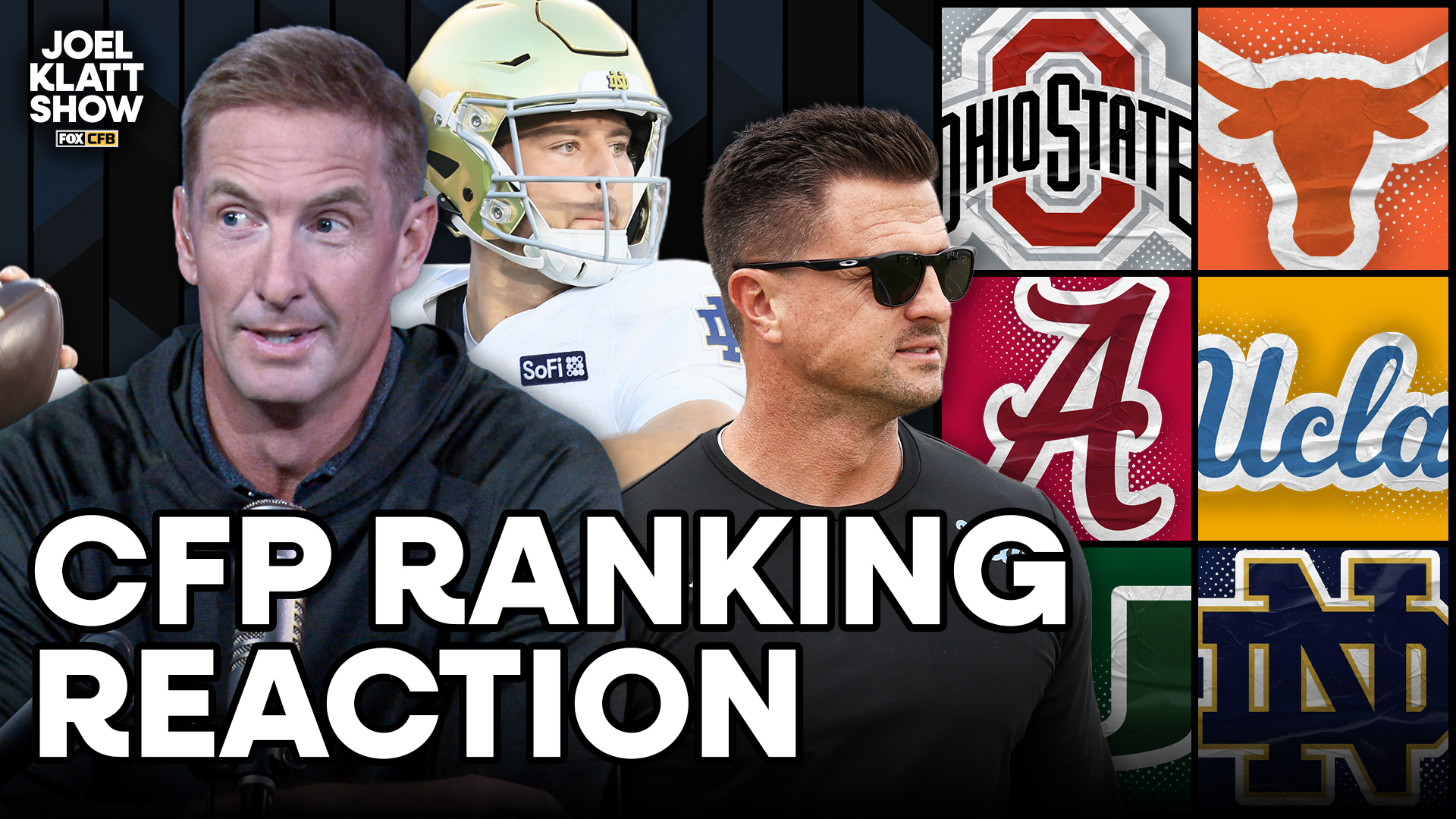
The college football world was buzzing Tuesday night when the College Football Playoff committee released its first top 25 rankings of the season, and Fox Sports analyst Joel Klatt found himself deeply troubled by what he saw. The initial rankings placed Miami at No. 1, followed by Georgia, Utah, and Indiana, with Ohio State sitting at No. 12, just on the outside looking in at the expanded 12-team field. But Klatt’s frustration wasn’t directed at any particular team’s placement. Instead, on the latest episode of “The Joel Klatt Show,” the veteran analyst made it clear that his concern runs much deeper, targeting the very foundation of how these rankings are constructed. He pushed back forcefully against the prevailing narrative that the first ranking doesn’t really matter, arguing instead that this initial snapshot carries enormous weight in shaping the entire season’s outcome. For Klatt, this wasn’t just about who landed where, but about a fundamentally flawed system that has been building a house without blueprints since the playoff era began in 2014.
The heart of Klatt’s criticism centers on what he sees as a complete lack of consistent criteria in how the committee evaluates teams. He pointed out that the 13 individuals in the room are essentially left to their own devices, free to rank teams based on whatever standards they deem appropriate at any given moment. This creates a chaotic and unpredictable system where the goalposts seem to shift from week to week, depending on which criteria best supports a particular narrative. Klatt observed that across the years since the playoff format was introduced, we’ve seen certain criteria emphasized at certain times, only to be abandoned in favor of different metrics at other moments. Records certainly play a role in the deliberations, as do wins over quality opponents, but then factors like strength of schedule, injuries, and even who’s missing from a lineup suddenly become relevant when it suits the committee’s purposes. The fundamental problem, as Klatt sees it, is that none of these criteria are actually weighted or valued more highly than any other, creating a system where everything matters and nothing matters simultaneously. He was careful to emphasize that he believes the people in that room are good, trustworthy individuals who are genuinely trying to do their best under impossible circumstances, but that doesn’t change the uncomfortable truth that the process itself is fundamentally broken.
Perhaps the most striking element of Klatt’s criticism is his focus on the sheer number of people responsible for making these life-altering decisions. Thirteen individuals, he argued with evident disbelief, are being asked to shape the destiny of a sport that means so much to so many people across the country. In his view, this is the most important thing in college football, the mechanism by which we determine who gets a chance to compete for a national championship, and yet it’s being decided by a group small enough to fit around a single conference table. Klatt drew attention to the absurdity of this arrangement, noting that such a small number of inputs into the ranking process creates an incredibly fragile and potentially skewed system. These thirteen people, no matter how dedicated or knowledgeable they might be, are doing the best they can with the criteria they’ve been given, but they’re operating without any real blueprint for what a fair and consistent ranking should look like. The solution, Klatt suggests, is obvious: we need to dramatically increase the number of voices and perspectives that contribute to these rankings, creating a larger, more diverse data set that would be more resistant to individual biases and blind spots.
Klatt then pivoted to a compelling statistical argument, one that anyone who’s ever balanced a checkbook or planned a family budget can understand. He acknowledged that not everyone has formal training in mathematics or statistics, but we all have an intuitive understanding of numbers because we deal with them every day in our personal lives. We know what’s normal for our spending patterns, and we can instantly recognize when something is an outlier, like the month we take a vacation and expenditures spike dramatically. In that moment, we don’t panic and restructure our entire yearly budget around that anomalous month; we understand it for what it is, an exception, and we evaluate our finances accordingly. Klatt argued forcefully that the top 25 rankings released Tuesday night represent exactly this kind of statistical outlier, one so extreme that you couldn’t assemble 50 different committees and get them to produce anything remotely similar. In statistics, when you encounter data this far outside the normal distribution, you’re supposed to throw out the edges and evaluate the middle, focusing on what’s representative rather than what’s aberrant. But the college football world is doing the opposite, treating this extreme outlier as the definitive voice that will represent the entire sport and determine who gets to compete for a championship. Klatt’s frustration was palpable as he noted that this wild, unpredictable ranking has become the baseline against which every future result will be measured.
The consequences of this flawed process extend far beyond the rankings themselves, and Klatt did not mince words about the damage being done to college football’s non-conference schedule. He argued that the way the committee evaluates teams and the inconsistent criteria it employs is actively killing some of the most exciting and meaningful regular season games in the sport. The top 25 they presented, combined with similar rankings over the past decade, sends an unmistakable message to athletic directors and coaches: there is absolutely no reason to schedule difficult non-conference games. When we see marquee matchups like Texas against Ohio State in Week 2, or Michigan facing Oklahoma, these are games that fans adore, that generate incredible television ratings, and that showcase the best of what college football has to offer. Yet these games are dying, going extinct right before our eyes, because the committee consistently fails to adequately reward teams for their strength of schedule. Klatt described this as an active hunting party, with the committee shooting these great non-conference games out in the wild, sending a clear signal that risk-taking is punished rather than rewarded. Even the most casual observer can see that teams like Georgia and Alabama are celebrated for their conference schedules, while schools that schedule ambitious non-conference opponents receive no measurable benefit for their courage.
In his final and most emphatic point, Klatt dismantled the notion that the first ranking shouldn’t carry much weight in the grand scheme of the season. Throughout the ranking show, he heard commentators and committee members alike urging everyone to slow down, to remember that this is just the beginning, and to avoid overreacting to what was presented. Klatt rejected this entirely, arguing with conviction that these initial rankings matter enormously, second only to the final rankings that come out at the end of the season. He framed college football as a race, a desperate competition for those precious 12 spots in the playoff field, and the first top 25 represents the starting grid. Drawing on his experience covering NASCAR and IndyCar, Klatt painted a vivid picture: the best cars get to start up front, and they don’t have to prove themselves to anyone ahead of them. It’s the cars behind them that face the burden of proof, that have to work harder just to move forward and overcome the track position disadvantage. He asked a simple question that any racing fan would understand instantly: would you rather start twelfth or first? The answer is obvious, and it’s the same in football. Every game from this point forward takes on new value, assigned directly by the rankings delivered on Tuesday night. Those teams fortunate enough to find themselves positioned favorably now enjoy a massive advantage, while those trailing behind face an uphill battle that becomes steeper with every passing week. The first ranking, Klatt concluded, isn’t just a starting point. It’s a defining moment that shapes everything that follows.