



It was one of those Monday nights in the Pacific Northwest where the rain seemed to hang in the air like a held breath, and the Chicago Bears arrived with something to prove. They didn’t just want a win; they wanted a statement, a signature victory that would announce them as legitimate Super Bowl contenders. And by the time the final whistle blew, they had delivered exactly that. The Bears walked into Seattle’s raucous home stadium and emerged with a commanding 34-17 victory over the defending Super Bowl champion Seahawks, a game that felt less like an upset and more like a changing of the guard. It was a slugfest in every sense of the word, but Chicago controlled the tempo, the physicality, and the scoreboard from start to finish. With this win, the Bears improved to 6-2, moving within half a game of the NFC North-leading Minnesota Vikings, while the Seahawks slipped into a tie with the Los Angeles Rams at 4-4, both looking up at the San Francisco 49ers in the NFC West. But numbers only tell part of the story. What made this victory so compelling was the way it unfolded—a crisp, confident offense orchestrated by head coach Ben Johnson, a defense that played with relentless fury, and a young quarterback who finally looked like the superstar Chicago believed he could be.
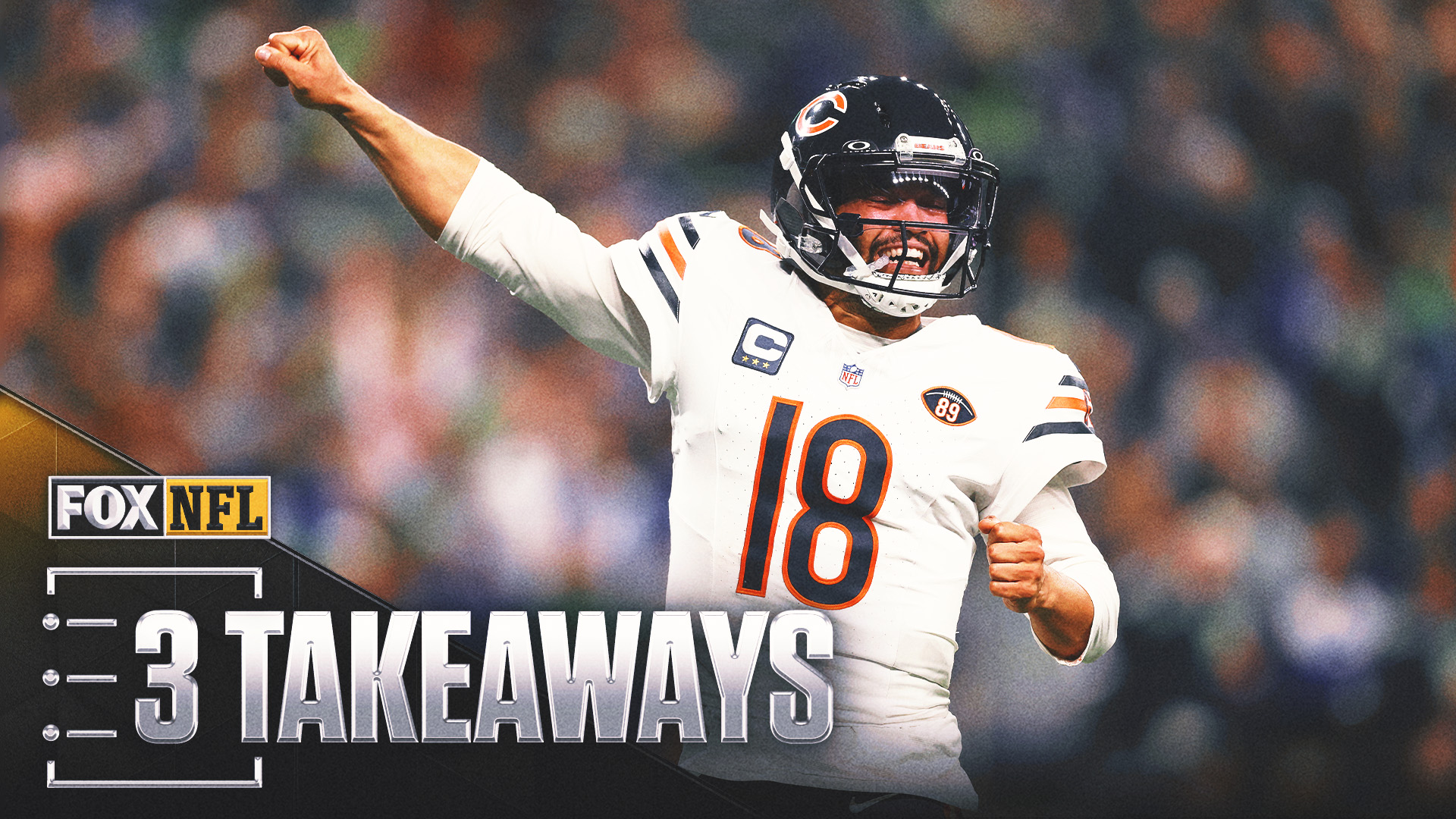
Caleb Williams has been scrutinized from the moment he stepped onto an NFL field, and on this night, he answered every lingering question with a performance that was both efficient and explosive. The Bears’ offense seized control immediately, marching 80 yards on 17 plays on their opening drive, a methodical effort that culminated in a 1-yard touchdown pass to Luther Burden III. It was a statement of intent, and Williams was flawless during that possession, completing 8 of 10 passes for 58 yards and a score. Sure, there were hiccups along the way—a couple of stalled drives, a partially blocked punt that somehow still traveled 45 yards—but Williams never lost his composure. He finished the game 24 of 34 for 247 yards, with that touchdown pass and, crucially, no interceptions. He spread the ball around to seven different receivers, posting a stellar 101.0 passer rating, and in doing so, he became the first quarterback all season to throw for more than 200 yards against Seattle’s defense. Tight end Colston Loveland was his favorite target, hauling in seven catches for 65 yards, while running back D’Andre Swift powered the ground game with 61 rushing yards on 25 carries and found the end zone three times. The 34 points the Bears put up were the most Seattle’s defense has allowed all season, and it felt like a breakthrough moment for an offense that had been searching for its identity. This was the version of Williams the Bears dreamed about when they drafted him—poised, creative, and in complete command of the huddle.
Defensively, the Bears made a massive investment in the offseason, trading two first-round picks to acquire Jeffery Simmons from the Tennessee Titans, and Monday night was the exact payoff they had in mind. Simmons was an absolute force in the middle of the defensive line, leading the team with six combined tackles, including two tackles for loss, and adding a sack and a pass breakup. He played 49 snaps, about 86 percent of Chicago’s defensive plays, and his presence completely disrupted everything Seattle tried to do offensively. Simmons didn’t just stuff the stat sheet; he changed the geometry of the game, collapsing the pocket, occupying double teams, and freeing his teammates to hunt the quarterback. The Bears sacked Sam Darnold three times and generated a 31 percent pressure rate, according to Next Gen Stats, making the Seattle quarterback miserable for most of the evening. It was the kind of performance that makes you understand why the Bears were willing to give up so much draft capital. When a defensive tackle can dominate the line of scrimmage like that, the entire defense elevates. Chicago’s secondary played tighter, the linebackers flowed to the ball with more confidence, and the pass rush seemed to feed off Simmons’s energy. It was a complete defensive effort, and it served notice to the rest of the league that the Bears now have a legitimate game-wrecker in the middle of their defense.
For Seattle, the night was a painful reminder that their quarterback issues haven’t gone away. Sam Darnold, the former USC star, continues to struggle with the turnover bug, and Monday was no different. Early in the game, a pass attempt was deflected at the line of scrimmage by Austin Booker and picked off by defensive lineman James Lynch, giving Chicago a short field and shifting all the momentum. That interception was Darnold’s ninth of the season, and only Justin Herbert has thrown more. Perhaps more alarming is that Darnold has now thrown an interception in every single game he’s played this year, a consistency that no team can afford from its quarterback. The Seahawks simply couldn’t get anything going on offense outside of their dynamic wide receiver, Jaxon Smith-Njigba. The Ohio State product was spectacular, finishing with six catches for 118 yards, including a 43-yard touchdown on a beautiful double move at the end of the first half. But even Smith-Njigba had his moments of frustration, getting called for offensive pass interference for the first time in his career on a play that would have given Seattle first-and-goal from the 1-yard line late in the third quarter. That drive eventually fell apart, and a Jason Myers field goal attempt was blocked by the Bears. It was that kind of night for Seattle—every time they seemed to be building momentum, something went wrong, often by their own doing.
While Darnold’s interceptions were the headline, Seattle’s offensive struggles ran much deeper. The Seahawks finished with just 252 total yards as a team, and their red zone issues have become a full-blown crisis. They were 0-for-3 in the red zone last week against the Kansas City Chiefs, and against the Bears, they managed just one touchdown on three trips inside the 20-yard line. For the season, Seattle is converting red zone opportunities at a rate below 50 percent, which ranks them fifth-worst in the entire league. That’s a recipe for losing close games, and it’s exactly what happened on Monday. The running game, which was supposed to be revitalized by the additions of Jadarian Price and Zach Charbonnet, remained stuck in neutral, with Chicago holding Seattle to just 81 rushing yards. The offensive line struggled to create any push, and the defense, while not terrible, was on the field far too long because the offense couldn’t sustain drives. There’s a growing sense of frustration in Seattle, a feeling that this team is too talented to be this inconsistent. They’ve now lost three of their last four games, and the schedule isn’t getting any easier. The defense can only do so much when the offense keeps putting them in bad situations, and the special teams miscues only added to the sense of disarray. At some point, the Seahawks are going to have to look in the mirror and figure out why they keep shooting themselves in the foot, because the talent is there, but the execution is not.
Looking ahead, both teams face pivotal matchups that could define their seasons. The Bears, riding high after this impressive victory, will be back in primetime next Sunday night against the Tampa Bay Buccaneers. That game will be a fascinating test for Chicago, as Tampa Bay just pulled off one of the strangest wins in NFL history, becoming the first team since 1974 to win a game without completing a single pass. The Buccaneers are unconventional, unpredictable, and clearly not afraid to do things their own way, which means the Bears will need to be sharp and disciplined. If Chicago can keep their momentum going and pick up another win, they’ll firmly establish themselves as a force in the NFC. As for the Seahawks, they’ll host the upstart Arizona Cardinals in a suddenly must-win situation. Arizona is playing with confidence and youthful energy, and if they beat Seattle next Sunday, the two teams will be tied at 4-5, which would be a disaster for a Seahawks team with Super Bowl aspirations. The pressure is mounting on everyone in Seattle, from the coaching staff to the quarterback to the players on the field. Monday night was supposed to be a chance to prove they were still the class of the conference, but instead, it exposed the same flaws that have been plaguing them all season. The Bears, meanwhile, are starting to look like a team on a mission, one that believes its best football is still ahead. In a season full of surprises, this might be the biggest story of all.