


1. The Announcement and Its Weight
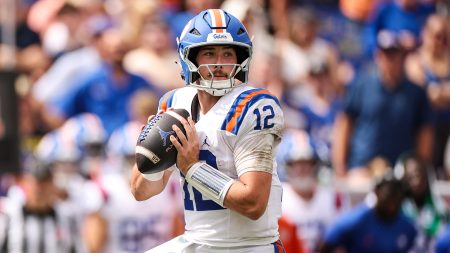
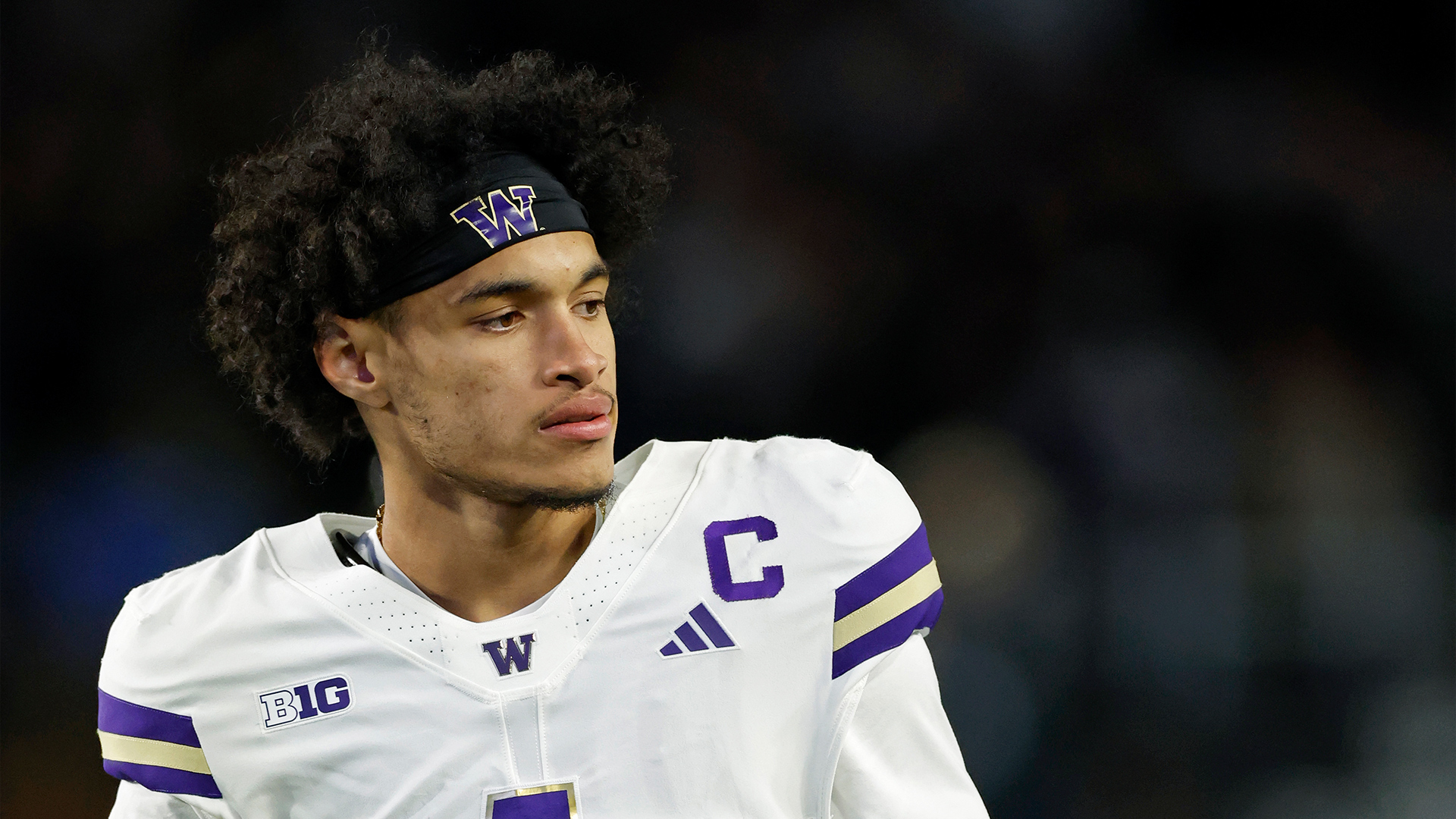
In the ever-shifting landscape of college football, where fortunes can change with a single snap, the news from Seattle carried a familiar yet electrifying resonance. Washington Huskies head coach Jedd Fisch confirmed on Monday that quarterback Demond Williams Jr. would reclaim his starting role for the team’s upcoming home clash against the formidable Penn State Nittany Lions, barring any lingering issues from the physical toll of his recent return. It was a statement that was both a logical conclusion and a powerful testament to the resilience of a young man who had spent nearly a month on the sidelines, nursing a fractured rib and watching his team navigate the turbulent waters of a conference season without him. The announcement was not made with bombast or grand proclamation, but with a measured, almost protective caution. “If Demond is feeling good, I don’t see why he wouldn’t play and start,” Fisch said, his words carrying the weight of a coach who understands that health and confidence are intertwined. The memory of Williams taking hits in his heroic comeback performance was still fresh, a reminder that the line between triumph and setback is razor-thin. For Williams, this was the culmination of weeks of rehabilitation, of silent frustration, and of patient waiting. It was the moment he had been quietly working for, the chance to prove that his early-season brilliance was not a fleeting flash but the foundation of something greater. The news rippled through the Huskies’ fanbase, igniting a cautious optimism that had been kindled in the most dramatic fashion possible just days earlier.
2. The Journey Through Adversity and Recovery
To truly understand the significance of Williams’s return, one must rewind to the fateful afternoon of October 9, when Washington faced Iowa. In the midst of a difficult 41-24 defeat, Williams was leading the offense with a combination of poise and athleticism that had made him one of the Big Ten’s most promising young quarterbacks. But on the final drive of the first half, a brutal sack left him crumpled on the turf, clutching his side. The diagnosis of a fractured rib was a cruel twist of fate for a player who had begun the season with a quarterback rating of 145.7, ranking him tenth in the entire conference. The injury was not just a physical impediment; it was an emotional gut punch. For Williams, the ensuing weeks were a purgatory of sorts. He watched from the sidelines as Elijah Brown, the transfer quarterback, stepped into the breach. Brown’s performances were a mixed bag—a thrilling three-touchdown effort in a win over Purdue, followed by a frustratingly stagnant outing against a formidable Nebraska defense. Through it all, Williams was a captive observer, his competitive fire burning with every incomplete pass and every stalled drive. He was present at practices, a leader in spirit if not in uniform, offering guidance to his replacement while privately grappling with the agony of being unable to control his own destiny. The bye week that followed provided a brief respite, a chance to heal, but also a period of agonizing uncertainty. Coach Fisch remained tight-lipped about his starter, keeping the quarterback battle a closely guarded secret. For Williams, the wait was a test of character, a daily exercise in patience and faith, knowing that his body was slowly mending but unsure if it would be ready when the moment arrived.
3. The Spark of a Miraculous Comeback
When Washington traveled to Nebraska, the narrative seemed set. Brown was announced as the starter for the second straight game, and the Huskies’ offense sputtered against a relentless Cornhusker defense. For three quarters, the team managed a mere three points, and the prospects of a victory looked bleak. The atmosphere on the sidelines was tense, a cocktail of frustration and mounting desperation. It was then that Coach Fisch made the decision that would alter the trajectory of the season. With the game on the line in the fourth quarter, he turned to Williams, sending the junior signal-caller onto the field with instructions simple in their clarity but immense in their implications: ignite a dormant offense. Williams, despite the lingering memory of his rib injury, played with a fearless abandon that immediately transformed the energy of the game. He completed 7 of 13 passes for 99 yards, but the statistics alone do not capture the nerve of his performance. The defining moment came on a do-or-die fourth-and-18 play with just 1:42 remaining on the clock. The season, in many ways, hung in the balance. Williams dropped back, scanned the field, and delivered a laser-guided strike to Chris Lawson for a 24-yard gain, keeping the drive and the dream alive. Two plays later, he connected with Lawson again, this time on a 25-yard catch-and-run touchdown that stunned the Nebraska crowd and sealed an improbable 17-10 victory. The image of Williams celebrating, his face a mask of pure, unadulterated joy, was the kind of moment that transcends sport. It was a testament to his grit, his refusal to be defined by injury, and his innate ability to rise when the pressure was most suffocating.
4. The Quarterback Tug-of-War and a Team’s Renewed Belief
The aftermath of that remarkable comeback sent shockwaves through the Washington program. For Coach Fisch, it was a validation of his decision to keep both quarterbacks engaged and to ultimately unleash Williams when the moment demanded it. The quarterback room, once a source of delicate tension, had become a story of mutual respect and shared purpose. Brown, who had faced the brunt of Nebraska’s defensive fury for three quarters, had played his part, keeping the team within striking distance before yielding to the undeniable spark that Williams provided. The dynamic between the two players, while inherently competitive, had never devolved into bitterness. In fact, Fisch’s careful management of the situation—declaring both available, deferring the starter announcement, and ultimately trusting his gut in the heat of battle—had fostered an environment where the team’s collective ambition outweighed individual egos. For the Huskies, the fourth-quarter magic was more than just a win; it was an injection of belief. They had seen their leader go down, a backup step in, and then their original leader return to deliver a miracle. The locker room was galvanized, not just by the victory, but by the character displayed by Williams. His teammates knew that he had played through pain, that he had risked further injury to lift them to triumph. That kind of sacrifice forges bonds that cannot be manufactured in practice. As Williams prepares to take the field against Penn State, he does so with the unwavering support of a brotherhood that has witnessed his resilience first-hand.
5. The Colossal Challenge Against Penn State
The stage for Williams’s official return is nothing short of daunting. Penn State represents a tier of competition that will test every fiber of the Huskies’ newfound confidence. The Nittany Lions boast a ferocious defensive front, a secondary that thrives on pressuring quarterbacks, and an offense capable of scoring in bunches. For Williams, this is the ultimate crucible—a chance to prove that his performance against Nebraska was not an anomaly, but a preview of his potential. The pressure is immense, but it is a pressure that Williams seems uniquely equipped to handle. His journey—from a top prospect in Chandler, Arizona, to a starting quarterback in the Big Ten, to a fractured rib and a triumphant return—has been a masterclass in perseverance. He understands that on Saturday, he will be facing a team that cares little about his personal narrative. The Nittany Lions will be looking to expose any rust, any lingering hesitation, any sign that the injury has sapped his mobility or his willingness to stand tall in the pocket. The game will be a physical and mental gauntlet, but it is also a golden opportunity. A strong performance against a top-tier opponent would not only validate Fisch’s decision but also announce Williams’s arrival as a legitimate force in college football. The crowd at Husky Stadium will be roaring, riding the momentum of the improbable comeback, and Williams will be at the center of the storm, a young man with a second chance to write his own story.
6. A Reflection on Resilience and the Human Spirit
Beyond the X’s and O’s, beyond the analytics and the rankings, Williams’s story is a reminder of why we love sports. It is a narrative of human frailty and triumph, of falling and getting back up, of the unwavering belief that the next moment can be the greatest one. In a world that often emphasizes the cold calculus of statistics, the sight of a quarterback, ribs taped and spirit unbroken, leading his team to victory on a broken play is a testament to the indomitable nature of the human will. For Washington, the fourth quarter in Nebraska was a turning point, but for Williams, it was a personal revolution. He had stared into the abyss of a lost season, of being remembered as the player who got injured and was overtaken by his backup. Instead, he reasserted his identity with a fearless pass on fourth-and-18, a throw that will be replayed in Huskies lore for years to come. As he prepares for Penn State, the broader audience will be watching not just for a football game, but for a continuation of a compelling human drama. Will the magic carry over? Can a young man who has already endured so much summon the strength for one more heroic performance? The answers are uncertain, but that is precisely the beauty of it. Demond Williams Jr. has already won a victory that no box score can adequately capture. He has shown us that the most important battles are often fought within, and that the courage to step back into the arena is sometimes more heroic than the triumph itself. With each snap on Saturday, he will be writing a new chapter, and we will all be watching, hoping, and believing in the power of redemption.