

There are nights in baseball when everything feels like a matter of survival, and Tuesday at Tropicana Field was exactly that for the Tampa Bay Rays. After dropping Game 1 of the American League Championship Series in a frustrating 7–3 loss, the Rays woke up knowing they couldn’t afford to dig themselves a two-game hole before the series ever left St. Petersburg. Game 2 wasn’t complicated. It was simple, actually. Just win. That’s it. No fancy speeches, no dramatic team meeting, no need to reinvent who they are. They just needed to walk into the ballpark with their heads held high, shake off the sting of Monday night, and play the kind of clean, aggressive baseball that got them here in the first place. Manager Kevin Cash saw that mindset the moment his players filtered into the clubhouse on Tuesday afternoon. He liked the way they carried themselves. There was no panic, no slouching, no lingering doom. Just a quiet confidence that said, “We’re fine. We’re going to even this thing up.” And they did. Behind sharp pitching, relentless baserunning, and a few gifts from a normally reliable opponent, the Rays beat the Cleveland Guardians 3–1. It wasn’t a blowout. It wasn’t always pretty. But in October, nobody asks for style points. They just ask for a win, and the Rays got exactly that, pulling the series even and shifting all the momentum into a brand-new, best-of-five matchup that suddenly feels wide open.
The game might have stayed scoreless deep into the night if not for a bizarre fourth inning that no one saw coming, least of all the Guardians. The Rays have made a habit of creating pressure on the basepaths. They study opponents, find weaknesses, and then attack them relentlessly. But even Tampa Bay had to be a little surprised at the source of Cleveland’s unraveling. It wasn’t a rookie or a role player who cracked under the bright lights. It was José Ramírez, the Guardians’ veteran third baseman and one of the most respected hitters in the game. In a single pivotal inning, Ramírez made two uncharacteristic mistakes, the kind of plays he has made in his sleep for 14 years. The first came on a groundball to shortstop. Brayan Rocchio fielded it, but there was no chance to throw out Chandler Simpson, who is practically a blur in cleats. Victor Mesa Jr., already on base after a forceout, saw the play developing and never stopped running. With two outs, he rounded second with his head down, and when he looked up, third base was empty. Ramírez, for whatever reason, hadn’t gotten over to cover the bag. Mesa cruised in standing up, and just like that, the Rays had runners on the corners. Then came the real gut punch. Ben Williamson hit a routine chopper to third. It was the kind of groundball that gets scooped up and thrown to first without a second thought. Except this time, it didn’t happen. The ball skipped right through Ramírez’s legs and into left field, allowing Mesa to score easily. The Tropicana Field crowd erupted, not just because the Rays had taken the lead, but because they had watched a superstar’s nightmare unfold in real time. The Rays weren’t done. Liam Hicks followed with a two-run single to center, clearing the bases and making it 3–0. Every run was unearned. For a team like Cleveland, which prides itself on defense and fundamentals, it was a nightmare inning. For Tampa Bay, it was a reminder that baseball can turn on a dime, and that the most unexpected hero can be the one who simply keeps running hard when everyone else assumes the play is over.
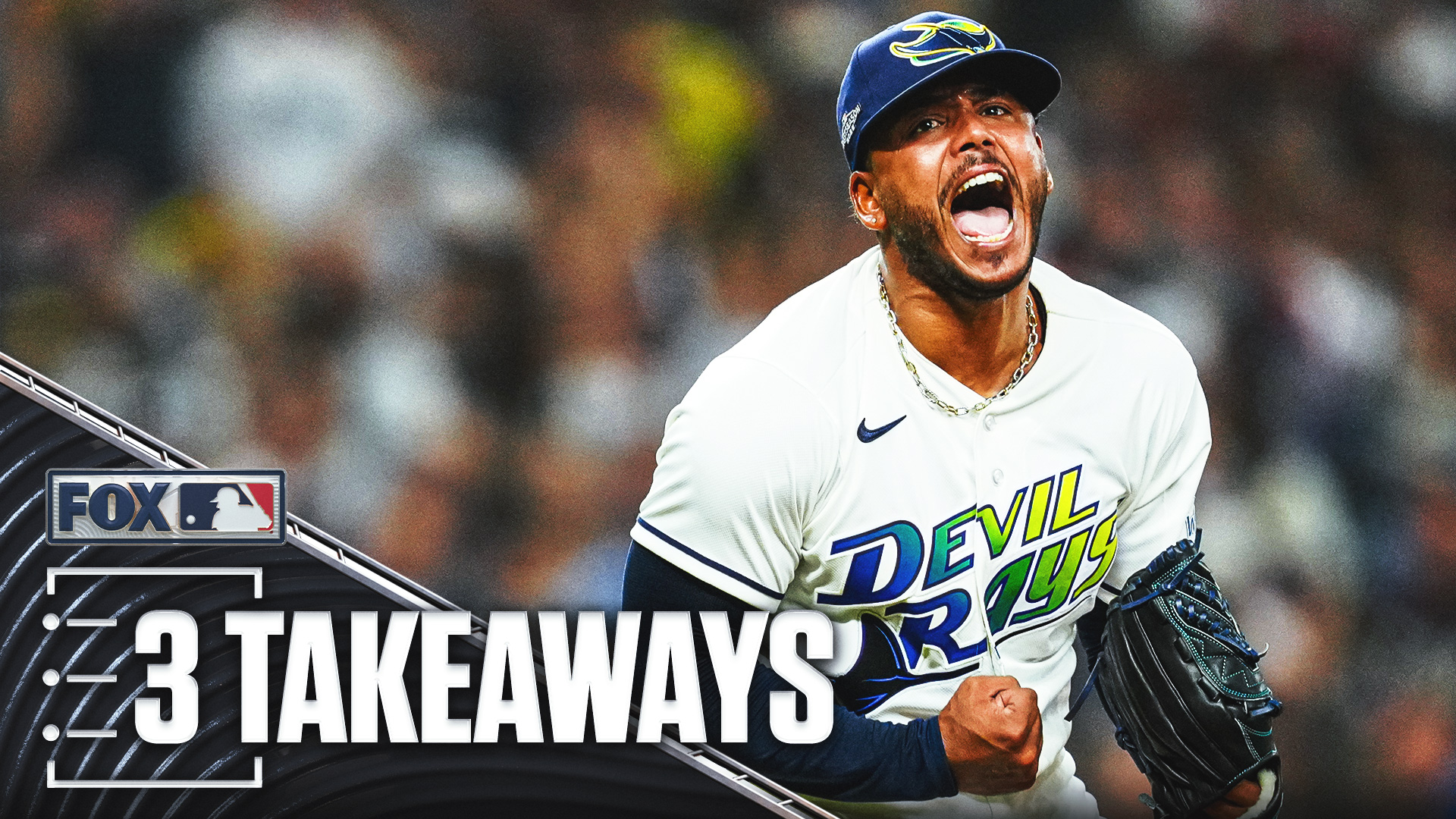
If the fourth inning belonged to the Rays’ opportunistic offense, the middle innings belonged to Freddy Peralta, a right-hander who has spent much of his career battling the perception that he’s only built for five innings. The internet has lovingly nicknamed him “Five-Inning Freddy” because, more often than not, that’s exactly where his outings end. But on Tuesday night, with the Rays clinging to a three-run lead and needing someone to grab the game by the throat, Peralta refused to hand the ball back. He was sharp from the very first pitch, relying heavily on his high-octane fastball and a slightly adjusted delivery that included pitching exclusively from the stretch. The results were clean and efficient. Guardians hitters kept coming up empty, waving at heaters and beating balls into the dirt. After Johnny DeLuca tracked down a fly ball for the final out of the fifth, Peralta turned toward the dugout and let out a guttural scream. He was exhausted. He was amped. He was ready for more. And Kevin Cash, to his credit, gave him that chance. Peralta came back out for the sixth inning and delivered perhaps his cleanest frame of the night, retiring Nathaniel Lowe, Travis Bazzana, and Petey Halpin in order. When he walked off the mound, it wasn’t just a quality start. It was a statement. Across eight career postseason starts, this was the first time Peralta had ever completed six innings. In the biggest moments of the season, he found another gear. The Rays traded for him over the summer, and he had already proven himself as a dependable No. 2 starter behind ace Drew Rasmussen. But October is a different animal. The lights are brighter. The stakes are heavier. And on this night, Peralta proved he wasn’t just capable of holding the line. He was capable of holding the whole game together.
Of course, no discussion of Game 2 would be complete without addressing the elephant in the dugout: Kevin Cash’s bullpen management. The Rays’ longtime skipper took a lot of heat after Game 1, and honestly, some of it was deserved. He went to middle- and low-leverage relievers in a game that was still very much in reach, and the Guardians made him pay. It felt like a missed opportunity, and Cash knew it. He didn’t make excuses afterward. He didn’t pretend the loss was just bad luck. He simply went back to work, determined not to make the same mistake twice. In Game 2, with the Rays nursing a 3–1 lead and needing outs, Cash went straight to his best arms. Ian Seymour, the left-handed Swiss Army knife who has been invaluable all season, came in with one out in the seventh and immediately shut things down. He worked his way through 1⅓ scoreless innings, allowing just one hit and striking out two, keeping the Guardians at arm’s length and preserving the lead for the ninth. Then came Bryan Baker, the closer, who made it look effortless. Baker needed just eight pitches to retire the side in order and lock down the save. It was quick. It was clean. It was exactly the kind of high-leverage relief work that was missing in Game 1. The contrast was impossible to ignore. Monday night, the bullpen decisions felt puzzling, almost like Cash was overthinking things. Tuesday night, he managed like a man who knew exactly what he had and wasn’t afraid to use it. Baseball can be forgiving like that. One bad game doesn’t define a manager, especially one with a track record like Cash’s. But there’s no question that Tuesday’s win felt sweeter because of how much was at stake. The Rays didn’t just need a victory. They needed a reminder that their bullpen could be trusted in October. And they got it.
Now the series shifts. With the ALCS tied at one game apiece, both teams are packing their bags and heading to Cleveland, where Games 3, 4, and 5 will be played at Progressive Field. Neither team has announced its starting pitchers yet, which only adds to the intrigue. There’s a certain electricity that comes with a playoff series moving to a new city. The crowd changes. The quirks of the ballpark change. The comfort level of both teams shifts in subtle ways. The Guardians are heading home, and there’s something to be said for sleeping in your own bed and hearing your own fans roar. But the Rays have been a tough, resilient group all year, and they’re not going to be intimidated by a hostile environment. If anything, the road might suit them. They’ve spent the entire season playing with a chip on their shoulder, feeding off the idea that nobody believes in them. Now they’ve got a split on the road, a new pitcher lined up, and a chance to steal the series back. For the Guardians, the next few days are about regrouping and finding a way to neutralize Tampa Bay’s relentless pressure. They can’t count on the Rays making mistakes, and they certainly can’t afford another inning like the fourth. The series is essentially a best-of-five now, and every pitch matters a little more than the last. Momentum is a funny thing in baseball. It can vanish as quickly as it appears. But right now, the Rays have it, and they’re not trying to hide it.
In the end, Tuesday’s game was a reminder of why October baseball is so special. It’s not always about the best team on paper. It’s about who blinks first. It’s about a superstar third baseman forgetting to cover a bag at the worst possible moment. It’s about a pitcher who supposedly couldn’t go six innings suddenly finding the strength to do exactly that. It’s about a manager who got roasted for his decisions one night and then looked like a genius the next. The Rays have been here before. They’ve been counted out, written off, and underestimated. And yet, here they are, heading to Cleveland with the series tied and their confidence restored. The Guardians, meanwhile, have to be kicking themselves. They had a golden opportunity to put the Rays on the ropes, and they let it slip away. But that’s baseball. One inning can change everything. One mistake can define a game. One win can shift an entire series. As the sun rises on a new day, the ALCS is exactly where it should be: even, tense, and completely unpredictable. Game 3 can’t come soon enough. The Rays are hungry. The Guardians are home. And somewhere in the middle, two teams are about to find out who really has what it takes to get to the World Series.