


Paragraph 1: A Story That Almost Wrote Itself
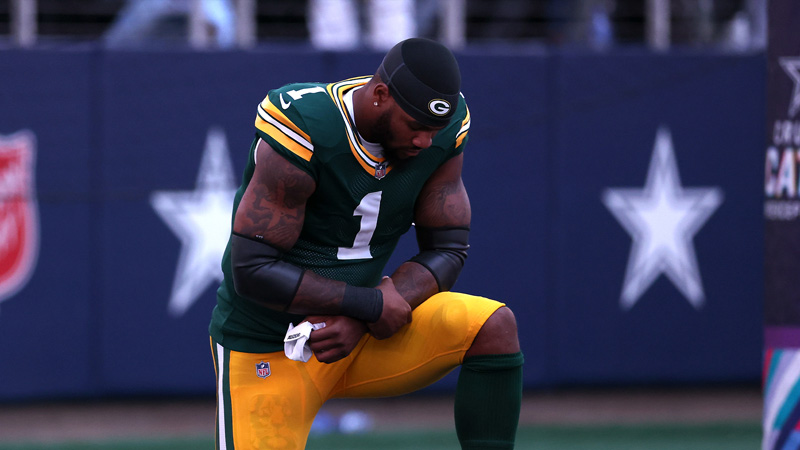
There was a story waiting to be written, and it felt almost too perfect to be true. The Green Bay Packers and the Dallas Cowboys were set to meet at Lambeau Field on a Sunday night in Week 6, and the football world had already decided what the narrative should be. It would be the return of Micah Parsons, the superstar defensive end who had been traded from Dallas to Green Bay in a blockbuster deal that shook the NFL to its core. It would be a game of revenge, a clash of old and new, a chance for Parsons to show the Cowboys what they had given up on. The only problem was that Parsons, at that moment, was still recovering from a torn ACL he suffered in Week 15 of the previous season. And the football world, in its relentless hunger for drama, kept asking him when he would be back, as if his rehabilitation was merely a subplot in a larger television show. But Parsons, to his credit, refused to play the part. He did not see the game as a personal vendetta. He did not see the Cowboys as a team to be conquered, but rather as a chapter in his life that had already closed. He understood that fans wanted a hero to return at the perfect moment, to step onto the frozen tundra and deliver a performance that would be remembered for years. But he also understood something deeper, something more human: that health is not a prop, and that revenge is not a reason to rush back into a sport that demands everything from the body. His perspective was not born of bitterness or indifference. It was born of growth.
Paragraph 2: The Wisdom of Wanting to Be Whole Again
Speaking on his podcast, “The Edge with Micah Parsons,” the Packers’ defensive force made it clear that he was not interested in fueling the fire that so many others were trying to ignite. “So many people wanted me to be back for that game to make the game bigger than what it was,” he said. “It’s just another Sunday Night Football game against two good teams. It’s not about me. I think that probably let people down. ‘Oh, Micah, he’s going to want to be back for the Dallas game.’ No, I’m in that phase of life where I just wanna be healthy again. That’s it. I don’t care about the team I left or the team they think I want my revenge against. I don’t need revenge. I just need two healthy knees to do what I love to do.” There is a profound simplicity in those words, a quiet maturity that often gets lost in the noise of professional sports. Parsons was not dismissing the importance of the game, nor was he disrespecting the Cowboys or the fans who once cheered for him. He was simply prioritizing something far more essential than a scoreboard: his own body, his own future, and the joy of playing the game without pain or hesitation. He mentioned that he was “making sure” all the small things were fixed before returning, a phrase that speaks to the grueling reality of recovering from a major knee injury. It is not just about the ligament healing. It is about the confidence, the muscle memory, the trust in your own body to respond when you cut, jump, and explode toward the quarterback. And perhaps, in that way, Parsons has found a peace that many athletes never discover until it is too late.
Paragraph 3: The Trade That Changed Everything
To fully understand why so many assumed Parsons would want revenge, one has to revisit the messy and dramatic circumstances that led to his departure from Dallas. There was an ugly contract dispute that lingered for months, a contentious relationship that seemed to sour beyond repair, and ultimately, a trade that sent him to Green Bay just two weeks before the 2025 NFL regular season began. The Cowboys, in exchange for their former Defensive Rookie of the Year, received defensive tackle and three-time Pro Bowler Kenny Clark, along with first-round picks in 2026 and 2027. It was a move that signaled a new direction for Dallas, but it also left a bitter taste in the mouths of many fans who believed the team had failed to hold onto a generational talent. For Parsons, the trade was not just a change of scenery. It was a fresh start, a chance to prove that he could thrive outside of the shadow of his former organization. He signed a four-year, $186 million extension with the Packers, a contract that solidified his place as one of the highest-paid defenders in NFL history and demonstrated that Green Bay was fully committed to building their defense around him. The two teams had already met once since the trade, a chaotic 40-40 tie in Dallas in Week 4 of last season. In that game, Parsons recorded one sack and three combined tackles, showing glimpses of the dominance that had made him a household name. But that was before the injury, before the long months of rehabilitation, before the quiet realization that the game would not wait for him, but he also did not have to rush to meet it.
Paragraph 4: The Impact of a Superstar’s Absence
Before tearing his ACL, Parsons played in 14 games for the Packers, and in that relatively short span, he reminded everyone why he was considered one of the most feared pass rushers in the league. He finished the season with 12.5 sacks, two forced fumbles, and 41 combined tackles, earning his third All-Pro honor and his fifth Pro Bowl selection. Those numbers are remarkable, but they only tell part of the story. His presence on the field changed the geometry of opposing offenses. Quarterbacks had to account for him at all times, offensive coordinators had to design protections specifically to neutralize him, and his teammates benefited from the chaos he created. Without him, the Packers’ defense has still managed to hold its own, ranking fifth in the NFL in opponent passing yards, allowing just 181.0 yards per game, and eighth in total yards allowed at 308.6 per game. However, they are tied for 14th in points allowed, giving up 22.4 per game, and tied for 24th in rushing yards allowed at 127.6 per game. Those latter numbers suggest that while the defense is not collapsing without its star, it is also not quite the same. The absence of Parsons is felt most acutely on third downs, in critical moments, and in those split-second plays where a single player can collapse the pocket and change the course of a drive. But even as the Packers wait for his return, there is a sense of patience, a recognition that rushing him back would be a mistake. They understand that a healthy Parsons, even if he returns later than expected, is worth more than a desperate attempt to win one game in October.
Paragraph 5: A Legacy That Transcends a Single Franchise
For all the drama surrounding his departure from Dallas, it is impossible to ignore the mark Parsons left on that franchise. In just 63 regular-season games with the Cowboys, he recorded 52.5 sacks, which places him 13th in team history, and he forced nine fumbles, which ties him for 14th. He was a Pro Bowler in each of his four seasons in Dallas, from 2021 to 2024, and he earned All-Pro honors in both 2021 and 2022. Those are Hall of Fame-caliber numbers, especially considering the limited number of games he played. But perhaps the most telling statistic is the way he is remembered by the fans and his former teammates. Despite the ugly contract dispute and the eventual trade, Parsons was never a player who coasted on talent alone. He was relentless, fiery, and passionate, the kind of player who made everyone around him better. That is why so many people wanted to see him return for the Cowboys game. It was not just about revenge; it was about closure, about seeing a beloved figure face his past and come out victorious. But Parsons, in his own way, has already achieved that closure. He does not need to prove anything to the Cowboys. He does not need to show them what they lost. He has already moved on, not out of anger, but out of a quiet understanding that the NFL is a business, and that players, like franchises, must sometimes move in different directions. His legacy in Dallas is secure, but his legacy as a person is defined by how he handles the present, not how he clings to the past.
Paragraph 6: The Real Meaning of Sunday Night Football
As the Packers prepare to host the Cowboys at Lambeau Field, the storylines are still there. Green Bay is 3-2, coming off a dominant 31-7 victory over the Chicago Bears at home, while Dallas is 2-3, reeling from a surprising 24-16 loss at home to the previously winless Tampa Bay Buccaneers, led by rookie quarterback Jalon Daniels. On paper, the Packers look like the stronger team, and the Cowboys appear to be searching for answers. But for Parsons, the game is not about records or revenge. It is simply another opportunity to do what he loves, even if he has to do it from the sideline this time. He has made it clear that he wants to be healthy, not just for one game, but for the rest of his career. He wants to be able to play with his kids one day, to walk without a limp, to wake up in the morning without stiffness and pain. That is the perspective that comes from injury, from the long, lonely hours of rehabilitation, from the realization that the game can be taken away at any moment. And so, as the national broadcast hypes up the matchup, as fans clamor for drama and redemption, Parsons will be focused on something far more personal: the slow, steady process of becoming whole again. He does not need revenge. He does not need to prove anything to anyone. He just needs two healthy knees, and in that simple need, there is a lesson for all of us about what it truly means to have passion, purpose, and peace.