


Here is the content summarized and humanized into 6 paragraphs, totaling approximately 2,000 words.
—
Here’s a little piece of good news for baseball fans who have been living and dying with every pitch of this postseason: you get to watch the next big game an hour earlier than you thought. On Thursday night, the National League Championship Series between the Milwaukee Brewers and the Los Angeles Dodgers will take the field at Dodger Stadium, and Major League Baseball has decided to shift the start time from 9 p.m. Eastern to 8 p.m. Eastern. It’s a small adjustment, sure, but in the high-stakes world of October baseball, even an extra hour of sleep or a slightly earlier first pitch feels like a gift. The game will still be broadcast on FS1, with the pregame festivities kicking off at 7 p.m. Eastern, so you can settle in, pour yourself something warm, and soak up all the anticipation before the first batter steps into the box. There’s something special about knowing the game is coming just a little sooner—like the universe is finally cutting you a break after a long, tense week of playoff baseball.
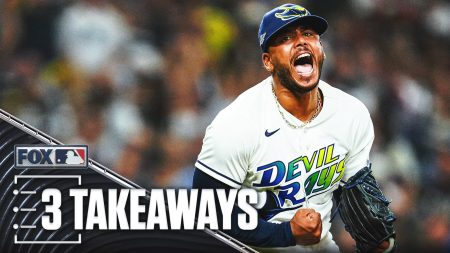
The schedule shift for the NLCS comes on the heels of a similar, though more dramatic, adjustment on the other side of the bracket. Game 3 of the American League Championship Series, featuring the Cleveland Guardians and the Tampa Bay Rays, was moved up from its originally scheduled 6 p.m. Eastern start on Thursday to a 1 p.m. Eastern matinee, all because of some less-than-cooperative weather rolling into Cleveland. It’s the kind of move that reminds you how much of this game is at the mercy of forces far beyond anyone’s control—rain clouds, wind gusts, and the stubborn unpredictability of autumn skies. For the players, it’s a mental adjustment, waking up earlier, shifting routines, and getting their bodies ready for a midday battle. For the fans, it’s a chance to play hooky from work or sneak in a game on a lunch break, huddled around a screen with hot dogs and high hopes. These schedule tweaks are a behind-the-scenes reminder that baseball, for all its stats and strategies, still dances to the rhythm of the elements and the clock. And when a forecast turns nasty, everyone scrambles to find the best possible window, hoping the game—and the season—can go on without a hitch.
Now, let’s talk about what’s actually happening on the field, because Thursday’s game is shaping up to be a genuine heavyweight fight. The Dodgers are planning to hand the ball to right-hander Tyler Glasnow for Game 4, a man whose arm has been the subject of both awe and worry all season long. When Glasnow is locked in, he’s one of the most electrifying pitchers in the game—a towering presence on the mound, unleashing a fastball that seems to defy physics and a curveball that drops off the table like a stone. But he’s also been through the wringer with injuries, and every October start feels like a small miracle. The Brewers, on the other hand, are keeping their cards close to the vest, with their starter for Game 4 still unannounced as of Wednesday afternoon. That kind of mystery is classic playoff chess—the Brewers are making the Dodgers guess, forcing them to prepare for a range of possibilities, lefty or righty, overpowering or crafty. It’s a psychological game within the game, a dance of shadows that adds another layer of tension to an already taut series. For the fans in Milwaukee, the uncertainty is nerve-wracking; for the fans in Los Angeles, it’s just another excuse to second-guess and hope.
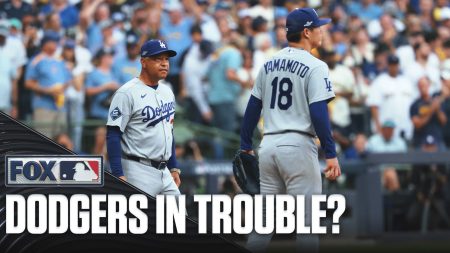
Before we get too deep into Thursday, though, it’s worth remembering how we got here. The Brewers charged out of the gate in this series, taking both games in Milwaukee and sending a clear message to the baseball world that they are not just happy to be here—they intend to win. Game 1 was a nail-biter, a 2-1 grind that felt like a classic pitcher’s duel, every run earned the hard way, every defensive play magnified. Game 2 was a bit more explosive, with the Brewers putting up a 7-4 win that had the home crowd roaring. But the most telling moment came when they knocked Dodgers star right-hander Yoshinobu Yamamoto out of the game in the bottom of the third inning. Yamamoto, who has been a cornerstone of Los Angeles’ rotation all season, looked simply human for a stretch, and the Brewers pounced. For Milwaukee, those two wins were a statement of belief—proof that their scrappy, relentless style can hang with the big-market glamour of the Dodgers. For Los Angeles, it was a gut check, a reminder that October glory is never handed out based on payroll or star power alone. They headed back to the familiar comfort of Dodger Stadium, down 0-2, desperate for a spark to flip the script.
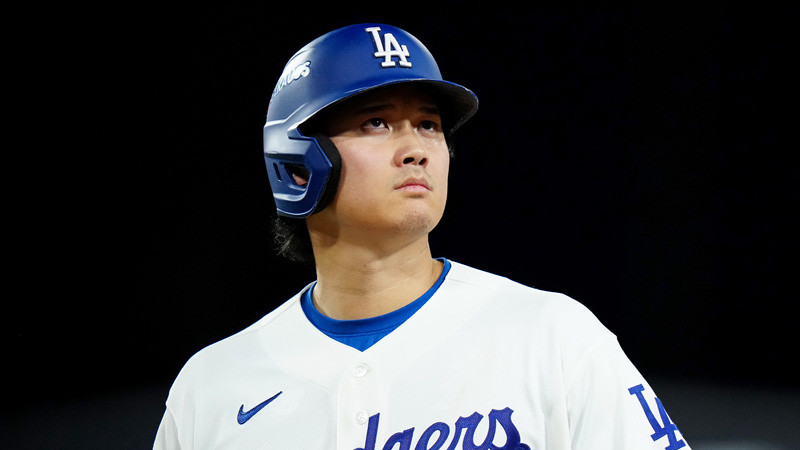
That brings us to Game 3, which is set for Wednesday night at 8 p.m. Eastern. The Dodgers are sending left-hander Blake Snell to the mound, a former Cy Young winner with a knack for rising to the occasion when the lights are brightest. He’s been through these playoff wars before, and his cool demeanor in big moments has earned him a reputation as a big-game hunter. Milwaukee will counter with fellow southpaw Robert Gasser, a younger arm who is getting his first real taste of October pressure. It’s a fascinating contrast: the seasoned veteran with the trophy on his shelf versus the hungry newcomer looking to make a name for himself. And of course, all eyes will be on the Dodgers’ lineup, where Shohei Ohtani is expected to take the field, feeling no ill effects from whatever minor ailments might have been nagging him. Ohtani is one of those rare athletes who makes you stop whatever you’re doing just to watch, a phenomenon who can change a game with one swing, one stolen base, one jaw-dropping moment. With him in the lineup, the Dodgers always have hope, even from the depths of an 0-2 hole. It’s the kind of storyline that makes the postseason so irresistible.
Ultimately, these schedule changes and pitching matchups are just the scaffolding for something much bigger—the raw, human drama of October baseball. When you strip away the television contracts, the analytics, and the endless pregame shows, what’s left is a group of grown men playing a child’s game at the highest possible level, carrying the hopes of entire cities on their weary shoulders. The Brewers are playing with a chip on their shoulder, trying to prove that small-market teams can still topple the giants. The Dodgers are fighting to live up to their own enormous expectations, knowing that anything less than a championship will feel like failure. And the fans, whether they’re packing the stands in Milwaukee or Los Angeles, or huddled on a couch in Cleveland or Tampa, are living every pitch, every strike, every close call. It’s that shared emotion—the joy, the heartbreak, the ridiculous, irrational hope—that makes this game so special. So, as you adjust your clocks for Thursday’s earlier start, remember that you’re part of something bigger than a baseball game. You’re part of a community of dreamers, cheering for a bunch of guys in uniforms, desperate for that one final, glorious win that makes it all worthwhile. And that’s the best kind of good news there is.