





Paragraph 1 — There’s something quietly complicated about the situation unfolding in Ann Arbor, and it has little to do with the scoreboard. When Kyle Whittingham took over as Michigan’s head coach, he inherited a roster he didn’t assemble, a quarterback he didn’t recruit, and an enormous NIL investment that wasn’t his gamble to make. Bryce Underwood arrived in Ann Arbor as the former No. 1 overall recruit in the country, lured by the previous coaching staff with a deal that made him the face of Michigan’s future. But the future has arrived under a new sheriff, and Whittingham has no emotional or professional equity in that decision. That’s not to say he wants Underwood to fail — far from it — but it does mean his patience isn’t going to be automatically extended just because Underwood was a five-star prospect. This is a coach who built his reputation at Utah on discipline, accountability, and earning your role. The fact that Underwood was handed the starting job before Whittingham even walked through the door creates an uneasy, almost fragile dynamic. It’s not hostile, but it is watchful. And it makes Saturday’s game against No. 11 Oklahoma far more than just a Midwestern showdown — it’s a quiet test of trust, loyalty, and whether a coach can fully embrace a player he never chose.
Paragraph 2 — The first real glimpse of that tension came in Michigan’s opener against Western Michigan, a game that was supposed to be a soft landing for Underwood but turned into something far more uncomfortable. He completed just 12 of 22 passes for 170 yards, threw one touchdown, and gave the ball away twice. The Wolverines won, but barely, and the performance felt less like a debut and more like a warning. Underwood didn’t look lost exactly, but he looked out of sync — hesitant at times, forcing throws at others, and never appearing fully comfortable in an offense that seemed to be speaking a different language than the one he preferred. For a young quarterback, that’s normal. For a coach who didn’t pick him, it’s complicated. Whittingham didn’t sugarcoat things when asked about Underwood’s status. He said Underwood was “our QB right now,” but immediately added that it wasn’t “something that’s infinite” and that at some point Michigan has to “turn a corner.” Those words landed like a splash of cold water. Underwood, when informed of the comments, seemed genuinely caught off guard. He shrugged it off with a “that’s cool, I didn’t see that,” but you could feel the uncertainty underneath. It’s not that Whittingham said anything cruel — he didn’t. It’s that he said something honest, and honesty in the world of college football quarterbacks can be a very fragile thing.
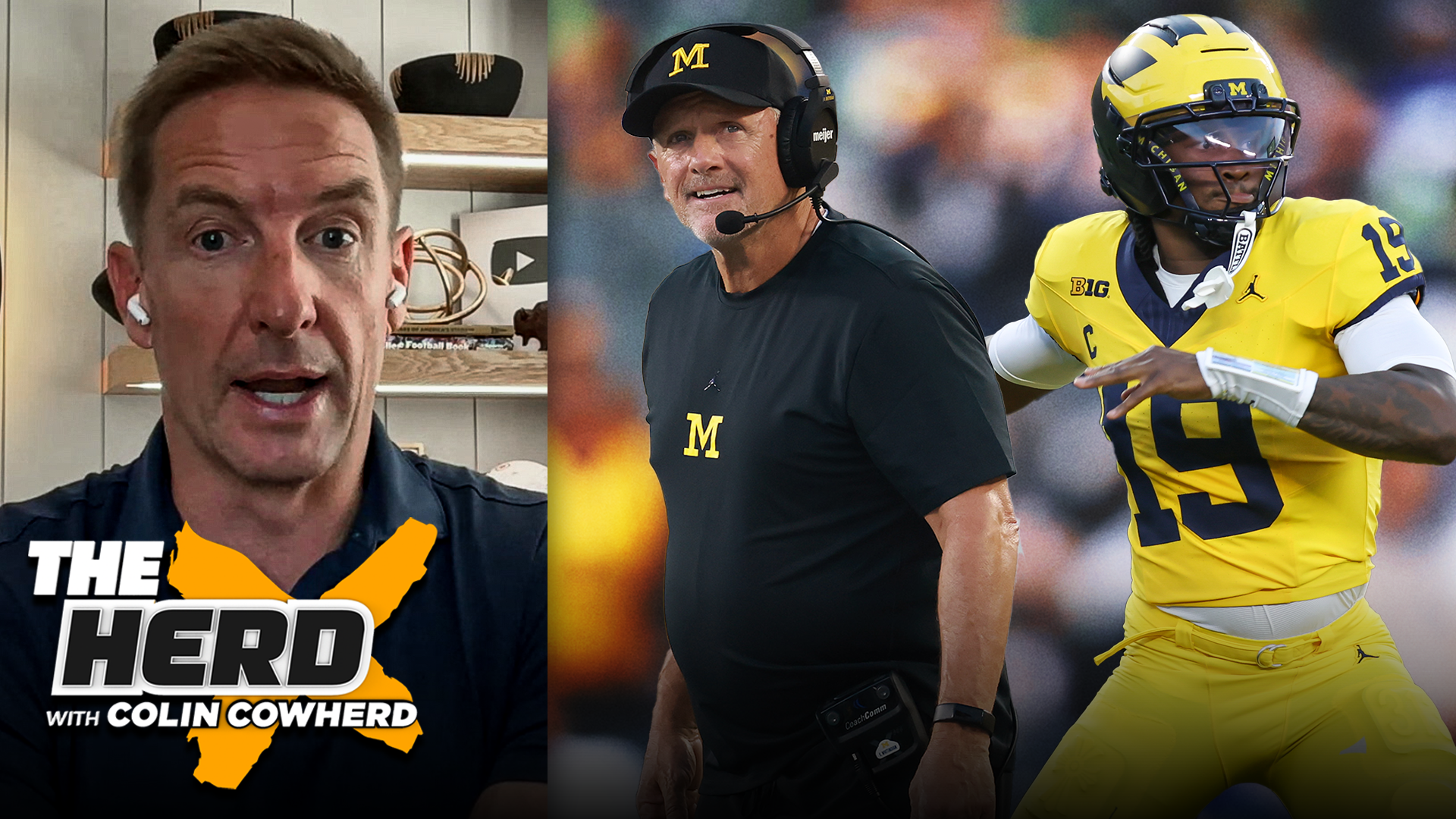
Paragraph 3 — FOX Sports lead college football analyst Joel Klatt zeroed in on exactly why this dynamic matters so much. Speaking on “The Herd,” Klatt pointed out that Whittingham has no real ties to Underwood beyond circumstance. He wasn’t part of the recruitment. He wasn’t the one who promised the NIL money. And he wasn’t the coach who looked Underwood in the eye and told him he was the future of the program. That previous coaching staff — led by Sherrone Moore — is gone, and Whittingham arrived with his own history, his own philosophy, and his own ideas about what Michigan football should be. He spent 20 seasons at Utah, becoming the winningest coach in program history, and he did it by building teams that were disciplined, physical, and tough. He didn’t get there by coddling five-star quarterbacks. He got there by making everyone earn everything. So when Klatt says Whittingham isn’t “as tied to Underwood” as the previous staff, he’s not suggesting the coach is looking for an excuse to bench him. He’s suggesting Whittingham will evaluate Underwood purely on performance, not promise. There’s no built-in grace period. No sense of obligation to a recruiting rank or a highlight reel. Underwood has to prove it in front of the new boss, and that’s a much taller order than simply being handed the job in the first place.
Paragraph 4 — The real issue, though, may not be about talent or effort at all. It’s about fit. Klatt described Michigan’s offense under Whittingham as looking like “oil and water” in the opener — a quarterback and a system that simply didn’t seem to gell. That’s a coaching problem as much as a player problem. Klatt stressed that the best coaches put their players in the best position to succeed, which means they have to figure out exactly what their guy does well and then build around that. It’s not about cramming Underwood into a system that doesn’t suit him. It’s about shaping the system around his strengths. Underwood has a strong arm, mobility, and the kind of raw athleticism that made him the top recruit in the country. But if the offense asks him to make reads and throws he’s not comfortable with, or if it doesn’t incorporate enough designed runs and quick, high-percentage passes to let him establish a rhythm, then he’s going to look like the uncertain quarterback we saw in Week 1. That’s not necessarily his fault — and it’s not necessarily Whittingham’s either. It’s the messy reality of a transition when a new coach inherits a handpicked franchise quarterback and has to figure out whether he can be the right kind of architect for him. There’s no manual for that. There’s just trial and error, and this Saturday, against one of the best defenses in the country, the margin for error is razor thin.
Paragraph 5 — And that’s what makes the Oklahoma game so fascinating. The Sooners are ranked No. 11, they have a dynamic quarterback in John Mateer, and they are exactly the kind of opponent that exposes every flaw in your preparation. Michigan won’t have the luxury of working through its issues in a low-stakes environment. Oklahoma will test every aspect of the Wolverines’ offense, and if Underwood struggles again, Whittingham will have to make a decision in real time. How long does he stay in the game? Does he get the chance to work through his mistakes, or does Whittingham give him a quick hook in favor of someone else? Klatt posed that exact question, and it’s the one nobody in Ann Arbor wants to answer yet. The thing is, Whittingham has shown throughout his career that he values winning over any single player’s development. He’s not the kind of coach who will sacrifice a football game to protect a quarterback’s confidence. At the same time, benching Underwood too quickly could create a bigger problem than it solves — a fractured locker room, a demoralized young player, a fan base in panic. Whittingham has to balance all of that against the simple need to win games. He didn’t create this situation, but he’s the one responsible for managing it, and Saturday will be his first real test under the brightest lights. There’s no easing into this. There’s no warm-up. There’s just a top-15 opponent, a restless fan base, and a coach trying to figure out if the future of Michigan football is the guy he inherited or somebody else.
Paragraph 6 — What makes this story so compelling isn’t just the football. It’s the human drama underneath it. Underwood is a teenager, or barely more than that, carrying the weight of enormous expectations that were placed on him before he ever played a college snap. He’s not just trying to win games — he’s trying to justify a life-changing contract, prove he was worth the hype, and convince a new coach who never recruited him to believe in him. That’s a psychological burden that doesn’t show up in the box score, but it influences everything he does on the field. Whittingham, meanwhile, is a veteran coach who has seen everything in the sport, but he’s never walked into a situation quite like this one. He inherited a franchise quarterback he didn’t choose, and now he has to decide how much patience to extend and how quickly to move on if things don’t improve. There’s a cold calculus to that, but there’s also a very human element. No coach wants to be the one who ruined the No. 1 recruit’s career. No player wants to be the guy who made a legendary coach look like he couldn’t develop talent. Both of them are trapped in a relationship neither of them asked for, and the only way out is to make it work. That’s what makes Saturday so important. It’s not just a football game. It’s a referendum on whether two people who didn’t choose each other can find a way to move forward together — and whether Michigan’s future is big enough to hold both of them.