




Paragraph 1: A Sudden Shift in the Miami Sun
The news landed on a Thursday like an unexpected storm rolling in over Miami, the kind that makes you look up from your coffee and double-check the sky. Inter Miami CF announced that Cristian Alberto “Kily” González had been appointed as the club’s new first team head coach, replacing Guillermo Hoyos. For a club that has become synonymous with Hollywood glamour and footballing royalty, the decision was both a surprise and a statement. There was no long farewell, no dramatic press conference with a podium and a club crest. Just a quiet, formal announcement that said the Argentine would officially take over once his work permits are processed. Until then, Hoyos would remain in charge, a placeholder in a very strange in-between world. It is the kind of move that makes you think about how fast football moves, how temporary everything feels, and how even a team sitting second in the Eastern Conference can decide that something isn’t quite working. Inter Miami had 39 points through 21 games, a record that most teams would envy, but the club’s ambition has outgrown the usual metrics. With Lionel Messi wearing the pink jersey, the expectation is no longer just to compete. It is to win. And winning, in this context, means a relentless pursuit of perfect momentum, a refusal to accept the natural dips and valleys that every season brings. This coaching change is a reminder that in the modern game, patience is a luxury that few clubs can afford, especially when the eyes of the world are watching every result.
Paragraph 2: The Season’s Two Faces
To understand why Inter Miami made this move, you have to look at the two faces of their season. On one hand, they are a team that has spent much of the season proving that last year’s success was no fluke. With 39 points and a place near the top of the East, they have shown depth, talent, and the ability to grind out results. On the other hand, there is a creeping sense of unease beneath the surface. The club entered this coaching change during a five-match winless streak, with four losses and one draw across MLS regular season and Leagues Cup play. That kind of slide can feel like sand running through your fingers: slow enough to ignore, but fast enough to panic. For a team built to win championships, one bad month can erase months of good work. The players likely feel the weight of that pressure, especially after a World Cup season that stretched their legs and their minds. The coaching change is not a rejection of what Guillermo Hoyos built, but rather an attempt to stop the bleeding before it becomes a wound too deep to heal. It is a human decision, made by executives who have to balance loyalty with logic, emotion with ambition. In the locker room, there is probably a mix of sadness and relief, gratitude and uncertainty. Players are not robots. They know that when a team changes coaches mid-season, it means that someone has to be the scapegoat, and often it is the person who cares the most. Hoyos, who stepped into the role under challenging circumstances, found early success, but the recent slide made him vulnerable. And in the high-stakes world of modern football, vulnerability is often enough.
Paragraph 3: Kily González, A Footballing Soul
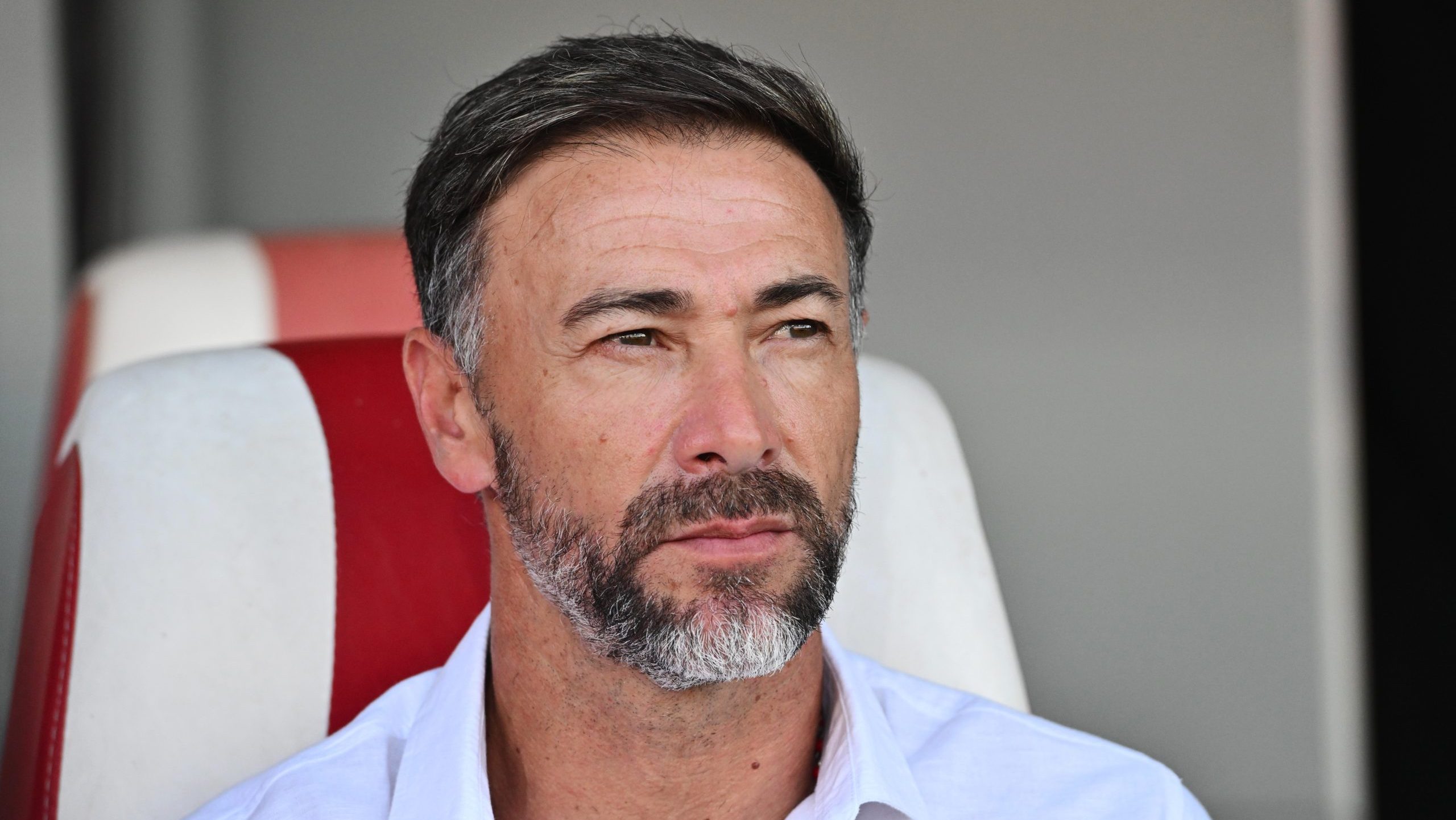
Cristian Alberto Kily González is not a stranger to big stages. As a player, he was the kind of winger who could change a game with a single touch: direct, fearless, and full of the kind of intensity that comes from growing up in the football-mad streets of Argentina. He began his career at Rosario Central in 1993, where his performances quickly caught the attention of European clubs. From there, he moved to Valencia, where he won La Liga and played in two Champions League finals, then to Zaragoza, and eventually to Inter Milan in Serie A. That kind of resume gives him instant credibility in the dressing room. But his most meaningful connection to Inter Miami is a more personal one. As a player for the Argentina national team, Kily González shared the pitch with a young Lionel Messi during World Cup qualifiers in 2005. That was the era when everyone began to realize that Messi was not just a promising talent, but something the world had never seen before. To have played alongside him, to have seen him up close before the world knew his name, gives Kily a unique bond with the club’s captain. That relationship could prove invaluable in the coming months. As a coach, Kily González has managed Argentine clubs like Rosario Central, Unión de Santa Fe, and Platense. His coaching career has not been as glittering as his playing days, but it has been authentic. He knows what it means to work with limited resources, to face difficult questions from the press, to feel the anxiety of a fanbase that expects passion above all else. He is a man of football, not a bureaucratic manager. He understands that the game is about emotion as much as tactics, about connection as much as formation. That humanity is exactly what a team in crisis often needs.
Paragraph 4: Guillermo Hoyos’s Unfinished Story
Guillermo Hoyos’s story with Inter Miami is a bittersweet one. He was not hired as the head coach at the start of the season. Instead, he was the club’s sporting director, a man who helped shape the roster from behind the scenes. But when Javier Mascherano left the role, the club turned to Hoyos as an interim solution. He accepted, perhaps reluctantly, perhaps with the excitement of a man who never forgot the thrill of being on the touchline. And for a while, it looked like one of the most inspired decisions in recent MLS history. Hoyos began his managerial stint with a remarkable 6-1-1 record, taking 19 of 24 possible points while his team scored 26 goals in eight matches. It was the kind of start that coaches dream of, a perfect blend of tactical organization and attacking freedom. The front office was impressed enough to name him the permanent manager following the World Cup, a decision that made sense at the time. But football is a game of ruthlessness, and the recent winless run changed the narrative. Four losses and one draw, across league and cup play, created the kind of pressure that no coach can ignore. It is easy to forget, in moments like this, that Hoyos is a human being with feelings, a man who gave his best to a club he already served in another role. He will now continue to lead the team provisionally until Kily González and his staff arrive, which is a strange and awkward situation for everyone involved. But Hoyos has shown a quiet dignity throughout, the kind of professionalism that deserves respect even when the results are not there.
Paragraph 5: The Awkward Limbo and the Road Ahead
There is something deeply human about the transition period that now begins at Inter Miami. Kily González has been announced as the new head coach, but he cannot actually take over yet because his work permits have not been processed. So the club finds itself in a kind of limbo, with a coach who is already gone but still sitting in the chair, and a coach who has been hired but cannot yet touch the wheel. This is not unusual in world football, but it does not make it any easier. For the players, it means an uncertain dynamic: they are still following Hoyos’s instructions, but they know that a new voice is coming. For the fans, it is a strange feeling of anticipation mixed with guilt. On Saturday, Inter Miami hosts CF Montreal at 7:30 p.m. ET, and Hoyos will be the man on the touchline, trying to end the winless streak before his tenure is officially over. It could be his last chance to leave a positive mark, or the beginning of a long goodbye. Kily González will likely be watching from somewhere, taking notes, waiting for his moment to step in alongside his coaching staff. He will need time to assess the squad, to build relationships with players who have been through an emotional roller coaster, and to adapt his tactical ideas to the specific talents of this group. He will also need to earn the trust of Messi and the other veterans in the locker room, which is a task that cannot be accomplished through reputation alone. But there is hope in this change, a fragile kind of hope that thrives on the belief that sometimes a different voice is all a team needs to remember who it truly is.
Paragraph 6: The Beauty and Brutality of Change
In the end, this coaching change tells us something profound about the nature of football and of life itself. Nothing is ever permanent. The same team that looked unstoppable in early summer can suddenly feel fragile, and the same coach who was praised as a savior can be deemed expendable within a matter of weeks. Inter Miami’s decision to appoint Kily González is not just a tactical move; it is a reflection of the club’s belief that they have something special this season, something worth fighting for. They are second in the Eastern Conference, they have Lionel Messi on their side, and they have a squad full of players who have tasted success. But they also have doubts, and doubts are the most dangerous thing in football. Kily González arrives with the weight of history on his shoulders, not just as a coach, but as a man who once played alongside Messi, who once represented Argentina, who once faced the best defenders in Europe. He carries with him the memory of his playing days, but he also carries the scars of his managerial struggles, the lessons learned at Rosario Central, Unión, and Platense. He knows that nothing is guaranteed, that a new coach does not automatically fix a broken season. But he also knows that football is a game of belief, and that sometimes all a team needs is someone to remind them of their own magic. For Guillermo Hoyos, there is no shame in this ending. He did his job, he gave his all, and he leaves with his head held high. And for the fans, for the players, and for everyone who loves this beautiful, chaotic sport, the story continues. Saturday is coming, and with it, a chance to begin again.