

There is an old saying in business that a rising tide lifts all boats, but for China’s wealthiest, the tide has been stubbornly uneven. Over the past year, the country’s AI-powered export machine has hummed with remarkable energy, sending advanced chips, servers, and electric vehicles to buyers around the world. Yet inside China, the domestic economy has felt heavier: consumer confidence has remained fragile, the property market has continued to cast a long shadow, and the benchmark CSI 300 index has fallen 7% since the last time Forbes measured the fortunes of the country’s richest. The result is a list that looks less like a celebration of unstoppable growth and more like a reflection of a two-speed economy. More than half of the tycoons on this year’s China’s Richest ranking saw their net worth decline. The collective wealth of the entire group slipped to $1.3 trillion from $1.35 trillion a year earlier. It is not a crash; it is a correction, but it is also a sharp reminder that even the world’s second-largest economy cannot shield its elite from the forces of uncertainty. The threshold to make the list rose slightly, to $4.75 billion from $4.6 billion, meaning the bar is higher even as many fortunes shrank—a sign of new money rushing in at the top. And the composition of that new money tells the story of where China’s future is heading: artificial intelligence, robotics, and the hard-nosed business of making the physical components that power the digital age. The old giants of beverages, real estate, and consumer goods are not disappearing, but they are no longer leading the parade. In their place stand a new generation of entrepreneurs whose wealth is tied less to what people drink or buy in stores, and more to the machines and algorithms that are reshaping the world. This year’s list is a study in transition: not merely who got richer or poorer, but which vision of China’s economy is winning.
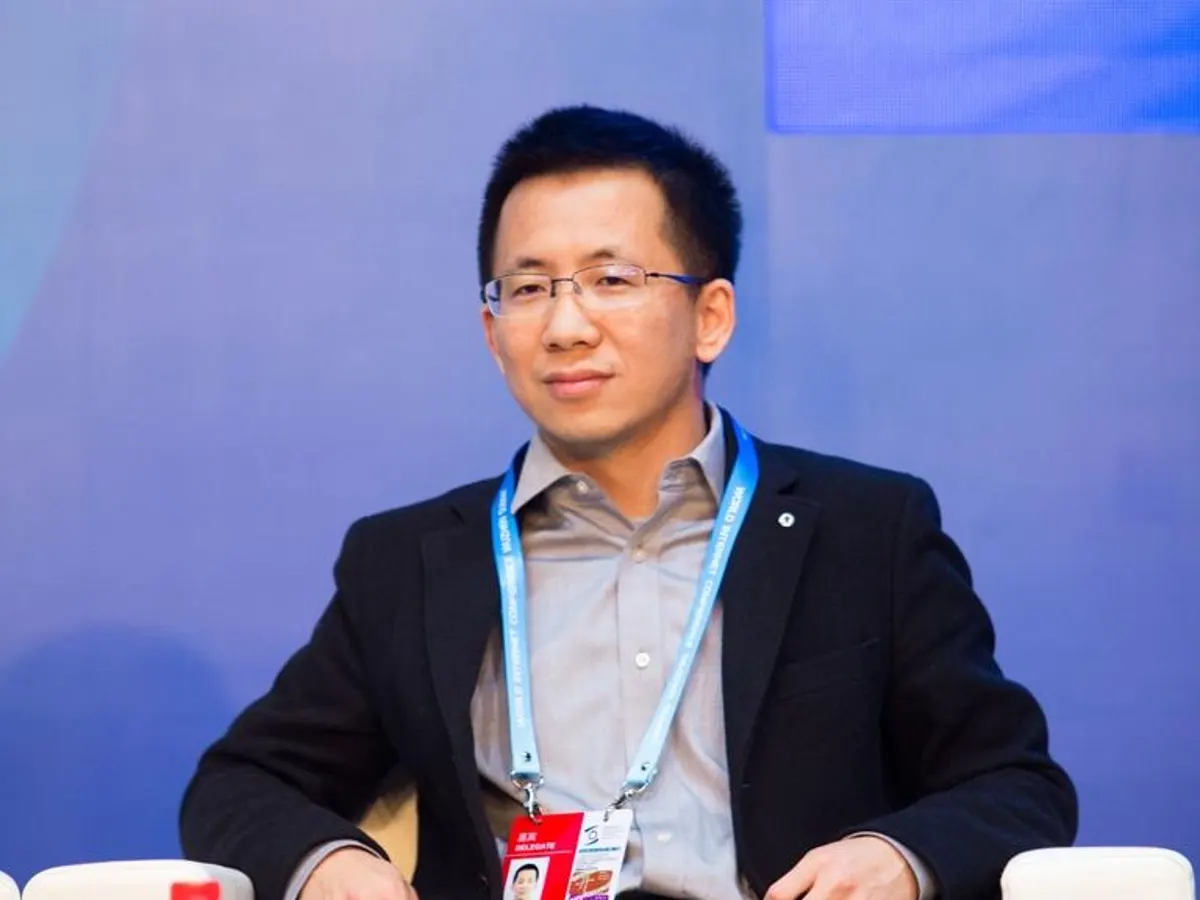
At the very top of this new order is Zhang Yiming, the cofounder of ByteDance, whose ascent to No. 1 feels like a coronation for the AI age. Zhang, best known for creating TikTok, has been a quietly powerful force in technology for years, but this is the first time he has claimed the top spot on Forbes’ list of China’s richest. His net worth jumped by $14.7 billion to $84 billion, a surge that owes everything to ByteDance’s aggressive bet on artificial intelligence. The company has proposed investing as much as $70 billion this year, mostly in AI infrastructure—data centers, chips, and the enormous computational systems needed to train and run advanced models. For a man who stepped back from daily operations and tends to avoid the spotlight, Zhang’s fortune has become a proxy for the explosive potential of Chinese AI. His rise also marks a symbolic changing of the guard. For five years, the No. 1 spot belonged to a bottled water tycoon; now it belongs to a technologist whose products are used by billions of people around the world. What makes Zhang’s story compelling is not just the money, but the way it reflects a broader shift in how value is created. TikTok made ByteDance a household name, but the company’s future—and Zhang’s place at the top of the wealth pyramid—now rests on the ability to turn massive investments in AI into real products and services. It is a high-risk, high-reward gamble, and so far the market is betting that it will pay off. Zhang may be the richest man in China, but he is also the face of a new kind of Chinese capitalism: less focused on real estate and consumer staples, more focused on the infrastructure of intelligence itself. His rise to No. 1 is not merely a personal achievement; it is a signal that the country’s most valuable companies are now those that power the digital brain of the future. In a year when so many old fortunes were shrinking, Zhang’s grew by an amount that would make him one of the richest people on the planet all by himself. And he did it by betting on the thing that most of the world is still trying to understand: artificial intelligence.
If Zhang Yiming’s rise represents the future, Zhong Shanshan’s fall represents the weight of the present. After five years as China’s richest man, the founder of Nongfu Spring has slipped to No. 2, his fortune shrinking by $16.9 billion to $60.2 billion. It is a stunning reversal for a man who built one of the country’s most recognizable consumer brands, but it is also a story about the limits of the domestic market. Nongfu Spring’s water and beverage business, long a cash cow, has been hit by slowing revenue growth in a market that is now saturated. There are only so many bottles of water a person can drink, and with competitors piling in and consumer spending staying cautious, the company’s shares fell by nearly a quarter over the past year. For Zhong, the pain is not just financial; it is symbolic. He became the face of Chinese consumer wealth, the man who turned water into gold. But the same domestic economy that made him rich has now turned against him. Weak consumption has become a structural problem in China, and even the most beloved brands are not immune. Zhong’s slide is a reminder that in China’s current environment, the domestic consumer is no longer the reliable engine of growth that they once were. The government has tried to stimulate spending, but confidence remains shaky, and the property market’s long downturn has made households feel poorer and more cautious. Zhong’s fortune is still enormous, and he remains one of the world’s richest people, but his decline mirrors the broader slowdown in Chinese consumer demand. There is a human dimension to this as well. Zhong is not a young man chasing a new frontier; he is a builder of a mature business that has become a giant in a market that has stopped growing as quickly. The question now is whether Nongfu Spring can find new growth at home or expand abroad, or whether Zhong will continue to watch his net worth erode. For now, he has been dethroned by a technologist, and the symbolism is hard to miss: the era of consumer staples as the safest path to extreme wealth in China may be over. The new wealth is being made not by selling refreshment, but by building the engines of intelligence.
The biggest winner in dollar terms this year is Liang Wenfeng, the founder of DeepSeek, a homegrown AI heavyweight that has captured the world’s imagination. Liang jumped 31 spots to No. 3, with his fortune ballooning by $34.5 billion to $46 billion. The catalyst was an October funding round that valued DeepSeek, a privately held company, at over $75 billion. DeepSeek has become a symbol of China’s ability to compete in the AI race, despite US restrictions on advanced chip exports. Liang’s rise is remarkable not just for its speed, but for what it represents: a shift from copycat software to cutting-edge research, from consumer apps to fundamental artificial intelligence. His wealth is now tied to one of the most closely watched companies in the world, a firm that has shown that Chinese engineers can build models that rival those from Silicon Valley. But he is not the only notable gainer. Chen Jianhua, chairman of the petrochemicals conglomerate Hengli Group, also saw his fortune more than double to $25.2 billion, rising 30 spots to No. 10. The trigger was the backdoor listing of Hengli’s shipbuilding unit on the Shanghai Stock Exchange, which came at a time of surging global demand for new vessels. Shipbuilding may sound like an old-economy industry, but it is booming, driven by the need to replace aging fleets, the push for cleaner-burning ships, and the reshuffling of global supply chains. Chen’s rise shows that not all new wealth in China is in technology; there is still plenty of money to be made in the physical world, especially when it intersects with global trade. Together, Liang and Chen illustrate the two engines of China’s export boom: cutting-edge AI and old-fashioned industrial might. Both have thrived despite the weakness at home, because their customers are the world. And both have proved that the fortunes of China’s richest are increasingly determined not by domestic consumption, but by how well Chinese companies can sell to the rest of the planet. For Liang, the future is software and silicon; for Chen, it is steel and ships. But their stories share a common thread: in a year when the domestic economy dragged, the global market was a lifeline.
The changing face of China’s wealth is perhaps most visible in the newcomers to this year’s list. There are seven first-time entrants, and every single one comes from AI, robotics, or a closely related field. The wealthiest of them is Zhu Yiming, cofounder of CXMT, a chipmaker that has become central to China’s quest for semiconductor self-sufficiency. Zhu’s fortune is estimated at $13 billion, a remarkable sum for a man whose company only listed on the Shanghai Stock Exchange in July. Within three months, CXMT sent shockwaves through the global industry when it disclosed that it was close to launching the next generation of high-density memory chips. The news was so significant that shares of global rivals tumbled, underscoring how much is at stake in the battle for chip supremacy. The only woman to debut this year is Wang Xin, chairman and general manager of Guangdong Dtech Technology, a company that makes precision cutting tools for printed circuit boards. Her presence is a reminder that the AI boom is not just about algorithms and data centers; it also depends on a vast supply chain of specialized equipment and components. Another notable newcomer is Wang Xingxing, the founder of Yushu Technology, also known as Unitree, a humanoid robot maker. At 36, Wang is now the youngest member of the list, and his company has become a symbol of China’s ambition to lead in robotics. Humanoid robots are no longer science fiction; they are being developed, tested, and deployed in factories and homes, and Wang is at the center of that movement. The newcomers are joined by six returning tycoons, including Zhang Wanzhen, whose fortune comes largely from a stake in Chaozhou Three-Circle, an electronic components maker. Zhang stepped down as chairman in 2021, but his timing could not have been better: the company’s Shenzhen-listed shares more than doubled over the past year, driven by AI demand for its products. Meanwhile, 13 people dropped off the list entirely, a reminder of how unforgiving this moment is for those in declining industries. The new entrants are younger, more technical, and more global in their outlook than the tycoons they replace. They represent a generation of entrepreneurs who grew up with the internet, who see AI not as a buzzword but as a tool, and who are building companies that are competitive on the world stage. Their presence on the list is not just a change in personnel; it is a changing of the guard in China’s economy.
Behind every name on this list is a mountain of data, and the methodology used to compile it is worth understanding, because it shapes the story. Forbes’ ranking is based on shareholding and financial information from families, individuals, stock exchanges, analysts, and private databases. Net worth figures are calculated using exchange rates and stock prices as of October 16, 2026. For private companies, the valuation is derived by applying financial ratios and comparisons with similar public companies. Some family fortunes are split, and the list includes a number of entrepreneurs whose citizenship is not Chinese but whose primary source of wealth lies in mainland China. The editors reserve the right to amend the list in light of new information. This process is part science, part art, and it relies on the work of many specialists—from Euromonitor International to analysts at firms like MSCI and China Merchants Securities—who help put numbers on businesses that do not always want to be measured. What does it all add up to? A picture of a country at an inflection point. China’s richest people are no longer primarily the titans of real estate and consumer goods who defined the past two decades. They are increasingly the builders of AI models, chipmakers, robot manufacturers, and industrialists who serve the global economy. The fall of Zhong Shanshan and the rise of Zhang Yiming is not just a swap of names at the top; it is a sign that the sources of Chinese wealth are being reinvented. The domestic economy, with its weak consumption and sluggish property sector, is no longer the guaranteed path to riches. Instead, the new wealth is coming from exports, technology, and the infrastructure of the digital age. There is risk in this shift, too. AI companies are expensive to build and their valuations can be volatile, as the drop in many fortunes this year shows. But the list also reveals a kind of resilience: despite the headwinds, China’s best entrepreneurs are still creating enormous value, and they are doing it in fields that will define the twenty-first century. The 2026 edition of China’s Richest is not just a ranking of money. It is a map of where the country’s economic energy is flowing—away from the old, toward the new, and outward into a world that is hungry for what China can build. For the tycoons themselves, the numbers are personal, but for the rest of us, they are a window into the future.