


There is something beautifully cruel about October baseball. For six months, the regular season lets teams believe in tidy narratives: the best offense should win, the best closer should shut the door, the most talented roster should coast. Then October arrives and laughs at all of it. On Wednesday night, the sport whittled itself down to five teams still chasing a World Series, and the games were not decided by reputation or payroll or even talent alone. They were decided by a rookie center fielder who refused to stop believing in himself, a heartsick Yankees team that made one too many mistakes against a division rival that never needed an invitation to punish them, a contact-happy Brewers squad that somehow made the electrifying Padres look helpless, and a veteran Guardians star who decided he had waited long enough to make his mark. When the dust settled, the National League Championship Series would be a rematch of last year’s epic Dodgers-Brewers showdown, and the American League would feature the Rays, fresh off a sweep of the Yankees, waiting to meet the winner of a White Sox-Guardians series that the Guardians refused to let end quietly. There is no way to predict any of it. That is the point. It is also why the stomach churns, why the dugouts feel tighter, why every pitch seems to carry the weight of a season.
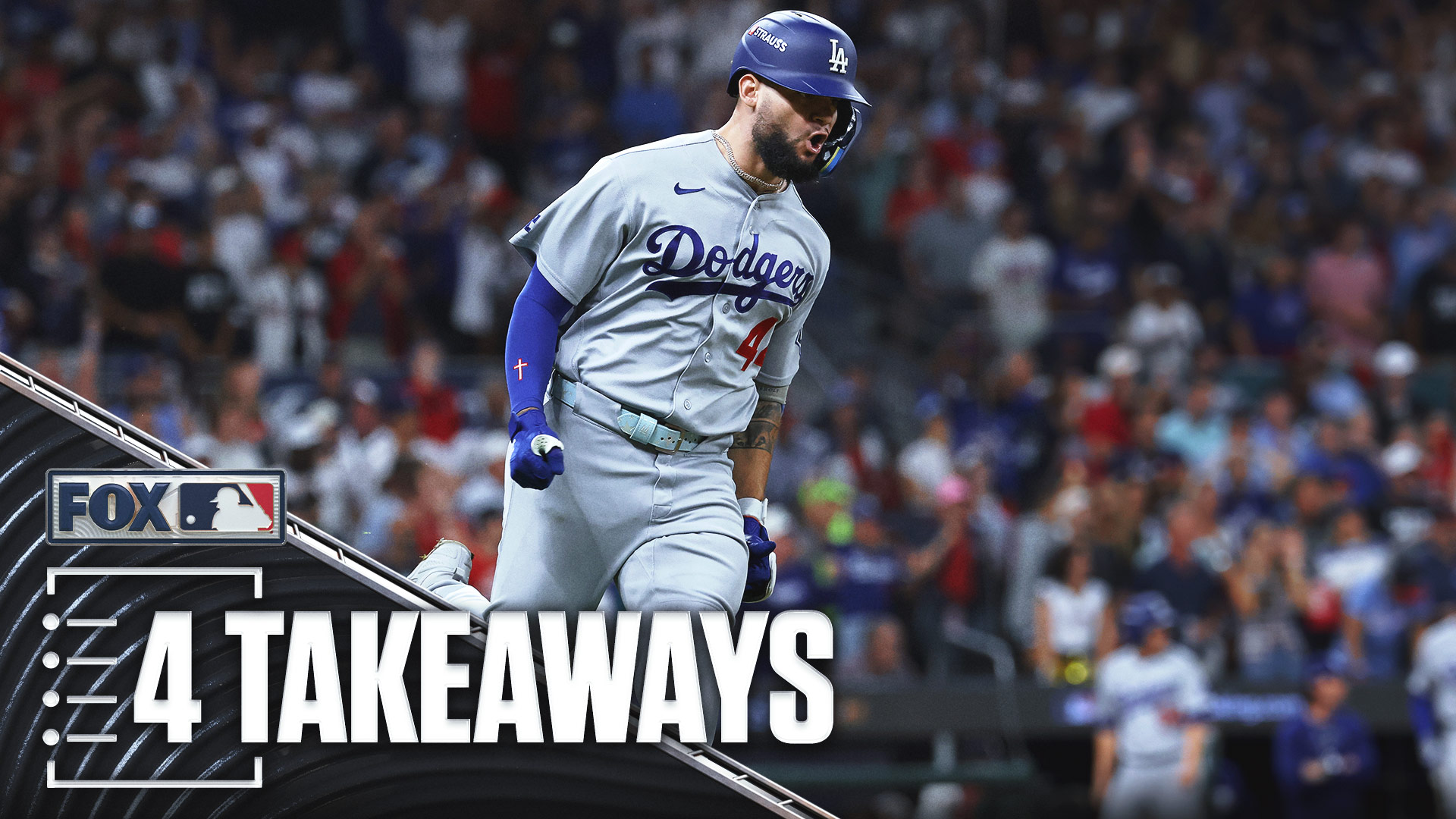
For Andy Pages, the last few weeks had been an exercise in public humiliation. The Dodgers’ All-Star center fielder, one of the most productive hitters in baseball during the regular season, had gone 4-for-51 in the Dodgers’ 2025 World Series run and opened this October hitless in the first two games of the NLDS. He had also lost his ABS challenge privileges after another embarrassing failed challenge, adding a layer of frustration to an already brutal stretch. There were whispers, inevitably, about whether Dave Roberts should bench him, whether the bright lights were too much for him. But Roberts, the Dodgers’ manager, has always had a stubborn faith in his players, especially the ones who helped get him there. “I’m gonna continue to give Andy leash,” Roberts said. “I believe in him. I feel that for us to win the World Series this year, we’re gonna need him to be an active part of our team.” All he asked for was better at-bats. Pages did not wait long. In Game 3, he showed signs of life with two hits and a run scored. Then came Game 4, with the Dodgers trying to close out the Braves and avoid a trip back to Atlanta for a sudden-death Game 5. Atlanta starter Tyler Mahle had been brilliant since coming over from San Francisco at the trade deadline, and for six innings he held the Dodgers mostly in check. The only hit he allowed through the first four innings was a single to Pages. In the seventh, with the bases loaded, two outs, and the game hanging in the balance, the Dodgers had a chance to put the Braves away. Braves manager Walt Weiss went to his bullpen, eventually calling on Robert Suarez to face Pages. The free-swinging outfielder, known for chasing pitches out of the zone, suddenly became the most patient hitter in the stadium. He took the first two pitches that were outside the zone, worked the count to 3-1, fouled off a four-seamer down the middle, and then delivered the blow that ended the Braves’ season: a base hit back up the middle that scored two runs and broke the game open. It was the Dodgers’ only hit with runners in scoring position in the entire series, but it was enough. Los Angeles hit eight home runs over the four games, including three from Max Muncy, whose solo shot in the ninth inning gave closer Edwin Diaz extra cushion before he sealed the 4-1 win. The Dodgers have now reached the NLCS eight times in the last eleven years, and they are one series away from a third straight trip to the World Series. Pages proved that faith is not always rewarded, but sometimes it is.
If the Dodgers are a story of redemption, the Yankees are a story of unraveling. There might not be a more dangerous team in the league to make mistakes against than the Tampa Bay Rays, and the Yankees know it. They had learned that lesson in Game 2 of the ALDS, when they committed four errors in one of the most dreadful playoff performances they have ever produced. Backs against the wall in the Bronx on Wednesday night, the last thing they could afford to do was lose focus or run out of gas. But Max Fried, their left-hander, looked spent as he labored into the late innings. On his final pitch of the night, a 77.9 mph sweeper that hung in the zone like a slow-moving balloon, he could not have placed it any better for a hitter if he had tried. Tampa Bay left fielder Victor Mesa Jr. sent it into the night, a go-ahead, two-run rocket that broke a tied game and gave the Rays a lead they would never surrender. It was Mesa’s first career postseason home run, and it felt inevitable in the way so many Rays moments do. The Yankees’ season ended with a 4-3 loss, swept by their division rival and left to wonder why this keeps happening. Last year, they were also eliminated at the hands of the Rays. This year, they were cooked by an entirely unheralded hero. Ryan Vilade, a right fielder with a modest 108 OPS+ and 96 games under his belt this season, took Fried deep in his second at-bat, a solo shot to the short porch in right field that counted for a home run in exactly one major-league ballpark: Yankee Stadium. It was Vilade’s first career playoff game, his first career postseason hit, and the kind of memory he admitted he had only dreamed about. “Definitely didn’t expect anything, like homer being your first postseason hit,” Vilade said. “You dream about it, and then to do it was really special.” The Rays, who have built an entire culture around squeezing production from overlooked players and formless roles, were the perfect villains for a Yankees team that always seems to find a new way to implode. The sweep was not just a loss. It was a mirror. New York looked fatigued, scattered, error-prone and emotionally fragile, all while Tampa Bay looked like a machine that had no interest in giving them a second to breathe.
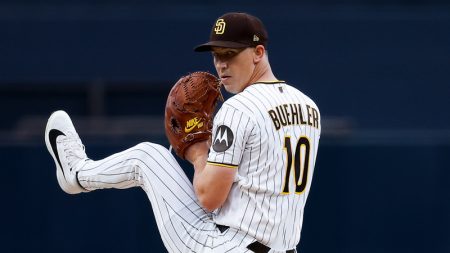
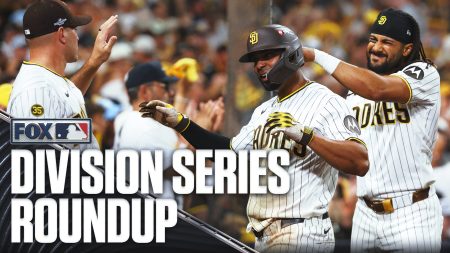
Across the country, the Milwaukee Brewers were proving that an offense built on contact and constant pressure can still thrive in October. The Padres had scored first in each of the first three games of the NLDS, and they were baseball’s hottest team, riding a wave of momentum and a raucous home crowd in San Diego. But the Brewers, who had won a franchise-record 103 games, kept finding ways to get under the Padres’ skin. In the decisive Game 4, Milwaukee did not just win, 3-1. They made a statement about their identity. They did not strike out until their 29th batter of the game. That is almost impossible in modern baseball, where strikeouts have become as common as groundouts, and against a Padres bullpen that had been overpowering all series. The Brewers put 13 hard-hit balls into play, they dribbled singles through the infield, they stole bases, they forced the Padres to make throws and field grounders and make decisions under pressure. They were a mosquito that would not leave the room. Even Walker Buehler, who had been brilliant since his return from injury, could only hold the Brewers to one run through three innings. Sal Frelick legged out an infield single, stole second, and scored on a Garrett Mitchell RBI single. Then Fernando Tatis Jr. brought the crowd to life with a 429-foot solo homer to center field, and it felt for a moment like the Padres would do what they had done all October. But the Brewers answered. Jackson Chourio, their star left fielder, lined an RBI single off Bradgley Rodriguez, who had pitched in all four games of the series and was beginning to show the wear of overexposure. Jake Bauers, who reached base in all four of his plate appearances, came around to score on a sacrifice fly by Frelick an inning later. Milwaukee’s bullpen kept the Padres in check, and in the eighth inning, the baseball gods nearly wrote a different ending. Manny Machado sent a ball 406 feet into the San Diego night, and for a split second, the entire stadium believed it was a game-tying home run. But Garrett Mitchell, fighting through a sea of Padres fans in the first row of the center-field bleachers, reached over the railing and made the catch. The Brewers had snapped a 12-game postseason road losing streak in one of the most hostile environments in baseball, cooled off the most dangerous team in the league, and earned the right to see the Dodgers again. There was a new feeling in their dugout, as Jake Bauers put it: belief, not doubt.
In Cleveland, the Guardians were saved by a man who has been their heart for fourteen seasons. José Ramírez had been quiet, almost invisible, in the first two games of the ALDS against the White Sox, and his team was on the verge of elimination in a 2-0 series hole. But Game 3 was a reminder that greatness does not retire quietly. Ramírez went 2-for-4 with two runs scored, two RBI, and a walk. He became just the tenth player in MLB postseason history to record a double, a triple, and a stolen base in the same game. And in the sixth inning, with the White Sox threatening to blow the game open, he made one of the most spectacular defensive plays of the postseason. After right-hander Hunter Gaddis hit Sam Antonacci with the bases loaded to force in a run, White Sox third baseman Miguel Vargas ripped a liner toward short. It looked destined for left field, a bases-clearing hit that would have changed everything. But Ramírez snagged it straight off the bat for the final out of the inning. As if that were not enough, he fired a perfect throw to first, even though the inning was already over. That is who he is: a player who cannot stop competing, even when the play is dead, even when everyone else has already exhaled. “It’s a great mindset from the team,” Ramírez said through an interpreter. “We did the best we could because there’s no way back. We came out to compete. There’s no tomorrow.” The White Sox, who had set a dubious postseason record by striking out 19 times, had plenty of chances. They went 2-for-11 with runners in scoring position and left eight men on base. But Cleveland’s relentless approach on the basepaths — getting on, stealing bases, forcing the White Sox to make near-perfect plays — created chaos. The Guardians went 5-for-17 with runners in scoring position, piling on in a way they had not done all series. Guardians manager Stephen Vogt summed up the evening in a single sentence: “Josy, that’s why he’s one of the best players in the league. He can hurt you with the bat, the legs, and the glove. He showed all that today.” With their season on the line, Ramírez refused to let it end. Now the Guardians get to play another day, and the White Sox have to figure out how to put a team back together that refuses to die.
So here we are, down to five teams with a chance to make history, and the matchups could not be more compelling. The Dodgers and Brewers will meet in the NLCS for the second consecutive year, a rematch that feels more like a rivalry now. Los Angeles has the star power, the home runs, and the swagger of a team that has been here before. Milwaukee has the contact, the grit, and the belief that they can somehow outlast anyone. It is a fascinating contrast of styles, and it will be played in front of some of the loudest, most desperate crowds in baseball. In the American League, the Rays are waiting with fresh arms and a maddening ability to turn nobodies into heroes. They will face either the Chicago White Sox, who are one win away from advancing but suddenly look fragile after losing Game 3 in Cleveland, or the Guardians, who have José Ramírez and absolutely nothing to lose. There are going to be more moments like the ones we saw on Wednesday: a rookie center fielder coming through, a tired pitcher hanging a sweeper, a contact team scratching out a run without a home run, a veteran shortstop stabbing a line drive out of the air. October is not about the perfect team. It is about the team that can survive the imperfections, the missed signs, the heartbreak, the fatigue and still find a way to celebrate. These five teams are still alive because they have answered challenges that would have broken lesser groups. The Dodgers have their faith. The Rays have their discipline. The Brewers have their stubbornness. The Guardians have their relentless spirit. And the White Sox have one more chance to silence the doubters. The beauty of October is that all the narratives get rewritten every night. There is no script, no safe bet, no guaranteed ending. There is only the next pitch, the next swing, the next catch at the wall. And for the lucky five teams left, there is still a chance to believe that this time, the last memory of the season will be champagne-soaked and perfect.