


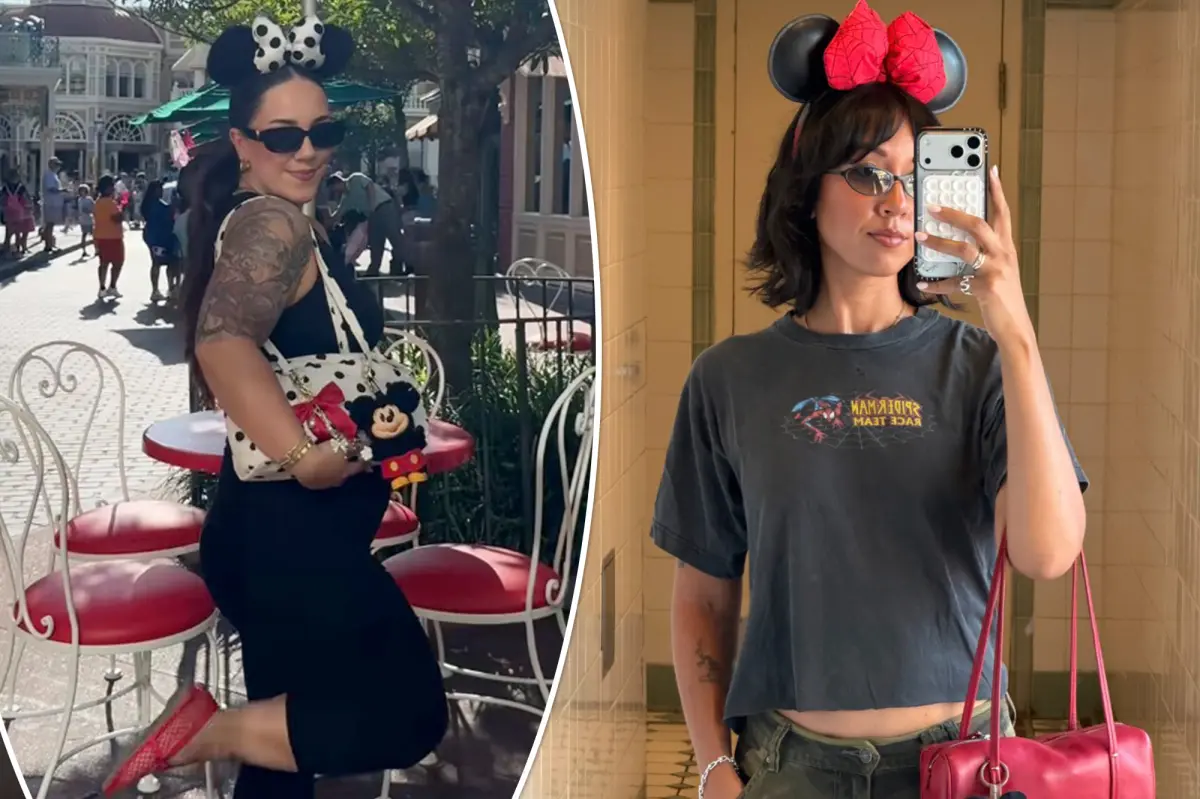
For as long as internet culture can remember, the phrase “Disney adult” has been shorthand for something slightly embarrassing. It conjures images of full-grown men and women wearing light-up Mickey ears, clutching oversized popcorn buckets, crying at parades, and spending their hard-earned savings on a vacation that, to outsiders, looks like it was designed for children. There was always a whiff of mockery in the way society talked about them—the assumption being that anyone who loved Disney that much must be stuck in some arrested development, unable to face real life. But in the last few years, something curious has happened. The Disney adult is getting a rebrand. The same fanbase that used to be dismissed as nerdy and obsessive is suddenly looking, for lack of a better word, cool. Maybe it was the tattoos, showing up where the old stereotypes had nothing but character-print tees. Maybe it was the fashion, with young women walking through the parks in massive black boots, cropped jackets, and designer sunglasses, looking like they just stepped out of a street style blog rather than a children’s movie. Either way, the image of a Disney adult is evolving: less “kidult who can’t let go,” more “style icon who happens to love a mouse.” It’s a shift that feels both superficial—because clothes are, after all, just clothes—and meaningful, because it suggests that loving something deeply and unironically is no longer a source of shame. In a culture that constantly tells grown-ups to be serious and measured, the newly cool Disney adult is proof that joy, even of the cartoon variety, can be worn with pride.
Take Ashley Wilbraham, a 32-year-old Los Angeles content creator who has branded herself Disneyland’s “bad girl.” Wilbraham’s social media presence is built on a very specific aesthetic: grunge-inspired outfits, graphic tees, short-shorts, and an attitude that reads less like “Disney princess” and more like “front-row at a rock show.” Her TikToks, which have earned more than five million likes, are full of Disneyland food reviews, clothing hauls, and outfit inspiration—all delivered with the kind of effortless confidence that makes it easy to understand why the internet has embraced her. She doesn’t look like someone who is trying to relive her childhood; she looks like someone who is enjoying her present. In a recent interview with The Cut, Wilbraham said that deciding what to wear is “half the excitement of a Disney day,” and that small confession strikes a chord. Anyone who has ever spent the evening before a trip laying out clothes, mixing and matching pieces, and imagining how they’ll feel walking through the gates knows exactly what she means. The outfit isn’t just about looking good; it’s about becoming a version of yourself who is unbothered, playful, and free. For Wilbraham, the park is a runway, and the runway is a form of self-expression. There is something deeply human about that—the urge to show up for the places we love wearing something that makes us feel like ourselves, maybe even a better version of ourselves. She’s not the exception; she’s part of a wave of Disney fans who treat their park-day style as seriously as any other fashion-forward person treats a first date. They’ve taken the classic Disney uniform—ears, tees, and all—and reimagined it as a statement of identity.
Another standout in this new wave is Stephanie Arant, a 35-year-old influencer whose Disney park outfits have drawn attention for all the right reasons. Instead of ruffled princess dresses and dainty headbands, Arant pieces together looks that are relaxed, understated, and undeniably cool: camo-print jorts, oversized tops, ballet flats, and just enough attitude to let you know she’s not trying to win a costume contest. She’s there for the magic, sure, but she’s also there in her own skin. This is a far cry from the traditional image of Disney adults, who have spent decades being ridiculed for their nerdy, unabashed love of all things Mickey and Minnie. Some of that ridicule has been fair; some of it hasn’t. In her 2025 book, “Disney Adults: Exploring (And Falling In Love With) A Magical Subculture,” AJ Wolfe, the founder of Disney Food Blog, tried to capture what actually drives the people who make Disney their personality. Wolfe wrote that Disney adults “max out our credit cards to go,” count down the days until they can return, and “plan obsessively” about what they’ll do, eat, wear, and experience next time. It’s a confession that might sound unhinged to critics, but to the thousands of people who share the same obsession, it’s simply the truth. There is something beautiful about caring that much—about giving yourself over to a place that fills you with joy, even if others don’t understand it. The obsession is not a flaw; it’s a feature. It’s what fuels the anticipation, the research, the late-night ticket purchases, the carefully curated vacation days. And perhaps the new cool-girl aesthetic is simply a way to dress up that devotion in a language the rest of the world can finally understand.
It’s worth remembering, though, that the Disney adult community is not a monolith—and the rebrand doesn’t erase the more complicated corners. Earlier this year, Toni Kulusich, a California Disney regular, became known as “Peter Pan Girl” after sharing videos of herself interacting with Disneyland cast members who played Peter Pan over a period of years. Some of her videos showed her in extended conversations with the actors, giving them gifts, dressing up in themed outfits, and visiting the park at least once a week. The internet did what the internet does: called it stalking, called her creepy, and turned her into a viral punchline. Kulusich, to her credit, did not shrink. “Seeing him makes me happy; dressing up makes me happy; going to Disneyland once a week makes me happy,” she said in an interview with WIRED. “If people are going to hate on me, I’m not going to let it stop me. Because I know I’m not doing anything wrong.” Whether you find her behavior charming or concerning, her story is a reminder that Disney adults exist on a spectrum. There are people who love the parks for the food, the rides, the art, the nostalgia. There are people who love them for the escape—and escape can look different for everyone. And then there are people whose attachment to the characters crosses a line into parasocial territory that makes observers uneasy. It’s easy to mock, but it’s harder to untangle the loneliness, longing, and comfort that can underpin such behavior. A rebrand can make the Disney adult look cooler, but it doesn’t make the community any less human. If anything, it widens the tent, making room for everyone from the fashion-forward to the completely unrepentant.
For those who have noticed the shift, the term “Disney-girl cool” is more than a trend; it’s a movement. Atlanta-based Disney influencer Jackson Moehler told The Cut, “When people say ‘Disney-girl cool,’ they are going for the vibes. People are trying to change the narrative of the Disney adult that isn’t weird.” That single quote gets at something crucial: the rebrand is not just about fashion, but about reframing what it means to be an adult who finds meaning in Disney. The goal, in other words, is to be seen as a well-dressed, self-aware, fully functioning person who just happens to spend their free time at a theme park. And Disney itself has taken notice. Last year, the company hired streetwear designer Bobby Kim as its first-ever creative director for merchandise, a move that felt like a deliberate wink at the cool-girl crowd. Kim’s recent vintage-themed collection sold out within seconds—proof that fans were hungry for something that felt less like souvenirs and more like art. Kim seemed to understand the assignment, telling The Cut: “The Disney cool girl doesn’t seem to be a knock but a sense of pride… It seems to say, ‘Look at how I’m dressing, how I am piecing this together, I am creating art.’” That partnership is significant because it signals that Disney is willing to let fans help rewrite the script. Instead of telling adults to dress like kids, it’s inviting them to play with the brand in a way that feels grown-up, stylish, and deliberate. The merchandise isn’t just product; it’s a mirror reflecting the community’s own creativity back at them.
So what does it all mean? At its best, the Disney adult rebrand is less about trading one uniform for another and more about expanding the definition of who belongs. The Disney fanbase has always been broad, but for a long time, the loudest image of it was narrow: the grown-up in a bubble of nostalgia, unable to move forward. Now that image is being replaced by something more complicated and compelling. The Disney adult might be a woman with tattoos and a leather jacket. She might be a man in vintage streetwear. She might be someone whose love for Peter Pan is intense and hard to explain. Or she might be no one you think of as a fan until you spot her in line for Space Mountain, standing in the middle of a crowd of kids, grinning with a kind of pure joy that looks almost subversive. The rebrand is, in many ways, a permission slip. It says: you can love something that made you happy as a child. You can wear it on your sleeve—or your sneakers, or your social media feed—without apologizing. You can treat a trip to Disney as a reason to feel special, to plan, to count down the days, to dress like the protagonist of your own little story. That’s not childish. It’s human. We all want to be moved. We all want places that feel like ours. And whether the Disney adult is cool or cringe, funny or obsessive, one thing is certain: she is having a better time than the people yelling at her from the internet. Let her wear the short-shorts. Let her buy the vintage collection. Let her announce, with honesty and pride, that choosing an outfit is half the excitement. The magic isn’t in the merchandise or the mean tweets; it’s in the permission to love something unabashedly, no matter how old you are.