



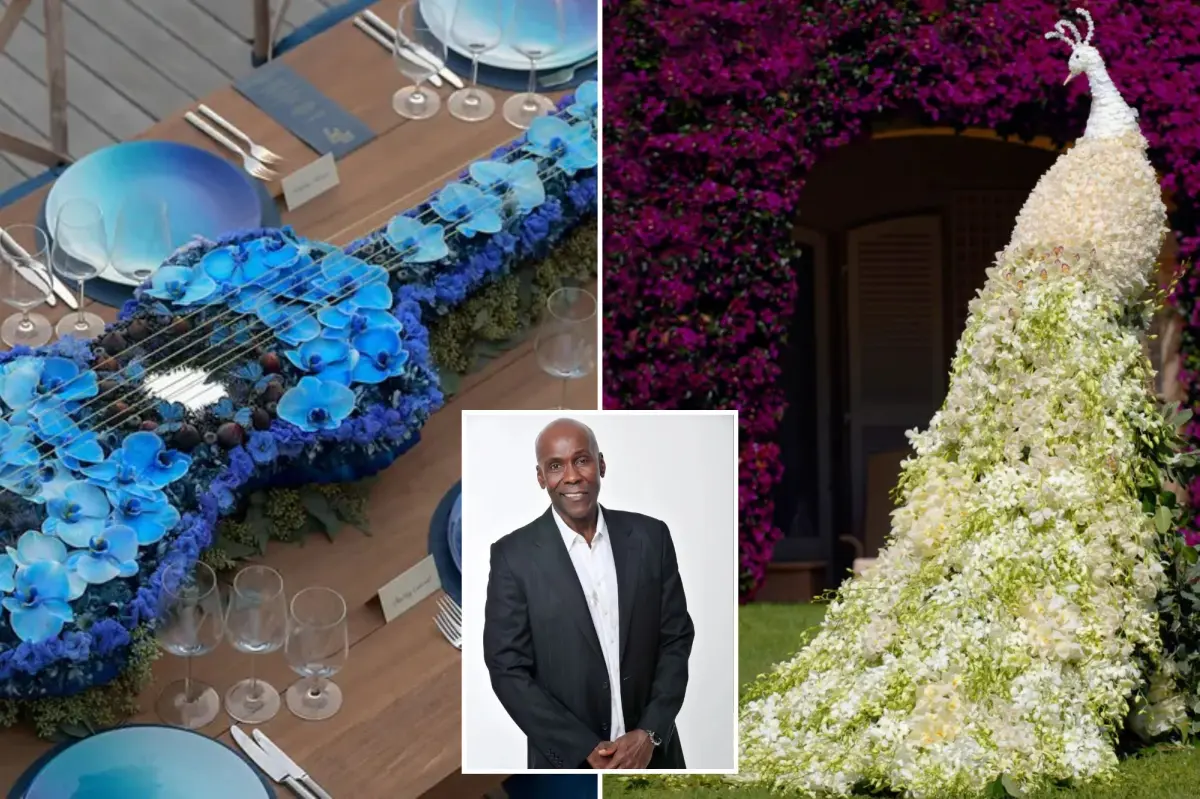
We’ve all been there: you’re scrolling through Instagram or flipping through a glossy magazine, and there it is—a wedding so breathtaking, so perfectly styled, that you immediately save it to your secret inspiration board. You tell yourself you’ll put your own spin on it, of course. You’ll use the same flowing floral arch but in your favorite colors, or that dramatic candlelit aisle but with a modern twist. Then you post your own ceremony, and someone else sees it, loves it, and puts their spin on it. Rinse and repeat, over and over, and what you end up with is something Preston Bailey, the legendary New York wedding planner and floral artist, calls a “matrimonial mutant”—a surreal, one-size-fits-all ceremony that barely resembles the original spark that inspired it. Bailey, who has orchestrated weddings for Serena Williams and Alexis Ohanian, Catherine Zeta-Jones and Michael Douglas, Ivanka Trump and Jared Kushner, and even Donald and Melania Trump, has seen it all. In 2024, he had the world watching the staggering $600 million wedding of India’s richest man, Anant Ambani, to Radhika Merchant, where 14,000 guests were wowed by his extravagant floral installations, including moving animal sculptures. Yet for all his celebrity credentials, Bailey is surprisingly blunt about the industry’s obsession with copying what’s hot. “Wedding trends are evil,” he says. “They make everyone a little bit lazy, just following whatever is happening at the moment.”
You might expect someone who designs for royalty and billionaires to encourage you to replicate the spectacle, but Bailey has a different mission entirely. He wants everyday couples—the ones with a realistic budget, a small backyard venue, and a guest list made up of people they actually love—to feel empowered to become trendsetters instead of followers. It’s easy to forget that this Panama-born master of matrimony started with a wedding that cost just $300. He hasn’t forgotten. That humble beginning is exactly why he insists that a memorable wedding has little to do with how much money you throw at it and everything to do with how you make people feel. For Bailey, event design is not about flowers, lighting, or fancy linens in themselves; it’s about entertainment. When he plans a supersized ceremony, he creates what he calls “pretty environments” where, every half hour, there’s a wonderful surprise—a change in lighting, a new sensory experience, something delicious served, or a small moment of delight unfolding before guests’ eyes. But that same philosophy scales down beautifully to a modest wedding. The secret is to set the tone at every stage of the evening. If there’s a cocktail hour, ask yourself: what are we going to do to set the mood? How do the music, lighting, and even the way servers move through the room work together? Then, as the night goes on, change it up again and again so nothing feels monotonous. Punctuate each transition with a tiny surprise. And above all, start slow and low, then build. Don’t blast the music from the very first minute; let people come together gently, like the opening scene of a Broadway show, and let the evening grow in intensity and emotion. “Ultimately, guests are there for quite a while, and a lot of events are beautiful, but boring,” Bailey admits. “I know that I’ve succeeded when nobody wants to leave at the end of the evening. Then I know I nailed it.”
So how do you actually start planning an event that feels alive rather than simply decorated? Bailey’s advice is refreshingly grounded. First, establish your guest list. Second, figure out what truly matters to you as a couple. And third—maybe unexpectedly—get serious about centerpieces. Think about it: your guests will be seated at a dinner table for hours. That table is the stage for most of the evening, and what sits at its center becomes a focal point for conversation, connection, and awe. “If you’re having a dinner, and you’re sitting guests at a table for a few hours, invest in what is on the table,” Bailey says. But before you imagine monumental silver swans exploding with expensive, exotic flowers, stop right there. A sexy centerpiece doesn’t have to cost a fortune. Bailey points out that many couples now buy orchids, which have become far more affordable than they once were. Orchids are beautiful on the table, and they last anywhere from three to six months. That means you can enjoy them well beyond the wedding day—as a living memory in your own home, or as a gift to someone who helped you celebrate. The idea is not to impress people with how much you spent, but to create something genuinely interesting that draws people in. A centerpiece can be a conversation starter, a mood setter, or just a quiet piece of beauty that makes people feel cared for. It’s the kind of detail that doesn’t show up big in photos but leaves a lasting impression on the people who were actually there.
Now, let’s talk about the altar—that sacred spot where you’ll exchange vows and where your guests will be staring for much of the ceremony. It’s also where social media’s more questionable trends tend to crawl out of the woodwork. You’ve seen the giant, custom-built arches that look like they belong at Coachella, the massive floral walls that cost more than a used car, and the elaborate installations that take a team of designers a full day to assemble. Bailey’s advice? Be “altar-native.” You don’t need to hire an architect or order half the Philadelphia Flower Show to make that moment special. One of his favorite budget-friendly tricks is simple: candles. Votive candles, to be exact. They cost pennies, he says, but when you use a ton of them, they create a warm, romantic, almost sacred atmosphere that no overpriced structure can match. “Everybody’s looking at the altar,” Bailey says. “And there are lots of ways of creating a beautiful visual that won’t break the bank, like votive candles. They cost pennies. Just use a ton of them.” The beauty of candles is that they also tie into Bailey’s broader entertainment philosophy—they create a lighting change as the ceremony transitions from day to evening, they add intimacy, and they photograph beautifully without looking like a direct copy of a celebrity wedding. It’s a reminder that the altar doesn’t need to be a spectacle; it needs to be meaningful. It needs to frame the two of you, not overshadow you. When you strip away the pressure to create something viral, you can focus on creating something sacred.
There’s a broader lesson here, and it’s one Bailey has been preaching more and more in recent years: less is more, again. In the age of Instagram, everyone has seen everything. And now too many couples try to do everything all at once—because they can, because they’ve seen it all, because they’re afraid their wedding won’t be “enough.” But Bailey, who was one of the first people to champion the idea that more is better back in his early career, now believes that the industry has gotten carried away with that concept. “People are taking the idea that, ‘Oh my God, we have to use tons of flowers to create something that is beautiful,’ too far. I think it’s time to pull back a little bit,” he says. When it comes to flowers, maximalism doesn’t actually make things more beautiful; it makes them overwhelming. Arrangements get lost in a sea of petals, and no single bloom gets the chance to be appreciated. Instead, he suggests thinking like a gallery curator: buy seasonal flowers, arrange them with enough space to breathe, and let each stem stand out. A single, carefully chosen bloom in a sculptural vase can be far more striking than a hundred roses crammed together. This approach is also a huge relief for anyone saving for a down payment or hoping to avoid starting married life in debt. It gives you permission to choose quality over quantity, intention over excess. And it aligns beautifully with the trend toward sustainability, because seasonal and locally grown flowers are better for the environment and often carry a deeper sense of place and time.
Finally, let’s talk about what your guests take home. At celebrity weddings, guests often leave with serious swag—luxury gift bags, designer keepsakes, and extravagant favors that cost more than most people’s first car. But Bailey gently reminds us that noblesse oblige is their business, not yours. Nobody really wants a wine glass with your names etched into it, or a custom playlist download they’ll never listen to, or another scented candle that will sit in a drawer until it gets regifted at the next holiday party. What do people actually want? A sugar rush. “Everybody loves sweets,” Bailey says. He recommends giving your guests something delicious and beautifully wrapped—maybe Magnolia cupcakes, or a batch of your favorite cookies, or a small box of locally made chocolates. Put it in a charming takeaway bag so people can enjoy it on the way home or save it for a midnight snack. Edible gifts are better than anything someone might regift because they’re personal, comforting, and immediately enjoyed. And that’s really the heart of Bailey’s entire philosophy: a wedding isn’t about impressing people with how much you spent or how closely you followed the latest trend. It’s about creating a warm, entertaining, memorable experience that makes the people you love feel welcomed, delighted, and genuinely cared for. Whether you have $300 or $600 million, the goal is the same. Start with what matters to you, use your imagination, and don’t be afraid to surprise people. Your wedding should feel like a beautiful evening that could only ever belong to you—not a copy of someone else’s highlight reel. And if your guests never want to leave, well, then you know you nailed it.